EGR Valve Volkswagen Manufacturer China Sourcing Guide
A Volkswagen-fit EGR valve program can look simple on a spreadsheet and fail quickly in the field. One connector keyway is different. A flange is flat on the sample but not in mass production. An actuator passes a basic movement check but drifts outside the expected feedback range after heat exposure. For aftermarket distributors, diesel repair networks, importers, and private-label range owners, these are commercial problems, not only engineering details.
Driventus manufactures engine and powertrain components in Taizhou, Zhejiang, and exports to more than 60 countries. Production is managed under IATF 16949:2016 and ISO 9001:2015 quality systems. This guide is written as a practical sourcing framework for buyers evaluating an egr valve volkswagen manufacturer china program: what to define before quotation, where failures usually start, how MOQ and lead time really behave, which tests matter, and what documentation reduces import and warranty risk.
Driventus is an independent aftermarket manufacturer. Volkswagen and other brand names are referenced for fitment identification only and do not imply vehicle manufacturer approval or endorsement.
Define the Program by Fitment Risk, Not by Part Name
“Volkswagen EGR valve” is not a sourcing specification. It is a starting point. The actual buying scope depends on engine platform, emission market, actuator design, connector geometry, gasket interface, and the OE cross-reference logic in the buyer’s database.
An EGR valve meters exhaust gas back into the intake stream according to ECU demand, vacuum signal, or actuator position. In Volkswagen-fit aftermarket programs, buyers commonly source diesel applications for 1.6L, 1.9L, 2.0L, and 2.5L platforms, plus selected petrol references for older regional ranges. The risk is that two units can look similar in a catalog image and still differ by connector keyway, flange angle, feedback sensor range, vacuum diaphragm setting, or cooler bypass arrangement.
Build the sourcing scope around the exact application. At minimum, the RFQ should identify:
Engine family, displacement, fuel type, emission level, model year range, and sales market where known
Valve type: pneumatic, electric stepper motor, DC motor with position sensor, or integrated EGR module
OE reference format, such as OE 06A…, 038…, 03G…, 03L…, 04L…, or OE 11251…, only where it matches the buyer’s verified fitment data
Order type: neutral carton, buyer brand, TecDoc-style range, regional distributor program, or private-label program
Target market: EU, UK, US, Canada, Australia, Brazil, or mixed export lanes with different labelling rules
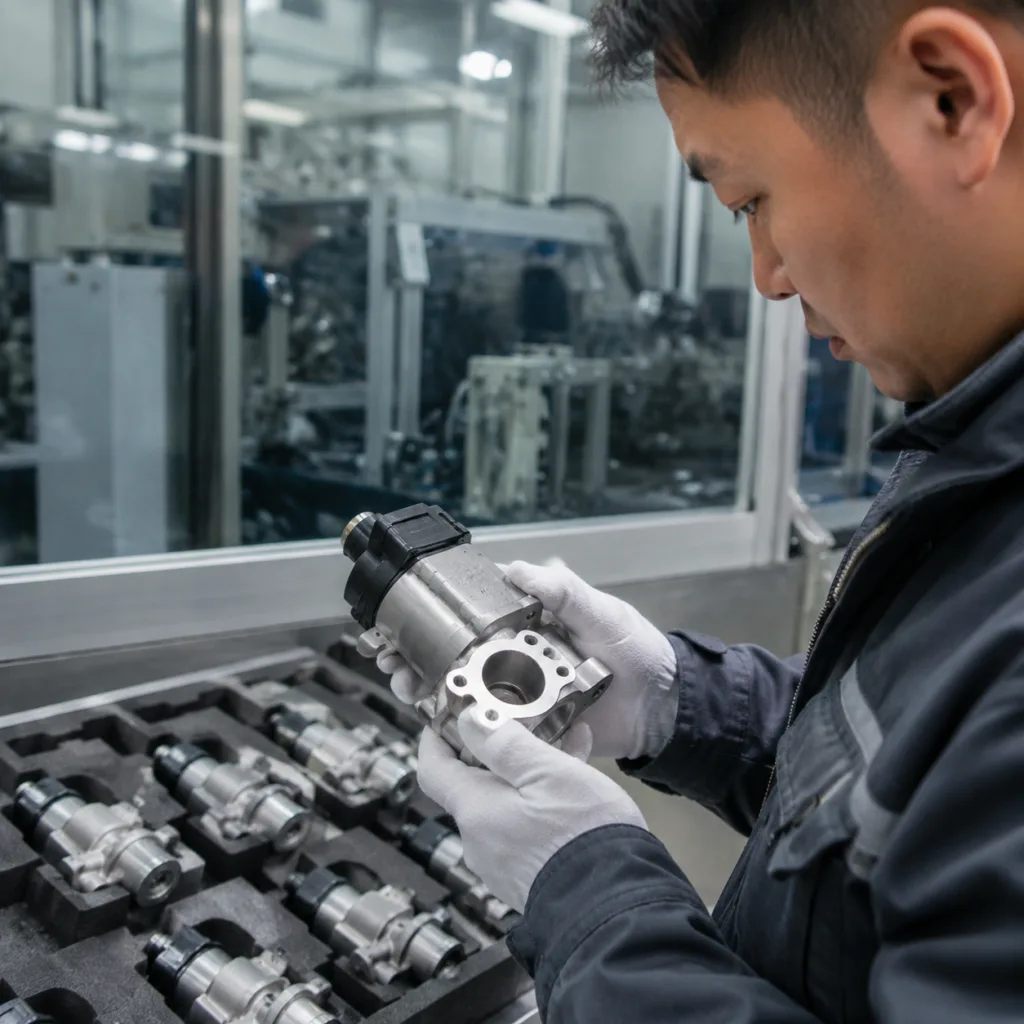
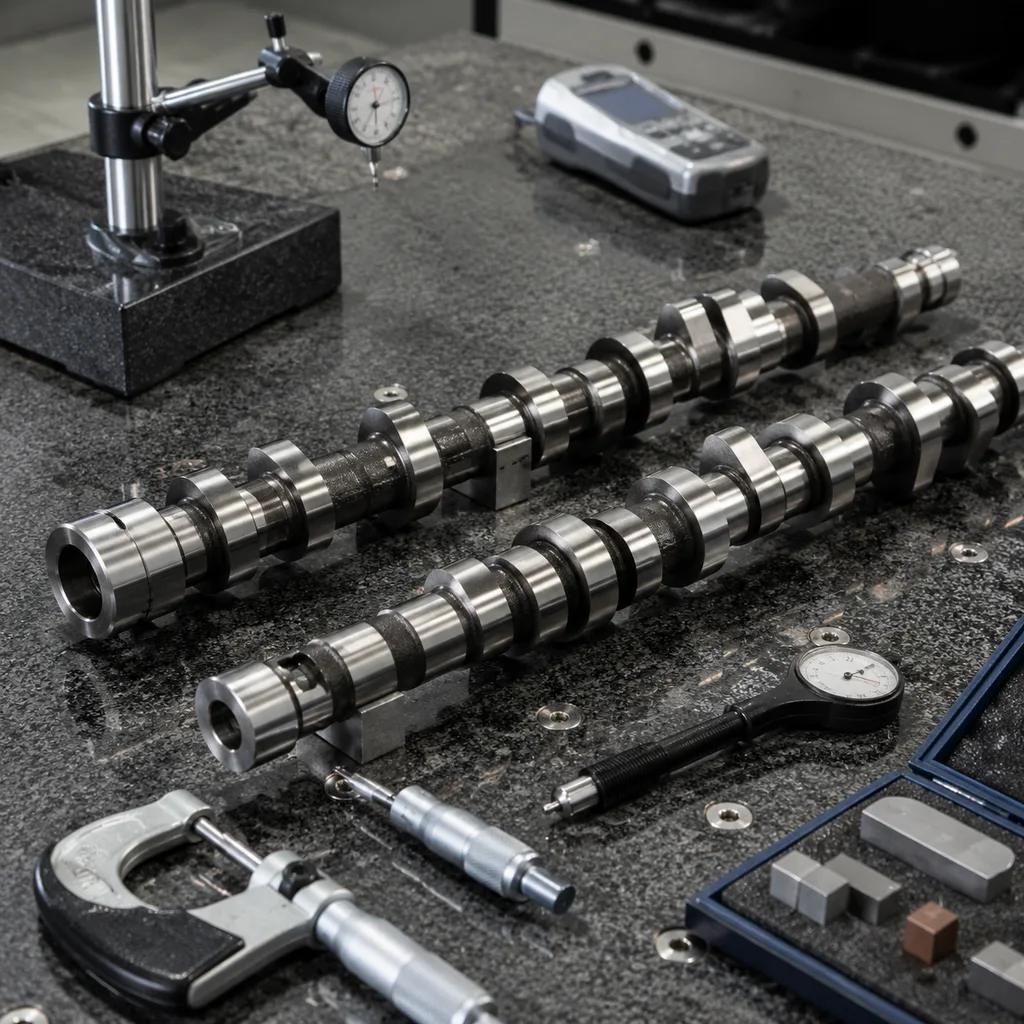
Sample confirmation is still the safest way to prevent wrong-part launches. Buyers should provide one OE or proven aftermarket sample per reference whenever possible. Useful first-pass checkpoints include flange flatness target within 0.05–0.10 mm, bolt-hole centre distance normally within ±0.10 mm on machined interfaces, connector engagement against the buyer’s harness plug, and gasket compression surfaces free from casting flash or machining burrs. Final tolerances must follow the approved drawing, but naming these checkpoints early tells the factory what level of inspection is expected.
Driventus can support Volkswagen-fit EGR valves as part of broader engine component sourcing programs. Buyers can review related engine parts in our catalog and use the EGR RFQ to consolidate gaskets, water pumps, pistons, and turbocharger-related parts where the same distribution channel is involved.
Choose the Order Model: Sample, Pilot, Replenishment, or Private Label
The right MOQ is the quantity that validates the part without trapping the buyer in slow stock. For EGR valves, MOQ and lead time are driven less by basic assembly capacity and more by actuator sourcing, casting or machining fixtures, connector availability, test requirements, and packaging complexity.
Use the order stage to judge the quotation:
Purchase stage
Typical B2B purpose
Common quantity structure
Practical timing logic
Main buyer checks
Sample order
Fitment and bench validation
5–20 pcs per reference
7–15 days if parts are available; 20–35 days if actuator or machining setup is required
Dimensions, connector, actuator response, sealing
Pilot order
Distributor launch or branch trial
100–300 pcs mixed references
25–45 days after sample approval and packaging confirmation
</tr></thead><tbody> </tbody></table>Do not compare only the lowest unit price. A simple pneumatic valve may sit in a completely different cost band from an electric EGR module with integrated cooler interface, position feedback, or imported sensor components. Ask for price breaks at realistic levels such as 100, 300, 500, and 1,000 pcs per SKU. Then calculate landed cost after packaging, inspection, duty, freight, warranty reserve, and slow-moving inventory risk. A 1,000-piece price is not a saving if annual demand is 180 pieces.
Lead time should be confirmed SKU by SKU. Stocked or semi-finished references move faster than new tooling, uncommon connector variants, or buyer-specific packaging. A complete quotation should state whether tooling is needed, expected sample timing, mass-production timing, inspection scope, and shipment terms. If a new casting, jig, or test harness is required, clarify one-time tooling cost, ownership, amortisation rules, and whether the tooling is exclusive or shared.
For buyers seeking an egr valve volkswagen manufacturer china source, the practical question is continuity. Can the supplier maintain dimensional accuracy and electrical performance across a mixed range where one reference sells 200 pieces a year and another sells 2,000? The production plan must support both without undocumented substitutions, unexplained design changes, or missing test records.
Mixed orders need their own rules. If a container includes EGR valves, water pumps, gaskets, and other engine parts, specify inner quantity, master carton quantity, pallet height limit, carton burst strength, barcode format, pallet separation, SKU-level packing lists, and whether each SKU requires a separate batch inspection report. Receiving efficiency at the destination warehouse starts with packing discipline at the factory.
Failure Modes to Control Before Mass Production
EGR valve quality is the sum of several small controls: housing integrity, valve seat accuracy, shaft or pintle movement, actuator calibration, sealing, connector retention, and final functional testing. A sourcing engineer should expect a control plan that links incoming materials, machining, assembly, calibration, and end-of-line inspection. A generic visual inspection sheet is not enough.
Common failure modes and the controls that reduce them include:
Porous housing or weak sealing surface: inspect aluminium or stainless housings for porosity, thread quality, wall thickness, sealing defects, and flange flatness
Poor mounting fit: control CNC bore diameter, seat geometry, mounting datum position, thread depth, and bolt-hole centre distance
Sticking valve movement: test shaft, pintle, or flap travel for smooth movement, repeatable return behaviour, and correct stop position
Incorrect electric actuator behaviour: verify command voltage, current draw, opening angle, response time, and position feedback where applicable
Weak pneumatic response: run vacuum holding tests at buyer-agreed vacuum level and hold-time criteria
Seat or interface leakage: define pressure or vacuum conditions and maximum leakage limits by drawing or sample approval
Heat-related drift: apply thermal cycling or heat-soak checks for selected high-temperature diesel references and integrated EGR modules
Corrosion exposure: review salt-spray or corrosion resistance for exposed metal parts, commonly 48–96 hours or longer when specified under an agreed published method
Untested escapes: apply 100% final functional testing for movement and sealing-critical characteristics, with failed units isolated before packing
For new SKU approval, buyers should request a process flow diagram, control plan, inspection report template, and sample dimensional report. Higher-risk references may justify a PPAP-style file with material confirmation, gauge list, calibration records, capability data for key machined dimensions, end-of-line test screenshots or data export, packaging specification, and a signed golden-sample approval sheet.
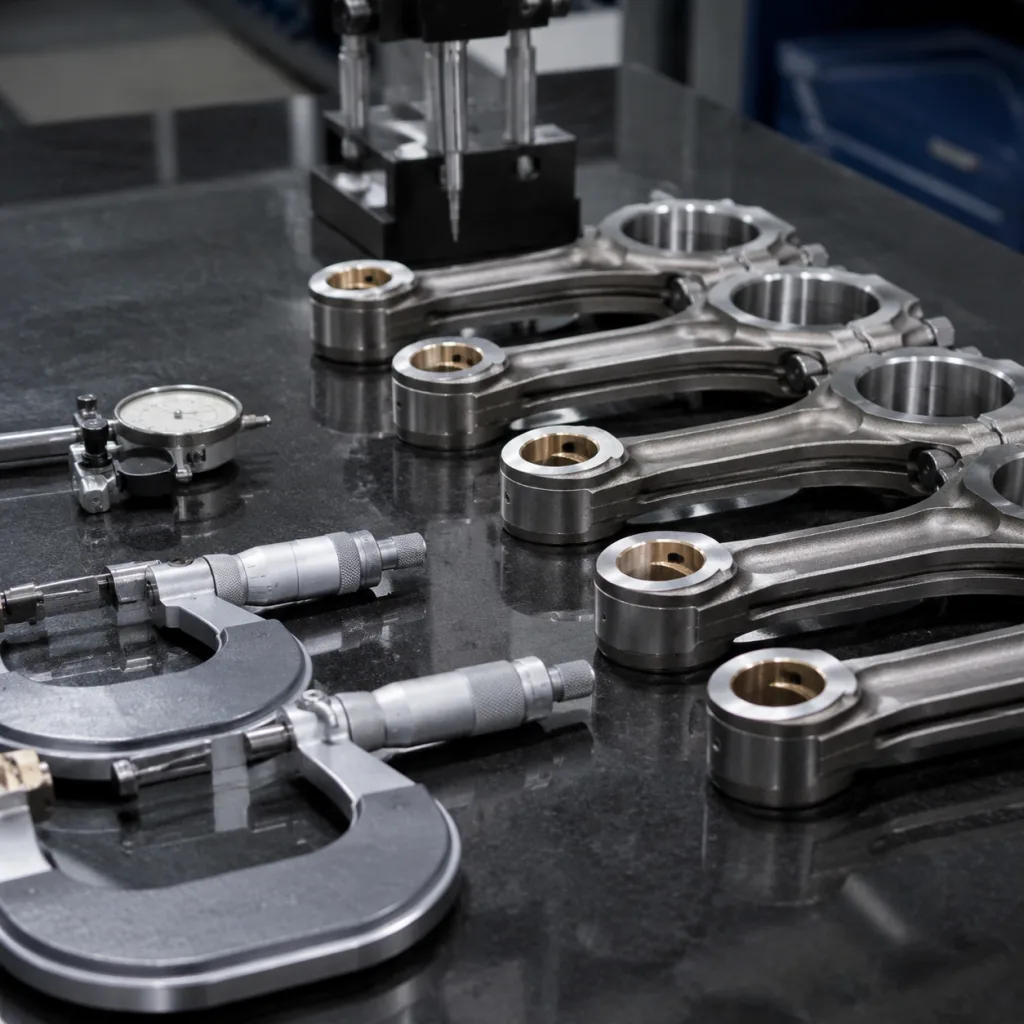
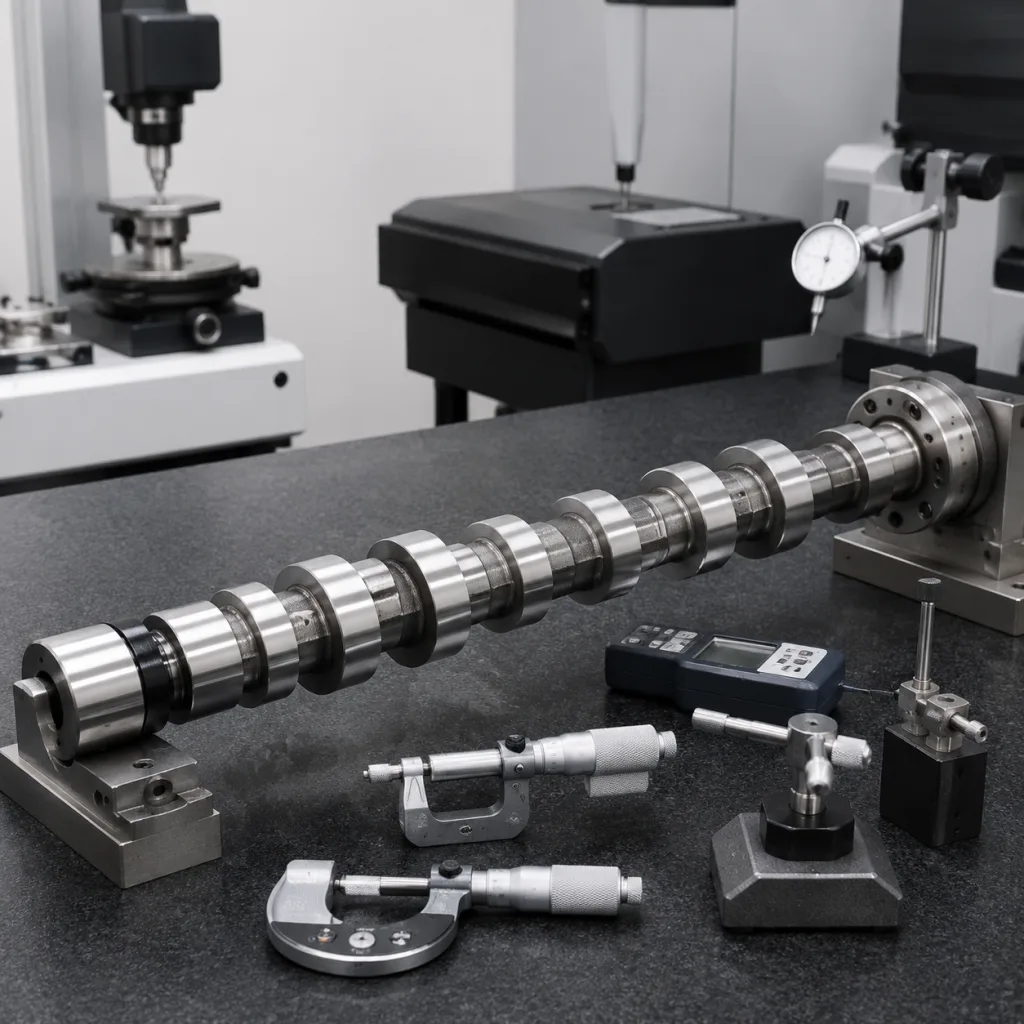
Make inspection criteria numeric. Examples include flange flatness, bore diameter, shaft end play, bolt-hole centre distance, actuator current range, sensor output range, vacuum decay, leakage limit, connector pull-off force, and operating noise. Exact values must match the approved drawing and reference design, but measurable criteria are far easier to audit than the phrase “tested before shipment.”
Traceability matters most after a field issue. For private-label supply, confirm how serial numbers, lot numbers, or date codes appear on the product, label, inner carton, and export carton. The trace should connect production date, operator or line, actuator batch, housing batch, final test record, and packing list. That allows a buyer to isolate a batch instead of freezing an entire product range.
Driventus operates under IATF 16949:2016 and ISO 9001:2015 quality management frameworks. Buyers can review our quality system to understand audit documentation, incoming inspection, process control, and corrective-action handling.
Compliance Documentation: What Each Market Usually Asks For
EGR valves are emissions-related components, so documentation needs to be precise. A supplier should not claim vehicle manufacturer approval unless that approval is formally documented. Driventus does not make such claims; references to Volkswagen-fit applications are used only to identify compatibility for aftermarket buyers.
For EU and UK buyers, material compliance requests often reference REACH (EC) No 1907/2006. Depending on the channel, buyers may also ask for substance declarations, packaging information, country-of-origin marking, and confirmation that labels do not misrepresent brand affiliation. ECE R-83 relates to vehicle emissions type approval, but component supply should not be presented as vehicle type approval. Use wording such as “fits” or “replacement for” rather than language that implies OE approval.
For North America, the file is usually driven by customs classification, country-of-origin marking, warranty process, customer-specific emissions-related sales rules, and channel policies. Confirm HS code treatment, invoice description, COO marking on product or packaging, and any state-level or customer-specific restriction before shipment. For Australia and Brazil, confirm local import documentation, labelling language, tax documentation, and any registration or conformity expectations before the first order leaves China.
A practical procurement file normally includes:
Product drawing or controlled specification sheet with revision number and approval date
Material statement for major housing, seal, shaft, spring, diaphragm, connector, and electrical components
REACH (EC) No 1907/2006 declaration where required by the buyer, plus SVHC status if requested
IATF 16949:2016 and ISO 9001:2015 certificate copies, within validity period and matching the manufacturing site where applicable
Batch inspection report and functional test summary, showing quantity inspected, acceptance criteria, and pass/fail result
Packaging specification with net weight, gross weight, carton size, pallet pattern, pallet height, and moisture-protection method
Country-of-origin marking method and label layout where applicable, including barcode format and importer references
Warranty claim analysis procedure, response time target, sample-return address, and credit or replacement decision process
Good compliance files save time after shipment. Customs brokers, marketplace teams, fleet customers, and key accounts often ask for evidence when goods are already moving. For private-label programs, keep approved artwork, label files, carton specifications, and change history in the same folder as the quality records. That small habit prevents expensive ambiguity later.
Audit the Factory by Tracing Three Real SKUs
A factory audit should test repeatability, not stage a tour. A clean assembly area is useful, but the buyer needs proof that the same reference will be produced to the same specification six months later, even if a component supplier, batch, or operator changes.
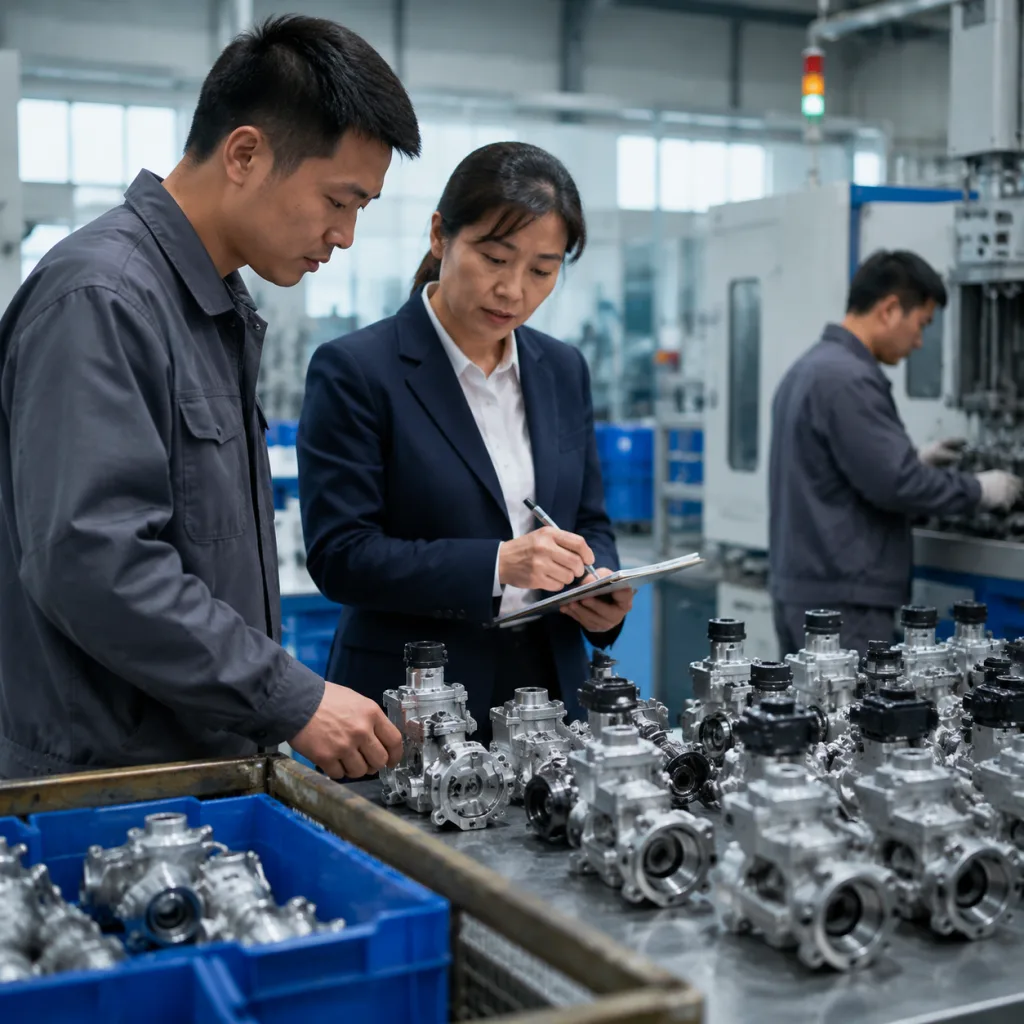
Instead of asking only general questions, select three active SKUs and trace them from incoming components to finished cartons. Check whether actuator batches match production records. Ask the operator to find the current work instruction. Look at how failed units are labelled and physically separated. Compare carton labels with the packing list. This walk-through often reveals more than a conference-room presentation.
Use these audit questions to structure the review:
1. Are drawings, bills of materials, test parameters, packaging files, and inspection standards controlled by revision number? 2. How are supplier changes for actuators, sensors, springs, seals, connectors, castings, and machined subcomponents approved? 3. Is there a golden sample or master sample for each active reference, and where is it stored? 4. Which characteristics are measured in-process, which are checked at final inspection, and which are tested 100%? 5. Are functional tests recorded by batch, operator, date, equipment ID, and test result where applicable? 6. How are nonconforming valves segregated, labelled, reworked, scrapped, and analysed? 7. What corrective-action format is used for repeat field failures, and what is the normal 8D or root-cause response time? 8. Can the supplier support buyer-specific packaging, barcodes, labels, instruction inserts, and carton drop-test requirements? 9. Are export cartons suitable for sea freight humidity, mixed-pallet handling, warehouse stacking, and courier distribution? 10. How are OE cross-references verified against samples, drawings, or fitment databases without implying brand approval? 11. How are engineering changes communicated to customers before sample production and mass production? 12. What production, inspection, calibration, and shipment records are retained for each batch, and for how long?
Calibration deserves a direct check. For electric EGR valves, actuator response, current draw, stroke position, sensor feedback, and connector reliability are critical. For pneumatic units, vacuum retention, diaphragm condition, spring return, and movement consistency should be recorded clearly enough for warranty review.
Driventus supports document-based audits and on-site audit coordination for qualified B2B projects. Where the buyer needs a modified housing, connector variant, gasket set, or branded packaging program, our custom manufacturing team can review drawings, samples, and annual demand forecasts.
RFQ Pack: Send This Before Asking for the Final Price
A good RFQ prevents the wrong EGR valve from being quoted quickly. Before contacting an egr valve volkswagen manufacturer china supplier, put the technical and commercial information in one file so the factory can confirm feasibility, test scope, packaging, and price on the same basis.
Include the following:
Target OE cross-reference format, such as OE 06A…, 038…, 03G…, 03L…, or 04L…, only where it matches your verified database
Vehicle application list, model years, engine codes, displacement, fuel type, and emission market if available
Photos of the existing sample from six sides, plus close-ups of casting marks, connector, flange, and gasket face
Connector close-up with pin count, terminal layout, keyway orientation, terminal width, and lock-tab position
Certificate and compliance documents required by your market, including REACH status if applicable
Inspection standard, AQL level, sample size, critical characteristics, and whether third-party inspection is planned
Barcode, label, carton-marking, pallet-marking, and country-of-origin requirements
Warranty return process, labour-claim policy, failure-analysis format, and expected response time
Then ask for pricing in separated lines: unit price, tooling, sample charge, packaging surcharge, inspection cost, and freight basis. Bundled pricing hides the real cost drivers. EGR valve returns are expensive because the installed component is tied to diagnostics, labour claims, drivability issues, and emissions-system troubleshooting. Dimensional fit, actuator response, connector compatibility, and sealing should be settled before final price negotiation.
A simple file naming rule also helps: `Buyer_SKU-OEref-engine-market-quantity-date`. It reduces the chance that both sides quote the wrong version, especially when several similar references are being compared.
For Volkswagen-fit EGR valves and related engine component sourcing, buyers may send drawings, samples, application lists, or target SKU files through request a quote. Driventus will review fitment scope, MOQ, production timing, and documentation requirements before confirming supply feasibility.
Frequently asked questions
Yes, for qualified B2B orders. Private-label supply can include buyer cartons, labels, barcodes, and inserts after artwork approval. MOQ depends on SKU mix, packaging complexity, and forecast volume.
No. Driventus is an independent aftermarket manufacturer; brand names are referenced for fitment only. OE-style cross-references are used to help buyers identify applications and do not imply vehicle manufacturer endorsement.
Request valid IATF 16949:2016 and ISO 9001:2015 certificates, inspection reports, functional test summary, material declarations, packaging specification, and traceability method. EU buyers may also request REACH (EC) No 1907/2006 declarations.
If you are building a Volkswagen-fit EGR valve sourcing program, send your SKU list, samples, or drawings for a feasibility review. Contact Driventus here: /contact.html