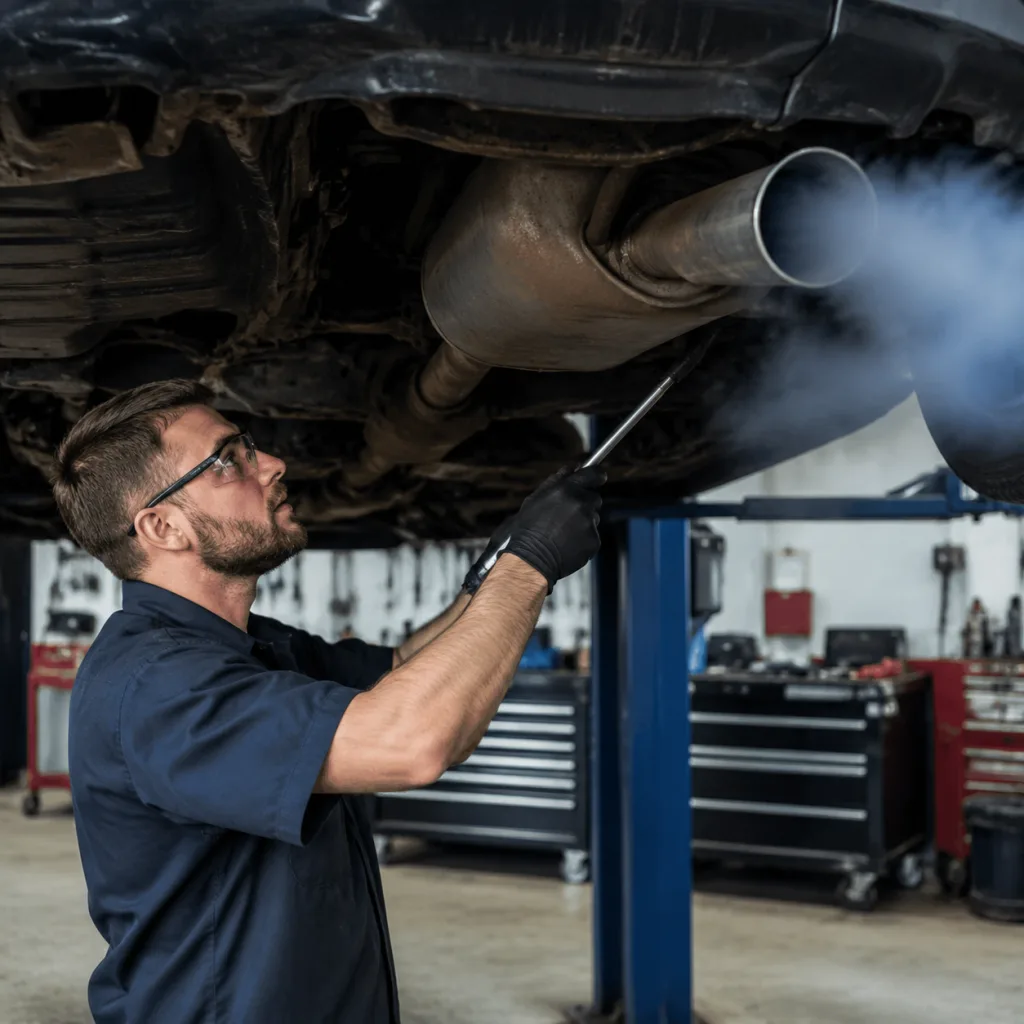
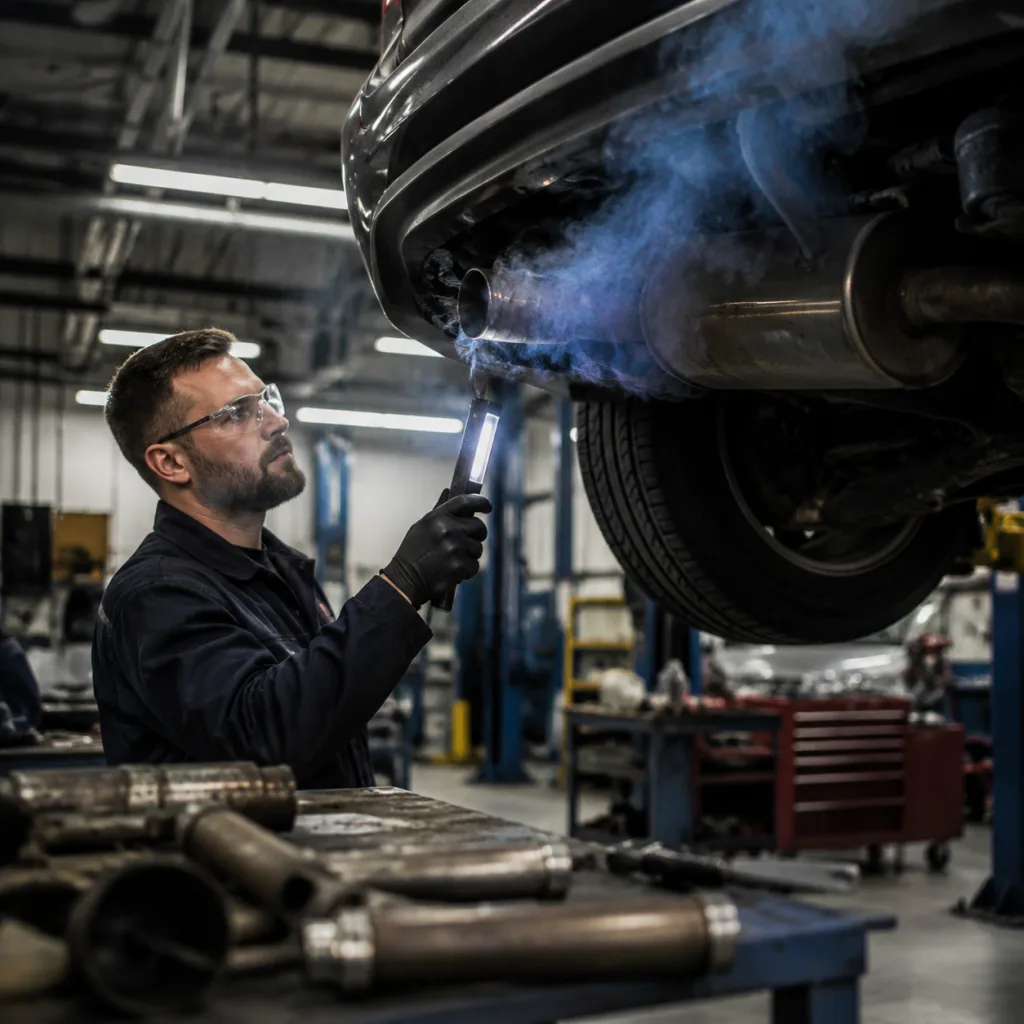
Blue smoke from the exhaust is not a single repair category. It is a visible sign that engine oil is reaching the combustion chamber, turbocharger housing, intake tract, or hot exhaust stream. For repair chains, fleet maintenance groups, warranty teams, and parts buyers, the invoice is only part of the exposure. The real cost sits in diagnosis, labour access, companion parts, downtime, comeback risk, and whether the replacement part matches the failure mode.
A PCV valve, hose, or simple seal job may stay in the USD/EUR 80-350 retail range in many markets. Ring, bore, turbocharger, cylinder-head, or overhaul work can quickly move into four figures once labour, machining, fluids, gaskets, oil lines, claim handling, and vehicle downtime are included. This blue smoke from exhaust repair cost guide is written for B2B teams that need to price, source, stock, and warranty these repairs by engine family rather than treating every smoking vehicle as the same problem.
Use it as a decision framework: identify the smoke pattern, confirm the root cause, cost the complete repair pack, then source parts with measurable specifications and traceable batches. Driventus is an independent aftermarket manufacturer; brand names and OE references are used for fitment identification only.
Start With the Smoke Pattern, Not the Parts Catalogue
Blue or blue-grey exhaust smoke normally points to oil consumption, but the timing of the smoke is what directs the repair. Cold-start haze, boost smoke, overrun smoke, and continuous smoke do not carry the same parts risk. A buyer who forecasts only by symptom will overstock some items and miss the kits workshops actually need.
Use the first observation to split the job into a likely failure path:
Turbo gaskets, seals, oil return pipe, PCV valve and hoses
</tr></thead><tbody> </tbody></table>Escalation thresholds should be written into the workshop process. Useful triggers include oil consumption above roughly 0.5-1.0 L per 1,000 km, repeated plug oil fouling, tailpipe oil wetness, intercooler oil pooling beyond light misting, or crankcase pressure outside the engine-maker service range.
For sourcing, tag every claim by engine code, aspiration type, mileage band, oil grade, service history, and confirmed fault. A cold-start seal case should not be counted with a boost-related turbo case. That separation improves MOQ planning, branch stocking, and supplier scorecards.
Step-by-Step Diagnosis Before Any Cost Is Approved
Do not price the repair from the most visible component. A new turbocharger can fail again if the blocked oil return, high crankcase pressure, overfilled sump, or ring blow-by is left in place. The estimate should follow a fixed inspection route and stop when evidence supports the repair pack.
Recommended sequence:
1. Reproduce the smoke under controlled conditions: cold start after 8-12 hours, hot idle for 5-10 minutes, snap acceleration, road-load acceleration, closed-throttle deceleration, and boost where applicable. 2. Check oil level, oil grade, service interval, overfill, fuel dilution, coolant contamination, and whether the oil specification matches the engine and aftertreatment system. 3. Scan for stored codes and freeze-frame data linked to boost control, misfire, fuel trim, exhaust aftertreatment, oil pressure, crankcase ventilation, or excessive regeneration events on diesel applications. 4. Inspect the air intake, intercooler, compressor outlet, turbine housing, exhaust path, and charge pipes. Light oil film can be normal. Pooled oil, dripping couplers, or wet turbine outlets are not. 5. Test crankcase ventilation flow and pressure, including PCV valve operation, separator function, breather hose restriction, collapsed or hardened hoses, and pressure at idle, 2,500 rpm no-load, and loaded conditions where safe. 6. Run compression and leak-down tests where ring, bore, valve, or head-gasket sealing is suspected. Many workshops use >15-20% cylinder-to-cylinder compression spread or >20-25% leak-down as an escalation trigger, subject to OEM data. 7. Use a borescope to check piston crowns, cylinder wall oiling, crosshatch condition, carbon deposits, wet valves, vertical scoring, washed areas, and broken ring-land evidence. 8. Measure the mechanical items that decide whether parts are reusable: ring end gap in the bore, piston-to-bore clearance, groove side clearance, valve stem-to-guide clearance, head flatness, and turbo radial/axial movement against service limits. 9. Review recent repairs, oil-service records, and prior turbocharger, injector, PCV, DPF, EGR, timing, or engine internal work before authorising replacement.
The job file should contain numbers, photos, scan reports, and technician notes. A one-page smoke diagnostic form is often enough: oil level, oil grade, compression, leak-down, PCV check, turbo oil-line inspection, borescope images, and repair approval. For warranty teams, that form separates a valid defect from an incomplete diagnosis.
Cost Bands: Cheap Part, Expensive Repair, or Full Overhaul?
The cost bands below are for procurement and estimating teams, not consumer quoting. Labour rates, tax, access time, vehicle platform, and regional parts pricing vary across the EU, UK, US, Canada, Australia, Brazil, and other markets. The ranking matters more than any single invoice number.
Fault type
Indicative B2B parts band*
Labour intensity
Comeback risk if misdiagnosed
Procurement note
PCV valve, separator, or hose fault
USD/EUR 5-80
0.3-1.5 h
Medium
Verify oil resistance, pressure function, diaphragm calibration, and fitment stability
Valve stem seals
USD/EUR 10-120
3-10 h
Medium
Often sold with head, cam-cover, valve-cover, and timing-related gasket items
</tr></thead><tbody> </tbody></table>*Bands are broad aftermarket planning ranges, not retail quotations. They exclude local tax, freight, machining, core charges, programming, fluids, and regional labour differences.
The trap is unit-price thinking. A valve stem seal set may be inexpensive, but access may require camshaft removal, valve spring compression, compressed-air or rope cylinder holding, special tools, or cylinder head removal. A turbocharger may be faster to fit, but the replacement is vulnerable if the oil feed is contaminated, the return line is restricted, the PCV system is faulty, or the installer skips priming.
For multi-location networks, compare landed cost per completed repair: part price + required companion parts + packaging + freight + defect allowance + warranty handling + branch downtime. Buyers can review engine and powertrain items in our catalog, including related engine components where applicable. A higher-priced complete repair pack can beat a cheaper single component if it prevents a second visit.
Spec Deep-Dive: What Prevents Repeat Oil Burning
Oil-smoke repairs are unforgiving. Small errors in geometry, surface finish, elastomer choice, oil-flow cleanliness, or coating control can increase consumption, raise blow-by, create carbon deposits, or shorten service life. Supplier claims should be converted into measurable checkpoints.
Critical part requirements:
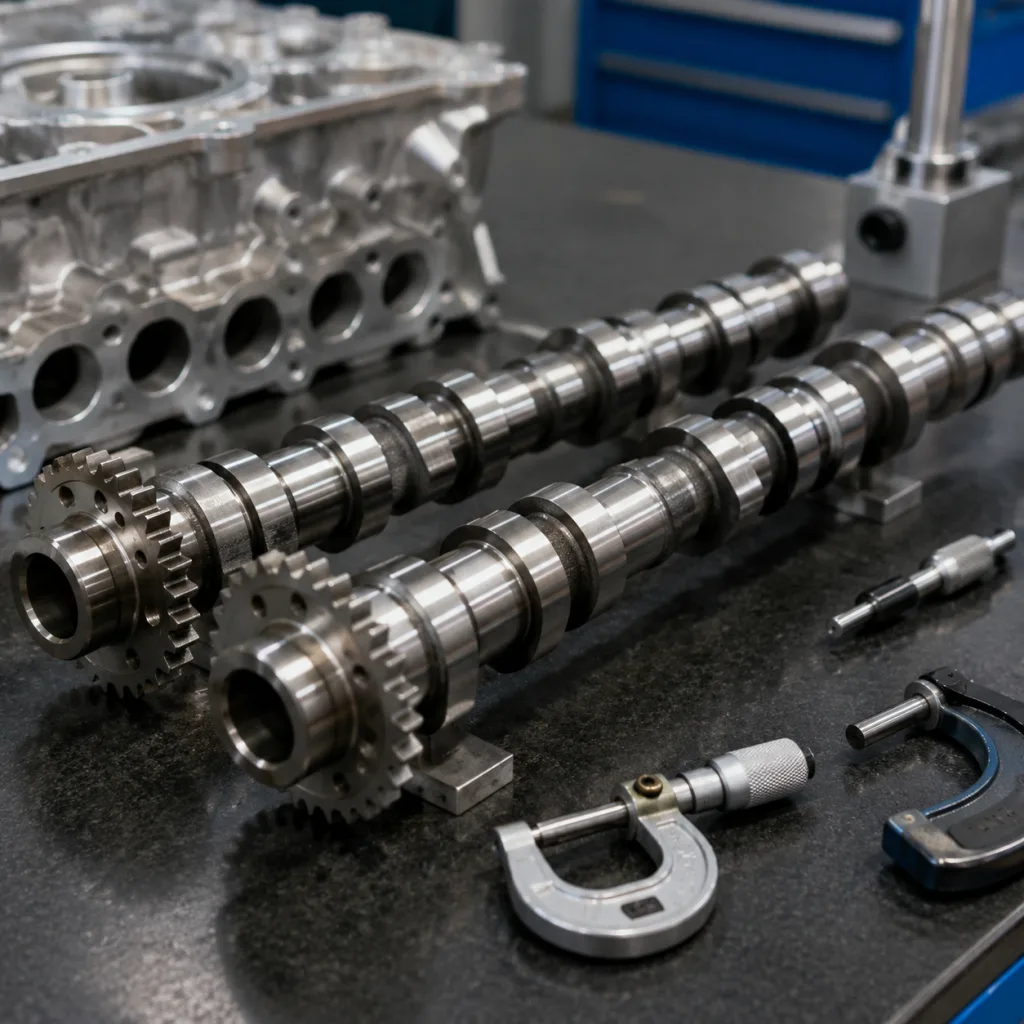
Piston rings: Control radial wall thickness, free gap, side clearance, coating type, ring tension, end-gap guidance, and application-specific pack design. Buyer checkpoints should include ring end-gap guidance by bore size, groove side clearance, coating thickness, barrel-face profile, and Cpk targets for agreed critical dimensions.
Pistons: Confirm skirt profile, pin bore alignment, groove width, ring-land strength, crown finish, alloy specification, and thermal-load suitability. Practical checks include piston-to-bore clearance, pin bore diameter, compression height, skirt coating adhesion, crown volume, and set weight matching.
Valve stem seals: Match elastomer to oil additives, heat, vacuum, stem diameter, guide fit, and spring retention. FKM is common for higher heat applications, while ACM/NBR may be used where specified. Confirm stem ID tolerance, guide OD retention force, and packaging that protects the sealing lip.
Gaskets: Define compressed thickness, bead geometry, coating adhesion, oil and coolant compatibility, bolt-load behaviour, and surface-finish requirements. Cylinder-head gasket programmes should specify bore diameter, fire-ring design, coating type, inspection level, and Ra requirements where the engine design needs them.
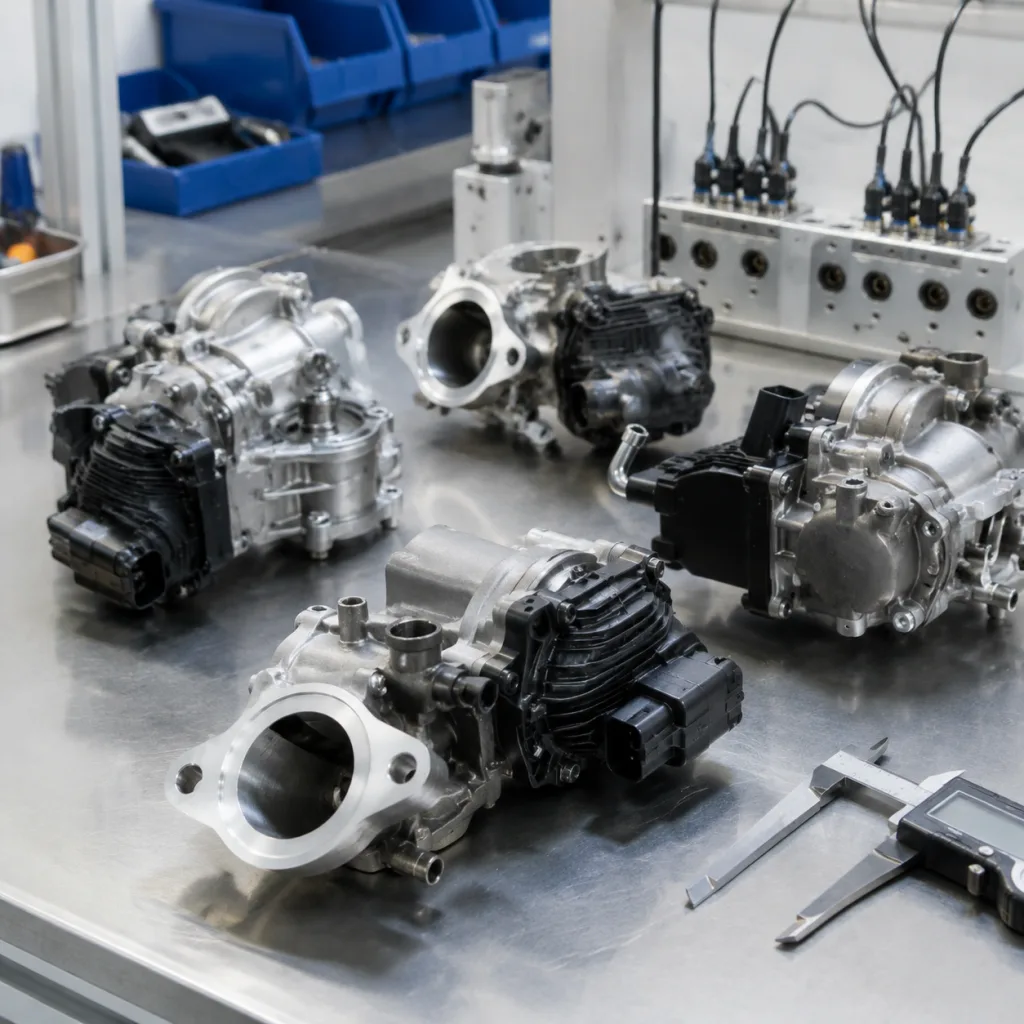
Turbocharger assemblies: Require rotor balance, bearing clearance, wastegate or actuator setting, housing crack inspection, oil passage cleanliness, and correct installation hardware. Ask for VSR or equivalent high-speed balance evidence, actuator calibration data, contamination-control records, and confirmation of included oil feed/return hardware.
Oil feed and return lines: Check internal diameter, bend geometry, banjo fitting quality, heat shielding, anti-coking design where specified, and unrestricted drain routing. Return lines need downhill flow without kinks. Feed lines should arrive clean, capped, and free from brazing residue or scale.
Crankcase ventilation parts: Specify calibrated flow, oil-separation efficiency, diaphragm durability, hose material stability, and resistance to collapse under vacuum or heat. Define hose hardness range, oil/ozone resistance, burst or collapse test method, and PCV opening pressure where applicable.
Driventus manufactures engine and powertrain components under IATF 16949:2016 and ISO 9001:2015 management systems. Our quality system covers incoming material checks, process control, dimensional inspection, batch traceability, and final verification. For regulated markets, buyers should also assess material declarations relevant to REACH (EC) No 1907/2006 where applicable.
A useful RFQ file includes the OE reference, engine code, sample part, expected annual volume, target packaging, inspection level, and critical-to-quality dimensions. The minimum inspection pack should include material certificate, dimensional report, functional test result, batch/lot code, packaging label proof, and installation notes for oil-sensitive parts.
Driventus is an independent aftermarket manufacturer; brand names and OE references are used for fitment identification only.
Decision Rule: When a Single-Part Fix Is the Wrong Bet
Some blue-smoke jobs justify a targeted part replacement. Others show system wear that a single seal, hose, or gasket will not solve. The commercial decision is not “repair or replace” in the abstract. It is whether the evidence supports a contained fix, an assembly replacement, or an overhaul kit.
Replacement or overhaul is usually the safer route when:
Turbocharger shaft play, compressor wheel contact, turbine-side oil wetting, failed actuator control, cracked housing, or excessive oil in the charge-air system is confirmed.
Compression and leak-down results show ring sealing loss across multiple cylinders, repeated plug oil fouling, or excessive crankcase blow-by after PCV checks are passed.
Cylinder bores show scoring, glazing, taper, or out-of-round wear beyond the service limit; visible vertical scoring, no usable crosshatch, or bore measurements outside OEM tolerance should trigger escalation.
Valve guides are worn enough that new stem seals cannot control oil flow; confirm with measured valve stem-to-guide clearance rather than visual judgement.
Head gasket leakage is combined with oil contamination, coolant loss, overheating history, warped deck surfaces, or repeated cooling-system pressurisation.
Oil feed or return lines are restricted, heat-damaged, carboned, internally delaminated, incorrectly routed, or previously reused against service guidance.
The same smoke complaint returns during the warranty period, especially after turbocharger replacement without PCV, oil-line, and intake-cleaning evidence.
A practical rule: move from targeted repair to assembly replacement or overhaul when two or more systems fail inspection together, such as low compression plus high crankcase pressure, or turbo oil wetting plus blocked return and failed PCV control. For fleets, add downtime to the calculation. A low-cost partial repair can become expensive if it creates a second immobilisation event.
For OEM, Tier-1, and repair-chain programmes, Driventus can support custom manufacturing for pistons, gaskets, crankshaft-related parts, water pumps, and turbocharger components. Typical sourcing documentation may include drawings, material specifications, inspection reports, PPAP-style documentation where agreed, packaging standards, barcode rules, distributor labelling requirements, and control plans for critical dimensions.
OE part-number cross-references should be used only for fitment identification, for example OE 06A107065 or OE 11251…. They should not be treated as approval, certification, or endorsement by a vehicle manufacturer.
RFQ Checklist for Networks Buying Oil-Smoke Repair Parts
A good RFQ should prevent three problems: wrong fitment, incomplete repair packs, and weak warranty evidence. It should also make suppliers quote the same scope, so category managers can compare capability instead of chasing the lowest line-item price.
Include these controls when buying parts linked to blue-smoke repairs:
Confirm application coverage by engine code, displacement, fuel type, aspiration, emissions standard, production date range, and known supersessions.
Request drawings, samples, or critical dimensions for pistons, rings, valve seals, gaskets, turbocharger interfaces, and oil-line connections. Define tolerance format and acceptance method before sampling.
Ask for material and coating information, including elastomer type for seals, ring surface treatment, gasket coating, bearing material, and heat-protection details.
Verify factory certification to IATF 16949:2016 and ISO 9001:2015, including certificate scope, issuing body, expiry date, and whether the quoted product family is covered.
Check export documentation, HS code consistency, country-of-origin marking, invoice description, packing list format, and market-specific chemical compliance such as REACH (EC) No 1907/2006.
Align MOQ, lead time, mixed-container options, forecast visibility, safety stock, and phase-in timing before programme launch.
Commercial assumptions belong in the RFQ, not in later emails. For slow-moving engine internals, buyers often negotiate MOQs by engine family rather than single SKU: for example, 50-200 sets per piston or ring reference, 100-500 pieces for valve stem seal kits, and higher quantities for hoses or PCV items where tooling and rubber batching drive cost. First production after sample approval often needs 45-90 days depending on tooling, machining, coating, and packaging. Repeat orders may fall to 30-60 days when materials and labels are already approved.
Separate ex-works price, export packing, inland freight, tooling or mould cost, inspection cost, documentation cost, payment terms, and claim handling. Then model landed cost with defect ppm target, technical support allowance, minimum shelf-life for rubber parts, and safety-stock carrying cost. Air freight can protect launch timing for small seal or gasket kits; turbochargers, pistons, and overhaul packs usually need sea freight planning.
Do not source a single component if the repair routinely needs a kit. A turbocharger programme may also require gaskets, oil lines, PCV parts, clamps, priming guidance, intake-cleaning instructions, and installation checklists. A piston programme may need rings, pins, clips, bearings, fasteners, timing items, oil pump checks, and a full gasket set. Kit-based sourcing improves first-time completion and gives warranty teams a cleaner link between diagnosis, parts used, and outcome.
Frequently asked questions
Blue smoke means oil is entering the combustion chamber, intake, turbocharger path, or exhaust stream. Common causes include worn piston rings, valve stem seals, turbocharger oil leakage, and crankcase ventilation faults. Smoke timing narrows the fault: cold-start smoke often points to valve seals, while smoke under boost requires turbocharger, oil drain, and crankcase pressure checks.
Yes. PCV valves, hoses, valve stem seals, and gaskets may be low-cost parts, but access labour and repeat-failure risk can be high. If the root cause is cylinder wear, excessive blow-by, oil return restriction, or incorrect crankcase ventilation, replacing only the obvious part can create a comeback and a warranty claim.
Use a standard diagnostic checklist, record compression or leak-down results where relevant, inspect crankcase ventilation and turbo oil lines, and source parts with documented specifications and traceable batches. Warranty rules should define the evidence required before approving claims, including photos, scan data, service records, oil specification, installation checklists, and failed-part returns.
If you source engine components for oil-consumption and smoke-related repairs, Driventus can review drawings, fitment lists, kit requirements, MOQ targets, lead-time plans, and forecast volumes. To discuss supply options or request a quote, contact us at /contact.html