camshaft · 2026-06-18

Camshaft Jaguar Wholesale Sourcing Guide

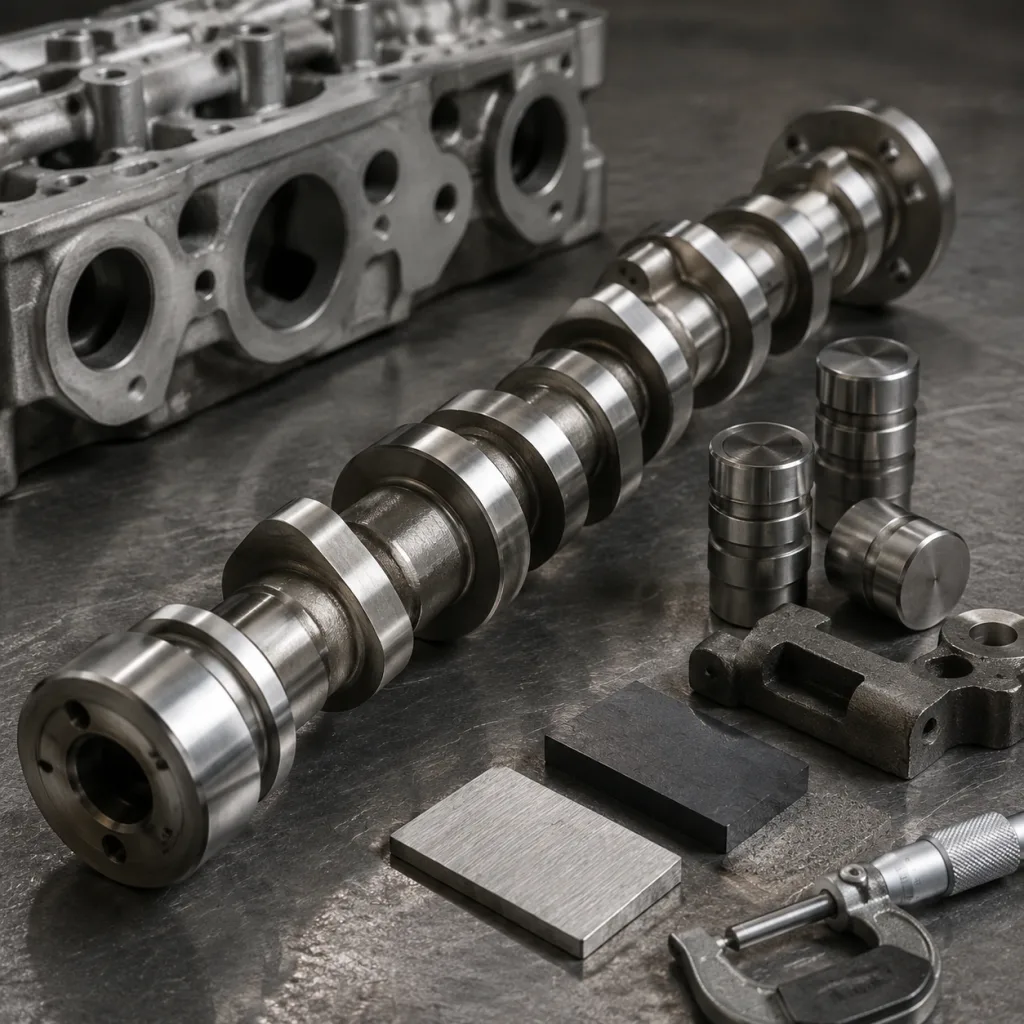
A camshaft Jaguar wholesale programme fails or scales on the same point: fitment discipline. Price matters, but it should come after the buyer has fixed the engine code, cam position, bank location, trigger design, phaser interface, material route, lobe geometry, hardness target, packaging, and inspection evidence. Jaguar-fitment demand is rarely a single-part purchase. Importers, aftermarket distributors, engine rebuilders, and repair-chain procurement teams usually need a controlled SKU range that can survive catalogue supersessions, regional engine variants, slow-moving references, and repeat orders.

The practical goal is not to “find a camshaft.” It is to build a repeatable sourcing file: confirmed reference, approved sample or drawing, measurable tolerances, batch traceability, export-safe packaging, and clear commercial gates for MOQ, lead time, documentation, and claims handling. Driventus manufactures engine components in Taizhou, Zhejiang, and exports to more than 60 countries. We support B2B customers through IATF 16949:2016 and ISO 9001:2015 controlled processes, with batch inspection records, material documentation, and export packaging options. Driventus is an independent aftermarket manufacturer; brand names are used for fitment reference only.

Start With the Fitment Decision Tree, Not the Price List

Jaguar-fitment camshaft demand is fragmented. One distributor may need older petrol-engine coverage, later multi-valve layouts, timing-chain driven applications, and selected performance-oriented engine families in the same buying cycle. Treat each reference as a technical decision before it becomes a commercial line item.

A useful decision sequence is:

1. Confirm the engine family, displacement, fuel type, production years, and timing-drive type. 2. Confirm whether the part is intake, exhaust, left-bank, or right-bank. 3. Check the sensor trigger end, oil-hole layout, journal count, lobe count, dowel or slot dimensions, and thrust face arrangement. 4. Confirm whether the camshaft uses a phaser, gear, sprocket, or fixed interface. 5. Match the construction route: cast, forged steel, or assembled shaft. 6. Freeze the approval reference before samples or production start.

For aftermarket programmes, Driventus can support catalogue-led supply as well as buyer-controlled cross-reference mapping. Buyers building a wider powertrain sourcing basket can review related engine components in our catalog and the engine category page at /products/engine-components.html.

Do not treat an OE-style number as a full specification. It is a cross-reference starting point. It still needs validation against a drawing, sample, trusted catalogue record, or agreed measurement sheet. For camshaft Jaguar wholesale programmes, the supplier should return a comparison sheet covering overall length, journal diameters, lobe count, oil-hole positions, trigger pattern, thrust face layout, and phaser or sprocket interface.

For high-mix orders, keep one master file per SKU. Include the approved reference, sample photos, measurement report, packaging version, label format, and any supersession notes. This prevents a later catalogue update or regional engine variant from being mistaken for the same part.

Where Wholesale Camshaft Orders Usually Go Wrong

Most camshaft sourcing problems are visible before shipment if the buyer knows where to look. The common failure mode is not a single bad part; it is an uncontrolled assumption repeated across a batch.

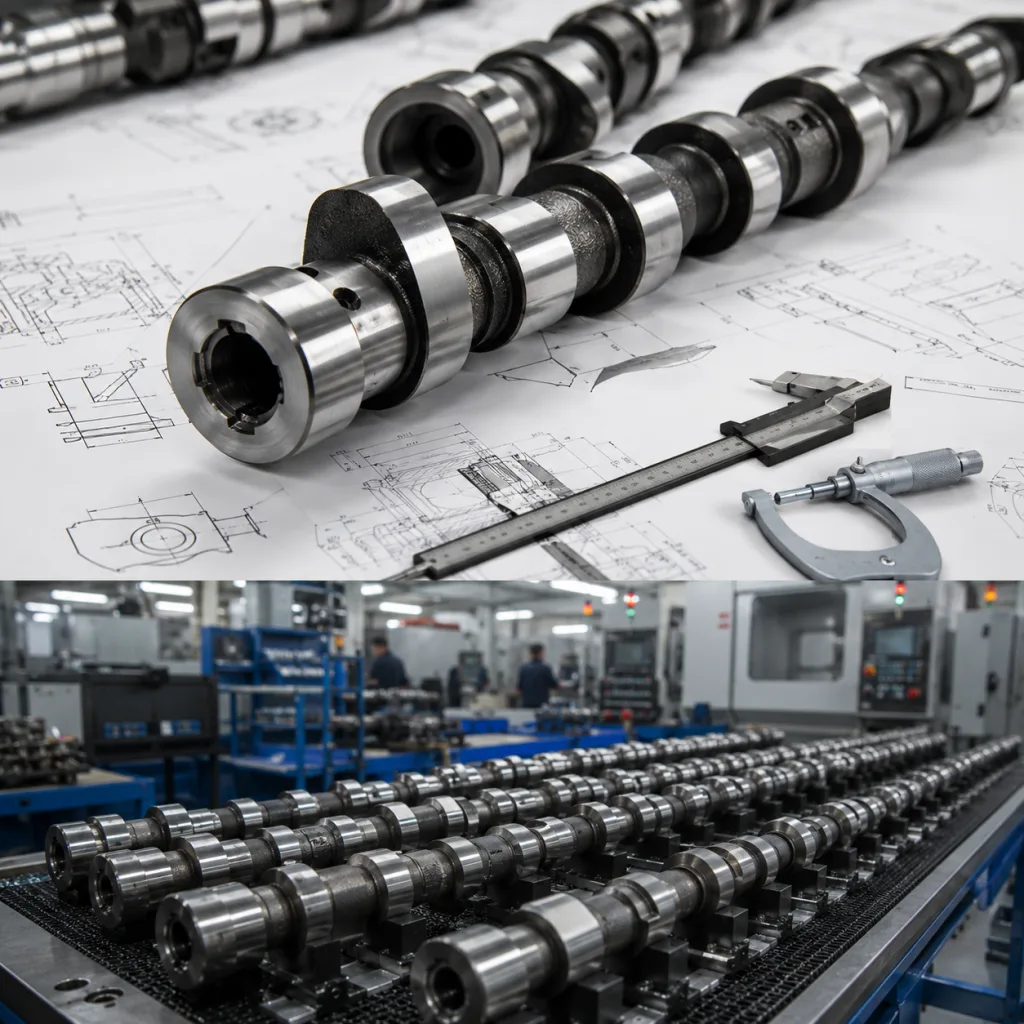
</tr></thead><tbody> </tbody></table>A buyer audit should follow the production route, not just the showroom. For a typical machined camshaft, check material receiving, blank identification, rough turning, drilling, heat treatment, straightening, finish grinding, lobe profiling, washing, anti-rust protection, final inspection, and packing. Ask how nonconforming parts are segregated, whether rework is allowed on journals or lobes, and how gauge calibration is controlled.

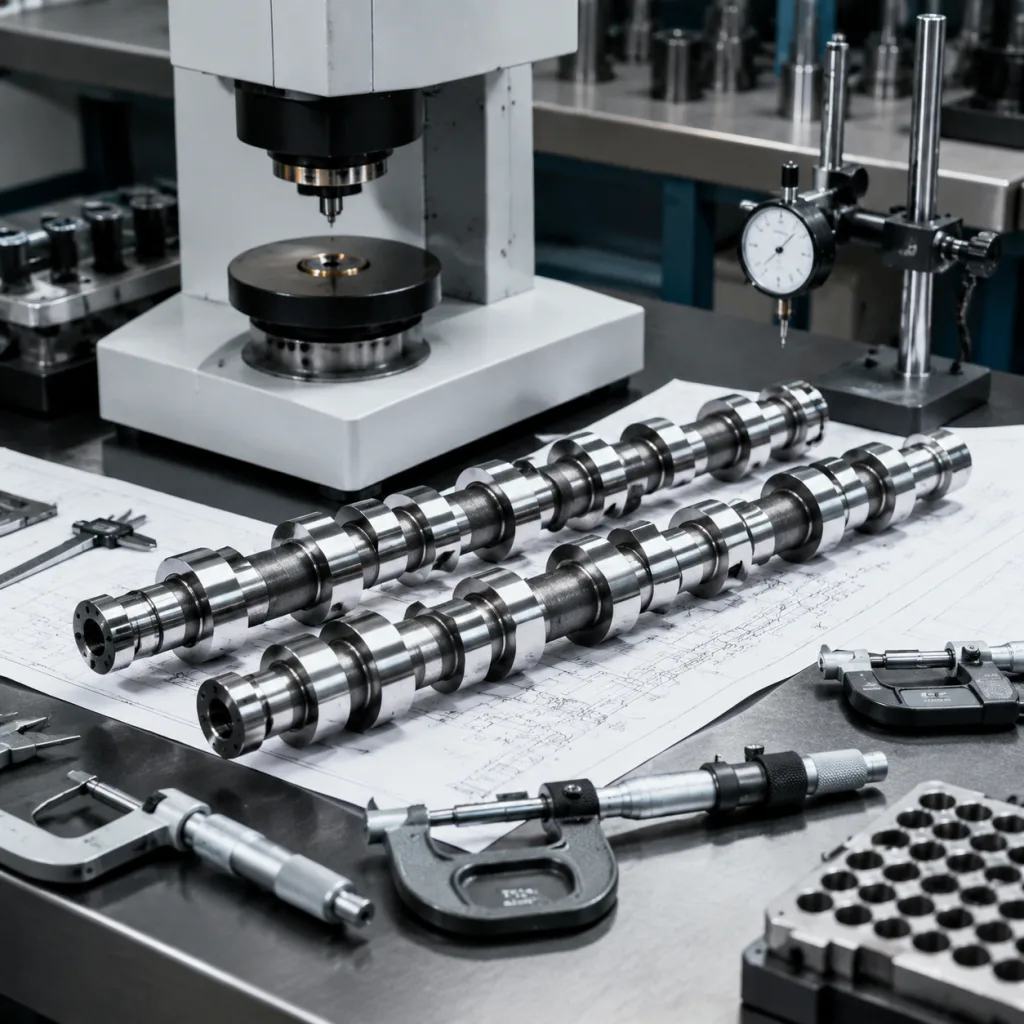
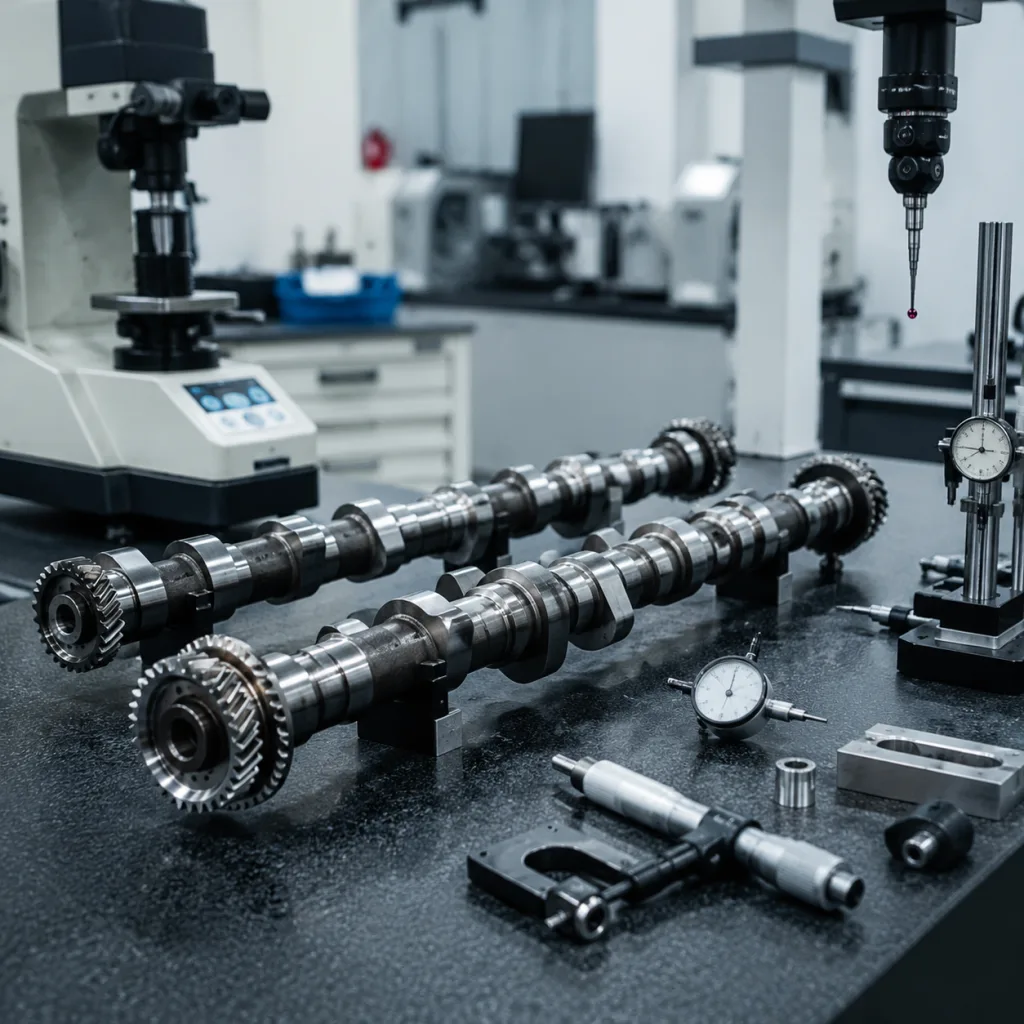
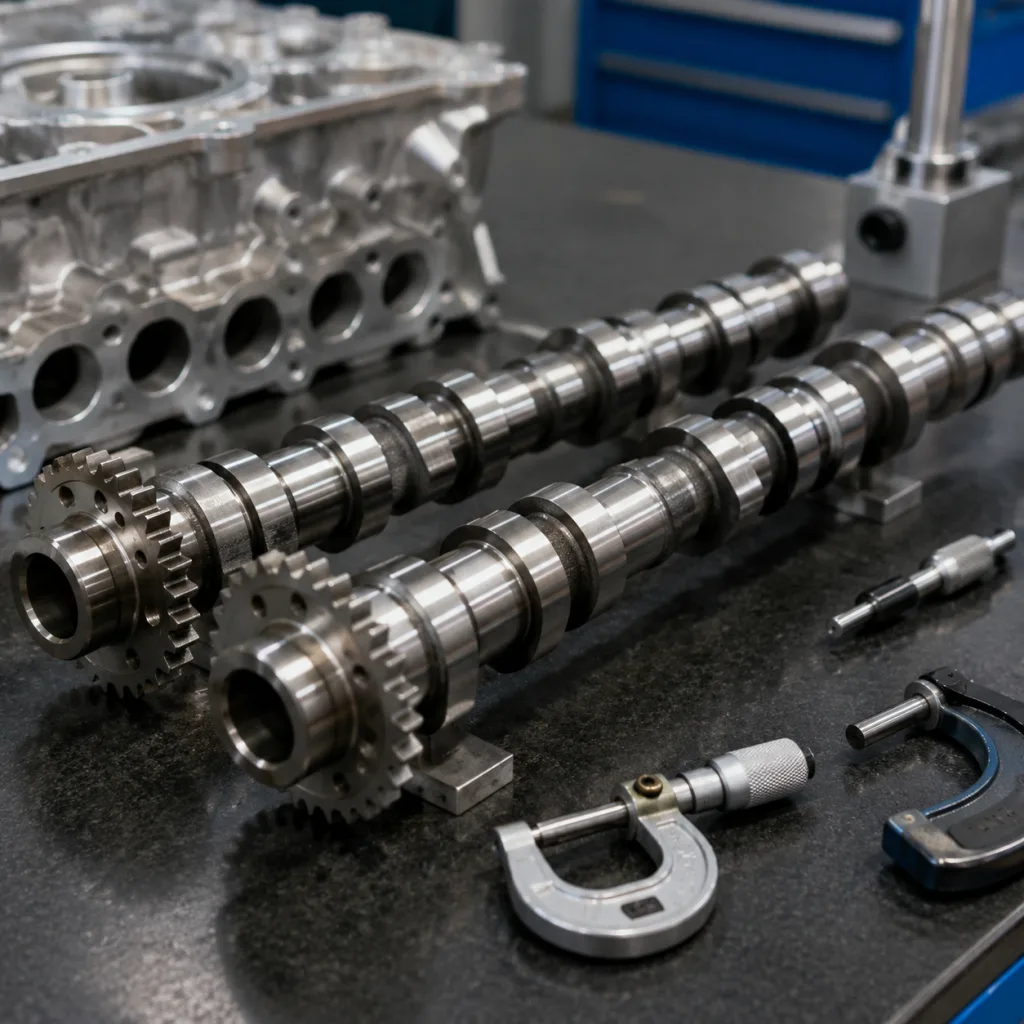
Measurement equipment should match the feature. Micrometers suit journal diameter. Profile equipment or approved templates suit lobe geometry. Dial indicators suit runout. Roughness testers confirm Ra. Hardness testers verify treated surfaces. If a supplier cannot show how each critical feature is measured, final inspection becomes a weak promise rather than a control system.

Driventus operates under IATF 16949:2016 and ISO 9001:2015. Our quality system covers incoming material inspection, in-process checks, final inspection, nonconforming product control, and corrective action handling. Buyers can request production control plans, inspection templates, sample approval records, gauge lists, calibration summaries, lot traceability examples, and packaging specifications as part of supplier qualification.

Specification Deep-Dive: Material, Geometry, Hardness and Finish

The right camshaft specification depends on engine architecture and replacement-market positioning. Chilled cast iron, ductile iron, forged steel, and assembled hollow designs may all be valid in different applications. The choice depends on valve-train load, follower type, lubrication conditions, durability target, and price level.

A serious aftermarket camshaft file should define:

  • Material grade and heat-treatment route
  • Casting, forging, or assembled-shaft construction
  • Journal diameter tolerance, roundness, and cylindricity requirement
  • Lobe lift tolerance and angular position tolerance
  • Straightness or total runout limit
  • Surface hardness range for lobes and journals
  • Surface roughness on journals, lobes, and thrust faces
  • Oil-hole position, chamfering, and deburring requirement
  • Sensor trigger, phaser, gear, or sprocket interface dimensions
  • Magnetic particle inspection or crack inspection where specified
  • Preservation oil, VCI packaging, and corrosion-protection duration

Indicative aftermarket control targets may include journal diameter within ±0.01–0.02 mm, lobe lift within ±0.03–0.05 mm, base-circle runout within 0.02–0.05 mm, total shaft runout within 0.03–0.08 mm, angular position controlled within ±0.5°–1.0°, and machined journal roughness around Ra 0.2–0.8 μm depending on the bearing system. These are planning references only. Final values should follow the approved drawing, OE-style sample, or buyer specification.

Hardness should be numerical, not descriptive. State the HRC or HV range, case depth where induction hardening or nitriding is used, and any minimum hardness requirement for journals or thrust faces. A practical sample approval package may include three hardness points per camshaft, surface roughness readings, runout data, lobe lift data, and photos of the trigger and oil-hole layout.

Validation should match risk. For an existing reference, many importers approve one to three samples with a dimensional report, hardness report, visual inspection, and packaging check. For new development or private-label camshaft Jaguar wholesale supply, buyers may require sample fitting, bench rotation check, oil-hole alignment confirmation, timing interface check, endurance or wear testing by agreement, and pre-shipment inspection from the first production lot.

Published management and compliance standards support procurement due diligence. IATF 16949:2016 and ISO 9001:2015 help structure process control and documentation. REACH (EC) No 1907/2006 may be relevant for EU importers assessing restricted substances in preservation oils, coatings, labels, or packaging materials. If a camshaft is supplied within a broader emission-related engine programme, buyers should confirm that the finished engine application is managed against the regulatory obligations of the destination market. Driventus does not claim approval or endorsement by any vehicle manufacturer.

Specification Deep-Dive: Material, Geometry, Hardness and Finish

Commercial Trade-Offs: Trial Order, Repeat Stock or New Development?

For camshaft Jaguar wholesale orders, MOQ and lead time depend on part complexity, tooling status, inspection depth, documentation scope, and packaging specification. The best commercial route depends on what the buyer is trying to prove.

Failure mode What causes it How to prevent it
Wrong bank or positionIntake, exhaust, left-bank, and right-bank data not separatedRequire position confirmation per SKU
Timing mismatchTrigger pattern, dowel, slot, or phaser interface differsCompare the sample or drawing before quotation release
Noise or early wearLobe profile, journal finish, hardness, or runout not controlledAudit grinding, heat treatment, and inspection records
Installation difficultyJournal diameter, thrust face, or oil-hole position variationUse dimensional reporting for first articles
Batch variationMaterial route or heat-treatment process changesRequire heat number traceability and process control plans
Corrosion on arrivalWeak preservation or ocean-freight packagingSpecify anti-rust oil, VCI, sealed bags, and carton strength
Slow claim resolutionNo lot code or inspection record tied to shipmentRequire batch traceability on packing lists and labels

</tr></thead><tbody> </tbody></table>Existing developed references usually move faster than new-tooled items. New development requires sample confirmation, drawing review, tooling or fixture preparation, validation, and agreed acceptance criteria before a stable supply plan is set.

Indicative B2B planning figures:

Buying scenario Best use case Typical planning range
Trial orderMarket test or fitment confirmation50–100 pieces per reference where feasible
Repeat stock orderKnown SKU with stable demand100–300 pieces per reference
Annual programmeDistributor range planningForecast-based releases and mixed SKU consolidation
New developmentBuyer-owned drawing, sample, or private-label launch200–500 pieces per reference, plus sample approval
Documentation-heavy orderPPAP-style file, special inspection, or third-party checksLonger quotation and production timeline

</tr></thead><tbody> </tbody></table>MOQ and price should be negotiated together. A 50-piece trial can help validate a market, but the unit price normally absorbs setup time, inspection preparation, and carton handling. At 100–200 pieces per reference, buyers usually gain better production efficiency and freight planning. At 300–500 pieces per reference, or under a stable annual forecast, suppliers can plan material, grinding capacity, labels, and export packing more efficiently.

Lead time should be split into gates: RFQ review, drawing or sample comparison, sample preparation, buyer feedback, production, inspection, packing, and shipment. Delays usually come from unclear fitment data, late artwork approval, unconfirmed hardness requirements, barcode changes, or adding PPAP-style documentation after quotation.

Packaging is not cosmetic. It protects precision surfaces and keeps the distributor’s warehouse process clean. A common export specification includes anti-rust oil or VCI protection, sleeve or foam separation, sealed inner bag, single-piece carton, reinforced master carton, desiccant for humid routes, and labels on at least two carton sides. Heavy camshafts should not move inside the carton.

Audit File and Custom Programme Roadmap

A supplier file should help procurement teams judge technical risk before they commit to an annual plan. For camshafts, useful documents include business licence, IATF 16949:2016 certificate, ISO 9001:2015 certificate, process flow chart, control plan, sample inspection report, material certificate format, packaging specification, gauge calibration summary, and traceability procedure.

For buyer-owned drawings or private-label programmes, Driventus can support custom manufacturing with controlled documentation and confidentiality handling. Development input may include 2D drawings, 3D data, physical samples, hardness targets, mating component details, target application notes, and annual forecast. If a customer requires a production part approval process, the documentation scope should be agreed at quotation stage. Waiting until after sampling often creates cost, timing, and acceptance disputes.

A practical roadmap is:

1. Submit complete RFQ data, target volume, and approval method. 2. Confirm quotation, MOQ, tooling or fixture needs, sample cost, and lead time. 3. Review drawing, sample, or cross-reference comparison. 4. Produce samples and issue dimensional, hardness, and visual reports. 5. Approve the master sample, packaging, label, and inspection format. 6. Release pilot lot or mass production. 7. Archive lot records for repeat orders and claim handling.

Important commercial checks include:

  • Confirm Incoterms, currency, payment terms, and quotation validity early
  • Define MOQ, price breakpoints, tooling charges, and sample charges
  • Define AQL level or inspection sampling expectations
  • Agree barcode, carton label, inner label, and pallet label formats
  • Confirm spare stock policy for warranty replacements
  • Set response times for 8D reports or corrective action requests
  • Define whether mixed-container consolidation is required
  • Clarify responsibility for artwork, private-label files, and market-specific wording
  • Agree how engineering changes, supersessions, and discontinued references are controlled

Corrective-action expectations should be measurable. A buyer may require initial containment within 24–48 hours, an 8D or corrective-action response within 5–10 working days, and replacement or credit handling tied to confirmed failure evidence, batch code, and installation information. Warranty discussions are faster when each camshaft, carton, and packing list can be traced back to a production lot and inspection record.

Driventus is an independent aftermarket manufacturer; brand names are referenced for fitment only.

Audit File and Custom Programme Roadmap

RFQ Questions That Separate Comparable Offers

A precise RFQ shortens quotation time and prevents misleading price comparisons. Two suppliers may quote the same reference number while assuming different material routes, packaging levels, inspection depth, documentation scope, or approval methods.

Before you request a quote, answer these questions:

  • Which engine family, displacement, model years, and timing-drive type does each SKU cover?
  • Is the camshaft intake, exhaust, left-bank, or right-bank?
  • Which OE-style, aftermarket, or internal cross-reference numbers are being used?
  • Is approval based on a drawing, physical sample, catalogue match, or engine builder feedback?
  • Is the required material fixed, or is an equivalent material acceptable?
  • Are hardness, case depth, surface finish, journal diameter, lobe lift, and runout targets defined?
  • What annual demand, first order quantity, target MOQ, and reorder schedule should the supplier plan around?
  • Does the target price assume neutral packaging, buyer labels, private-label cartons, or retail-ready packaging?
  • Are barcode rules, carton strength, pallet pattern, and label placement already fixed?
  • Which inspection report format, AQL level, and shipment documents are required?
  • Does the shipment need consolidation with other engine components?

A strong RFQ also states what is not yet known. If the buyer lacks a drawing, say whether a physical sample can be provided. If the buyer has a target price, state whether it includes special corrosion protection, third-party inspection, PPAP-style documentation, or custom artwork. This avoids comparing a basic carton offer with a fully documented export programme.

For buyers consolidating engine components, camshafts can be sourced together with pistons, crankshafts, gaskets, timing components, and water pumps. This approach can simplify supplier management, improve container utilisation, and coordinate replenishment for slow-moving Jaguar-fitment references. It also helps distributors build a controlled aftermarket engine range from one manufacturing group rather than multiple trading intermediaries.

Frequently asked questions

Send the engine family, displacement, model years, intake or exhaust position, left-bank or right-bank position where relevant, annual volume, first order quantity, target MOQ, packaging requirement, destination market, and any sample, drawing, or OE-style cross-reference available. Photos of the trigger end, journals, oil holes, lobe layout, and phaser or sprocket interface help confirm fitment.

Yes. Driventus can provide neutral packaging, buyer-labelled cartons, or private-label packaging by agreement. Barcode rules, carton strength, pallet pattern, artwork responsibility, corrosion-protection method, carton label format, and market-specific labelling should be confirmed before sample approval and mass production.

No. Driventus does not claim approval or endorsement by any vehicle manufacturer. Driventus is an independent aftermarket manufacturer; brand names are referenced for fitment only.

Share your target SKU list, annual forecast, first order quantity, target MOQ, packaging needs, price-break expectations, and documentation requirements with our export team. To discuss sourcing terms or samples, please visit /contact.html

Request a Quote
Item Existing reference New development or private label
Sample preparation2–4 weeks after data confirmation4–8 weeks depending on tooling
Sample quantity1–5 pieces per SKU3–10 pieces per SKU for approval
MOQUsually 50–200 pieces per referenceUsually 200–500 pieces per reference
Mass production lead-time35–60 days60–90 days after sample approval
Price logicLower unit cost at 200+ pieces or mixed repeat ordersTooling, fixture, testing, and artwork costs added
PackagingNeutral carton or buyer labelCustom box, barcode, and pallet plan
DocumentsInvoice, packing list, inspection summaryPPAP-style file by agreement