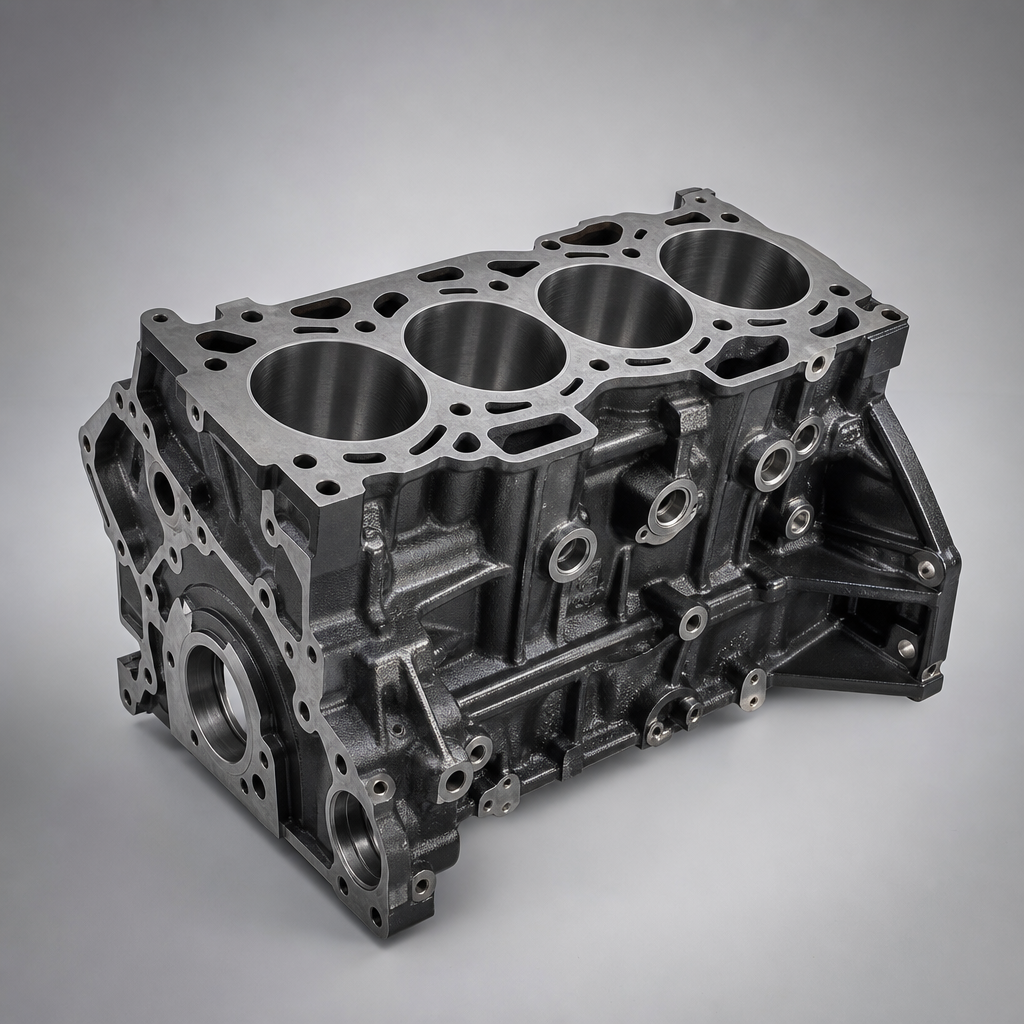
Blow-by is combustion gas that escapes past the piston assembly and enters the crankcase. It is not one fault. It is a symptom with several possible causes, and the right response depends on which failure mode the tests actually show. For procurement teams and workshop buyers, the task is to separate normal ageing from a part-level defect before ordering replacements. Common signs include excess crankcase pressure, oil mist at the breather, dipstick movement, oil consumption, and compression loss under load. The inspection path should start with operating conditions, then move to compression, leak-down, and visual checks of rings, pistons, bores, gaskets, and turbocharger oil control. Driventus is an independent aftermarket manufacturer; brand names are referenced for fitment only. We support diagnostic replacement decisions with production control under IATF 16949:2016 and ISO 9001:2015, and we publish technical details to help buyers compare fitment, quality, MOQ, price bands, and lead times before they source parts from our catalog, quality system, or custom manufacturing options.
When blow-by is normal, and when it is not
A small amount of blow-by is normal on every four-stroke engine because the rings are sealing against a moving cylinder wall. That changes once leakage is high enough to create pressure, oil contamination, or drivability complaints.
Watch for these patterns:
Oil cap pulsing or lifting at idle
Visible vapour from the breather system
Oil in the intake tract or intercooler piping
Hard starting after heat soak
Rising oil consumption with no external leak
Compression spread between cylinders
Positive crankcase pressure above ambient at idle or light load
The key point is diagnostic discipline. The gas you can see is not the root cause. It may come from worn rings, broken ring lands, cylinder wear, a stuck PCV system, an overheated piston, or poor assembly clearance. On a healthy warm engine, crankcase pressure is usually slight vacuum or near-neutral. Sustained positive pressure, repeated oil misting, or measurable compression imbalance means the engine needs proper testing, not guesswork.
Failure modes: what usually causes blow-by
Blow-by causes and fixes should be matched to the failure mode, not the symptom alone. The quickest mistake is to tear down an engine before checking the cheap external faults.
Failure mode
What it looks like
First check
Worn piston rings
Higher leakage under load and at cold start
Compression and leak-down test
Cylinder wear or taper
Rings cannot maintain contact
Bore gauge measurement
Stuck rings from deposits
Intermittent sealing loss
Endoscope, oil condition, service history
Broken ring land or damaged piston
Sudden loss of sealing
Leak-down, borescope, teardown
Failed PCV or breather restriction
Pressure rises without major wear
Vent flow and valve operation
Head gasket failure into crankcase
Cross-system leakage and coolant contamination
Cooling system pressure test
Turbocharger oil seal failure
Oil smoke and intake contamination can be mistaken for blow-by
Compressor outlet, intercooler, shaft play check
</tr></thead><tbody> </tbody></table>A compression test tells you whether cylinders are broadly balanced. A leak-down test tells you where air escapes. Used together, they separate top-end wear, bottom-end wear, ventilation faults, and turbo-side oil control issues. That distinction matters for sourcing because it changes the order set: rings, pistons, gaskets, a breather kit, or a turbo repair package.
Step-by-step test sequence that avoids bad calls
Use one sequence every time. The order matters.
1. Check oil level, oil grade, and service interval. 2. Verify the engine is at operating temperature unless the service manual calls for a cold test. 3. Inspect the PCV valve, breather hoses, separator, and intake plumbing for collapse, sludge, or restricted flow. 4. Read fault codes and freeze-frame data if the vehicle has engine management coverage. 5. Perform a compression test across all cylinders with the battery fully charged and throttle condition set per the test procedure. 6. Perform a leak-down test at top dead center on the compression stroke and listen for air at the intake, exhaust, crankcase, and coolant tank. 7. Measure cylinder bore wear, ovality, and taper. 8. Inspect piston crowns, ring lands, and ring end gaps if the engine is opened.
Record the numbers in one unit system. Compression should be logged in kPa, bar, or psi from the same starter speed and gauge setup. Leak-down should be recorded as a percentage at the same regulated input pressure, typically 100 psi or 6.9 bar, unless the tester spec says otherwise. Bore wear should be checked at multiple depths and clock positions, then compared with the OE maximum taper and out-of-round values.
If the cylinder wall is within tolerance but leakage is high, the ring pack is the primary suspect. If the bore is worn beyond spec, new rings alone will not hold seal. If the PCV system is blocked, the mechanical condition may still be acceptable and the fix is ventilation repair rather than a major rebuild.
Spec deep-dive: how to read the measurements
The numbers only help if they are taken under controlled conditions.
Compression variation between cylinders should generally stay within about 10 percent of the highest cylinder on a healthy gasoline engine. Leak-down results over roughly 15 to 20 percent call for closer inspection. Exact limits vary by engine family, so OE service data should govern final acceptance.
Bore wear needs the same discipline. Measure at several depths and at more than one clock position. A cylinder can look usable from the top and still be tapered or oval lower down. That matters because rings seal to the actual bore shape, not to the visible surface.
When compression is poor and leak-down noise is strongest at the crankcase, the ring pack or cylinder wall is usually at fault. When the air is escaping through the intake or exhaust, the issue may be valve sealing rather than true blow-by. When the coolant tank is the listening point, head gasket failure becomes more likely. The test pattern should drive the part choice.
What to replace, and when
The correct fix follows the evidence.
Replace the PCV valve, separator, or hoses when flow is restricted.
Re-ring the engine only when bore condition and piston groove condition remain within service limits.
Hone and fit oversize pistons when wear or scoring is beyond reuse limits.
Replace damaged pistons when ring lands are cracked, collapsed, or heat-damaged.
Replace head gaskets, valve stem seals, or turbo oil seals when the leak path is elsewhere but crankcase pressure is part of the complaint.
Clean or replace intake charge piping and intercooler components when oil contamination would otherwise carry the symptom forward after repair.
For purchasing, the replacement package has to match measured condition. A ring set is only economical when the cylinder finish can support it. A piston set is only defensible when pin diameter, compression height, crown design, and ring pack depth match the application. For a gasket job, thickness and coolant or oil passage alignment matter more than the listing title.
For standard catalogue parts, MOQ is typically one engine set or one box carton for repeat buyers, with price usually driven by volume tier and material grade. Small urgent orders normally carry a higher unit price because packing and handling are spread over fewer pieces. Lead time for stocked items is commonly 3 to 7 working days for dispatch, while made-to-order parts usually need 15 to 30 working days depending on machining, heat treatment, and inspection. Confirm those points before release, not after the vehicle is already down.
When ordering, verify dimensional match, surface finish, material, and any OE 06A-type cross-reference only if the vehicle application already uses that identifier. For buyers comparing part supply, our catalog and quality system pages are the fastest place to confirm scope and documentation.
Procurement checks before you release the order
Diagnostic replacement work fails when the part is close but not correct. Before approval, check:
Bore size, compression height, pin diameter, and ring pack height
Piston-to-bore clearance, ring end gap, and groove side clearance where applicable
Gasket thickness, bead pattern, and coolant or oil passage alignment
Surface flatness and finish where sealing is critical
Material grade and heat treatment records where applicable
Packaging traceability and lot identification
Test method for dimensional verification and functional leak testing
MOQ, carton quantity, and whether mixed part numbers are allowed
Unit price at the intended buy quantity and any surcharge for urgent production
Lead time by stock, scheduled production, or custom tooling status
Driventus is built for B2B sourcing, so the issue is not marketing language. It is whether the part can be verified against the application, the drawing, and the test method. For non-standard projects, custom manufacturing is available when the required geometry or material spec is outside standard catalogue stock.
A practical purchasing rule is to ask for three data points before release: a measured sample or OE reference, a tolerance statement, and the shipment condition. If the supplier cannot state the acceptable bore, pin, or gasket tolerance, the order is not ready. For recurring fleet work, agree on an annual usage forecast, then negotiate MOQ, buffer stock, and call-off terms so the repair team does not stall on a one-off shortage.
Scenario: replace, rebuild, or walk away
The decision is usually simpler than it looks once the measurements are in hand.
Replacement is the better call when wear is localised, the engine has a known overheating history, or downtime cost is higher than remanufacture labour. It is also the better call when the diagnostic evidence points to a single failed component, such as a cracked piston, distorted ring pack, or severely worn cylinder.
Rebuilds make sense when the block remains within machining limits and the parts set can be matched with verified tolerances. If the engine has repeated crankcase pressure issues after prior service, inspect the original machining quality, ring end-gap setup, and ventilation routing before fitting another parts set.
In procurement terms, the decision usually comes down to four numbers: measured wear, repair labour hours, vehicle downtime cost, and part availability. If machining pushes the total downtime beyond the value of the vehicle or machine, replacement parts are the better spend. If the core is still inside tolerance and the supplier can guarantee fit, finish, and traceability, rebuild remains the lower-cost route.
For buyers handling fleet maintenance or workshop supply, the practical rule is simple: replace only after testing, and only with parts that match the measured condition. If you need a verified sourcing path, request a quote and specify the engine code, OE 06A-style reference if relevant, the measured dimensions, target quantity, and required delivery window.
Frequently asked questions
Yes. A small amount of crankcase vapour is normal on a running engine. It becomes a problem when pressure, oil mist, consumption, or compression loss increases beyond expected wear levels. On a healthy engine, the crankcase should not show sustained positive pressure at idle, and the symptom should not worsen rapidly over a short mileage interval.
Yes. A blocked or stuck PCV system can trap crankcase pressure and look like internal ring wear. Always check ventilation before opening the engine. If the valve or separator is restricted, a replacement should be chosen by hose diameter, flow rating, and connector geometry, not just by engine family.
Compression and leak-down together give the clearest picture. Compression shows balance; leak-down shows where air escapes, which helps separate rings, valves, gaskets, and breather faults. A leak-down reading above about 15 to 20 percent is a useful threshold for deeper inspection, but the OE spec should control final acceptance.
For measured replacement parts, technical cross-checks, MOQ confirmation, and sourcing support, contact Driventus through /contact.html.