Bent Valve Valve Seat: Diagnosis and Replacement Checks
A bent valve rarely acts alone. When a valve stem is overloaded, the valve face and valve seat often show matching damage: uneven contact width, leakage, hot spots, or a seat that no longer holds concentric contact. For procurement teams and engine rebuilders, the practical question is not whether the valve was bent, but whether the seat can still be reused or must be replaced with a part that matches the original geometry and material specification. This matters on cylinder heads used in passenger vehicles, light commercial engines, and fleet rebuild programmes where leak-down stability and thermal transfer depend on the seat interface. Driventus is an independent aftermarket manufacturer; brand names are referenced for fitment only. For product scope, see [our catalog](/products.html), review the [quality system](/quality.html), or use [custom manufacturing](/oem-services.html) when a standard seat does not match the target engine family.
What a bent valve does to the seat
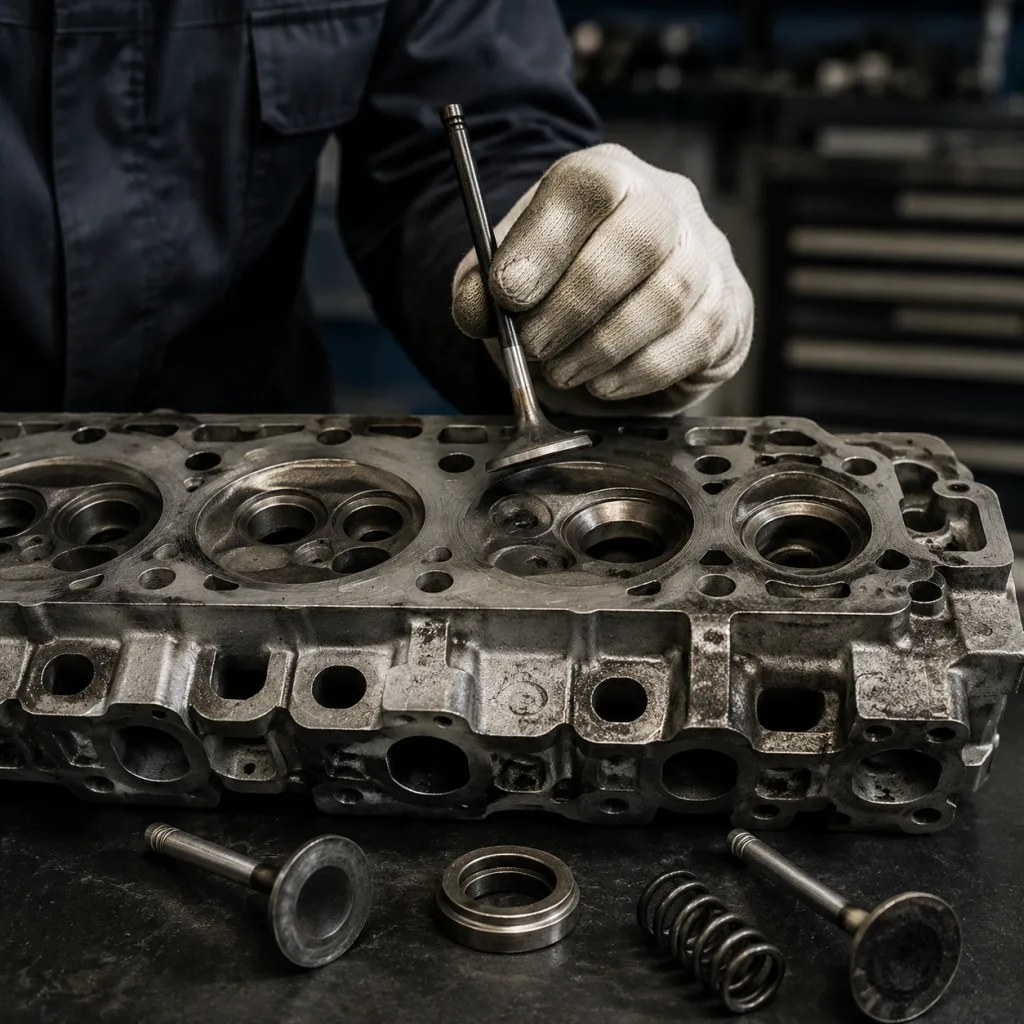
A valve bent by timing failure, piston contact, or foreign-object ingestion does not close on the seat with normal load distribution. The impact is usually localized on one side of the valve face, then transferred into the seat insert or cast-in seat pocket.
Common outcomes:
Off-centre contact band on the seat face
Pitting or micro-chipping on the sealing land
Loss of sealing width due to metal transfer
Increased heat concentration at one quadrant
Valve lash changes after reassembly if the head is not corrected
If the seat contact pattern is narrow and shifted, a simple valve replacement is often not enough. The seat must be measured for runout, contact width, and surface damage before reuse is approved.
Symptoms that point to seat damage
A damaged seat usually shows up during engine testing before complete failure. The most common symptoms are misfire, low compression on one cylinder, rough idle, and repeat leakage after a short run-in period.
Typical symptom-to-cause mapping:
Symptom
Likely condition
Inspection focus
Low compression
Poor sealing at seat
Leak-down test, contact pattern
Popping through intake or exhaust
Valve not fully seated
Seat runout, valve face damage
Hot exhaust valve area
Heat transfer interrupted
Seat width and concentricity
Oil fouling on one cylinder
Incomplete combustion from leakage
Cylinder pressure trace
</tr></thead><tbody> </tbody></table>If the fault follows a timing event, inspect for piston crown marks, bent guides, and keeper movement at the same time. A bent valve valve seat issue is often part of a larger head-damage set, not a single defect.
Inspection sequence before replacement
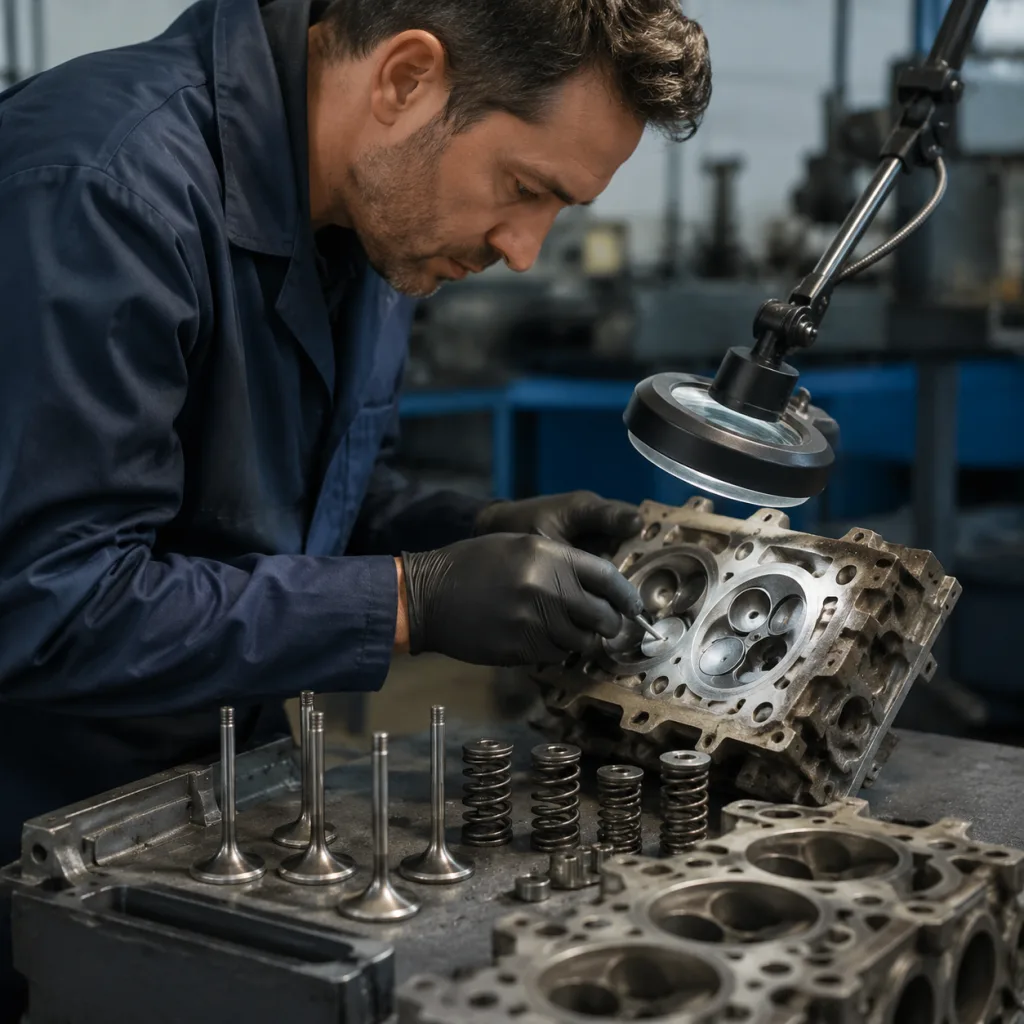
Use a fixed inspection sequence so damaged parts are not missed. For rebuild shops and buyers validating returned cores, the goal is to separate salvageable parts from seats that should be replaced.
1. Clean the head and remove carbon from the valve face area. 2. Check the valve for stem bend, head runout, and face wear. 3. Inspect the seat for chipping, burning, and uneven contact width. 4. Measure seat concentricity with the guide and valve axis. 5. Perform a vacuum test or leak-down test after lapping only if the seat surface is otherwise sound. 6. Verify guide wear before any final seat cut.
Replacement triggers
Replace the seat when one or more of the following are present:
Cracks in the seat ring or pocket
Contact band outside the specified width
Burn marks or erosion across more than one quadrant
Excessive runout after machining
A seat insert that has shifted in the pocket
For procurement teams, the replacement decision should be based on measurable criteria, not visual appearance alone.
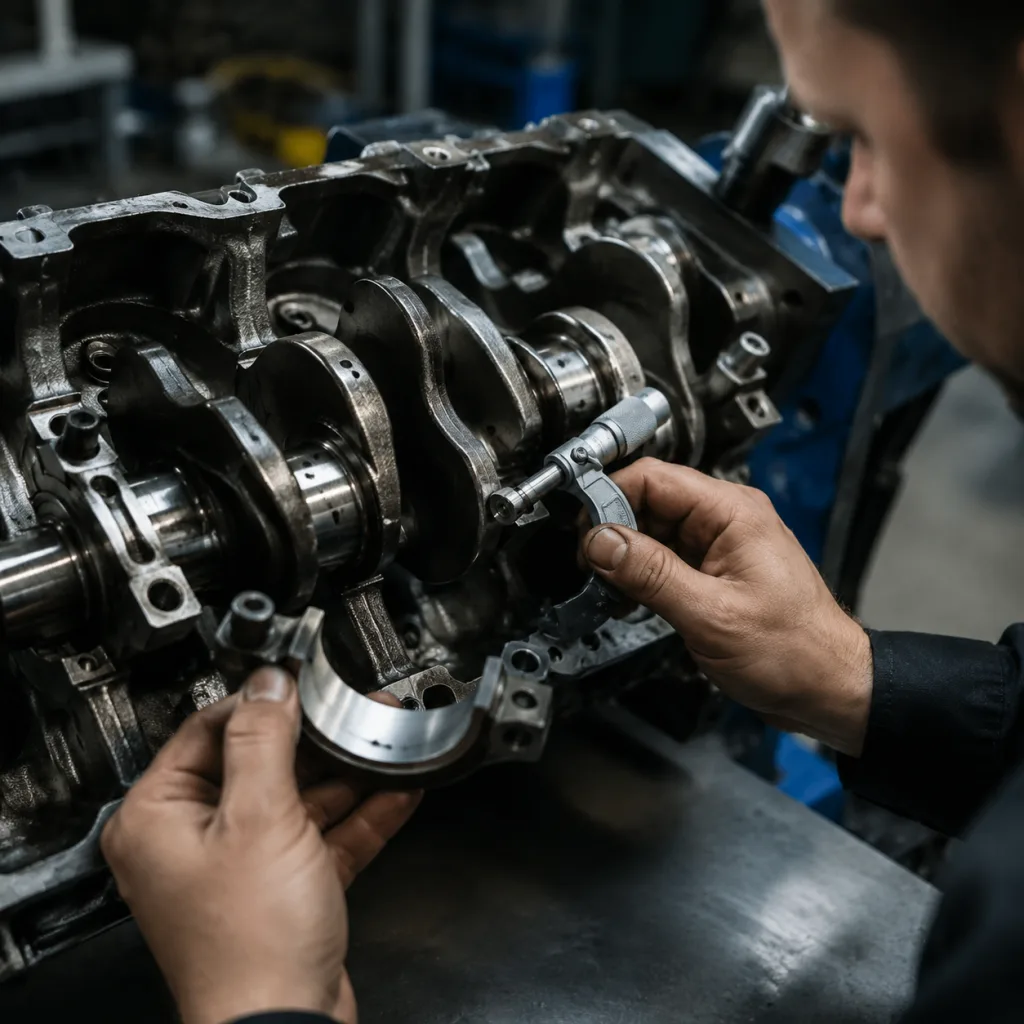
Dimensional checks that matter
Valve seats must match the cylinder head geometry and the valve head angle. On many passenger-car applications, the angle is commonly 30°, 45°, or 60° depending on the intake or exhaust design, but the original engine specification always controls.
Key checks before sourcing:
Outer diameter and interference fit
Inner diameter after machining
Seat angle and throat relationship
Contact width and location on the valve face
Insert height relative to the head deck
Material grade and hardness for temperature duty
Check
Why it matters
Typical risk if wrong
OD fit
Retention in the pocket
Insert movement or drop-out
Seat angle
Sealing contact
Leakage and poor lapping result
Contact width
Heat transfer and wear
Burning or rapid recession
Insert hardness
Wear resistance
Premature indentation
Concentricity
Compression retention
Misfire and hot running
</tr></thead><tbody> </tbody></table>Published references commonly used in procurement and validation include IATF 16949:2016, ISO 9001:2015, REACH (EC) No 1907/2006, and material- or emissions-related requirements where applicable. Driventus supplies seats for aftermarket and OEM-related applications with dimensional control aligned to the target drawing or sample.
When to replace versus machine
Not every damaged seat needs a full insert change. A light refinish may be acceptable when the parent material is stable and the remaining wall thickness is within specification. Replacement is the safer route when the seat has lost structural integrity or the repair would exceed the allowed cut depth.
Use machining when:
The seat is intact and the guide is serviceable
Runout can be corrected within limits
The remaining insert height supports a stable contact band
Use replacement when:
The seat has been overheated or cracked
The cut would remove too much material
The insert cannot hold concentricity after rework
The engine family requires a new hardened ring for durability
For hard-use fleets, turbocharged engines, and commercial-duty cylinder heads, replacement often gives more predictable life than repeated recutting.
Sourcing notes for aftermarket and OEM programs
Buyers should ask for material confirmation, drawing control, and batch traceability before approving a seat supplier. The right vendor should be able to support standard catalog supply and engineered variants.
Driventus can support:
Standard replacement seats for common engine families
OE cross-reference validation using existing sample parts
Custom manufacturing for non-standard diameters, angles, or heights
Packaging and traceability for distributor and rebuild channels
No. Even if the stem looks corrected, the head face or margin may be distorted. Measure runout, face condition, and stem diameter before reuse. If the valve did not seal evenly, replace it and inspect the seat at the same time.
Replace it if there is cracking, burning, a shifted contact band, or excessive runout after machining. A leak-down test that fails after valve work usually points to seat damage or guide wear that must be corrected first.
Yes, where the customer provides the reference sample or drawing. Driventus is an independent aftermarket manufacturer; brand names are referenced for fitment only. We validate dimensions and material targets before production.
If you are checking a damaged head or building a replacement programme, send the drawing, sample, or OE reference and we will review the fitment points. Start here: /contact.html