Mini Cooper Front Brake Pad Replacement: A Buyer’s Decision Guide
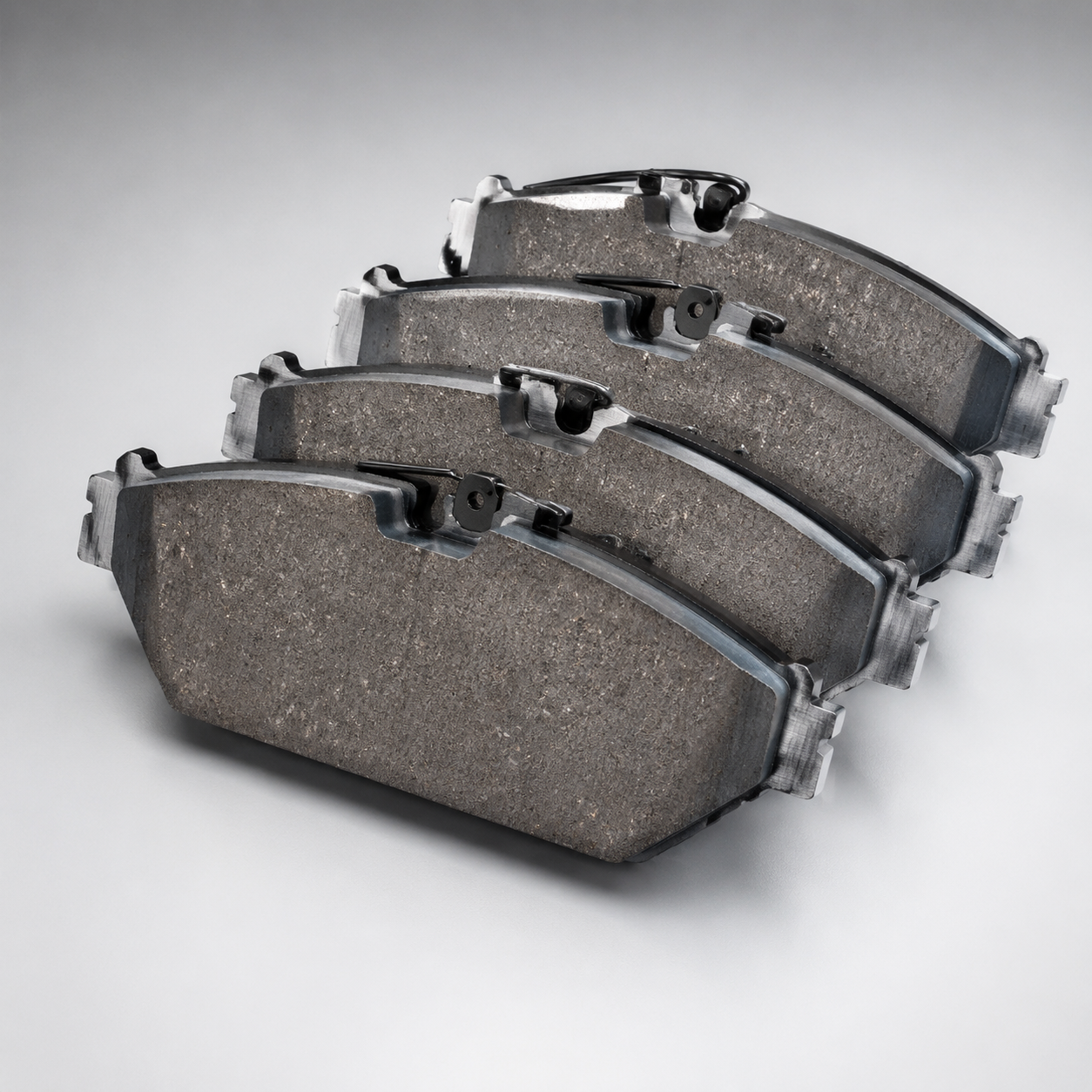
**Mini Cooper front brake pad replacement** is not a commodity decision for B2B buyers. It sits at the intersection of fitment accuracy, braking behaviour, warranty exposure and workshop efficiency. A pad set that looks close enough can still create drag, squeal, warning-light faults, rotor scoring or install delays if the geometry, shim stack, friction material or sensor setup is off.
That is why experienced distributors, repair groups and fleet procurement teams do not approve front pads on visual similarity alone. They want confirmation of backing plate dimensions, caliper compatibility, friction stability, hardware content and traceable production control. They also want to know where the product is tuned: low dust, low noise, longer wear, stronger initial bite, or a balanced aftermarket profile.
This article is structured for that commercial review process. Instead of repeating a generic maintenance guide, it focuses on how to assess a mini cooper front brake pad replacement line before it reaches stock, workshops or fleet service. The core questions are straightforward: will it fit first time, perform consistently, meet market compliance requirements and hold up under repeat ordering?
Decision framework: what to confirm before you stock a front pad set
Start with fit, not marketing claims. Mini front brake systems vary by model year, trim, engine output, wheel size and brake package, so the first task is to confirm that the pad matches the actual application rather than the catalogue description alone.
For a dependable mini cooper front brake pad replacement programme, buyers should verify these points first:
Backing plate outline and thickness match the caliper bracket, carrier and abutment points; plate thickness tolerance is commonly held within ±0.10 mm to ±0.15 mm depending on design
Overall pad length, height and friction thickness stay within drawing tolerance; aftermarket inspection limits are often around ±0.20 mm for length/height and ±0.10 mm to ±0.15 mm for friction block thickness per piece
Parallelism and flatness of the friction face are controlled, typically within 0.15 mm to 0.20 mm, to reduce uneven contact and taper wear
Chamfer and slot design match the approved drawing; these features affect noise, bedding and dust, not just appearance
Wear sensor provision is correct where electronic monitoring is used, including lead length, connector type and clip position
Shim construction is defined clearly, including single-layer or multi-layer design, adhesion method and temperature capability
Hardware inclusion is confirmed at SKU level, since missing clips or springs are a common cause of workshop returns
Coating and edge finish do not interfere with carrier movement; paint build on the ears can create drag on tight designs
Friction density and compressibility stay consistent from lot to lot so pedal feel does not drift across batches
A useful buying rule: if a supplier can only offer a cross-reference, but not the dimensional logic behind it, the part is not ready for approval.
Where an OE number is cited, treat it as a fitment reference only, for example OE 11251… when already specified by the customer or platform data. Cross-reference checks still need drawing review, sample comparison and application validation.
Buyers should also ask what the pad is tuned for. A comfort-oriented NAO or ceramic-type formula may reduce visible dust and squeal risk. A low-metallic option may deliver stronger cold bite, but often with more wheel dust and potentially higher rotor wear. The right choice depends on channel expectations, not on a universal “best” formula.
At incoming inspection, practical controls matter more than vague assurances. A workable sample plan may include 10–20 sets per lot for key dimensions, carrier-fit gauging on the ears, coating checks at abutment points and confirmation that friction thickness variation across the set stays inside the approved tolerance window.
Driventus is an independent aftermarket manufacturer; brand names are referenced for fitment only.
Comparison lens: what OE-equivalence really means in procurement
OE-equivalence is often used loosely. In procurement, it should mean the replacement part meets the required fit, function and repeatability for the intended service application. It does not automatically mean the aftermarket pad uses the exact same friction recipe as the factory-installed part.
The comparison should be made across the whole assembly:
Prevents install issues, drag and uneven rotor contact
Friction material
NAO, low-metallic or ceramic-type formulation by market target
Affects noise, dust, rotor wear, cold bite and pedal feel
Bond integrity
Adhesive process, cure control and shear performance
Reduces risk of friction separation under heat and load
Compressibility
Controlled under specified pressure and temperature
Supports pedal consistency and braking stability
Surface finish
Scorching, grinding, edge profile and flatness
Influences bedding-in, noise behaviour and early wear pattern
Sensor compatibility
Electronic wear lead or provision if required
Avoids warning-light complaints and install delays
Corrosion protection
Backing plate coating quality and coverage
Helps preserve fit and appearance during storage and service
Marking and traceability
Batch code, date code, carton identification
Supports complaint analysis, recall control and warranty management
</tr></thead><tbody> </tbody></table>For validation, many buyers ask for correlation to recognised standards. Depending on market and programme scope, manufacturers may reference ECE R90 for replacement brake linings in applicable regions, along with laboratory or dynamometer testing aligned with internal or customer standards. Production quality management is commonly expected to operate under IATF 16949:2016 and ISO 9001:2015.
When comparing offers, ask for target values rather than adjectives. Typical examples include:
Normal friction coefficient range such as 0.35–0.45 μ for a general aftermarket passenger-car front pad
Hot friction stability with controlled fade through repeated stops, often reviewed across roughly 100°C to 350°C or higher depending on validation scope
Compressibility control under defined load and temperature conditions
Bond shear performance with a documented minimum internal threshold and destructive test frequency per batch
Scorch depth or surface treatment standard where scorching is used to improve initial bedding response
Salt-spray or corrosion resistance expectation for coated backing plates used in export or coastal markets
This is where some low-price offers unravel. Two suppliers may quote the same dimensions, yet one delivers inconsistent pedal feel because raw-material lots, cure cycles or grinder settings are not tightly controlled. Fit can be right while field performance is unstable.
For cleaner comparison, normalize every quotation to the same basis: pad set only or full kit, with or without sensor, R90 included or not, neutral box or private label, tested stock reference or newly developed item. Without that, a cheaper quote may simply be a thinner specification.
Failure modes in the field: why returns happen and how to stop them early
Most claim activity in Mini front pad programmes does not start with catastrophic material failure. It starts with avoidable mismatch, weak pack control or incorrect expectations.
Where claims usually come from
Incorrect pad ear geometry causing tight or loose movement in the carrier
Missing, damaged or incompatible wear sensor arrangement
Excess paint or coating build on backing plate edges
Shim adhesion issues that contribute to squeal or vibration
Friction material selected for a market profile that does not match customer expectations for dust, comfort or bite
Incomplete hardware content at pack level
Catalogue or labelling errors that assign the correct pad to the wrong application
Controls that reduce return rates
Validate every new reference against a master sample and technical drawing
Check carrier fit using gauge fixtures before batch release
Confirm disc sweep pattern during vehicle testing where programme volume justifies it
Record batch traceability down to raw material lot and curing cycle
Review packaging protection to prevent chipped edges and transit damage
Audit carton labels and inner pack content to reduce mixed-stock errors
A few details are worth spelling out because they are common failure points:
Set a go/no-go gauge for pad ear width and abutment contact points so stamping burr or coating build cannot push the part out of fit range
Control coating thickness on functional edges; excessive build as small as 0.05–0.10 mm per side can materially affect carrier movement on tight designs
Define shim peel or adhesion checks after heat exposure, especially for multi-layer noise-control shims
Require 100% visual inspection for cracks, chipped friction edges, misaligned slots and incorrect sensor clips before packing
Use drop-test and carton compression standards for export packaging so inner trays protect pad edges during container transit
Lock catalogue data to a reviewed application file, especially where one Mini platform has multiple front brake packages
Disc condition also affects complaint rates. If the target channel commonly installs new pads on worn rotors, the buyer should ask whether the formula is tolerant of moderate grooving or whether disc replacement is recommended beyond a defined limit. Noise, long pedal travel and poor bedding are often blamed on the pad when the rotor is the real problem.
A useful KPI is the return split by cause: fitment, noise, wear, packaging, labelling and sensor issue. If a meaningful share of returns comes from labelling or packing rather than braking performance, the corrective action belongs in documentation and warehouse control, not friction reformulation.
Spec deep-dive: materials, compliance and the document pack buyers should ask for
For EU, UK and North American channels, brake pad sourcing usually requires a technical file, not just a commercial invoice. Buyers should know exactly what documents are expected before release, before shipment and after delivery if a warranty issue appears.
Typical documentation includes:
Dimensional inspection report
Friction material specification summary
Batch traceability format
Noise and wear test summary, if available
Packing specification and label format
Declaration relating to REACH (EC) No 1907/2006 where applicable to supplied materials
Quality certification copies for IATF 16949:2016 and ISO 9001:2015
Evidence of ECE R90 approval where the destination market requires it for replacement brake linings
At plant level, the critical question is not whether a process exists, but how it is controlled. Buyers should ask for the control logic at each stage:
Backing plate stamping: outline, hole position, thickness, burr control and flatness checks against drawing
Surface preparation before bonding: control of oil, oxidation and contamination to support bond reliability
Adhesive application: defined coating weight or coverage standard, plus batch traceability and pot-life control
Hot press: monitored pressure, dwell time and mould temperature, because these variables affect density and crack risk
Curing: documented oven profile with time and temperature records; under-cure can reduce bond strength and over-cure can affect friction stability
Grinding: final thickness tolerance, parallelism and surface finish control
Scorching or heat treatment: where used, a controlled surface layer can improve initial response after installation
Final pack audit: correct left/right count, sensor inclusion, fitting kit inclusion and carton label verification
A robust quality system should define reaction plans for out-of-spec dimensions, abnormal bond-test results, friction inconsistency and mixed-label risk.
Compliance-sensitive buyers should go beyond certificate copies. Ask for the R90 approval number by pad reference, the approval scope, the plant that produced the approved part and whether the quoted version includes the same hardware and shim configuration as the approved sample. For private-label programmes, confirm whether friction marking, production date code and batch code will appear on both the pad and the outer box.
Change control is another overlooked point. Small changes in raw material, shim design, coating chemistry or packaging can affect fit, noise or shelf presentation. If the customer requires private label, hardware variations or packaging changes, those should move through documented engineering change procedures rather than informal carton substitutions. For programme-specific adjustments, custom manufacturing is usually more reliable than adapting open-market stock after production.
From a planning standpoint, documentation should be tied to shipment timing. A common requirement is pre-shipment inspection data 3–5 working days before container loading, final packing list at shipment release and retained production records for at least the agreed warranty period.
Step-by-step supplier qualification for a Mini pad programme
If the commercial goal is stable repeat supply, supplier qualification should be handled like a staged programme, not a one-time quote comparison.
Start with these screening questions:
Can the supplier provide application-specific drawings or dimensional data?
Is there evidence of lot traceability from raw material to finished carton?
Are friction formulations stable across repeat orders?
Can the supplier support mixed-order export packing for distributor inventories?
Are audit records and process controls available for review?
Can the supplier support custom branding, kit composition or sensor variations?
Do they have a defined fitment-claim and corrective-action process?
Can they distinguish between high-volume catalogue parts and programme-specific Mini applications?
For buyers building a reliable mini cooper front brake pad replacement supply line, responsiveness matters too. A technically capable supplier should answer fitment questions quickly, support sample validation and explain the difference between open-market stock and private-label specification without ambiguity.
Commercial qualification also needs structure because MOQ and lead time can make a technically correct reference commercially impractical:
Open-market stock references: often lower MOQ, for example 50–200 sets per reference depending on warehouse availability and packing format
Factory production references: often require 300–1,000 sets per reference to run economically through pressing, curing and packaging
Private-label packaging: may add carton-printing MOQ, commonly 500–1,000 boxes per design
Custom hardware or sensor variation: usually increases MOQ and extends lead time because incoming components and validation change
Sample orders: may carry a higher unit price because they are broken from standard packing or pulled from validation stock
Lead time should be broken into parts, not quoted as one vague figure. A practical structure may look like 7–15 days for stock items, 30–45 days for repeat production and 45–60+ days for new private-label or custom-spec programmes after artwork and technical approval. If friction approval, R90 scope review or road testing is required, launch takes longer.
A disciplined qualification flow usually follows these stages:
1. RFQ review: application list, drawings, annual forecast, target market and compliance needs 2. Technical confirmation: dimensions, formula family, hardware content, sensor status and labelling format 3. Sample validation: bench measurement, carrier fit, visual inspection and, if needed, vehicle or dyno testing 4. Commercial confirmation: MOQ, price tiers, payment terms, lead time and packaging approval 5. Pilot order: limited first shipment with heightened inspection and complaint tracking 6. Mass-production release: locked specification with change-control rules
Price analysis should also be transparent. Unit cost is shaped by friction formula, steel and shim content, hardware inclusion, sensor type, coating system, testing burden and packaging complexity. Buyers should request a quote matrix by Incoterm, MOQ tier, packaging type and whether fitting hardware is included.
Driventus supplies independent aftermarket brake components alongside wider powertrain and chassis categories through our catalog. For buyers managing multiple vehicle lines, combining pad programmes with broader sourcing can simplify vendor management, shipment planning and documentation control.
Driventus is an independent aftermarket manufacturer; brand names are referenced for fitment only.
Frequently asked questions
The main risk is application mismatch. Pad outline, thickness, wear-sensor type, shim layout and included hardware can vary by brake package, model year and market specification. Buyers should verify dimensions, OE cross-reference logic and sample fit before approving production supply. In practice, small deviations in pad ear geometry, backing plate thickness or coating build can be enough to create drag, noise or installation delay.
Not necessarily. A replacement pad does not always need to duplicate the exact original friction recipe, but it should meet the target market’s requirements for friction stability, noise, dust, wear and pedal feel. Validation should include material control, bond integrity and, where needed, test correlation to recognised brake standards. Buyers typically compare the functional result, such as friction range, fade behaviour and wear pattern, rather than asking for an identical chemical recipe.
At minimum, importers should request a dimensional report, batch traceability format, certification to IATF 16949:2016 and ISO 9001:2015, and applicable material compliance declarations such as REACH (EC) No 1907/2006. Depending on the destination market and programme, they may also require ECE R90 approval evidence, packing specifications and available performance test summaries. For private-label business, they should also request carton artwork approval, label format, batch-marking method and pre-shipment inspection records.
If you are qualifying a brake pad supplier or need OE-equivalent fitment support for private-label programmes, you can [request a quote](/contact.html). We can review drawings, application data, validation points, MOQ and lead-time logic, and export packing requirements for your Mini Cooper front brake pad replacement programme.