Audi Brake Pad Replacement Cost: B2B Sourcing Guide
Audi brake pad replacement cost is often presented as a retail service price. Procurement teams need a broader calculation. For distributors, wholesalers and multi-location repair chains, the useful view separates pad set price, hardware, labour time, warranty exposure, packaging, logistics and validation requirements. Cost also varies by axle, vehicle platform, caliper type and friction formulation. A compact application may use a standard floating caliper, while higher-output models may require larger friction areas, wear sensors, anti-noise shims or low-dust ceramic materials. This guide gives B2B buyers a practical framework for comparing aftermarket brake pad supply and estimating total cost per service event. It is not a vehicle-specific repair manual and does not imply endorsement by any vehicle manufacturer. Driventus is an independent aftermarket manufacturer; brand names are referenced for fitment only.
Cost Components Buyers Should Separate
A useful Audi brake pad replacement cost estimate starts by separating the invoice into controllable and non-controllable elements. Retail repair invoices often combine parts, labour and fees, which makes supplier comparison difficult.
For B2B planning, model the cost by axle and include:
Brake pad set: front or rear axle set, usually four pads per axle.
Hardware: clips, springs, bolts, abutment plates and wear indicators where required.
Labour time: commonly 0.8–1.8 hours per axle, depending on caliper layout, corrosion, electronic parking brake procedures and workshop process.
Consumables: brake cleaner, lubricant, thread-locking compound and disposal fees.
Logistics: carton strength, pallet density, sea or air freight, customs handling and local warehousing.
Warranty reserve: expected claim rate, noise return handling and customer service cost.
For importers and repair-chain buyers, the pad purchase price is only one line in the calculation. A low ex-works price can be offset by noise complaints, missing hardware, weak packaging, poor fitment data or inconsistent batch traceability. The better benchmark is landed cost per completed service event, not unit price alone.
Typical Price Ranges by Channel
Published prices vary by country, labour rate, vehicle specification and service policy. For procurement planning, the table below gives indicative market ranges rather than fixed quotations. Values exclude VAT or sales tax where applicable.
Channel / cost item
Indicative range per axle
Main variables
Aftermarket pad set wholesale
USD 12–45
formulation, hardware, sensor, packaging, order volume
parts choice, labour rate, rotor condition, local taxes
Fleet or repair-chain supply cost
Contract-based
annual volume, fill rate, warranty terms, private label
</tr></thead><tbody> </tbody></table>The commercial value of the keyword reflects strong purchase intent: users are often comparing parts, service pricing or supplier options. For distributors, content and product pages should answer price, fitment and quality questions quickly. Linking coverage through our catalog helps buyers check whether the required pad family, wear sensor and hardware kit can be supplied together.
Why Audi Applications Affect Brake Pad Pricing
Audi applications cover a wide range of brake system layouts, so pricing changes with pad geometry, friction area and supporting hardware. A small rear pad for a compact vehicle does not carry the same material, tooling or validation cost as a large front pad for a performance-oriented platform.
Key cost drivers include:
Axle position: front pads usually cost more because they typically have larger surface area and higher heat load.
Caliper design: fixed multi-piston calipers use different pad shapes and retention hardware than floating calipers.
Wear sensor provision: some applications require an integrated or separate electronic wear indicator.
Friction formulation: semi-metallic, low-metallic NAO and ceramic materials differ in raw material cost, dust level, noise behaviour and rotor interaction.
Noise control features: chamfers, slots, scorching and multi-layer shims add process steps.
Packaging scope: axle set only, axle set with hardware, or private-label retail kit.
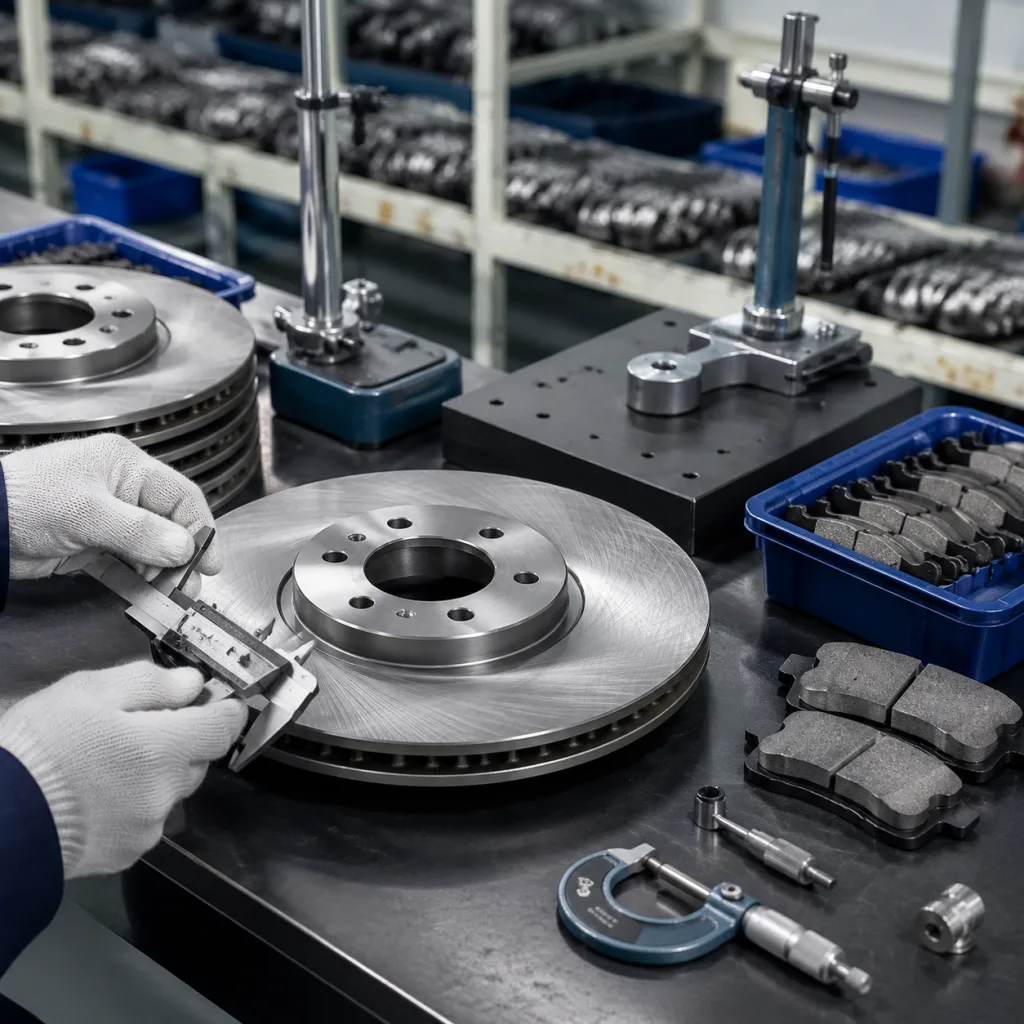
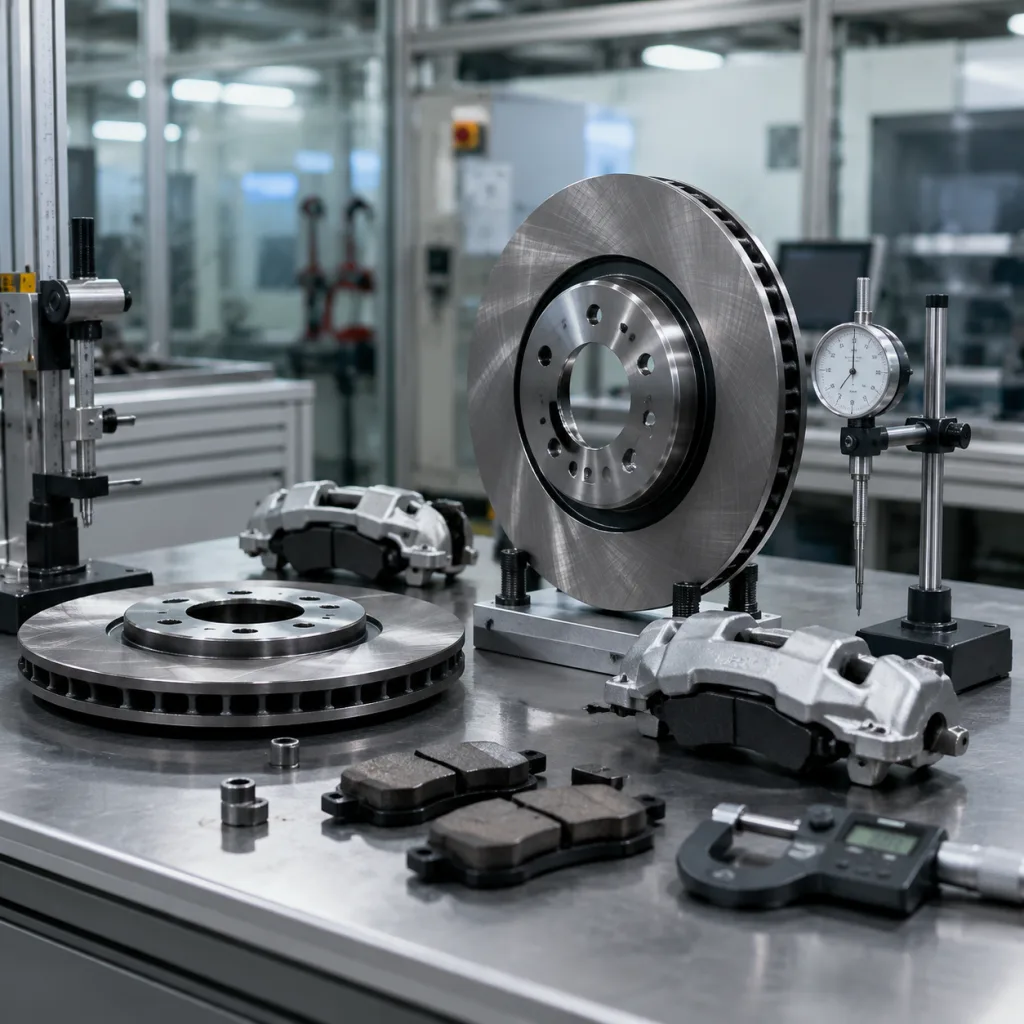
Dimensional matching is the foundation of a reliable replacement programme. Buyers should confirm backing plate thickness, overall length, width, friction thickness, chamfer layout and sensor position against drawings or physical samples. If an OE part-number cross-reference is used, keep it fitment-focused and avoid implying vehicle manufacturer approval unless a documented approval exists.
Validation Standards and Quality Controls
Brake pads are safety-related components, so cost analysis should include validation evidence, not only price. Driventus manages brake pad programmes under IATF 16949:2016 and ISO 9001:2015 aligned procedures, including incoming material inspection, batch traceability, process control and final inspection. Our quality system supports distributor audits, PPAP-style documentation requests and batch records where agreed in the supply contract.
Relevant published standards and regulations may include:
ECE R-90: replacement brake lining assembly performance requirements for markets that recognise this regulation.
SAE J2522: dynamometer-based brake effectiveness and fade test procedure.
SAE J2521: brake noise matrix test procedure used to assess noise propensity.
SAE J2527: brake dynamometer test procedure for assessing wear and effectiveness characteristics.
REACH (EC) No 1907/2006: chemical substance compliance obligations for EU supply chains.
IATF 16949:2016 and ISO 9001:2015: automotive and quality management system frameworks.
Procurement teams should request the test plan that matches the target market. An EU distributor may prioritise ECE R-90 evidence and REACH declarations, while a North American buyer may focus on dynamometer data, noise evaluation and state-level material restrictions. Acceptance criteria should be agreed before tooling release or the first mass order.
Sourcing Levers That Reduce Total Cost
The most stable way to reduce Audi brake pad replacement cost across a repair network is not to force the lowest unit price. It is to reduce variation, fitment errors, stock-outs and avoidable returns.
Useful sourcing levers include:
Consolidated fitment mapping: avoid duplicate SKUs where one pad set legitimately covers several platform variants.
Complete kits: include clips, springs and wear sensors where the service pattern requires them.
Private-label packaging control: specify barcode format, carton strength, corrosion protection and multilingual labels.
Forecast-based production: align quarterly forecasts with manufacturing slots to reduce air freight and stock-outs.
Batch traceability: mark cartons and product labels so claims can be traced to production date, material batch and inspection record.
Application testing: validate high-volume SKUs first, then extend the range based on sell-through data.
Driventus can support catalogue expansion, friction formulation selection and pad kit configuration through custom manufacturing. For larger programmes, buyers can define MOQ, tooling ownership, packaging specification, documentation level and annual price review rules before the first production run.
Procurement Checklist Before Placing Orders
Before awarding supply, buyers should compare suppliers with a documented checklist rather than a price spreadsheet alone.
Recommended checks:
Confirm application list, axle position and pad dimensions against the target vehicle parc.
Verify whether hardware and wear sensors are included, optional or excluded.
Review friction material type, copper content position and market restrictions.
Request ECE R-90, SAE dynamometer or internal validation data relevant to the sales region.
Check IATF 16949:2016 and ISO 9001:2015 certificate status and scope.
Define packaging, palletisation, label language and barcode requirements.
Agree AQL, inspection records, claim handling process and response time.
Compare landed cost per axle set, not only FOB or ex-works price.
This process gives category managers a defensible basis for supplier selection. It also helps repair-chain buyers keep service pricing stable while maintaining predictable fitment and noise performance. Driventus is an independent aftermarket manufacturer; brand names are referenced for fitment only.
Frequently asked questions
A complete service invoice often ranges from about USD 180 to 550 per axle, depending on country, labour rate, pad type, hardware and whether rotors also need replacement. Wholesale pad set cost is much lower, but B2B buyers should calculate landed cost, documentation needs and warranty exposure.
For many European replacement brake lining applications, ECE R-90 is the recognised regulatory framework. Buyers should confirm the exact market requirement and request supporting documentation for the specific pad family being supplied.
Yes. Driventus can discuss private-label packaging, hardware inclusion, fitment mapping and documentation levels for distributors and repair-chain programmes, subject to MOQ, tooling and market compliance requirements.
If you are comparing landed cost, validation data and packaging options for brake pad supply, send your application list and annual volume to [request a quote](/contact.html).