Aftermarket Performance Auto Parts: Buyer Guide for Sourcing
Procurement teams sourcing aftermarket performance auto parts need evidence that goes beyond a catalog match. Fitment is only the starting point; the buying decision should also test dimensional accuracy, material grade, heat treatment, surface finish, inspection discipline, and the supplier’s ability to repeat the same result at production scale. For engine and powertrain components, small deviations in ring land geometry, journal diameter, gasket compression, pump clearance, or actuator calibration can affect durability, installation rejection, and warranty exposure. This guide explains what to verify before issuing a PO, which specifications carry the most risk, and how to compare suppliers using objective evidence rather than sales claims. Driventus is an independent aftermarket manufacturer; brand names are referenced for fitment only. If you are building a supplier shortlist, start with [our catalog](/products.html), review the [quality system](/quality.html), and compare part families such as [engine components](/products/engine-components.html) before you [request a quote](/contact.html).
What buyers should verify first
For aftermarket performance auto parts, the first screen is fitment accuracy. Confirm the OE cross-reference, application range, engine code, and any running changes by model year, production date, or market. A part that is dimensionally close can still fail in service if the coating, hardness, sealing profile, or clearance strategy is wrong.
Use this order of review:
1. OE reference, engine code, and application compatibility. 2. Critical dimensions with stated tolerances. 3. Material specification and heat treatment route. 4. Surface finish, coating, plating, or sealing requirement. 5. Packaging, traceability, lot control, and labelling.
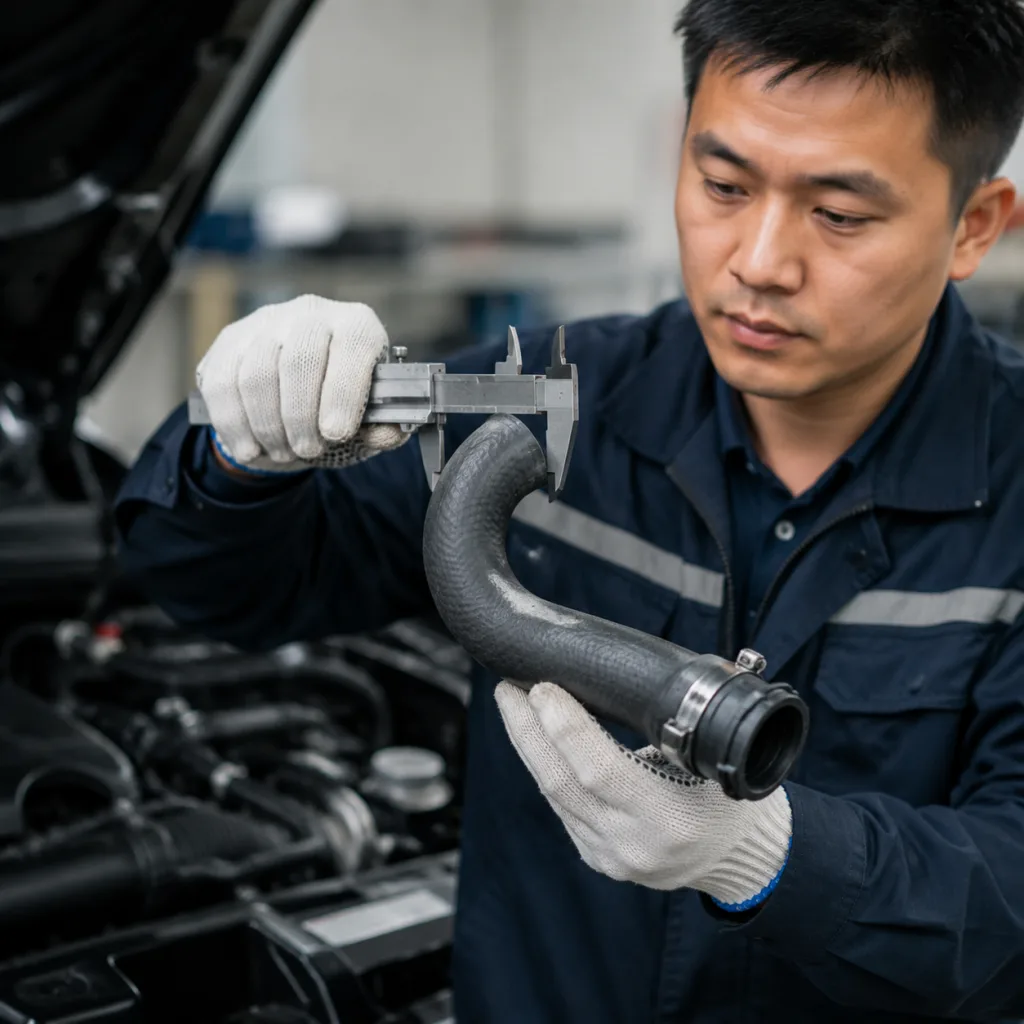
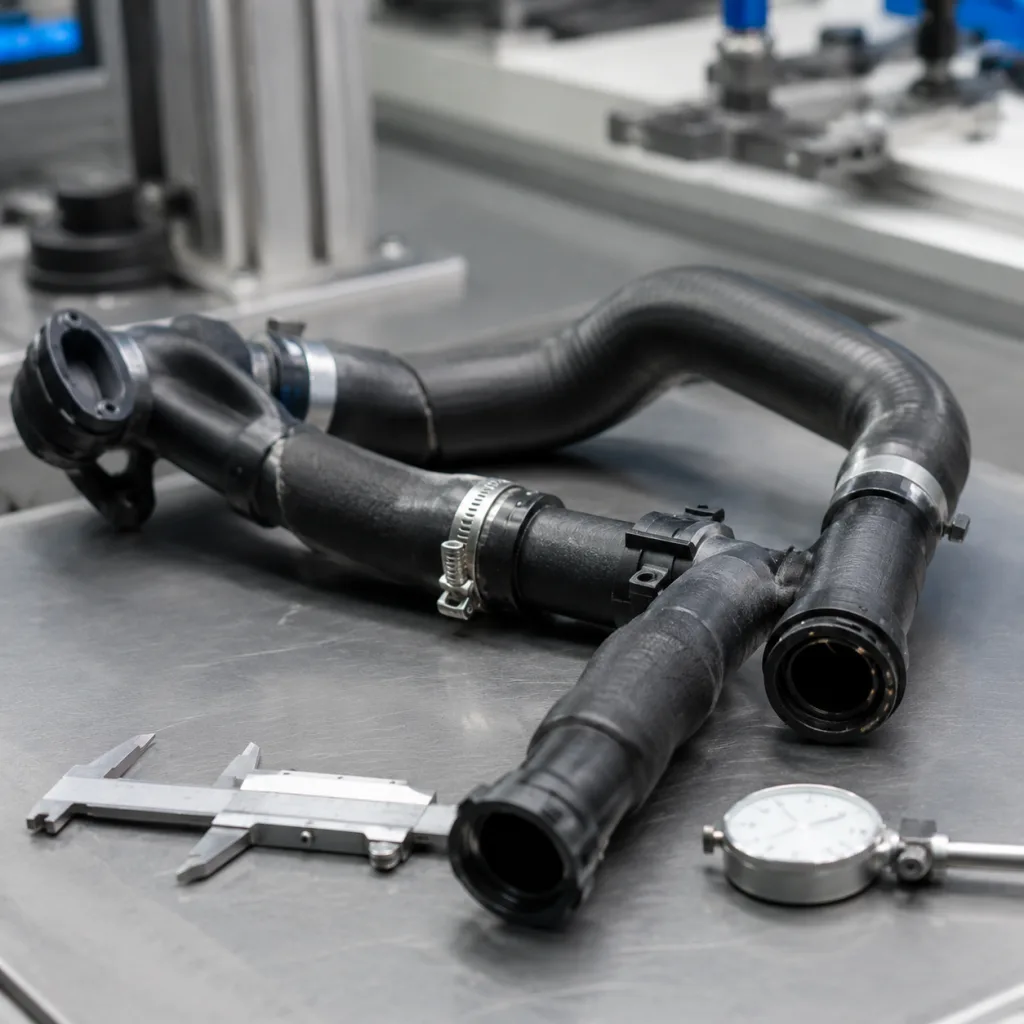
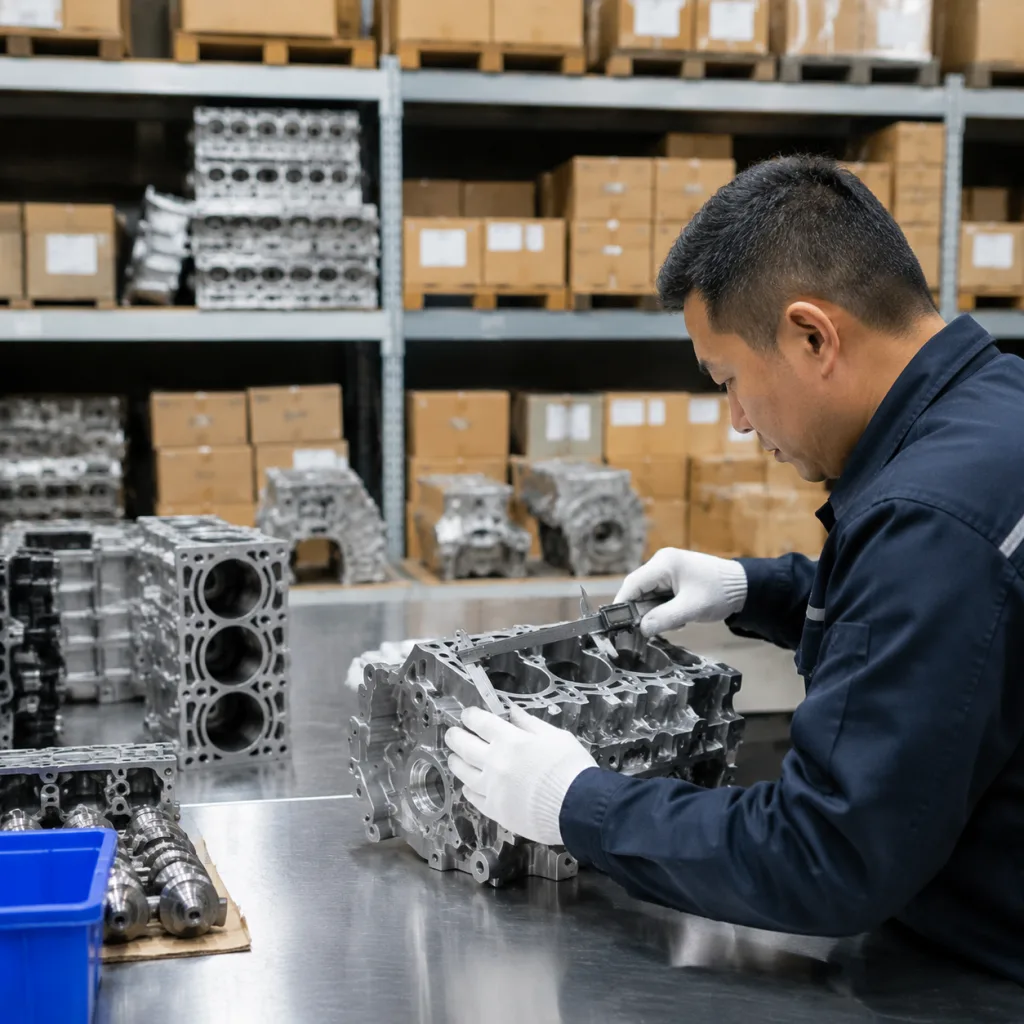
For high-wear engine items, ask for measured samples against the drawing rather than relying on a marketing sheet. This is especially important for pistons, crankshafts, gaskets, water pumps, and turbocharger subassemblies, where fitment and operating loads are closely linked. A capable supplier should explain which dimensions are checked, how often they are checked, what equipment is used, and how out-of-tolerance parts are contained before shipment.
Part families and procurement priorities
The product family changes the buying risk. Engine components typically require tighter dimensional control, stronger validation, and clearer traceability than commodity brackets, covers, or simple housings. Separating part families by technical risk helps procurement teams compare suppliers fairly and avoid treating all aftermarket parts as if they carry the same failure modes.
| Part family | Main buying risk | What to verify |
|---|---|---|
| Pistons | Thermal expansion, skirt wear, ring groove accuracy | Alloy, pin bore, skirt profile, ring land geometry, coating thickness |
| Crankshafts | Fatigue strength, journal geometry, balance | Forging or casting route, fillet radius, hardness, runout, balance data |
| Gaskets | Seal integrity, compression set, media compatibility | Core material, embossing, coating, thickness, sealing bead consistency |
| Water pumps | Bearing life, cavitation resistance, leakage | Impeller design, seal face, bearing spec, housing flatness, leak test method |
| Turbochargers | Rotordynamic stability, heat tolerance, boost control | Shaft balance, housing material, wheel clearance, actuator calibration |
| Spec item | Why it matters | Typical buyer request |
|---|---|---|
| Material grade | Strength, heat resistance, machinability | Alloy designation, steel grade, or material standard |
| Hardness | Wear and fatigue resistance | HRC, HRB, or HB range after heat treatment |
| Dimensional tolerance | Fit, clearance, and interchangeability | Bore, diameter, flatness, concentricity, or runout limits |
| Surface finish | Friction, sealing, oil retention, and wear performance | Ra target on critical surfaces with inspection method |
| Coating / plating | Corrosion, heat, and scuff resistance | Coating type, thickness range, adhesion or salt-spray requirement |
| Comparison factor | Low-risk signal | Higher-risk signal |
|---|---|---|
| Technical response | Direct answers to drawing points, tolerances, and materials | Generic brochure or catalog page only |
| Sampling | Measured sample with inspection report | Visual-only sample or unverified reference part |
| Lead time | Stable production schedule with capacity explanation | Vague delivery promise without production detail |
| Traceability | Lot coding, retained records, and batch linkage | No batch history or unclear labelling |
| Customisation | Drawing-based support with change control | Fixed catalog only and limited engineering response |