aftermarket replacement parts · 2026-06-14

Cheap Car Parts Online: What Buyers Should Verify First

Buying cheap car parts online can support margin targets, but only when the part is fit for purpose, traceable, and repeatable across shipments. For procurement teams, the real question is not whether the quoted unit price is low; it is whether the total landed cost remains controlled after returns, downtime, rework, warranty handling, and customer complaints. That requires verification before volume purchasing: dimensional match, material grade, surface treatment, packaging, batch control, and the supplier’s quality process. It also means distinguishing genuine aftermarket value from parts that are simply under-specified. Driventus is an independent aftermarket manufacturer; brand names are referenced for fitment only. If you source for distributors, repair chains, fleet programs, or OEM-related channels, the cheapest offer is rarely the lowest-risk option. A stronger approach is to compare technical evidence, sample performance, supply stability, and commercial terms side by side before approving a part for repeat orders.

What makes a low-cost part acceptable

Low price is useful only when the part still meets the application requirement. Before price negotiations begin, buyers should define the minimum acceptable specification: base material, machining tolerance, coating or surface treatment, seal material where applicable, and packaging standard.

A part is usually inexpensive for one of three reasons: efficient manufacturing, simplified logistics, or reduced specification. The first two can create real procurement value. The third often shifts cost into inspections, claims, and lost customer confidence.

</tr></thead><tbody> </tbody></table>For B2B sourcing, the useful question is not “Is this the cheapest?” but “Why is this cheaper, and what has not been removed?” A low-cost part can be a sound choice when the supplier can explain the manufacturing route, inspection plan, and packing method clearly.

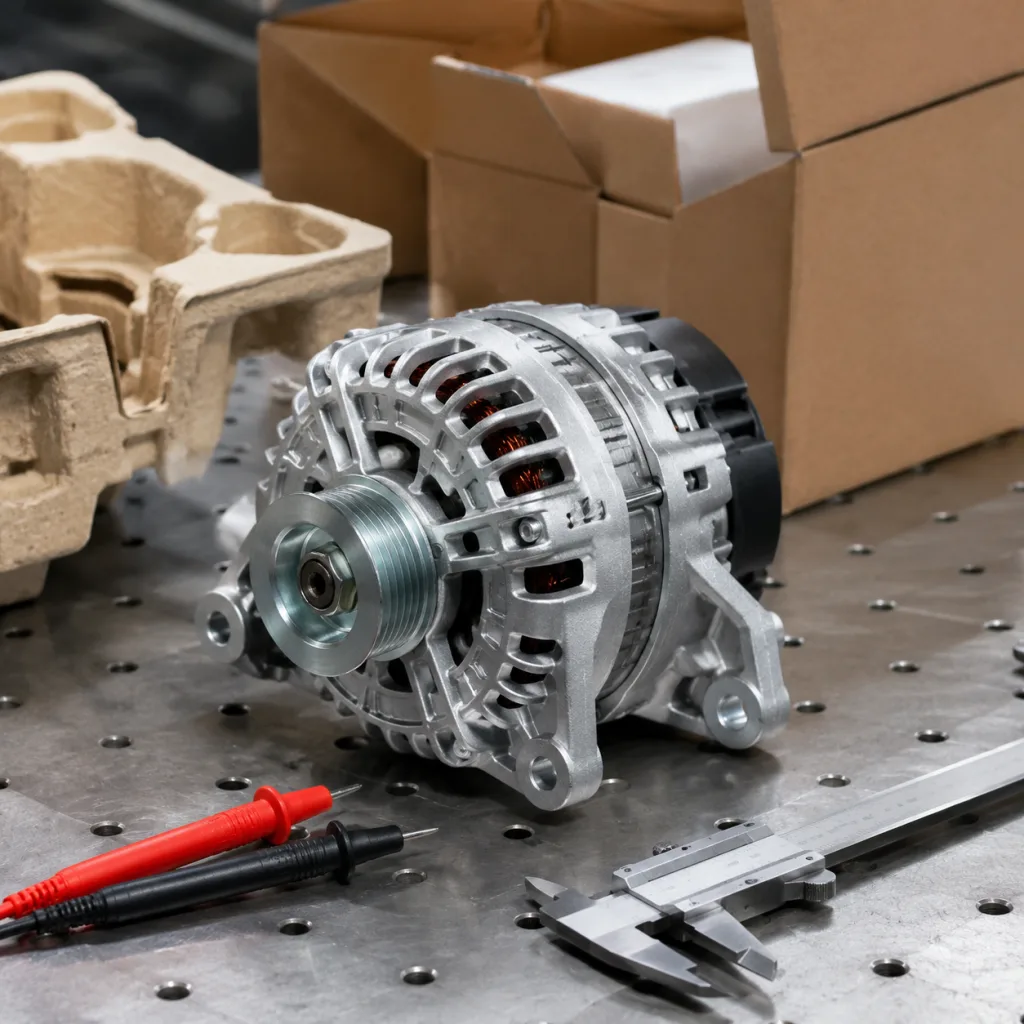
If you are evaluating our catalog, compare parts by functional specification first, then by price. For engine and powertrain items, engine components are a practical starting point when you need product families that can be cross-checked by application rather than by marketing description.

Fitment is more important than the headline price

The lowest quote has little value if the part does not install correctly, causes noise or leakage, or fails early in service. In aftermarket sourcing, fitment confirmation should include OE cross-reference review, overall dimensions, mounting points, interface geometry, and any known supersessions. For assemblies such as pumps, pistons, gaskets, sensors, or turbocharger-related components, a small deviation can create repeat failures even when the part looks correct on arrival.

Use a simple validation stack:

1. Confirm the application by engine code, platform, and build range. 2. Check the OE reference and any known supersessions. 3. Compare the sample against a measured reference part. 4. Verify packaging labels and batch traceability. 5. Run installation and functional checks before release.

If the supplier cannot explain how the part matches the target application, treat the item as unverified rather than approved. That is where low-cost sourcing usually becomes expensive: returns rise, technicians lose time, and inventory that looked attractive in the RFQ becomes difficult to sell with confidence.

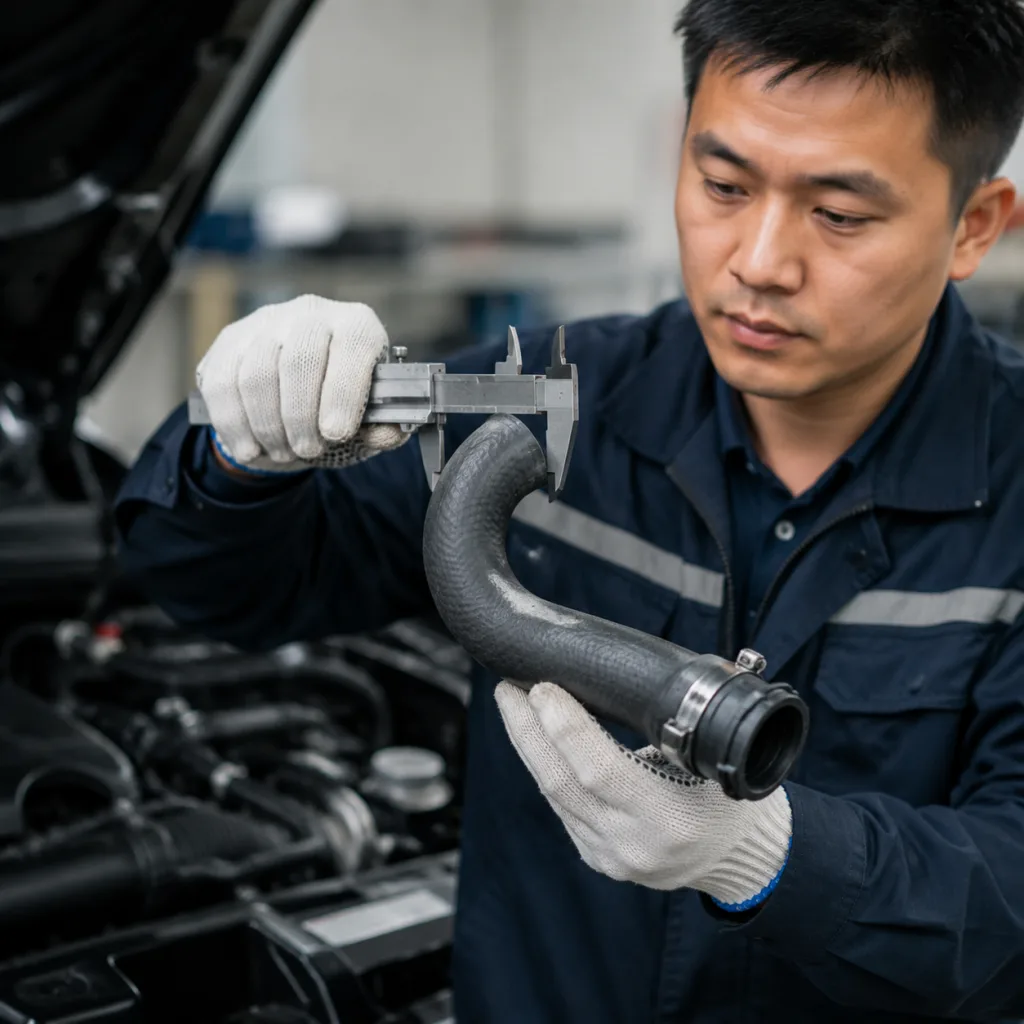
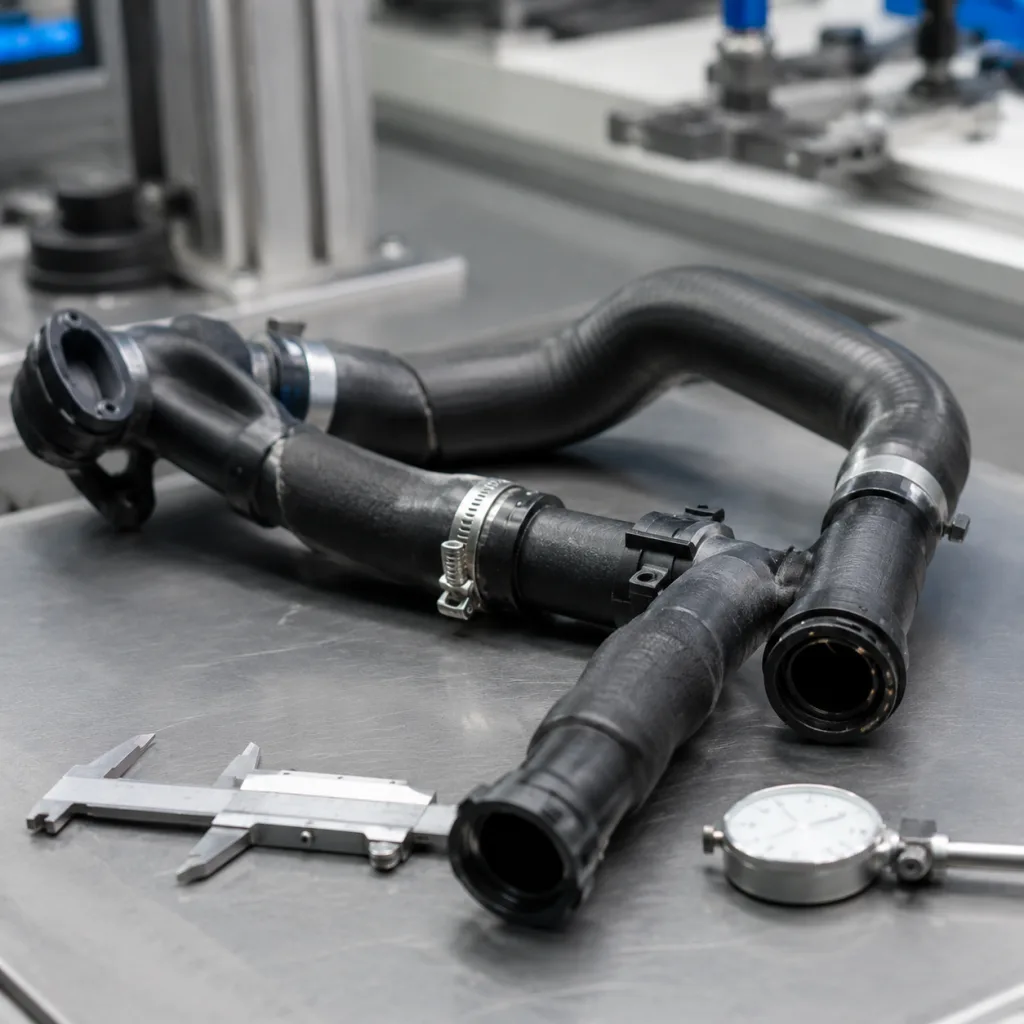
For buyers comparing cheap car parts online, dimensional evidence matters more than broad compatibility claims. A lower unit price is not a saving if it drives returns, labour claims, emergency replacement orders, or stock write-offs.

Specifications that should appear on every quote

A serious quote should let your team compare offers without guessing. At minimum, ask each supplier to include:

  • Part name and application range
  • Material specification and any heat treatment or coating
  • Key dimensions with tolerance where relevant
  • Test method or validation basis
  • Packaging quantity, carton count, and palletisation
  • Lead time for samples and mass production
  • Country of origin and traceability format
  • Compliance statement where applicable, including REACH (EC) No 1907/2006

For regulated or warranty-sensitive markets, the quote should also state which quality framework supports production control. Driventus operates under IATF 16949:2016 and ISO 9001:2015. These certifications do not replace buyer validation, but they do indicate a documented control system for process stability, inspection, nonconformity handling, and corrective action.

Checkpoint Acceptable low-cost signal Risk signal
MaterialDeclared alloy, grade, or elastomer with test supportNo material declaration
DimensionsCritical dimensions match OE drawing or validated sampleOnly a visual match
Surface finishCoating, hardness, or corrosion data availableNo treatment disclosure
DocumentationBatch traceability and inspection recordUnlabelled bulk supply
Commercial termsStable MOQ, lead time, and pack specFrequent spec changes

</tr></thead><tbody> </tbody></table>Clear documentation also protects internal decision-making. Purchasing, engineering, quality, warehouse, and sales teams can work from the same approved data instead of relying on email fragments or supplier promises.

If a supplier cannot provide a clear technical pack, the quote is not comparable. It may be cheaper on paper, but the missing information becomes a hidden cost during receiving, installation, claims review, or customer support.

Price tiers and their real trade-offs

Not all inexpensive offers carry the same risk. During RFQ review, separate low prices by the evidence behind them, not only by the amount printed on the quotation.

Document Why it matters What to look for
Material reportConfirms base compositionGrade, batch, date
Dimensional sheetConfirms fitment-critical sizesTolerance, datum, revision
Test recordSupports service-life claimsMethod, sample size, result
Packing specReduces transit damageUnit pack, outer pack, labels
Compliance noteSupports import reviewREACH, restricted substances

</tr></thead><tbody> </tbody></table>For parts exposed to heat, pressure, friction, fuel, oil, vibration, or repeated load cycles, lifecycle cost matters more than the invoice price. A slightly higher unit cost can still be the better buying decision if it reduces failure rates, inbound inspection time, urgent replacements, or customer credits. In practical terms, this is how buyers move from opportunistic purchasing to repeatable sourcing.

For validation-heavy categories, ask for test references against recognised methods where relevant, such as SAE J2527 for durability exposure or ECE R-83 where emissions-related context applies. Do not treat a published standard as a marketing slogan. Treat it as a prompt for evidence: what was tested, under which method, on what sample size, and with what result.

The most reliable price comparison includes the unit cost, freight and duty assumptions, defect allowance, inspection effort, packaging loss, payment terms, and the cost of a delayed or failed installation. Once those factors are visible, the cheapest quote is often no longer the best commercial offer.

How to reduce risk before you place volume

The best cost control is front-loaded verification. A disciplined purchasing process usually costs less than one failed container, especially when the part will be sold through multiple distributors, repair locations, or fleet maintenance programs.

1. Request two or three samples from the same batch. 2. Measure critical dimensions against your reference part. 3. Check appearance, coating, seals, and assembly quality. 4. Validate fit on the intended engine or subsystem. 5. Freeze packaging, labels, and carton quantities before mass order. 6. Record the approved revision and supplier contact for future POs.

After sample approval, keep the commercial terms simple and repeatable. Stable MOQ, clear lead time, fixed carton quantities, and agreed label formats reduce administrative work, warehouse errors, and receiving delays. If your team sources from multiple markets, use the same approval checklist across suppliers so a low quote is evaluated with the same discipline as a premium offer.

For custom programmes, custom manufacturing can be more economical than adapting a marginally compatible stock part. A controlled drawing, agreed material, and dedicated packing standard often reduce long-term cost better than forcing an off-the-shelf item into an application it was not designed to serve.

When you are ready to compare supply options, quality system documentation should be part of the decision, not an afterthought. If the supplier’s controls are weak, the lowest initial price usually becomes the most expensive option over time.

Frequently asked questions

Check fitment data, material declaration, dimensional evidence, sample results, and batch traceability. If the supplier cannot provide these, the low price may be hiding higher costs in returns, downtime, or claims handling.

No. Compare total landed cost, expected service life, defect risk, inspection effort, and administrative burden. A slightly higher unit price is often cheaper once failures, handling, and customer credits are included.

Ask for a technical sheet, inspection record, packing specification, compliance note, and sample approval reference. For regulated supply, confirm REACH (EC) No 1907/2006 status and the supplier’s quality controls.

If you need a technical comparison or bulk supply review, send your application details, target volumes, and required specifications. Request a quote at /contact.html.

Request a Quote
Tier Typical profile Procurement use Main risk
Bare-minimum importLowest unit price, limited dataEmergency spot buyHigh variation and returns
Documented aftermarketMeasured dimensions, traceability, batch controlRegular wholesale supplyModerate, manageable with QA
Verified productionSample approval, stable process, controlled packagingLong-term programmesHigher entry effort, lower failure cost