camshaft · 2026-06-19

Camshaft for BMW X5 Replacement: Buyer Checklist

A camshaft for BMW X5 replacement program needs more than a visual match to the removed part. For distributors, importers, and repair-chain buyers, the commercial risk sits in fitment accuracy, lobe wear resistance, oil control, and traceable production records. The X5 nameplate spans multiple petrol and diesel engine families across model years, so procurement teams should confirm engine code, production date, valve-train layout, sensor trigger design, and OE part-number cross-reference before issuing a purchase order. Driventus manufactures aftermarket engine components in Taizhou, Zhejiang, under IATF 16949:2016 and ISO 9001:2015 controls for export markets. Driventus is an independent aftermarket manufacturer; brand names are referenced for fitment only. This article breaks the sourcing decision into practical checks, common failure modes, and specification points buyers can use without relying on catalogue shortcuts.

Start with the engine code, not the model name

BMW X5 applications can involve inline-six petrol, V8 petrol, and diesel engine families depending on generation and market. That is why a camshaft specified only by vehicle model is too broad for procurement. The same nameplate can cover different engine codes, timing systems, and valve-train layouts.

The fastest way to narrow the correct part is to build the application from the engine outward. Use the removed unit, the workshop’s vehicle-identification data, and the supplier’s cross-reference list together. OE part numbers may appear in different reference formats, but the number is only useful when it is tied back to the exact engine configuration. A visually similar camshaft can still fail if the trigger wheel, phaser interface, journal count, or lobe arrangement is different.

Recommended fitment data to request:

  • Vehicle generation and production date range
  • Fuel type, displacement, and engine code
  • Camshaft position: intake, exhaust, left bank, or right bank where applicable
  • Timing interface: sprocket, VANOS/phaser connection, sensor trigger form
  • OE cross-reference presented as a traceable reference, not a blanket approval claim
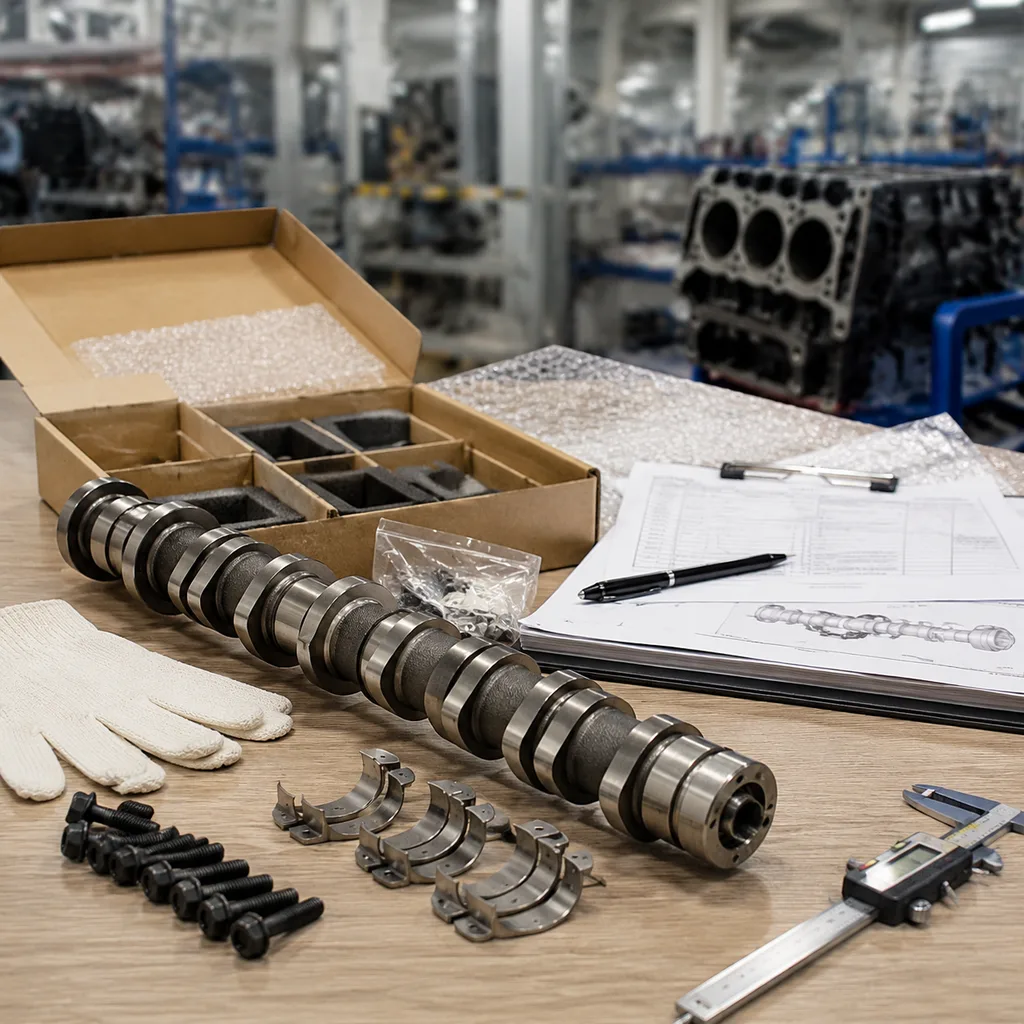
  • Related components that may need replacement at the same time: followers, hydraulic lifters, bearing caps, seals, timing chain kit, and oil control valve

Buyers building a wider engine-parts range can review our catalog and the related engine components page for part-family coverage.

Where replacement programs go wrong

Most camshaft sourcing problems are not manufacturing mysteries. They come from bad application data, incomplete installation plans, or assuming that one part will suit every X5 variant.

Common failure modes include:

  • Model-only cataloging that ignores engine code differences
  • Intake and exhaust positions being swapped during ordering or labeling
  • Bank orientation confusion on V-type engines
  • Sensor trigger mismatch that creates correlation fault codes
  • Worn followers or lifters left in place during installation
  • Oil contamination or sludge damaging the new lobe surface early
  • Packaging damage that chips journals, ends, or trigger features before installation

For a camshaft for BMW X5 replacement program, the part may fit physically and still fail in service if the valve timing window shifts even slightly. That can show up as rough idle, reduced torque, noise, or diagnostic trouble codes. Procurement teams reduce those risks by insisting on engine-code-specific listings, clear position marking, and a basic replacement bundle that includes the parts most likely to interact with the camshaft.

OE-equivalence checks that actually matter

An OE-equivalent camshaft should match the original function, installation geometry, and service durability. Buyers should verify both the drawing characteristics and the process capability behind them.

</tr></thead><tbody> </tbody></table>For BMW X5 replacement applications, lobe profile and phaser interface deserve the most attention. A small angular deviation can create poor idle or fault codes even when the camshaft installs without resistance. For high-volume programs, ask for first-article inspection results before releasing bulk production.

OE-equivalence checks that actually matter

Materials and machining: the spec deep-dive

Camshafts are commonly produced from cast iron or forged steel depending on engine design and duty requirements. The correct material choice depends on the reference design and the valve-train contact system. Buyers should not approve a material change without wear testing and hardness validation.

Typical manufacturing controls for replacement camshafts include:

  • Material verification by chemical composition and supplier batch record
  • Rough machining followed by controlled heat treatment or surface hardening
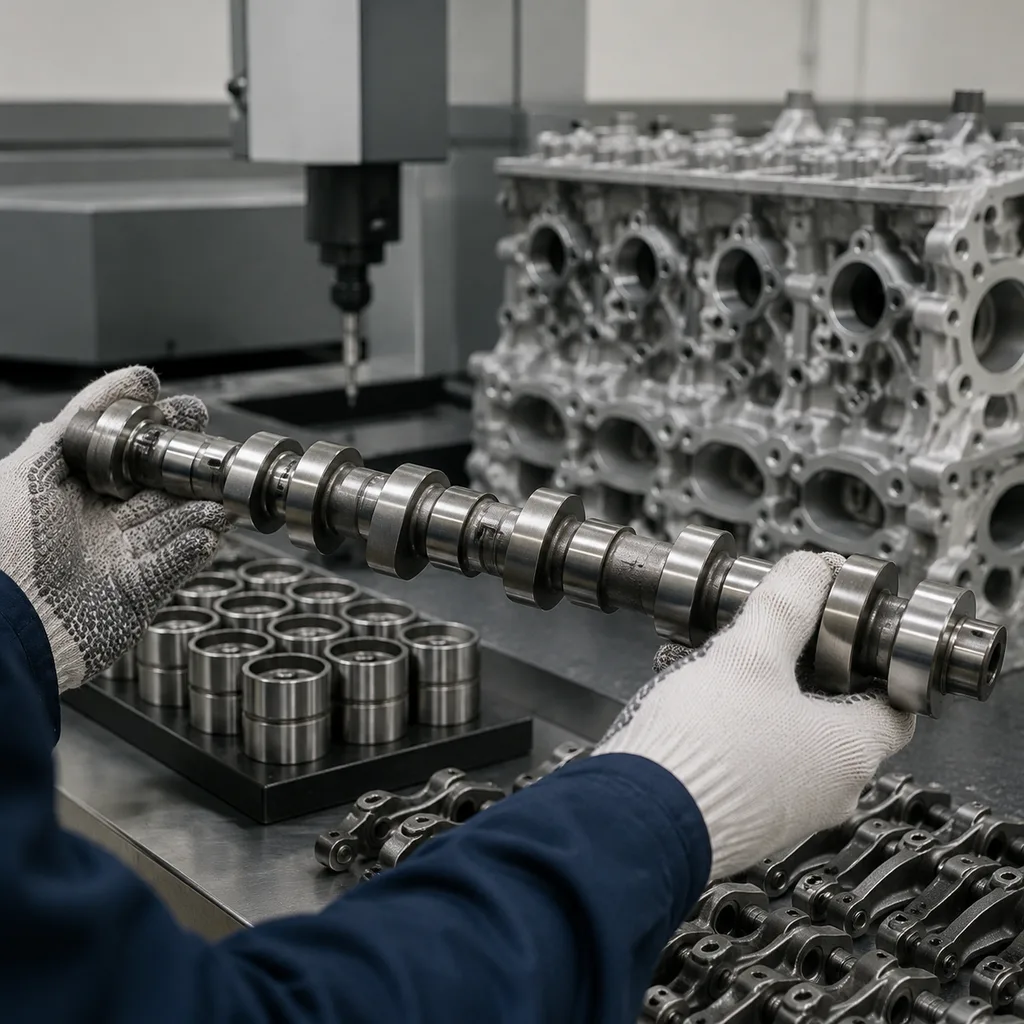
  • CNC grinding of lobes and journals against a controlled master profile
  • Straightness inspection after heat treatment and final grinding
  • Magnetic particle inspection or equivalent crack detection where applicable
  • Deburring and controlled cleaning of oil holes and end features
  • Anti-corrosion oiling and sealed export packaging

Useful acceptance criteria are measurable ones: journal diameter tolerance, lobe lift tolerance, surface roughness, runout, hardness range, and cleanliness requirements. Broad phrases such as “OEM quality” are not enough on their own. Driventus maintains manufacturing controls under IATF 16949:2016 and ISO 9001:2015; buyers can review our quality system for audit and documentation expectations.

Regulatory requirements also matter for import programs. Camshafts are not emissions-control certificates by themselves, but the engine’s final performance can be affected by valve timing accuracy. Where complete engine-repair kits are supplied into regulated markets, procurement teams should consider applicable vehicle-level requirements such as ECE R-83 for emissions type-approval context and REACH (EC) No 1907/2006 for substance compliance in the EU supply chain.

Validation package to request before approval

For a camshaft for BMW X5 replacement order, validation should match the risk. A small service batch may need dimensional and hardness records. A distributor private-label program should ask for broader evidence, including endurance and packaging validation.

Suggested validation package:

  • First-article inspection report with drawing dimensions and actual results
  • Lobe profile measurement report, including lift-curve comparison to the approved sample
  • Journal diameter, roundness, cylindricity, and surface roughness data
  • Hardness test results for lobes and journals
  • Runout and straightness inspection record
  • Material certificate for the production batch
  • Oil-hole cleanliness and burr inspection record
  • Packaging drop or transit simulation for export cartons where agreed
  • Production traceability code linking batch, date, and inspection records

Wear performance depends on the camshaft, lubrication quality, followers or lifters, installation cleanliness, and break-in procedure. A supplier controls the component, but installation-related variables should still be reflected in warranty terms. Repair chains should also standardize associated-part replacement. Installing a new camshaft with worn followers can create early lobe distress and lead to disputes that are difficult to separate from workshop conditions.

Validation package to request before approval

How to write an RFQ that gets a usable quote

A clear request for quotation reduces sampling cycles and prevents avoidable back-and-forth. When contacting a manufacturer, include the part family, annual forecast, target markets, packaging needs, and documentation requirements.

Minimum RFQ information:

  • Application: BMW X5 model years, engine codes, and market region
  • Position: intake or exhaust; bank location where relevant
  • OE cross-reference format: for example, OE 11251… if already used in the buyer’s system
  • Sample basis: original sample, approved aftermarket sample, or technical drawing
  • Volume: trial order, monthly demand, and annual forecast
  • Quality documentation: inspection report, material certificate, process flow, control plan where required
  • Branding: neutral, distributor label, or private-label packaging
  • Compliance: REACH (EC) No 1907/2006 declarations if required for EU import
  • Logistics: carton-size limits, palletization, Incoterms, and target lead time

Driventus supports standard aftermarket supply and custom manufacturing for buyers that need drawing-controlled production, private-label cartons, or market-specific kit configurations. We do not claim approval or endorsement by any vehicle manufacturer. Driventus is an independent aftermarket manufacturer; brand names are referenced for fitment only.

For commercial planning, ask the supplier to separate sample lead time, PPAP-style documentation timing if required, production lead time, and shipping transit. That avoids the common mistake of treating catalogue confirmation as production readiness.

Q&A: the questions buyers ask before ordering

What is the safest way to confirm the correct BMW X5 camshaft? Confirm the engine code, production date, camshaft position, fuel type, sensor trigger design, and OE cross-reference. A model-only description is not enough because BMW X5 applications vary by generation and engine family.

What documents should come with a replacement camshaft batch? Common documents include a first-article inspection report, material certificate, hardness results, lobe and journal measurement data, packaging details, and a batch traceability record. EU buyers may also request REACH (EC) No 1907/2006 substance information.

Can Driventus support private-label programs? Yes. Driventus can support standard aftermarket supply and custom manufacturing for qualified B2B buyers, including packaging, inspection records, and application-specific part development after sample or drawing review.

How do buyers reduce claim disputes? Use engine-code-specific listings, mark intake and exhaust clearly, add installation notes for related parts, keep batch traceability, and agree on a claim-analysis process covering photos, mileage, oil condition, replaced parts, and diagnostic codes.

Frequently asked questions

Confirm the engine code, production date, camshaft position, fuel type, sensor trigger design, and OE cross-reference. A model-only description is not enough because BMW X5 applications vary by generation and engine family.

Common documents include a first-article inspection report, material certificate, hardness results, lobe and journal measurement data, packaging details, and batch traceability record. EU buyers may also request REACH (EC) No 1907/2006 substance information.

Yes. Driventus can support standard aftermarket supply and custom manufacturing for qualified B2B buyers, including packaging, inspection records, and application-specific part development after sample or drawing review.

If you are building a BMW X5 camshaft replacement range, send the engine codes, target OE cross-references, and annual forecast. Driventus can review fitment and documentation requirements when you [request a quote](/contact.html).

Request a Quote
Check area What to verify Why it matters
Overall length and end featuresEnd face, oil gallery, drive slot, thrust controlPrevents timing misalignment and installation interference
Journal diameter and roundnessControlled at each bearing journalSupports oil-film stability and reduces seizure risk
Lobe lift and base circleIntake and exhaust profiles by positionMaintains valve timing, compression, and emissions performance
Surface hardnessHardened lobe and journal surfacesReduces scuffing during start-up and high-load operation
Sensor trigger geometryTooth count, angular position, runoutAvoids cam/crank correlation fault codes
Oil passagesHole position, cleanliness, deburringProtects hydraulic lifters and variable timing components
Packaging protectionRust prevention, impact isolation, ID labelReduces claims from corrosion or transit damage