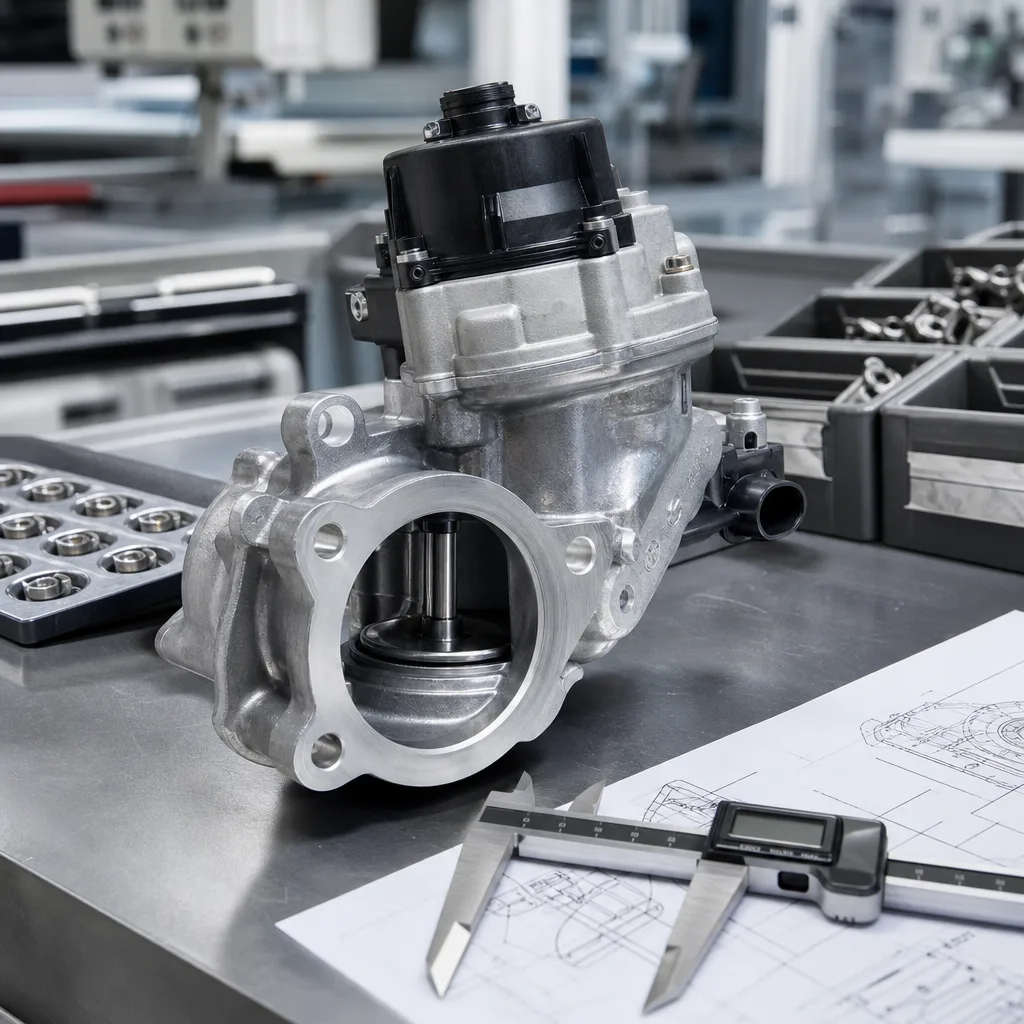
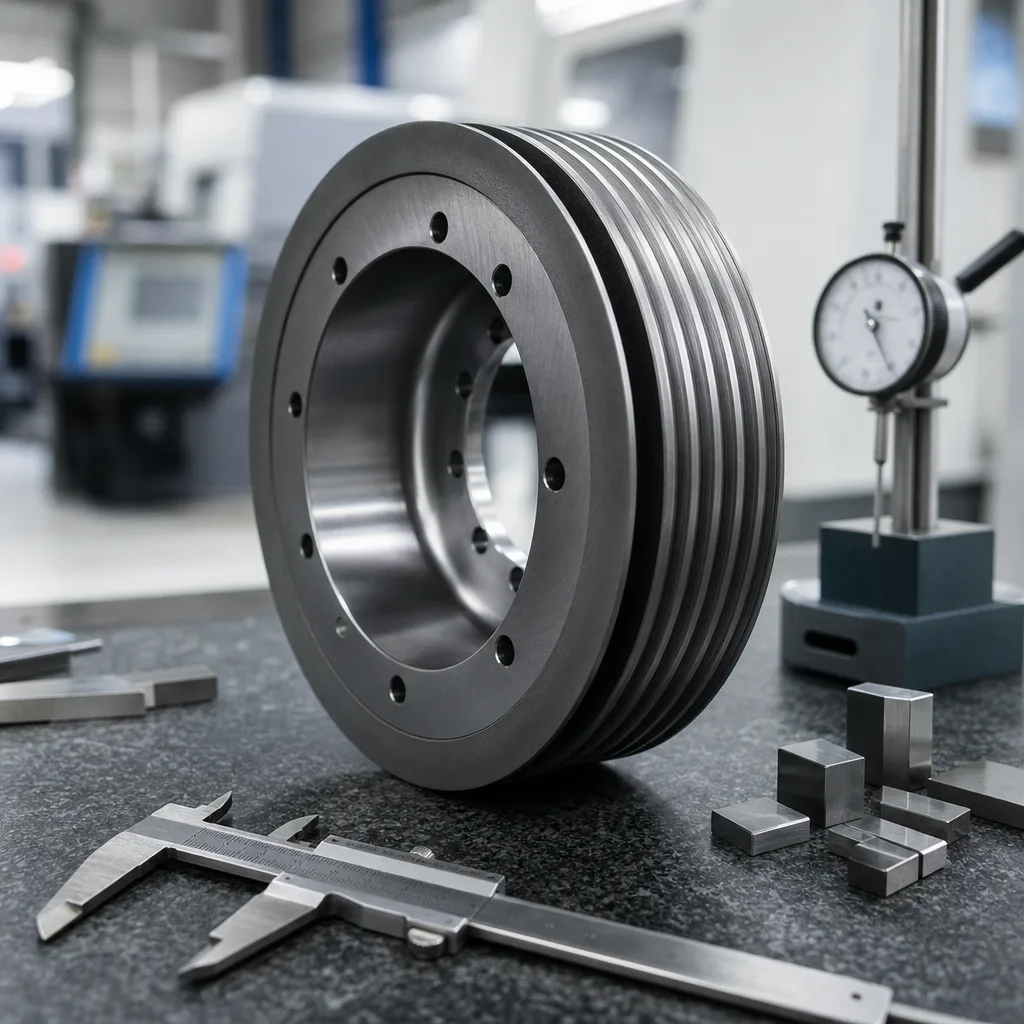
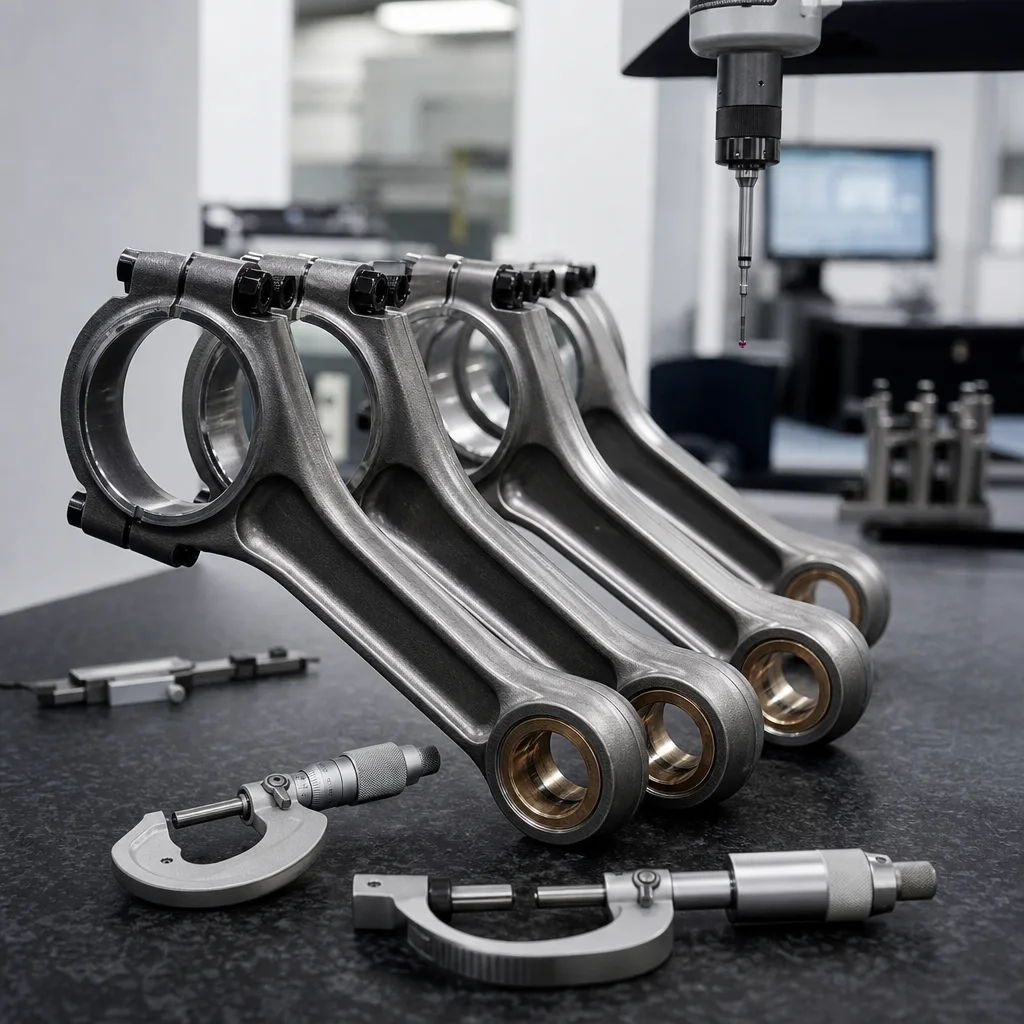
Warped Cylinder Head Cylinder Head: Symptoms and Checks
A warped cylinder head often reveals itself through repeat head-gasket failure, unexplained coolant loss, combustion pressure in the cooling circuit, or compression loss that comes back after an otherwise normal repair. The problem is not tied to one engine family. Aluminium heads, cast-iron heads, and mixed-material assemblies can all move after overheating, incorrect bolt torque or angle, corrosion, detonation, or previous machining error. For rebuild shops, fleet maintenance teams, distributors, and procurement managers, the question is not whether the head looks usable on the bench. It is whether the part still meets the engine maker's limits for deck flatness, minimum head height, crack inspection, coolant-jacket pressure retention, valve-seat geometry, guide clearance, cam-bore alignment, and gasket-face surface finish. This article covers the symptom pattern, inspection sequence, repair-or-replace decision, and documentation buyers should request when a warped cylinder head cylinder head issue affects repeatable supply. Driventus is an independent aftermarket manufacturer; brand names are referenced for fitment only.
Symptoms That Point to Head Warpage
A distorted sealing face does not always fail in the same way. The leak path depends on where the head has lifted, how the gasket has failed, and whether the engine uses an MLS, composite, copper, or elastomer-bead gasket design. Even so, the pattern is often clear when the same symptoms return after gasket replacement or after an overheating event.
Common warning signs include:
- Coolant loss with no external leak found at hoses, radiator, heater core, water pump, expansion tank, or oil cooler
- White exhaust smoke after warm-up, especially after the vehicle has sat overnight and coolant has seeped into one cylinder
- Bubbling in the expansion tank or radiator from combustion gas entering the cooling circuit
- Cooling-system pressure that rises quickly from a cold start, before normal thermal expansion should build pressure
- Misfire on one or more cylinders, often worse at start-up when coolant has entered the chamber
- Oil contamination, including a milky appearance under the cap or on the dipstick
- Oil in the coolant, sludge in the expansion tank, or gasket material displaced near an oil or coolant transfer port
- Uneven compression readings, cylinder-to-cylinder leakage variation, or leak-down loss into the coolant jacket
- Repeated head-gasket failure in the same bank, same cylinder pair, or same fire-ring area
These symptoms can overlap with cracked blocks, failed gaskets, sleeve movement, injector faults, turbocharger coolant leaks, EGR cooler failure, oil-cooler leakage, or combustion leakage through intake and exhaust paths. That is why the repair process needs to move beyond guesswork. A warped cylinder head cylinder head concern should lead to measured inspection, not another symptom-based decision.
If the engine recently overheated, the torque history is unknown, old torque-to-yield bolts were reused, or the same bank fails again after gasket replacement, treat the head as a dimensional and metallurgical risk until inspection proves otherwise. Visual condition helps, but it is not a release criterion. A head may look clean, crack-free, and ready to refit while still sitting outside the sealing tolerance needed for the next service life.
What Causes the Distortion
Head distortion is usually a heat-and-load problem, not a single isolated defect. The cylinder head is clamped to the block, exposed to uneven combustion heat, cooled by internal water jackets, and cycled repeatedly from ambient temperature to operating temperature. When one area expands more than another, or when clamping load is uneven, the deck face can bow, twist, or lift around the combustion sealing area.
Common causes include:
- Overheating from coolant loss, stuck thermostat, failed water pump, restricted radiator flow, blocked passages, air pockets, weak pressure cap, or low fan performance
- Uneven clamping from incorrect torque sequence, incorrect torque angle, reused torque-to-yield bolts, stretched studs, damaged washers, contaminated threads, or lubricant applied where the service procedure requires dry threads
- Local hot spots around exhaust seats, fire rings, pre-combustion chambers, injector bores, glow-plug bores, or thin bridge areas between valves
- Corrosion at the deck face after long storage, poor coolant maintenance, incorrect coolant chemistry, chloride contamination, or galvanic activity in mixed-metal assemblies
- Prior resurfacing that removed too much material and reduced stiffness or changed the relationship between the head, valves, camshaft, compression ratio, and timing components
- Detonation, pre-ignition, lean operation, or abnormal boost control that increases local heat and pressure around the gasket fire ring
- Cracks that open under thermal cycling and create a false flatness reading when the head is cold on the bench
Aluminium heads are more sensitive to thermal movement because aluminium expands roughly twice as much as cast iron over the same temperature rise. They also rely heavily on controlled clamping and gasket design to maintain sealing. Cast-iron heads are generally more dimensionally stable, but severe overheating, poor installation practice, or aggressive machining can still distort them. Mixed-material engines add another variable because the block and head may expand at different rates.
For procurement teams, distortion is not only a repair-shop problem. It can also become a supply-risk problem. Heads with inconsistent casting density, poor heat treatment, uncontrolled machining, weak fixture control, or inadequate final inspection may pass a quick visual review and still fail under real engine load. Buyers should therefore evaluate both the failed part and the manufacturing controls behind any replacement part.
How To Inspect The Head
Use a repeatable inspection sequence rather than a visual check alone. The aim is to confirm whether the head can seal under combustion pressure, retain coolant pressure, support valvetrain geometry, and meet the intended gasket surface requirements. Many passenger-car aluminium heads have flatness limits in the range of about 0.03-0.10 mm across specified spans, but the correct limit is always the engine maker's service data, not a generic rule.
A practical inspection sequence is:
1. Clean the deck face fully. Remove gasket residue, carbon, corrosion, sealant, and raised burrs so the measuring tool seats correctly. Avoid abrasive discs that round edges, embed grit, or change surface roughness. 2. Let the head stabilise at workshop temperature before measurement. A hot head or a head moved directly from a cold storage area can give inconsistent readings. 3. Check flatness with a calibrated precision straightedge and feeler gauges across the full length, across the width, and across both diagonals. On multi-cylinder heads, also check around high-load areas between cylinders and near coolant passages. 4. Record the highest gap at each location and compare it with the engine maker's service limit. Do not rely on a single centreline measurement. 5. Measure overall thickness or head height and compare it with the minimum specification before approving any skim or resurfacing operation. 6. Pressure-test the coolant jacket to confirm there are no hidden cracks, casting porosity paths, plug leaks, or defects that only show under pressure. Record test pressure, medium, hold time, and acceptance criteria. 7. Perform crack inspection in high-stress zones, including valve bridges, injector or glow-plug bores where applicable, exhaust seat areas, and the fire-ring perimeter. Dye penetrant, magnetic-particle inspection for ferrous heads, or pressure-assisted methods may be used depending on material and shop standard. 8. Inspect the combustion face, valve seats, valve guides, spring seats, cam journals, cam-bore alignment, dowel holes, threaded holes, and core plugs where the engine design requires it. 9. Verify surface finish after machining. MLS gaskets are especially sensitive to roughness average, waviness, chatter, and directional tool marks that can prevent proper micro-sealing. Many MLS applications require a fine, controlled finish, often around 30 Ra microinch or smoother, but the gasket supplier's specification should govern.
For rebuilt engines, no single pass/fail measurement is enough. Flatness, crack detection, pressure retention, minimum thickness, and surface finish must be judged together. A flat head that is cracked is not acceptable. A head that holds pressure but is below minimum thickness may create compression, timing, cam-alignment, or valve-clearance problems. A head machined flat but left with the wrong roughness profile can still cause gasket failure.
Documentation matters as much as the measurement itself in B2B supply. Inspection records should show the measuring method, tool calibration status, acceptance criteria, result, date or batch reference, inspector or station ID, and release status. That record is especially important for distributors and rebuilders who need consistent decisions across multiple lots, workshops, or engine families.
Repair, Skim, Or Replace
The right action depends on measured distortion, remaining thickness, crack status, prior repair history, gasket type, cam-bore condition, and the commercial risk of another teardown. A light skim may be acceptable when the head has enough material remaining and all other checks pass. Replacement becomes the stronger decision when warpage exceeds the service limit, cracks are found, machining margin is gone, cam-bore alignment is compromised, or the head has already failed repeatedly.
| Option | When it is acceptable | Main risk |
|---|---|---|
| Refit as-is | Flatness, pressure test, crack checks, thickness, surface finish, and valvetrain checks all pass against the engine file | Repeat failure if the original overheating, clamping, or coolant-flow cause was missed |
| Light skim | Distortion is within machining allowance, minimum thickness remains safe, and gasket surface finish can be restored to the gasket supplier's requirement | Excess material removal, valve recession, altered compression ratio, timing-chain or belt geometry change, reduced future repair margin |
| Machine and rebuild | The casting is sound but seats, guides, cam journals, threaded holes, plugs, or surface finish need controlled rework | Higher labour input and inspection burden; inconsistent quality if machining fixtures, cutters, feed rate, and final checks are not controlled |
| Replace the head | Distortion exceeds the service limit, cracks are present, pressure test fails, prior machining has reduced margin, cam-bore alignment is out of tolerance, or failure has repeated | Higher part cost, but lower comeback risk and better process control when sourced from a qualified supplier |