Warped Cylinder Head Cylinder Liner: Causes and Fixes
Sealing problems between the cylinder head and liner usually start as overheating, coolant loss, white exhaust smoke, compression imbalance, or repeated gasket failure. When technicians find a warped cylinder head cylinder liner condition, the real issue is often a mix of head flatness, liner protrusion, combustion pressure leakage, and cooling-system contamination. For procurement teams, the decision is not only whether to replace the liner, but whether the full stack-up can still meet dimensional control after machining. Driventus supplies cylinder liners for aftermarket and industrial engine programmes with production controls aligned to IATF 16949:2016 and ISO 9001:2015, and material compliance checks for REACH (EC) No 1907/2006 where applicable. Driventus is an independent aftermarket manufacturer; brand names are referenced for fitment only.
Symptoms That Point to Seal Loss
Do not start with the gasket. Start with the failure pattern.
- Repeated coolant loss with no visible external leak
- Compression imbalance across adjacent cylinders
- White steam on cold start, then misfire under load
- Combustion gas in the coolant after a pressure test
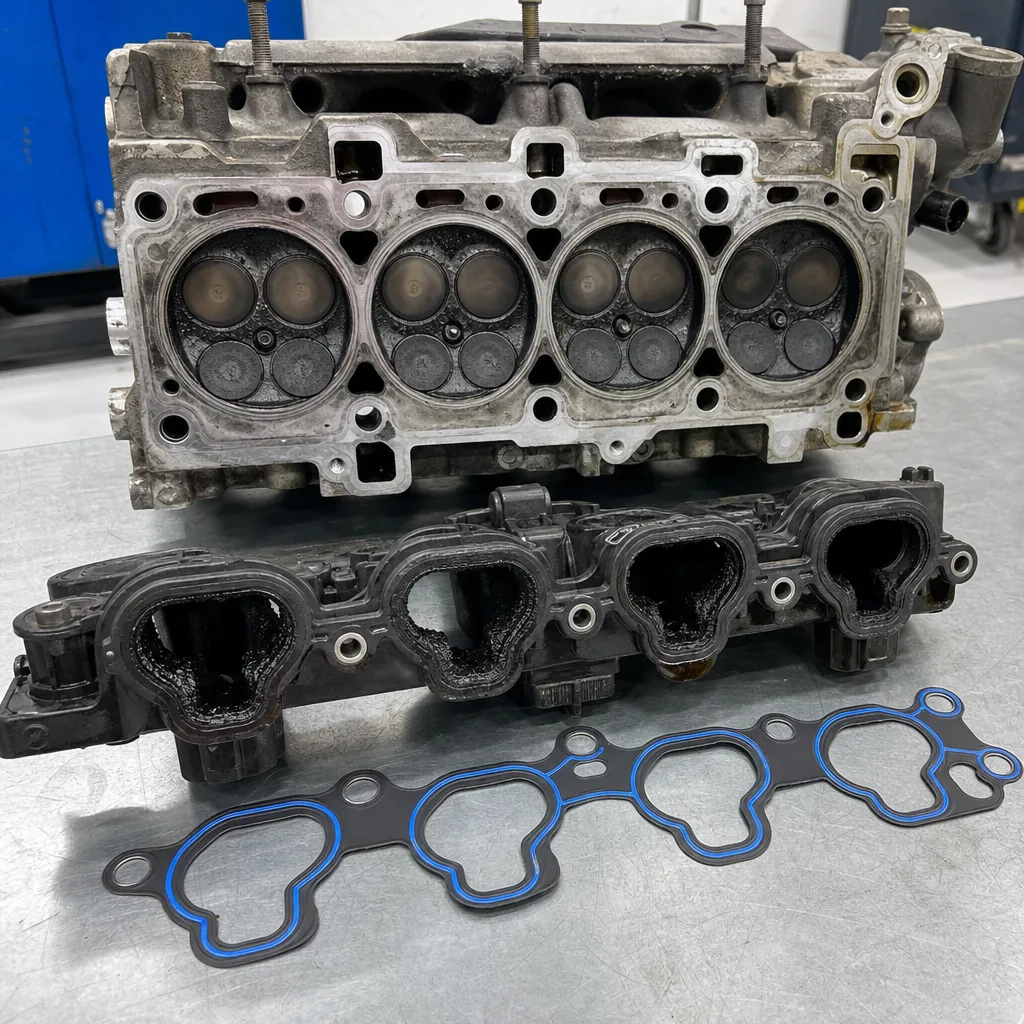
- Fire-ring witness marks or soot on the deck
If the engine uses a wet liner, a small change in liner protrusion can break the seal even when the head looks acceptable. On dry-liner designs, head distortion and bore wear can appear together because the engine has already run hot enough to affect both parts. Either way, treat the symptom set as a stack-up problem, not a single-part fault.
Why Head and Liner Distortion Happens
Most cases come from heat and stress, not one isolated mistake.
- Overheating from a restricted radiator, failed pump, or low coolant level
- Detonation or high cylinder pressure that lifts the head
- Wrong torque sequence or re-use of stretched fasteners
- Corrosion at the liner seat in wet-liner engines
- Previous machining that reduced deck height or altered protrusion
On engines that have seen repeated overheating, the head can lose flatness while the liner flange or block deck shifts out of spec. If the liner is not seated uniformly, the new gasket will fail even after the head is skimmed. That is why a full measurement set matters before approving a parts order.
Inspection Steps Before Any Rebuild
Minimum checks
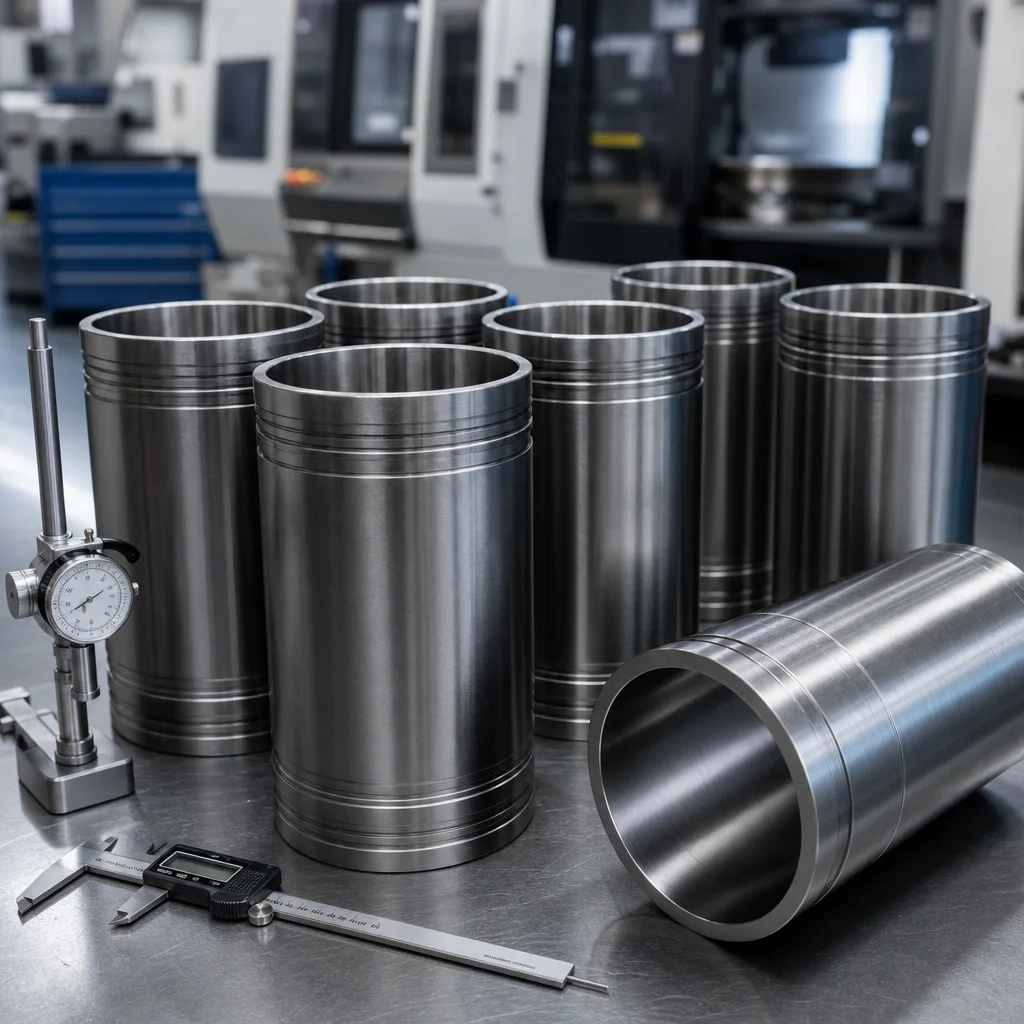
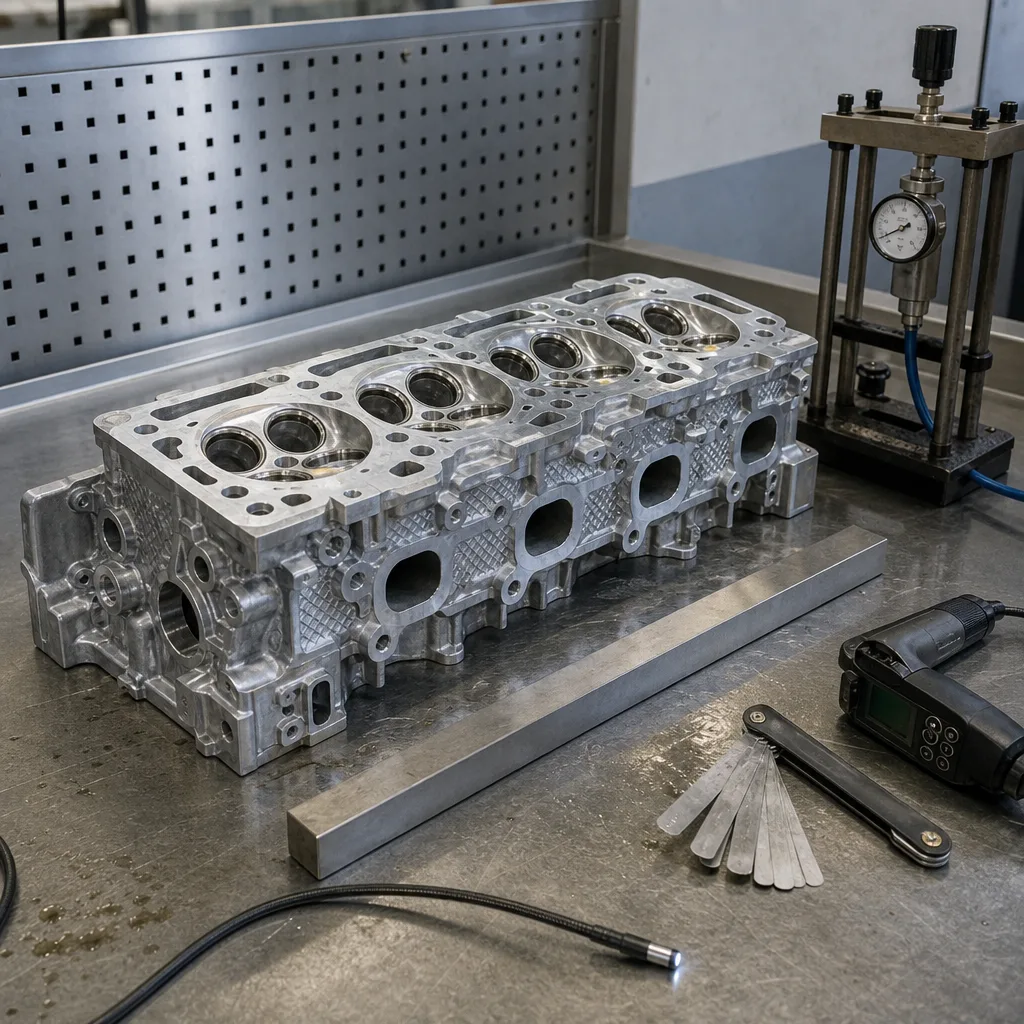
1. Measure head flatness with a calibrated straightedge and feeler gauges. 2. Check liner protrusion at multiple points around each bore. 3. Inspect the liner flange, seat, and deck for fretting, cavitation, or pitting. 4. Verify bore diameter, taper, and ovality with a dial bore gauge. 5. Pressure-test the cooling circuit and inspect for cracks or porous casting.
For procurement teams, ask the machine shop for recorded values, not a verbal pass/fail. A liner that is within nominal diameter but wrong in protrusion or seat condition will still create a repeat failure. If the cylinder head was warped enough to need heavy machining, confirm that valve-to-piston clearance is still safe after the rebuild.
Replace or Reuse: A Procurement Table
Use the table below to separate salvageable parts from parts that should be replaced.
| Finding | Likely cause | Action |
|---|---|---|
| Head flatness out of spec only | Overheat event or poor torque history | Reface or replace the head, then recheck clearance |
| Liner protrusion uneven | Seat wear, corrosion, incorrect installation | Reset or replace the liner and verify protrusion |
| Bore scoring with roundness loss | Dust ingestion, oil starvation, or seizure | Replace the liner; inspect rings and piston |
| Fire-ring imprint or gas leakage | Gasket failure with movement under load | Verify head, block, and fastener condition before reassembly |
| Cavitation at wet-liner wall | Coolant chemistry or long service life | Replace the liner and correct coolant maintenance |