Cracked Cylinder Head Cylinder Head: Diagnosis and Replacement
A cracked head can show up as coolant loss, white exhaust smoke, hard starting, repeated misfire, or pressure building in the cooling system after a short run. For procurement teams and workshop managers, the key issue is not only whether the casting is cracked, but whether the damage is local, whether the deck can still seal, and whether a replacement cylinder head will restore compression without creating a second failure. This article gives a practical fault path from symptom to inspection to replacement decision. It also sets out the checks a buyer should request before releasing an order for a direct-fit part. Driventus is an independent aftermarket manufacturer; brand names are referenced for fitment only.
Symptoms That Point to a Cracked Head
A cracked head rarely fails in one obvious event. In most cases, the first signs are indirect and easy to confuse with a gasket problem or a cooling-system fault.
Typical symptom patterns:
- Coolant loss with no visible external leak
- White exhaust smoke after warm-up
- Combustion gas in the expansion tank
- Misfire on one or two adjacent cylinders
- Oil contamination, or milky residue in the cap and breather system
- Overheating that returns after a short drive cycle
Common causes are also predictable: repeated overheating, detonation, incorrect torque on the fasteners, corrosion in the water jacket, or freeze damage after poor coolant protection. On aluminium cylinder heads, cracks often start near the valve bridge, injector seat, spark plug boss, or around the coolant passages. On cast iron parts, the crack may remain hidden longer, but pressure loss and combustion leakage still show up in the same way.
Do not assume a gasket has failed just because the symptoms are external. A damaged gasket can be the result, not the root cause. If the head is cracked, the repair will not hold unless the underlying defect is identified first.
Inspection Steps That Separate Head and Gasket Failure
Use a structured inspection path before you authorise machining or replacement. The objective is to prove where the leakage is coming from, then decide whether the casting is still serviceable.
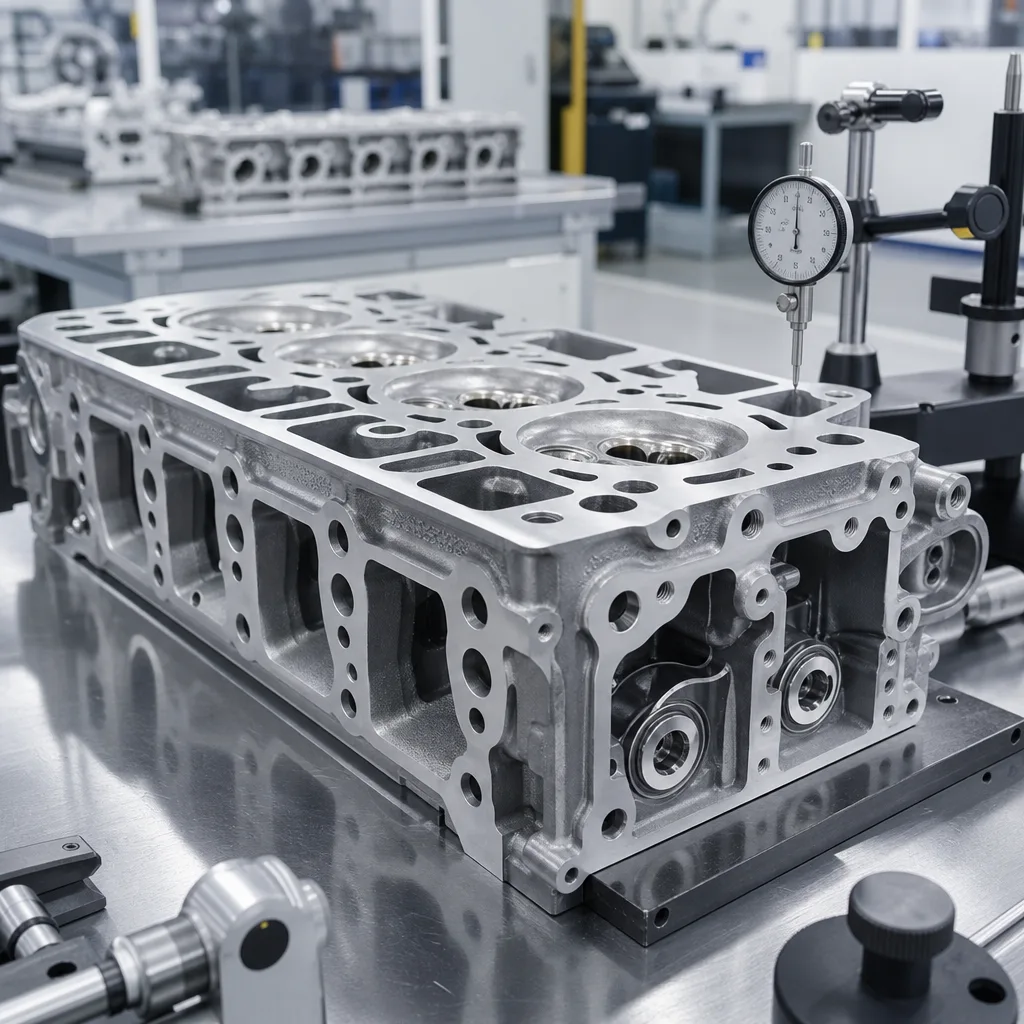
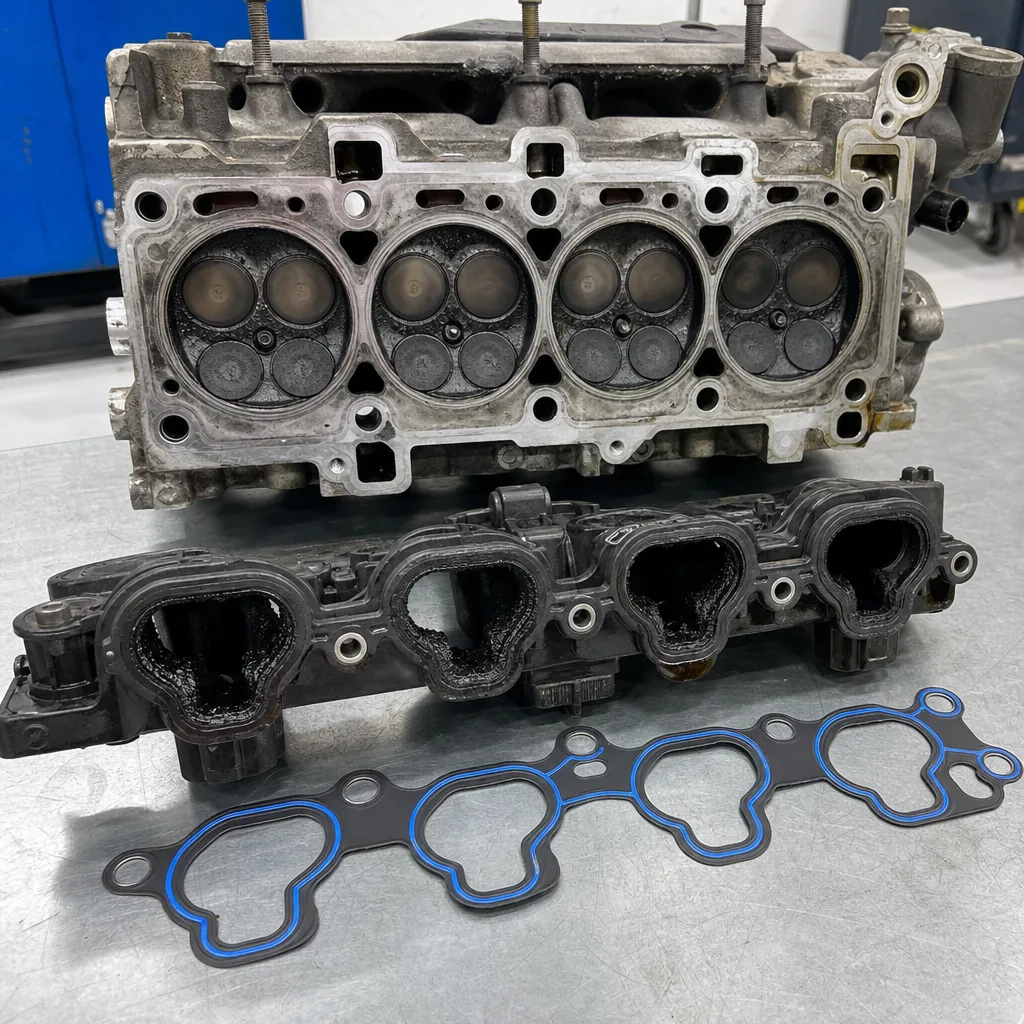
1. Check the cooling system pressure when cold and again after warm-up. A rapid rise can point to combustion leakage. 2. Remove the cylinder head and clean the combustion chambers, deck face, and water jacket openings. 3. Inspect with dye penetrant on aluminium heads, or the test method specified for the material and casting design. 4. Pressure test the head in water or in a dedicated fixture to locate fine cracks that are not visible to the eye. 5. Measure deck flatness with a straightedge and feeler gauges, then compare the result with the OE limit. 6. Inspect valve seats, injector bores, spark plug threads, and the bridge between valves, which are common failure points. 7. Verify that the head has not been distorted by previous machining or repeated overheating.
If the crack enters a combustion chamber, reaches a coolant passage, or travels through a structural bridge, the head is usually not worth salvaging in production supply. In that case, a replacement part gives a more repeatable result than a repair that depends on local welding skill and post-repair stability.
Repair Or Replace: A Simple Decision Table
The right answer depends on crack location, part material, and the risk tolerance of the vehicle owner or fleet operator. For procurement, repeatability matters more than theoretical repairability.
| Condition | Repair may be acceptable | Replacement is the safer choice |
|---|---|---|
| Small external casting crack away from sealing surfaces | Yes, if pressure testing passes and the part is traceable | If the vehicle has a history of overheating |
| Crack between valve seats or across the fire deck | Rarely | Yes |
| Crack into a coolant passage | Only in niche rebuild work | Yes |
| Warpage beyond the OE limit | Only if machining can restore the surface within spec | Yes, if material removal would exceed the limit |
| Repeat failure after prior repair | No | Yes |