aftermarket replacement parts · 2026-06-16

VW OEM Parts Online: How B2B Buyers Verify Fitment

Buying vw oem parts online is rarely a simple catalogue exercise for B2B teams. The risk is not just choosing the wrong price point. It is approving a part that matches a marketplace photo but fails on revision level, sealing geometry, material control, batch traceability, or warehouse requirements.

A distributor may need repeatable carton data and private-label packaging. A repair network may need fast replenishment without fitment disputes. An OEM or Tier-1 programme may need drawing review, controlled samples, and documented release criteria. Each case needs evidence, not assumptions.

Driventus is an independent aftermarket manufacturer in Taizhou, Zhejiang. Brand names are referenced for fitment only. We manufacture engine and powertrain components under IATF 16949:2016 and ISO 9001:2015 processes, supporting distributors, OEM/Tier-1 buyers, and repair networks. Use the framework below to pressure-test a listing before it becomes a purchase order.

Start with the decision gate: is the listing procurement-ready?

A VW-related listing is not procurement-ready until the application data can be tied to a controlled specification. Treat the first review as a gate. If the supplier cannot pass it, do not move to price negotiation yet.

Gate 1: identity

  • OE reference, supersession chain, and revision level
  • Engine code, displacement, fuel type, and model year range
  • Vehicle market or chassis range where relevant

Gate 2: engineering match

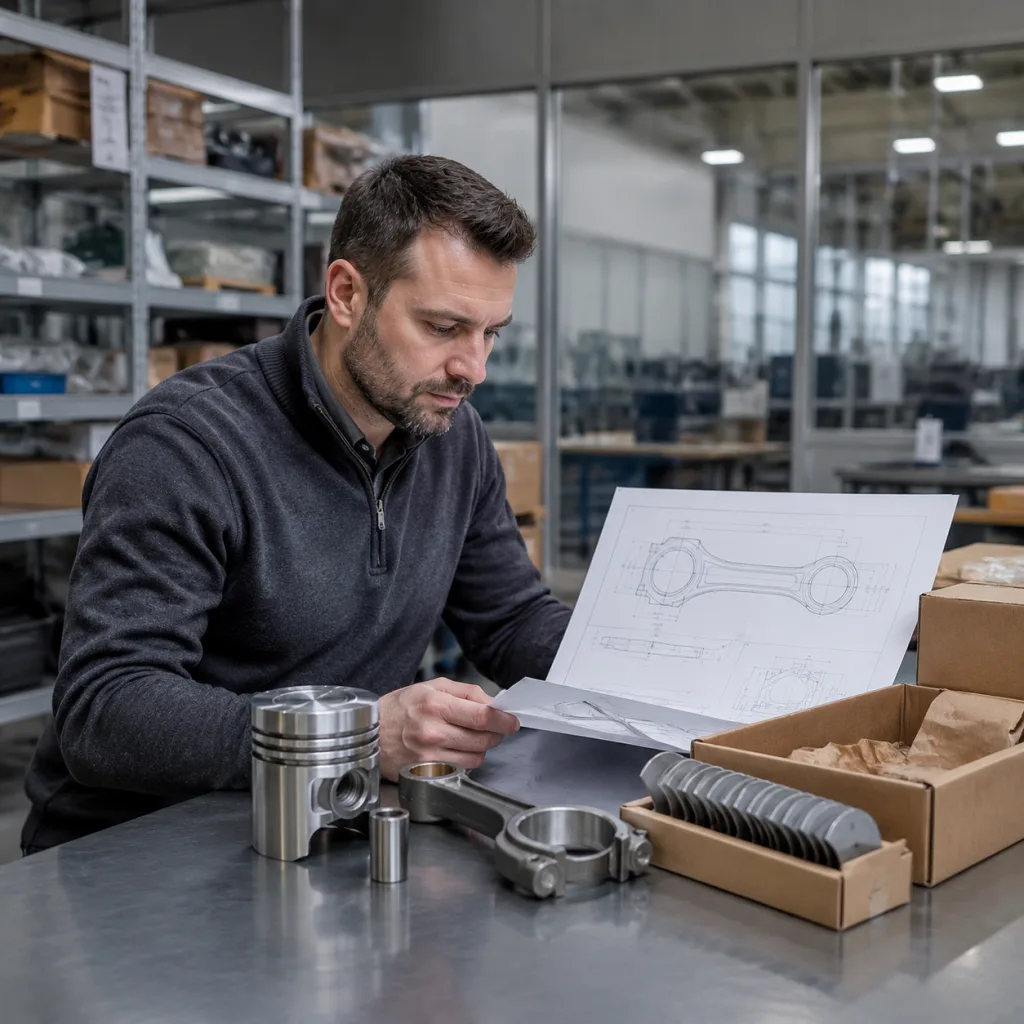
  • Drawing dimensions, datum points, and critical tolerances
  • Material grade, coating, heat treatment, or gasket compound
  • Inspection method for critical features

Gate 3: supply control

  • Pack quantity, neutral/private-label format, and country of origin
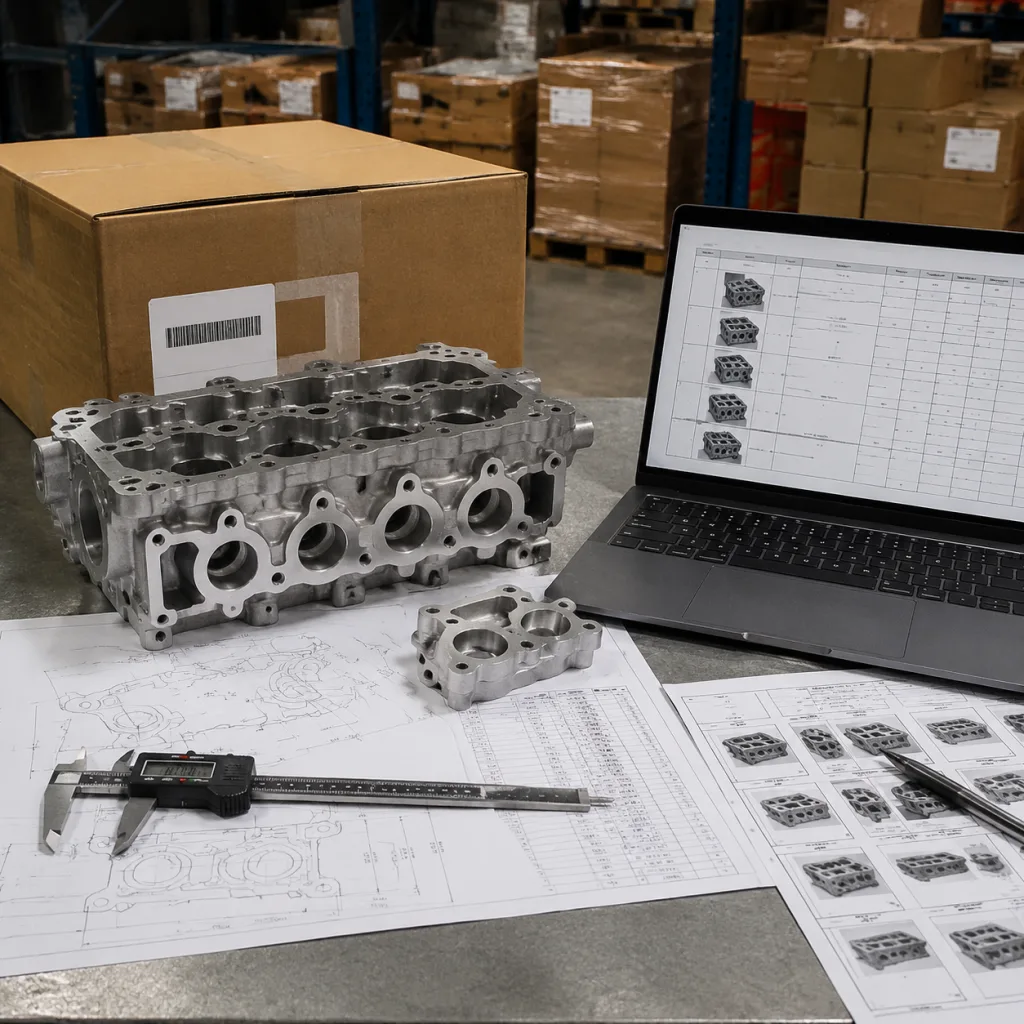
  • Batch, lot, heat number, mould cavity, or production-date traceability
  • MOQ, unit price basis, lead time, and Incoterms

If a buyer provides a reference such as OE 06A107065, the supplier should confirm whether the quote follows that exact revision or a superseded version. That difference can affect sealing faces, piston crown geometry, bearing clearance, pump impeller design, or bolt-hole offsets.

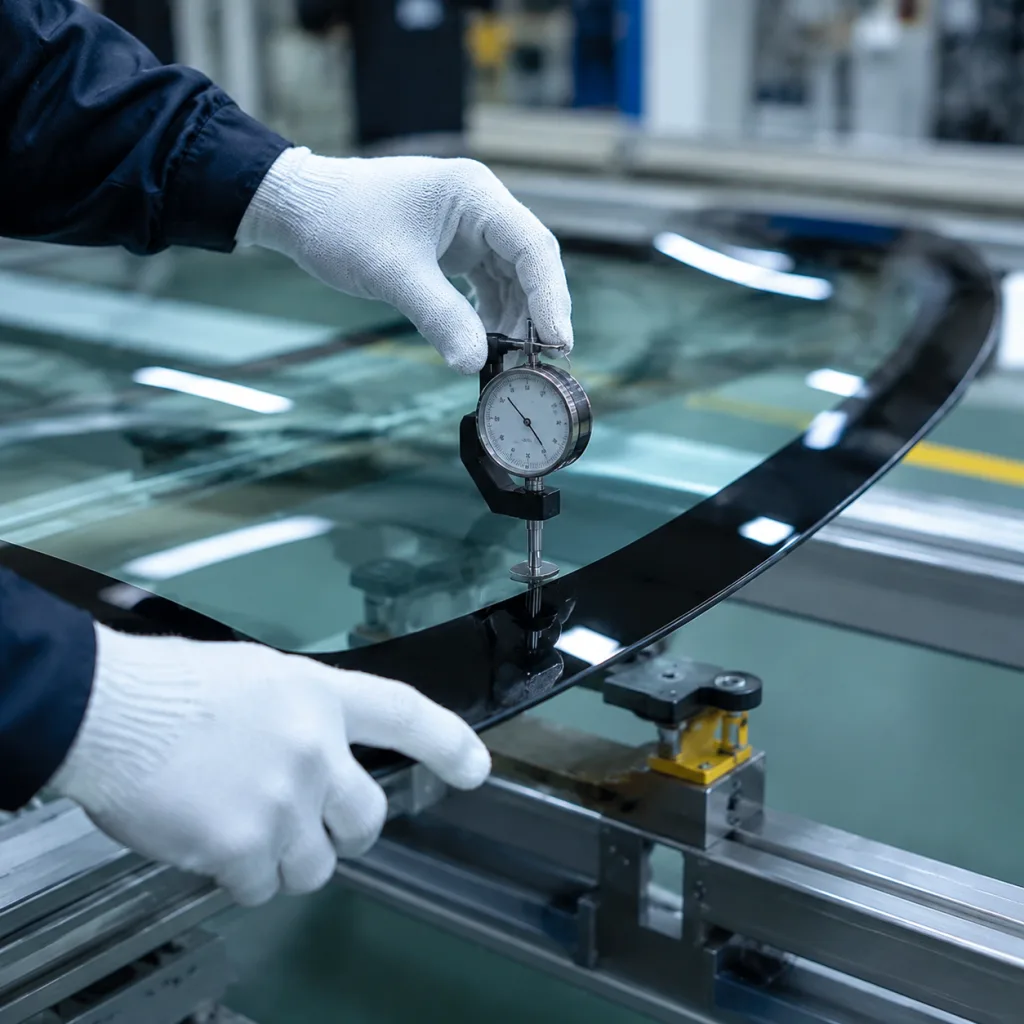
A useful first-pass request is simple: ask for 5 to 10 critical dimensions from the control plan. For machined engine parts, close features are often controlled around ±0.02 mm to ±0.05 mm, while non-critical cast or stamped features may allow wider limits depending on the drawing. For rubber and gasket parts, request thickness tolerance, compression set, hardness range, and temperature rating. A catalogue cross-reference without a measurement sheet is only a claim.

Failure modes that show up after a “fits VW” claim

Most costly fitment problems do not look dramatic at the quoting stage. The photo looks right. The bolt pattern seems right. The cross-reference is familiar. Then the return data arrives.

</tr></thead><tbody> </tbody></table>Engine components are unforgiving. A gasket may seal on one block revision and leak on another because the bead height, bore opening, or oil-channel geometry changed. A piston can match bore size but still miss compression height, pin diameter, ring groove width, or crown volume. A water pump may bolt up and still fail because pulley offset, impeller diameter, bearing preload, or coolant flow is wrong.

For a new supplier, add a pre-shipment inspection step. Initial samples may only need 5 measured pieces. Larger lots often justify 13 to 32 pieces, depending on order size and risk level. Record the measured value, tolerance, instrument used, inspector, and date. The safest order is not the one with the most confident description; it is the one backed by a usable measurement record.

Supplier comparison: stock trader, catalogue manufacturer, or programme partner?

The word “OEM” is often used loosely online. When evaluating vw oem parts online, separate the supplier’s role from the supplier’s evidence. A stock trader may solve an urgent gap. A catalogue manufacturer may be right for replenishment. A programme partner is needed when drawings, samples, packaging, or controlled deviations are involved.

Failure mode What to request Why it matters
Wrong generationOE number, revision, and supersession notePrevents ordering an earlier or later design
Dimensional drift5–10 key dimensions, tolerances, and inspection reportConfirms the part matches the controlled drawing
Material mismatchAlloy, rubber compound, steel grade, hardness, or coating dataProtects wear life, torque retention, and sealing performance
Variant errorEngine code, chassis range, build window, and transmission variant if relevantAvoids fitment errors across closely related models
Warehouse rejectionCarton qty, label format, barcode, gross weight, and pallet planSupports receiving, scanning, and branch distribution

</tr></thead><tbody> </tbody></table>Use the commercial terms to reveal the supplier type. Catalogue replenishment may run at 100 to 500 pieces per SKU for small machined or rubber parts. Heavier cast or rotating parts may be quoted by batch value, pallet quantity, or tooling utilisation. Stock dispatch can be 7 to 15 days. Production with tooling, private-label packaging, or sample approval can move to 30 to 60 days after approval.

A low unit price can still be the expensive option. It may require a full container, lock capital in slow-moving inventory, or arrive without traceable batch documents. If the evidence set is incomplete, the quote is incomplete too.

Spec deep-dive: what compliance documents should actually prove

A certificate is a starting point, not a release decision. Good compliance evidence shows how the supplier controls raw materials, machining, inspection, packaging, and final shipment.

For process control, ask whether the factory is certified to IATF 16949:2016 and ISO 9001:2015, then confirm that the quoted part family is covered by that controlled process. For EU material compliance, REACH (EC) No 1907/2006 can matter for elastomers, coatings, adhesives, and surface treatments.

Request documents that answer specific questions:

  • Dimensional inspection report: were the critical dimensions measured against tolerance?
  • Material certificate or compound declaration: is the correct alloy, steel grade, rubber, or coating used?
  • Surface treatment, coating thickness, hardness, or heat-treatment report: does the wear or corrosion-control layer meet the requirement?
  • Traceability record: can the part be tied to a lot, batch, heat number, mould cavity, or production date?
  • Functional test report: were leak, pressure, runout, balance, torque, or endurance checks performed where relevant?
  • Packaging specification: will export cartons, labels, pallets, and moisture protection meet receiving requirements?

Match the test to the part family. Sealing and thermal-load parts may need pressure, leak, or temperature-cycle data. Rotating and wear parts may need balance, runout, hardness, or endurance results. A pump assembly might require leak testing. A shaft may require runout checks. A gasket may require 100% visual inspection on sealing faces plus batch hardness checks.

Programme-level specifications may reference SAE J2527, ECE R-83, or other customer-defined durability standards depending on the system. Those references help define validation expectations, but they do not replace fitment data. A compliant part still has to match the exact application.

A practical sourcing path with Driventus

The cleanest B2B workflow starts with the part family, then narrows to fitment, documentation, and release conditions.

Step 1: identify the requirement. Send the OE number, target vehicle market, engine code if available, expected annual volume, packaging need, Incoterm, and sample requirement.

Step 2: confirm the evidence set. For standard catalogue items, the review usually covers cross-reference confirmation, stock or production availability, MOQ or carton quantity, and quotation terms. Browse our catalog for engine and powertrain coverage, or review our quality system to understand how inspection and release are handled.

Step 3: move custom work through controlled approval. For private-label or engineered programmes, the process normally moves through drawing or sample review, feasibility check, quotation, sample build, inspection report, buyer approval, and batch production. Custom manufacturing is available for qualified programmes that require drawing review, packaging changes, or controlled deviation handling.

Step 4: group related engine parts before ordering. Buyers working on pistons, crankshafts, gaskets, water pumps, and related assemblies can review the engine range here: engine components. Grouping related items makes it easier to compare quotes against the same application logic and documentation standard.

For VW-related programmes, the goal is to shorten the distance between inquiry and verified supply. One technical review. One purchasing document set. One release standard for repeat orders. That is how online sourcing becomes a controlled B2B process instead of a listing-by-listing gamble.

Frequently asked questions

Not always. OE refers to the original vehicle specification, while many online listings are aftermarket items that may or may not match the drawing, material, tolerance, and revision. Ask for the OE cross-reference, dimensional data, and test evidence before ordering.

Confirm the OE number, vehicle or engine code, revision level, tolerance data, sample approval status, and packaging spec. For import orders, also check MOQ, lead time, Incoterms, HS code, and traceability documents so the receiving team can accept the shipment without delays.

Yes, for qualified B2B programmes. We can review drawings, samples, target tolerances, annual volume, MOQ, and packaging requirements, then align production and inspection to the approved specification. Brand names are referenced for fitment only.

If you need a fitment review, sample pack, or batch quotation, send your part list, OE references, target volume, Incoterm, and target market through [/contact.html](/contact.html).

Request a Quote
Supplier claim Minimum evidence Buyer question
“OEM quality”Dimensional report, material cert, control plan, and test summaryWhich specification was matched?
“Fits VW models”VIN logic, engine code, OE cross-reference list, and build rangeWhich variants are excluded?
“Ready stock”Free stock count, packing photos, batch number, and dispatch dateIs the inventory allocated or actually available?
“Custom manufacturing”Drawing review, sample approval, tooling status, and MOQCan the factory hold the target tolerance repeatedly?
“Export ready”Commercial invoice format, HS code, Incoterms, and carton marksAre documents aligned with import and receiving rules?