Vehicle Control Arm: Sourcing Guide for Buyers
Procurement teams buying a vehicle control arm need more than a part description. The critical questions are dimensional match, bushing durometer, ball joint design, coating, packaging, and whether the supplier can hold batch-to-batch consistency. For fleet repair, wholesale distribution, and OEM programmes, small geometry errors can change alignment, tyre wear, and steering feel. Driventus is an independent aftermarket manufacturer; brand names are referenced for fitment only. Our focus is OE-equivalent dimensions, stable metallurgy, and traceable production under IATF 16949:2016 and ISO 9001:2015. Buyers should also ask for REACH (EC) No 1907/2006 material declarations, salt-spray data, and clear cross-reference control by OE number before placing volume orders. The sections below cover what to compare, which tests matter, and how to reduce sourcing risk without paying for claims that do not improve fit or service life.
What Buyers Should Verify First
The first procurement filter is fitment discipline. A suspension arm can look correct in photos and still fail on mounting width, bracket angle, taper size, or ride-height position.
Use a short technical checklist before you request samples:
- OE or superseded OE reference, with side and axle position confirmed
- Eye-to-eye length, bracket offset, and ball joint taper angle
- Bushing material, hardness range, and bonded or non-bonded construction
- Coating type, corrosion protection target, and weld appearance
- Pack-out method, torque hardware inclusion, and labelling format
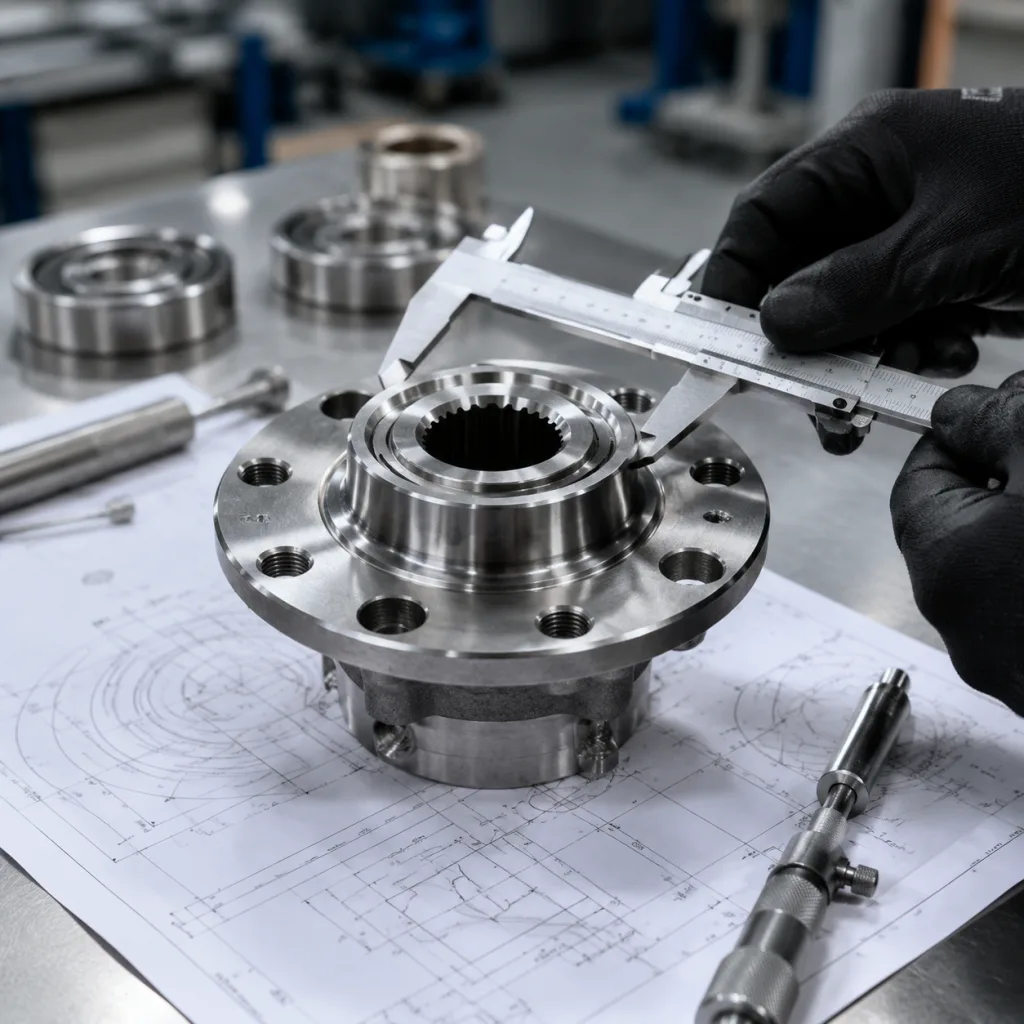
For volume orders, ask the supplier to confirm the drawing revision and the inspection method used on incoming material and finished goods. That reduces the chance of mixing similar-looking parts from different platforms. It also helps your warehouse keep one item number per validated fitment instead of creating exceptions later.
Arm Construction and Cost Trade-offs
Not every design fits the same sourcing objective. Construction affects stiffness, mass, tooling cost, and consistency across batches.
| Construction | Typical use | Strengths | Trade-offs |
|---|---|---|---|
| Forged steel | Higher-load passenger and light commercial applications | High strength, strong fatigue performance, stable geometry | Higher raw material and forming cost |
| Stamped steel | High-volume passenger applications | Lower cost, efficient mass production | Requires disciplined weld control and coating performance |
| Cast aluminium | Weight-sensitive platforms | Lower unsprung mass, corrosion resistance when coated properly | More sensitive to porosity and impact damage |
| Composite or hybrid | Selected premium applications | Weight reduction and tuned compliance | Narrower fitment range, harder to source in volume |
| Check | Why it matters | What to request |
|---|---|---|
| Dimensional inspection | Confirms direct fit and alignment behaviour | Measured report against the approved drawing |
| Static load and deflection | Verifies strength under peak loading | Test method, load curve, and pass criteria |
| Fatigue cycling | Exposes weld, bushing, and joint weakness | Cycle count and failure location summary |
| Corrosion exposure | Indicates coating durability | Salt-spray or cyclic corrosion data |
| Material compliance | Supports import and regulatory review | REACH (EC) No 1907/2006 declaration and material list |