valve cover gasket · 2026-06-07

Valve Cover Gasket Salt Spray Test Standard Guide

A valve cover gasket is not usually a corrosion-critical metal part, but salt spray testing can still matter in procurement. Many assemblies include steel compression limiters, bonded carriers, coated inserts, fastener sleeves, or packaged hardware that must survive humid marine conditions, winter road exposure, and long storage. Buyers often ask for a valve cover gasket salt spray test standard without defining exposure time, inspection method, or pass criteria, which creates avoidable disputes between purchasing, quality, and the factory. This guide explains how to specify the test, which standards can be cited, and what data should appear in a supplier report. It is written for sourcing engineers and import managers comparing aftermarket or OE-equivalent gasket suppliers. Driventus manufactures valve cover gaskets and related engine sealing parts in Taizhou, Zhejiang under IATF 16949:2016 and ISO 9001:2015 controls, with export supply to distributors, OEM/Tier-1 programmes, and repair-chain channels.

What Salt Spray Testing Can and Cannot Prove

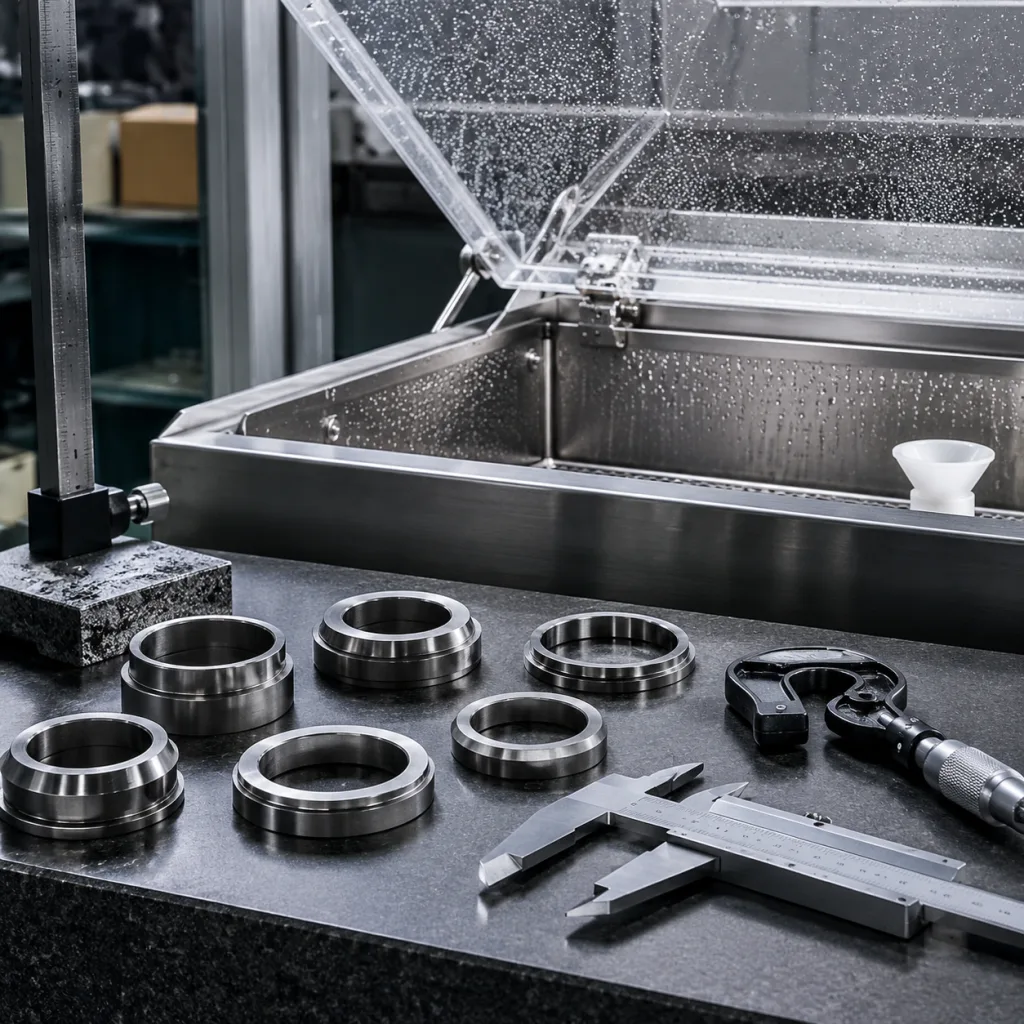
Salt spray testing is an accelerated corrosion screening method. It exposes parts or coupons to a controlled sodium chloride fog, usually at elevated temperature. It is useful for comparing coatings, plating systems, inserts, and production consistency. It is not a direct predictor of field life, because real vehicles see drying cycles, heat, oil mist, detergent, vibration, and mixed contaminants.

For valve cover gaskets, the question is usually not whether the rubber sealing bead corrodes. The relevant risks are:

  • Red rust on steel compression limiters, sleeves, or metal carriers.
  • White corrosion on zinc-plated parts or aluminium inserts.
  • Coating blistering, flaking, or under-film corrosion on carrier plates.
  • Rust transfer staining that may affect packaging appearance.
  • Loss of adhesion around bonded rubber-to-metal interfaces after exposure.

A practical specification should identify the component feature being tested. For example, a buyer may require 96 hours of neutral salt spray for zinc-plated compression limiters with no red rust, while a coated steel carrier may require a longer exposure and an adhesion check after testing. The same requirement should not be applied blindly to elastomer-only gaskets with no metallic content.

Published Standards to Reference

There is no single universal valve cover gasket salt spray test standard that covers every gasket design. Procurement teams normally reference recognised corrosion test methods, then add part-specific acceptance criteria. The most common base method is ASTM B117, Standard Practice for Operating Salt Spray (Fog) Apparatus. ISO 9227, Corrosion tests in artificial atmospheres - Salt spray tests, is also widely used in international supply chains.

A robust purchasing drawing or RFQ should state the standard, exposure time, sample quantity, preparation, inspection points, and acceptance limits. If the part is supplied into an automotive quality programme, connect the test to the supplier's process controls under IATF 16949:2016 and ISO 9001:2015. These management system standards do not define salt spray hours, but they do support controlled validation plans, calibrated equipment, traceability, and corrective action.

Environmental compliance should be handled separately. REACH (EC) No 1907/2006 relates to chemical substances in the EU market. It is not a corrosion test method, but buyers may require REACH declarations alongside salt spray reports when sourcing gaskets, coatings, or plated hardware.

</tr></thead><tbody> </tbody></table>

How to Write the RFQ Test Requirement

The RFQ should be specific enough that two laboratories would run the same test and reach comparable conclusions. Avoid a one-line statement such as 'salt spray test required'. It is incomplete.

Use a structured requirement like this:

  • Test method: ASTM B117 or ISO 9227 neutral salt spray.
  • Test duration: 48, 96, 240, or 480 hours, based on metal feature and coating.
  • Sample size: minimum 3 production parts per cavity or per lot, unless otherwise agreed.
  • Sample condition: as supplied, including coating, plating, rubber bonding, and normal packaging condition.
  • Inspection interval: before exposure, after exposure, and after drying.
  • Acceptance criteria: no red rust on functional steel surfaces; no coating blistering or peeling; no rubber-to-metal delamination; no corrosion product that interferes with installation.
  • Report content: photos before and after, chamber conditions, salt concentration, pH, temperature, exposure time, sample identification, and inspector sign-off.

For products with purely elastomeric construction, salt spray may be unnecessary. In that case, ask for material ageing, compression set, oil resistance, and dimensional inspection instead. Buyers can review relevant valve cover gasket families in our catalog and use the RFQ stage to separate corrosion-related requirements from general sealing validation.

Step-by-Step Supplier Verification

A clear verification process reduces delays during PPAP, incoming inspection, or first-article approval.

1. Confirm the gasket construction. Check whether the valve cover gasket includes steel, aluminium, plated sleeves, carrier plates, bonded inserts, or loose hardware.

2. Identify the corrosion-sensitive features. Mark the surfaces that matter for function, installation, or appearance. A hidden witness mark may be less important than red rust on a compression limiter face.

3. Select the correct base method. ASTM B117 and ISO 9227 are the normal choices for neutral salt spray. Use customer-specific methods only when a programme drawing requires them.

4. Define exposure time and acceptance criteria. A 96-hour requirement may be enough for many plated inserts. Longer durations can be appropriate for coated carriers or customer-specific programmes, but they should be justified by coating system and risk.

5. Request current production data. Reports should come from production-intent parts, not only generic coating coupons. Ask the supplier to link reports to batch number, drawing revision, and material code.

6. Review the quality controls behind the report. Calibration records, work instructions, nonconformance handling, and traceability should be covered by the supplier's quality system.

7. Freeze the requirement before mass production. Once the corrosion requirement is agreed, include it in the control plan, inspection standard, or purchase specification. This prevents later disputes over what 'pass' means.

Where a distributor or OEM/Tier-1 buyer needs a gasket adjusted for a particular cover design, Driventus can support custom manufacturing using buyer drawings, samples, or controlled dimensional targets.

Interpreting Test Reports and Failure Modes

Salt spray reports should be read with engineering judgement. A pass result is meaningful only if the tested sample matches the supplied product. Check the drawing revision, material grade, plating or coating description, sample date, and lot traceability.

Common report problems include missing photos, no stated pH range, no chamber temperature, unclear sample orientation, and acceptance wording that says only 'OK'. A useful report describes the condition of each relevant feature. For example, 'no red rust on zinc-plated compression limiters after 96 h ASTM B117' is stronger than 'salt spray passed'.

Failure analysis should distinguish cosmetic staining from functional risk. Light white corrosion on zinc plating may be acceptable if the buyer's standard allows it. Red rust on steel inserts, coating lift at formed edges, or delamination at a bonded rubber interface usually needs corrective action. Possible causes include thin plating, poor pretreatment, exposed cut edges, damaged coating during stamping, contaminated bonding surfaces, or inadequate packaging for sea freight.

For gasket assemblies exported by ocean container, packaging validation should be considered with corrosion testing. VCI bags, sealed inner bags, dry cartons, and pallet wrapping can reduce rust transfer during long transit. Packaging does not replace coating quality, but it can prevent avoidable claims during receiving inspection.

Procurement Checklist Before Approval

Before approving a valve cover gasket supplier, combine corrosion evidence with the normal sealing and dimensional validation. Salt spray is one line item in a broader purchase decision.

Minimum sourcing checklist:

  • Drawing or sample review, including groove profile and sealing bead geometry.
  • Elastomer material confirmation, such as ACM, FKM, NBR, or silicone according to application temperature and oil exposure.
  • Dimensional inspection report for critical sealing length, width, bead height, and bolt-hole positions.
  • Compression set, heat ageing, and oil resistance data where applicable.
  • Salt spray report for metallic inserts, carriers, sleeves, or hardware when present.
  • REACH (EC) No 1907/2006 declaration for EU-market programmes when requested.
  • IATF 16949:2016 and ISO 9001:2015 certificate review.
  • Lot traceability from raw material to finished gasket.
  • Packaging specification for export storage and sea freight.
  • Clear agreement on warranty, claim photos, and defect return procedure.

Driventus is an independent aftermarket manufacturer; brand names are referenced for fitment only. For cross-reference programmes, buyers should provide the target application, sample, drawing, or generic OE format where available, such as OE 06A107065 or OE 11251... references when already used in the sourcing file. No vehicle manufacturer approval is implied.

Frequently asked questions

No. ASTM B117 is relevant when the gasket includes corrosion-sensitive metal features such as steel carriers, sleeves, compression limiters, or hardware. Elastomer-only gaskets are usually better evaluated by dimensional checks, compression set, heat ageing, and oil resistance tests.

The correct duration depends on the coating system, metal feature, and application risk. Many RFQs use 48 or 96 hours for simple plated inserts, while coated carriers may require longer exposure. The RFQ should state both the hours and the visible acceptance criteria.

Driventus can provide agreed inspection and validation records for production programmes, including salt spray reports where the part specification requires them. Requirements should be confirmed during RFQ so they are included in the control plan and quotation.

For valve cover gasket sourcing, send the drawing, sample photos, material requirement, and target test method. Our engineering team can review the specification and help you [request a quote](/contact.html).

Request a Quote
Reference Use in specification What it does not define
ASTM B117Neutral salt fog chamber operationYour gasket-specific pass/fail criteria
ISO 9227Neutral, acetic acid, or copper-accelerated salt spray methodsField service life prediction
IATF 16949:2016Automotive quality management controlsCorrosion hours or coating type
ISO 9001:2015Quality management system controlsProduct-specific validation limits
REACH (EC) No 1907/2006Substance compliance declarationSalt spray performance