Timing chain specifications give a sourcing programme a controllable technical baseline. They are not a generic replacement claim. For B2B buyers, a timing chain should be defined at drawing level before it is approved for production, service, or private-label use. That means confirming pitch, number of pitches, chain type, inner and outer width, pin and bush or roller geometry, plate profile, material grade, heat-treatment condition, surface protection, lubrication state, allowable elongation, endurance performance and lot traceability. Driventus is an independent aftermarket manufacturer; brand names and OE numbers are referenced for fitment identification only. In practical terms, procurement teams need to know whether the chain matches the engine layout, sprocket tooth form, guide contact path, tensioner working range, oiling condition, NVH target and expected service interval. The supply file should also support repeat orders with inspection reports, material certificates, heat-treatment records, control plans, change-control notices and batch traceability. Review those controls alongside IATF 16949:2016, ISO 9001:2015 and REACH (EC) No 1907/2006 where applicable. The outcome should be a timing chain that fits the drawing, installs correctly in the engine package, and remains stable under load throughout the intended service life.
What a timing chain spec must define
A useful timing chain specification tells the buyer exactly what is controlled, why it matters, and how the part is verified before shipment. It should go well beyond an OE cross-reference or catalogue description. At drawing or data-sheet level, it needs to define the chain construction, controlled dimensions, material system, heat-treatment targets, surface condition, endurance requirement and traceability method used for production lots.
The buyer should be able to place two suppliers against the same measurable data set. If one offer lists only an application and another provides nominal dimensions, tolerance bands, inspection methods and validation results, the two offers are not technically equivalent, even if both claim the same fitment.
Spec item
What to verify
Buyer note
Chain type
Roller chain, bush chain, silent chain, single-row, double-row, or application-specific construction
Construction controls sprocket interface, NVH behaviour, bending stiffness and load capacity
Pitch
Nominal pitch and allowable pitch deviation, measured over a defined number of pitches under a specified measuring load
Must match sprocket tooth form, centre distance and tensioner position
Link count
Total number of pitches, outer/inner link arrangement and any special link or marked timing position
Do not rely on marketing descriptions only
Width
Inner width, outer width and guide-clearance dimensions at defined measuring points
Critical for guide, sprocket, cover and oil-jet clearance
Plate profile
Side plate shape, thickness, flatness, chamfer or deburr condition and edge radius where specified
Affects guide contact, fatigue strength, oil-film behaviour and installation clearance
Pin and bush or roller dimensions
Diameter, length, roundness, surface finish, fit class and contact geometry
Controls articulation, bearing pressure, wear rate and elongation growth
Material
Steel grade, approved equivalent grades and material certificate requirement
Should be named on the drawing, control plan or technical data sheet
Heat treatment
Carburising, carbonitriding, induction hardening, through hardening or other process
Request surface hardness, core hardness, effective case depth and inspection location where relevant
Surface condition
Phosphate, black oxide, passivation, rust-preventive oil, special coating or clean oiled finish
Impacts wear-in, corrosion resistance, storage life and cleanliness
Lubrication state
Dry, lightly oiled, rust-preventive oil, assembly lubricant or customer-specified lubricant
Important for export packaging, shelf life, first-start protection and cleanliness control
Endurance requirement
Test load, cycles, speed, temperature, lubricant and maximum elongation after test
Converts a fitment claim into a measurable performance requirement
Traceability
Lot number, production date, line, operator or shift, heat-treatment batch and inspection record
Essential for field containment, repeat-order control and warranty investigation
</tr></thead><tbody> </tbody></table>A complete specification also states whether the part is a direct replacement for an existing engine programme, a buyer-controlled drawing part, or a custom chain for a new aftermarket kit. That distinction affects the approval path. A catalogue replacement may start with OE fitment comparison; a buyer-controlled drawing should include revision status, approved deviations, sample-submission level and formal approval criteria.
When the purchase file contains only an OE reference, replacement quality is hard to control and supplier comparisons become subjective. A clear specification gives engineering, purchasing, quality and warehouse teams the same definition of what is being bought.
Dimensional and material controls buyers should request
For sourcing, the dimension sheet should be readable by both engineers and purchasing teams. It should show nominal values, tolerance bands, datum or measurement points, inspection frequency and the measuring equipment used on the production lot. A timing chain is an assembly of repeated precision interfaces; small variation at each pitch can accumulate into installation difficulty, abnormal tensioner position, start-up rattle, guide wear or premature elongation.
Typical dimensional control points
Pitch accuracy across individual links and across a defined gauge length, measured under a specified load
Link count against the released drawing, master sample or approved application data
Inner width and outer width at defined measurement positions, including maximum-width condition
Side plate thickness, flatness, profile, hole position, chamfer and burr condition
Pin diameter, length, roundness and surface finish at the bearing contact area
Bush or roller internal diameter, outside diameter, wall thickness and concentricity
Press-fit or interference control between pin, bush and plate where applicable
Articulation freedom after assembly, including tight-link and stiff-joint inspection
Assembled free length and measured elongation before and after validation testing
Mass per metre where weight affects NVH, inertia, chain whip or tensioner response
Cleanliness, burr control and residual metallic debris where engine oil circulation is sensitive
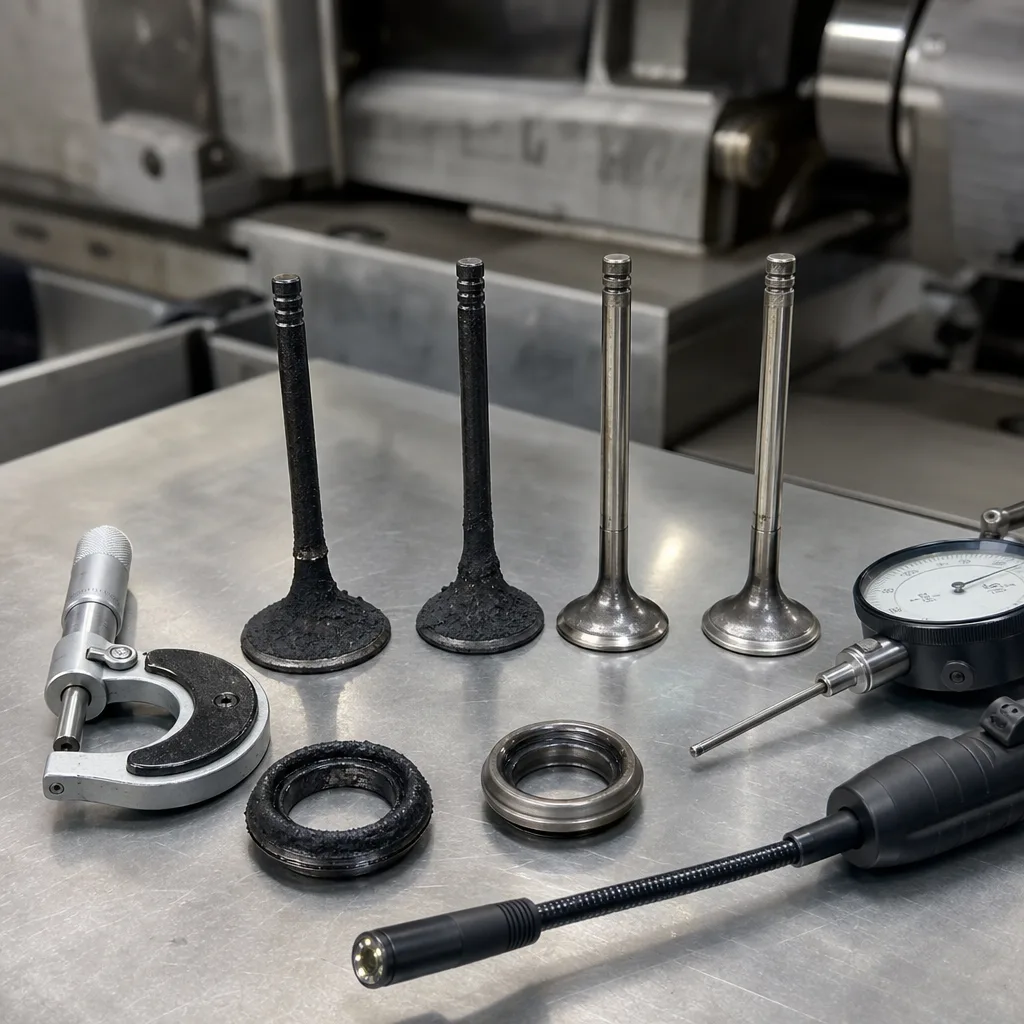
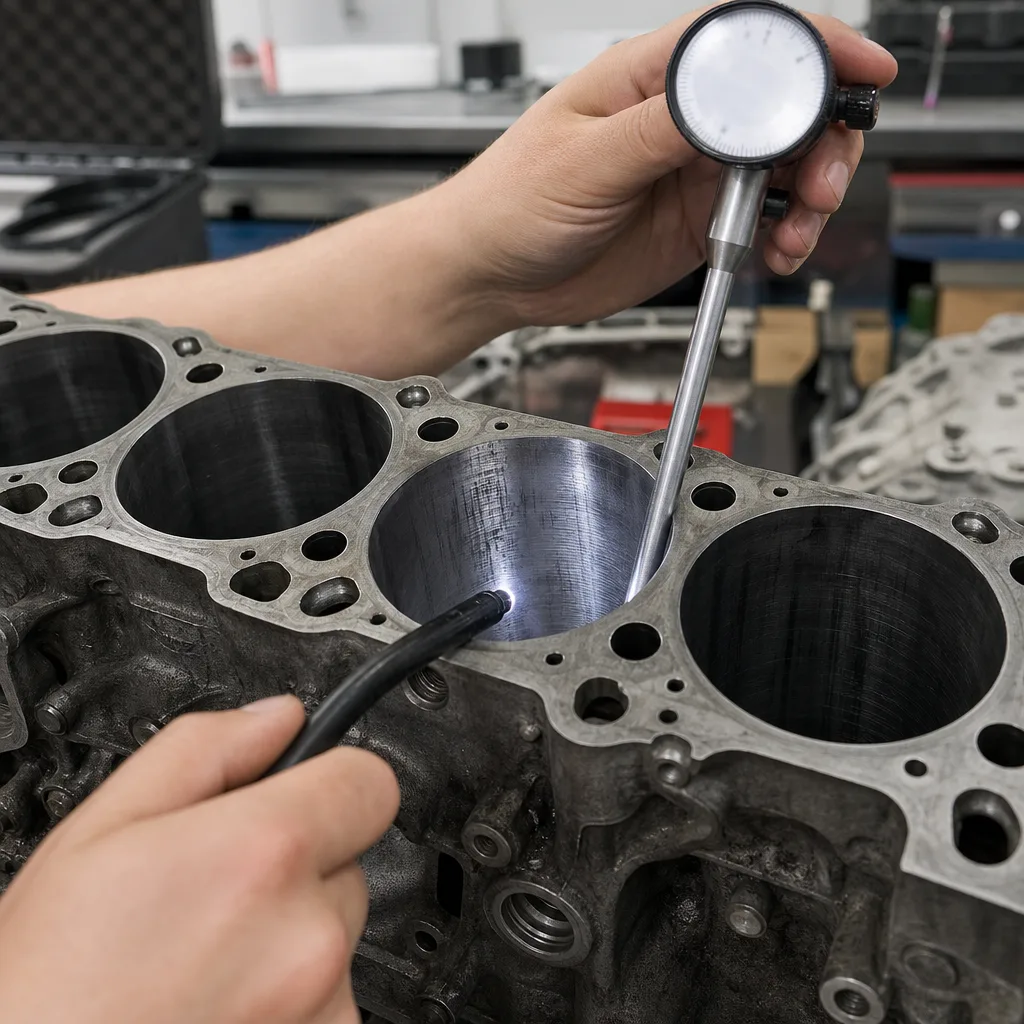
The inspection method needs to be explicit. Pitch variation, for instance, should be checked over a defined number of pitches under a stated measuring load, not by an informal bench comparison. Width and plate thickness may be verified by calibrated micrometer, dial gauge, optical comparator or automated gauge, depending on the feature. For high-volume supply, the control plan should state whether the feature is checked by first-off inspection, in-process sampling, final audit or 100% screening. A pass statement without measured values gives the buyer little basis for judging process capability or comparing lots over time.
Material and heat treatment matter just as much as geometry. Chain life depends on stable pin-to-bush, pin-to-link or rocker-pin contact, so the supplier should state the steel family, approved equivalent grades, hardening route and hardness range rather than relying on a vague “heat treated” note. Where the application is load-sensitive, buyers should request surface hardness, core hardness and effective case depth for the relevant wear surfaces. Those values must be tied to inspection locations, because hardness on a pin surface, side plate, bush or rocker element does not carry the same engineering meaning.
For many automotive timing chains, common requirements include alloy case-hardening steels for pins and bushes, medium-carbon or alloy steels for plates, controlled carburising or carbonitriding for wear surfaces, and shot peening or controlled edge finishing where plate fatigue is critical. The exact grade and hardness range must come from the released drawing or supplier-approved specification. The purchasing document should not allow an unapproved switch from a carburised wear component to a through-hardened alternative unless engineering has validated the change.
The purchase specification should also define the approval route for equivalent materials. Any substitution should require written buyer approval, documented equivalency and, where needed, revalidation of hardness, case depth, tensile strength, fatigue life and elongation performance. This is especially important for private-label programmes, long-term distribution contracts and kits where the chain must remain consistent across multiple production batches.
If corrosion control is part of the requirement, specify the coating, oiling or rust-preventive standard on the purchase order. Packaging, sea freight duration and warehouse conditions can all change the required protection level; a domestic oiled finish may not be adequate for a humid ocean-freight route followed by extended storage. If the application requires a formal environmental declaration, ask for REACH status and restricted-substance evidence rather than relying on an unsupported compliance statement.
For B2B sourcing, the strongest control package combines drawing tolerances, production inspection results, material and heat-treatment records, surface-condition evidence, cleanliness controls and an agreed elongation limit after endurance testing. That package makes the timing chain specifications enforceable rather than merely descriptive.
Validation tests and standards that matter
A timing chain programme should be supported by repeatable validation, not just fitment samples. A sample can show that the part installs. It cannot, by itself, prove that production lots will maintain wear resistance, fatigue strength or elongation control. The test plan should be tied to the product drawing, the customer's duty cycle and the acceptance criteria agreed before the order is released.
Common validation requests include:
Tensile load at break for the assembled chain, reported with sample size and failure mode
Proof load or assembly strength check where specified by the drawing or customer standard
Fatigue or endurance cycling under representative load, speed, temperature and lubrication condition
Elongation growth after endurance testing, measured over a defined gauge length
Wear assessment at pin, bush, roller, rocker or plate contact surfaces
Hardness checks on critical wear surfaces, with test scale and inspection location stated
Effective case depth verification where carburising, carbonitriding or surface hardening is specified
Metallographic review for case structure, decarburisation, retained austenite or abnormal microstructure where required
Noise or vibration assessment when the engine package is sensitive to chain whine, rattle or start-up noise
Articulation and tight-link checks before and after testing
Corrosion or coating performance where surface protection is specified
Cleanliness or residue checks where contamination could affect engine oil circulation
The most important feature of any validation plan is the acceptance limit. “Tested” is not enough. The report should show the sample size, test duration, applied load, speed, temperature where relevant, lubricant or oil grade, measured elongation and pass/fail threshold. If the buyer expects a maximum elongation percentage after a defined number of cycles, that value belongs in the specification or purchase order. The same principle applies to tensile strength, proof load, hardness range, case depth and corrosion resistance: the report needs numeric results, not only a conclusion line.
The quality system behind the part matters as well. Buyers should expect production control under IATF 16949:2016 and ISO 9001:2015 where the programme requires automotive process discipline, with calibration, nonconformance handling, corrective action, document control and lot traceability documented. For repeat orders, process stability is as important as first-sample performance. A strong initial test result has limited value if the supplier cannot show that the same material, heat treatment, tooling, assembly press settings, lubrication condition and inspection plan are used in later batches.
When a surface treatment, coating or packaging finish has its own performance requirement, name the test method on the drawing or purchase order. Neutral salt spray testing may be appropriate for corrosion screening when specified by the customer standard. Coated-part weathering protocols such as SAE J2527 are only relevant where the specific finish and programme requirement justify them. For chemical substance control, REACH (EC) No 1907/2006 status should be supported by supplier declarations or material evidence aligned with the programme requirement.
Validation should end with a report that engineering and purchasing can both use. It should identify the part number, revision level, sample lot, production date, test equipment, calibration status where applicable, test date, measured values, acceptance limits and conclusion. That record becomes a reference point for future audits, claims investigation, process-change review and supplier comparison.
How to compare replacement chains against OE data
Replacement sourcing should start with a controlled comparison to the OE reference, then move into dimensional verification, installation review and test evidence. OE numbers are useful for identifying the intended application, but they are not a complete specification. For cross-reference work, record the OE number exactly as supplied by the buyer, for example OE 06A107065, and verify the chain against the actual engine configuration rather than the part number alone.
The main comparison checks are:
Pitch and link count against the chain used in the engine build sheet, new OE sample or approved master sample
Chain construction type, including roller, bush, silent, single-row or double-row design
Inner and outer width against the sprocket, guide, tensioner arm and cover package
Side plate profile against guide contact surfaces, timing marks and cover clearance
Pin, bush, roller or rocker geometry against the original chain interface
Tensioner piston position at installation and remaining travel through the expected elongation range
Tooth engagement with the sprocket set, including crankshaft, camshaft, balance-shaft or oil-pump sprockets where applicable
Overall free length, stiffness and pre-load behaviour during installation
Lubrication path, oil supply points, oil-drain path and compatibility with engine oil condition
Noise behaviour where the engine package is sensitive to chain whine, slap or cold-start rattle
Service-kit compatibility, including guides, tensioners, sprockets, bolts, seals, VVT components or installation notes if supplied together
Do not approve a replacement on catalogue similarity alone. A visually similar chain can still differ in pin hardness, bush fit, plate thickness, articulation friction, residual burrs, surface finish or elongation rate. These differences may not appear during a bench fitment check, but they can affect tensioner position, guide wear, oil contamination and noise after service. Procurement teams therefore need measured dimensions and validation evidence, not only application coverage.
A practical comparison process begins with the OE reference and vehicle or engine data, then checks the chain against the actual hardware. Use engine code, production date range, market version and kit content to avoid mixing visually similar chains used across different engine revisions. If a buyer supplies a used sample, treat it with caution: wear can change free length, polish contact areas and mask the original surface condition. When possible, compare against a new OE sample, a buyer-approved master sample or a released drawing. Document every difference, even if the supplier considers it functionally acceptable, and approve any deviation before production.
Controlled documentation from our catalog and the quality system helps procurement and engineering teams confirm whether a replacement chain suits the intended programme. The goal is not simply to match a part number; it is to match the functional requirements of the engine system.
If the programme needs a chain made to a buyer-controlled drawing, custom manufacturing is the right route. In that case, the RFQ should include the drawing revision, target annual volume, sample quantity, PPAP or sample-approval requirement where applicable, validation plan, inspection report format and packaging expectations. It is better to release the part after dimensional and endurance checks than to depend on a general aftermarket claim.
Procurement checklist for B2B buyers
Before RFQ, sample approval or production release, ask for a package that lets engineering, purchasing, quality and logistics make the same decision from the same data. A well-structured checklist reduces quotation ambiguity, prevents late engineering changes and gives the supplier a clear basis for repeat production.
RFQ and technical documents
Drawing or data sheet with nominal dimensions, tolerances, measurement method and revision level
OE cross-reference, engine code and application data if the chain is a replacement item
Chain construction type, pitch, link count, width and controlled interface dimensions
Material declaration, approved equivalent grades and heat-treatment summary
Surface condition, coating, oiling, cleanliness or rust-preventive requirement
Endurance test summary with sample size, test conditions, measured elongation and acceptance limit
Inspection report template showing measured values, not only pass/fail status
REACH status and any restricted-substance declaration required by the programme
Quality and traceability documents
Lot traceability format, including production date, batch identification and heat-treatment batch where applicable
Sample inspection report for the first submitted lot or PPAP documentation where required
Calibration and measuring-equipment control for critical dimensions and hardness checks
Nonconformance, containment and corrective-action process
Change-control process for material, heat treatment, tooling, production site, subcontracted processes or surface treatment
Confirmation of document retention period for inspection, production and shipment records
Commercial and logistics requirements
Lead time, MOQ and monthly capacity by chain family or chain size
Packaging specification for export, warehouse handling and relabelling
Confirmation of whether the chain is supplied dry, oiled, coated or otherwise protected
Inner box, master carton and pallet requirements where private label is involved
Barcode, label language, carton marking and lot-code visibility requirements
Incoterms, shipment method and spare-parts distribution schedule
Forecast structure for blanket orders, phased call-offs or safety-stock agreements
If the programme includes private label, box labelling, service-kit assembly or drawing-level revision control, settle those requirements before first production. Labelling and packaging are not minor details in B2B distribution: incorrect labels can create mixed stock, warranty confusion, wrong-engine installation risk and delays at the buyer's warehouse. For timing chain kits, confirm whether the chain is supplied alone or with guides, tensioners, sprockets, bolts, seals, VVT components or installation notes.
For teams comparing several suppliers, the better question is not which one makes the broadest claim. It is which supplier can hold the same geometry, hardness range, case-depth condition, surface condition and elongation result across repeat orders. That is the practical value of clear timing chain specifications and a controlled supplier file.
A disciplined approval process also supports future cost reduction. Once the specification, inspection method and acceptance limits are fixed, purchasing can compare quotations without weakening the technical baseline. That creates a stronger negotiation position while protecting fitment, durability and field performance.
Frequently asked questions
There is no single number. Pitch, link count, width, pin diameter, plate profile, heat treatment and elongation limit all have to match the engine package. A chain can look correct and still fail if one controlled dimension or wear characteristic is outside the drawing.
No. OE references help with fitment identification, but they do not replace dimensional data, material detail or endurance evidence. Use the OE number as a cross-reference, then verify the actual chain geometry, installation behaviour, tensioner position and test report.
Ask for the drawing or data sheet, material and heat-treatment summary, lot traceability format, inspection records, endurance test results and REACH status. For private label or custom work, confirm packaging, labelling, revision control and change-control requirements as well.
Send your drawing, target volume, and OE cross-reference via [request a quote](/contact.html).