Timing Chain Kit Material: What Buyers Should Verify
Timing chain kit material is not a single item spec. Buyers have to evaluate the chain, sprockets, guides, tensioner body, spring and seals as a system, because the weakest part usually defines service life. For aftermarket and OEM programs, the relevant question is whether the supplied metallurgy, polymer grade, heat treatment and coating match the duty cycle, oil chemistry and temperature range of the target engine. Driventus is an independent aftermarket manufacturer; brand names are referenced for fitment only. This guide sets out the material choices procurement teams should verify, the documents to request from suppliers, and the tests that support repeatable sourcing. If you are comparing offers across regions, align the drawing pack with IATF 16949:2016, ISO 9001:2015 and REACH (EC) No 1907/2006 before you price the kit.
What the material spec has to cover
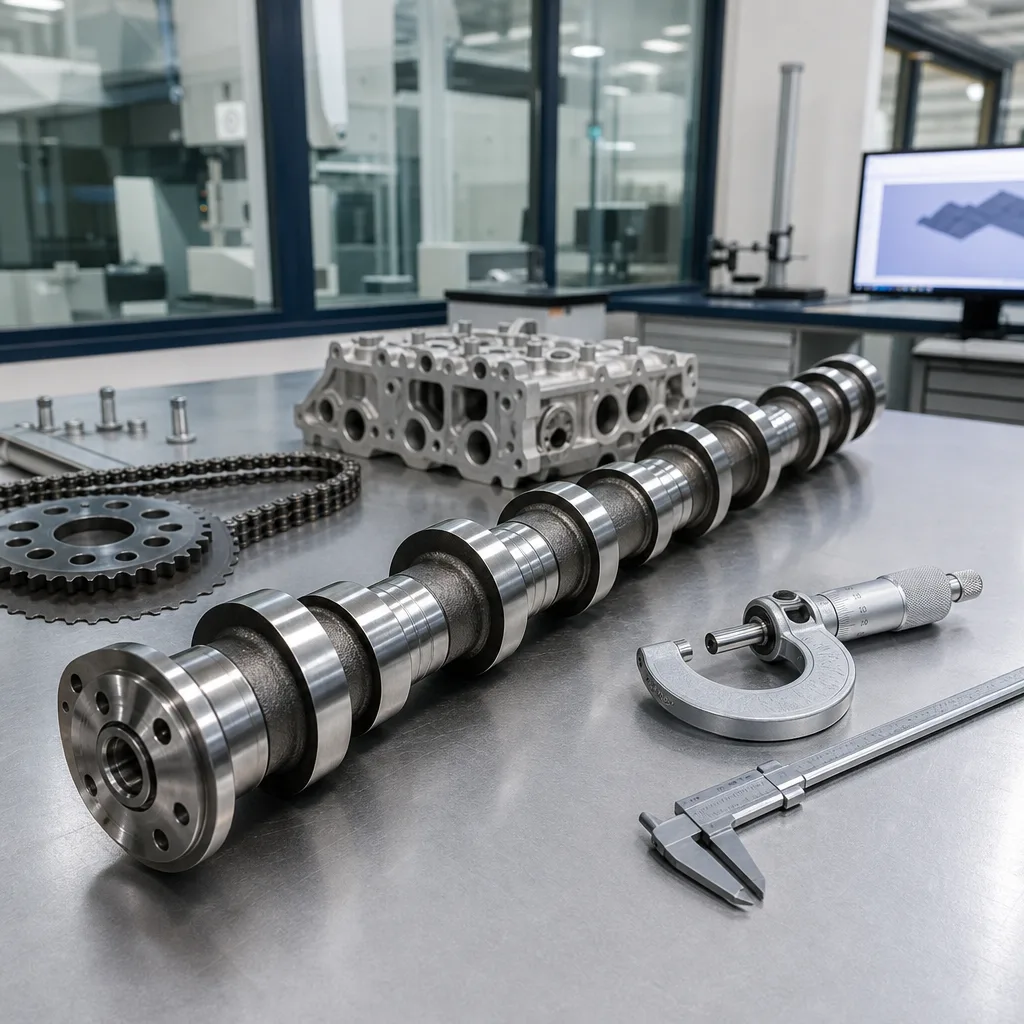
A useful procurement spec starts with the function of each part, not the marketing description of the kit. A timing chain kit normally includes the chain, cam and crank sprockets, guide rails, tensioner assembly, pins, seals and fasteners. Those parts work under mixed load: cyclic tension, boundary lubrication, cold starts, oil contamination and heat soak.
The buyer should ask for:
Base material grade for each metal part
Polymer grade and glass-fibre content for guides
Heat-treatment process and target hardness
Coating or surface finish, with test method
Traceability by lot, heat number or date code
For catalogue alignment, start with our catalog, then confirm the supplier can document the same material stack in the quality system. If the kit is part of a broader build, check adjacent parts in engine components so the chain set does not become the weak link in an otherwise matched assembly.
The core point is simple: fitment is dimensional, but durability is material-driven. Two kits that match in pitch and link count can still behave very differently after 40,000 km if the steel, polymer and coating choices are not controlled at source.
Common materials by component
Component
Common material choice
Why it matters
Buyer check
Chain links, pins, rollers
Alloy steel, typically quenched and tempered
Fatigue life, wear rate, noise
Confirm tensile load, pin hardness and shot peening
Sprockets
Case-hardened or induction-hardened steel
Tooth wear and pitch stability
Ask for surface hardness and core toughness data
Guide rails
Glass-fibre reinforced polyamide such as PA66 or PA46
Wear, oil resistance and dimensional stability
Verify polymer grade, filler content and heat ageing data
Tensioner plunger
Hardened steel with plated or nitrided surface
Stiction control and corrosion resistance
Check stroke tolerance and finish specification
Seals and O-rings
FKM or NBR depending temperature and oil chemistry
Leak control and long-term elasticity
Confirm compound family and compatibility statement
</tr></thead><tbody> </tbody></table>The table above is not a universal bill of materials. It is a practical sourcing map. In colder markets, polymer stability at low temperature matters as much as hot oil resistance. In high-mileage fleets, the chain itself may be adequate, but the guide rails fail first if the polymer is under-specified. For buyers serving mixed fleets, the safest approach is to standardise on the engine family, then let the material stack follow the validated duty cycle rather than the lowest quote.
Heat treatment and coatings are part of the material decision
Material grade alone is not enough. The same nominal steel can perform well or poorly depending on hardening depth, tempering cycle and surface finish. For sprockets, many programs specify a surface hardness in the 58 to 62 HRC range with a tougher core beneath it. For pins and rollers, the goal is usually wear resistance without making the component brittle. For guides, the important question is not only the resin family but also how well the polymer resists oil swell, creep and thermal fatigue.
A clean spec should define:
Heat-treatment method: carburising, induction hardening, quench and temper, or nitriding
Target surface hardness and acceptable tolerance band
Surface roughness where friction is critical
Coating type, if used, and the test method for corrosion resistance
Change-control rules for any post-approval material substitution
If a supplier claims corrosion performance on coated brackets, fasteners or tensioner housings, the validation file should name the test method, for example ISO 9227 or SAE J2527 where applicable. The point is not to overload the drawing with every possible test. The point is to make the claims auditable so a sourcing team can compare one offer with another on the same basis.
Where the buyer has a private-label or platform program, custom manufacturing should include material locking at APQP stage, not after sample approval.
How to compare supplier data without guessing
The best offers usually arrive with more than a price. They include the evidence needed to repeat the purchase six months later with the same result. For a timing chain kit, ask for the following documents before you move a supplier into approved status:
1. Material certificates for all metal parts 2. Polymer declaration for guides and seals 3. Dimensional inspection report against the drawing 4. Hardness report and heat-treatment summary 5. Endurance or bench-test results, ideally with the test conditions stated 6. Traceability format for production lots
For buyers managing multiple brands or engine families, the supplier should also show how part numbers are cross-referenced internally without changing the validated build. That is where a disciplined quality system matters more than a polished sample box. It should describe how incoming material, in-process checks, final inspection and complaint handling are controlled.
A weak supplier file tends to rely on statements such as "OEM quality" without test data, or on a sample that matches visually but not metallurgically. A strong file names the standard, the test condition and the acceptance limit. That is the difference between a price quote and a sourcing decision.
For teams buying across the EU, UK, US, Canada and Brazil, this approach reduces language drift and helps procurement compare like with like, even when the supply base is split across regions.
What failure looks like when material control is weak
Material mistakes usually show up as symptoms long before complete failure. In the field, buyers and workshop teams report chain rattle on cold start, timing drift, broken guide rails, sticky tensioners or premature tooth wear on the sprockets. Those outcomes do not always mean the design is wrong. More often, one material choice or one process step was not controlled tightly enough.
Typical root causes include:
Guide rails with insufficient heat resistance or poor filler dispersion
Chain pins with inconsistent hardness or poor surface finish
Sprockets that lost tooth profile because the case depth was too shallow
Tensioner plungers that corroded or stuck after storage and shipping exposure
Mixed batches where one process revision was introduced without revalidation
For distributors and repair chains, the commercial risk is straightforward: a low-cost kit that returns under warranty costs more than a controlled kit bought once. That is why the sourcing brief should focus on service life, not just unit price. If the engine family is already defined, compare the kit against the adjacent components in our catalog and keep the revision history on file.
The practical rule is simple. If the supplier cannot explain why a material was chosen, they probably cannot control what happens when that material sees real oil, heat and load over time.
Frequently asked questions
No. Excess hardness can reduce toughness and create brittle failure. Buyers should balance wear resistance, fatigue strength, noise and corrosion behaviour. The correct choice depends on engine load, oil quality, temperature range and service interval, not on hardness alone.
Request material certificates, heat-treatment reports, dimensional inspection data, hardness results, traceability details and validation tests. If coatings are claimed, ask for the test method and acceptance limit. A supplier should be able to link every claim to a document.
Yes, when the target dimensions, material grades and validation requirements are defined. For platform or private-label programs, use [request a quote](/contact.html) to share the drawing pack, annual volume and target market so the material stack can be matched to your application.
If you are comparing timing chain kit material across suppliers, send the engine family, target volume and required test documents. We can review the drawing pack and quote to your specification at [request a quote](/contact.html).