Timing Belt Kit Dimensions: What Buyers Should Verify
Timing belt kit dimensions are a sourcing control point, not a minor catalogue detail. For procurement teams, the dimensional match between the belt, tensioner, idler, and water pump determines whether a kit fits the intended engine family and whether installation can be completed without rework. The right comparison starts with belt length, width, pitch, tooth profile, and tensioner geometry, then extends to bearing size, mounting offset, pulley diameter, and gasket or seal interfaces where the kit includes a water pump. Driventus supplies timing belt kits for aftermarket and B2B channels with dimensional verification against OE references where available. Driventus is an independent aftermarket manufacturer; brand names are referenced for fitment only. Buyers should request measured drawings, material data, and test records before release. For procurement support, see [our catalog](/products.html), [quality system](/quality.html), and [request a quote](/contact.html).
What dimensions matter in a timing belt kit
A timing belt kit is a matched assembly. If one component is outside tolerance, the full kit can fail installation or run out of specification.
Key dimensions to verify:
Belt length: effective pitch length and outside length, depending on catalogue convention
Belt width: must match pulley face width and OE routing
Tooth profile: pitch, tooth count, and profile geometry
Tensioner pulley OD: affects belt wrap and back-face contact
Idler pulley OD and width: must match bracket spacing
Bore and mounting dimensions: bolt size, centre distance, and offset
Water pump interface, if included: gasket land, impeller clearance, bolt pattern, and seal seating depth
For engines with close packaging, a 1–2 mm error in pulley offset or belt width can create edge wear, noise, or incorrect tension. Buyers should treat the kit as an assembly specification, not a list of parts.
Core specification table for sourcing review
Use a dimension sheet before PO release. The table below shows the data points that should be present on a supplier drawing or inspection report.
</tr></thead><tbody> </tbody></table>Typical dimensional documentation should also list:
Material for belt backing, cords, and pulley bearings
Radial runout and face runout for rotating parts
Noise and belt tracking test results
Packaging count and kit contents
If the supplier cannot supply measured data, request it before sampling.
Common tolerances buyers should specify
Published OE dimensions are only useful if the supplier controls variation.
A practical procurement spec should include:
Belt width tolerance: confirm against OE or drawing requirement
Pulley outer diameter tolerance: prevent change in effective wrap angle
Bearing play and smoothness: inspect for axial and radial movement
Mounting hole positional tolerance: avoid bracket stress and misalignment
Water pump flange flatness: reduce gasket leakage risk
For B2B sourcing, ask for a dimensional inspection report from the production lot, not only a first-article sample. For repetitive supply, lock the approved drawing revision, sample code, and packing configuration. This is especially important when the same engine family uses different accessory layouts across model years.
Where the buyer requires change control, supplier drawings should be revision-managed under IATF 16949:2016 and ISO 9001:2015 processes.
How Driventus validates dimensional fit
Driventus uses a controlled process for timing drive components and related engine parts.
Verification typically includes:
1. Incoming material check for belt compounds, bearings, and cast or machined parts 2. In-process dimensional inspection of critical features 3. Final assembly verification against the approved drawing set 4. Lot traceability for belts, tensioners, idlers, and pumps 5. Packaging checks to prevent compression damage or contamination
When required by the customer, we can support OE-style cross-reference work using the part family and application data provided by the buyer. For broader engine sourcing, review our engine components page.
We also support custom manufacturing for private-label or programme-specific requirements, including kit content changes, packaging, and revised dimensional control plans.
Standards and test references buyers can request
Timing belt kits are not typically certified to one universal fitment standard, but the supplier should align controls with recognised quality and material frameworks.
Relevant references include:
IATF 16949:2016 for automotive quality management
ISO 9001:2015 for quality system discipline
REACH (EC) No 1907/2006 for chemical compliance in the EU
SAE J2527 where rubber or polymer durability testing is relevant to exposure resistance
ECE R-83 where application context involves emissions-related maintenance and roadworthiness considerations
For buyers, the most useful documents are dimensional inspection records, material declarations, and test summaries showing how the kit was validated for the target application. If the kit includes elastomer seals or gasketed pumps, request ageing and leakage data as part of the technical file.
Buyer checklist before placing a PO
Before approving a timing belt kit, confirm the following:
OE reference or engine code is stated clearly
Belt length, width, tooth count, and profile are listed
Tensioner and idler dimensions are identified separately
Water pump dimensions are included if the kit contains one
Drawing revision and sample approval status are fixed
Material declaration and compliance documents are available
Inspection method and acceptance criteria are defined
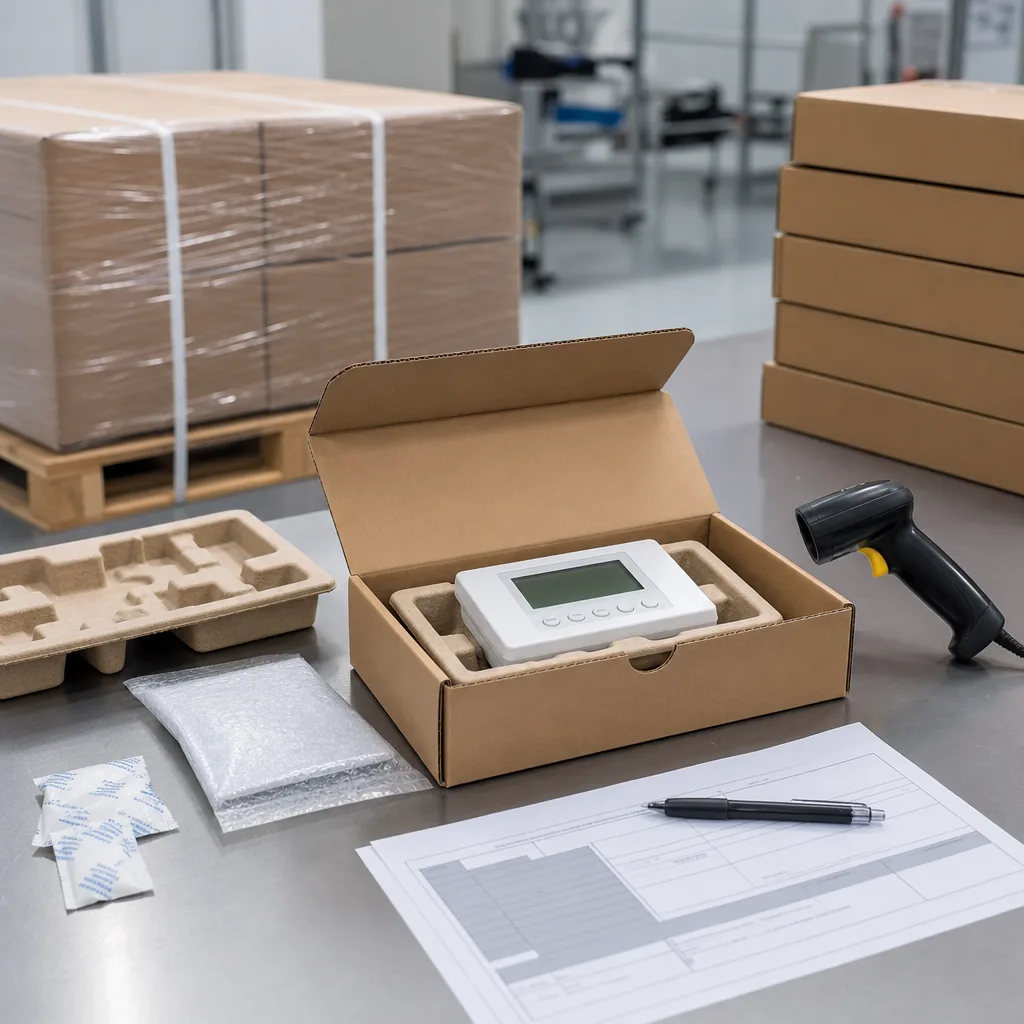
Packaging protects belt shape and pulley bearings during transport
If these data are missing, the sourcing risk is high. A low-cost kit with incomplete dimensional control often creates warranty exposure, installation delays, and repeat labour claims. For suppliers supporting multi-site programmes, a formal control plan is not optional.
Frequently asked questions
Belt length and tooth profile are the first checks, but pulley offset and width are equally important. A kit can look correct and still fail if the tensioner or idler geometry is wrong.
Request both. A part number is not enough for procurement approval. You need a drawing, revision status, and a dimensional inspection report to confirm fitment.
Yes. Driventus supports custom manufacturing for approved kit content, packaging, and dimensional requirements, subject to technical review and sample validation.
If you need timing belt kit dimensions checked against your application list or OE cross-reference, send your enquiry to /contact.html and our team will review the specification with you.