Tensioner Pulley Material: Specification and Sourcing Guide
Tensioner pulley material influences belt tracking, bearing support, wear life, NVH, thermal growth, corrosion resistance, and overall programme cost. For procurement teams, the decision is rarely as simple as choosing steel, aluminium, cast iron, or polymer. The complete assembly has to control belt-contact geometry, bearing press-fit, surface finish, balance, and dimensional stability across the vehicle duty cycle.
Stamped steel, machined steel, cast iron, aluminium alloy, and glass-fibre-reinforced polymer can all be valid options when the application window is clearly understood and the validation evidence supports the choice. That assessment starts with practical application data: belt type and profile, belt wrap angle, static and dynamic belt tension, pulley outside diameter, maximum pulley speed, under-bonnet temperature range, water, salt, dust, and oil exposure, target service interval, and warranty target.
A low-cost pulley that matches the basic envelope can still fail commercially. Axial or radial runout may drive belt noise. A coating may corrode during sea freight. A bearing seat may relax after heat cycling, or the running surface may accelerate belt wear. These are sourcing risks, not just engineering details.
Driventus is an independent aftermarket manufacturer; brand names are referenced for fitment only. For purchasing decisions, buyers should compare material grade, bearing specification, belt-running surface roughness, pulley mass, coating system, dimensional tolerances, corrosion performance, and validation evidence against the OE benchmark. This guide explains the main tensioner pulley material options, what to verify on drawings and samples, and how quality and compliance frameworks such as IATF 16949:2016, ISO 9001:2015, REACH (EC) No 1907/2006, PPAP-style documentation, corrosion testing, endurance cycling, and environmental durability tests support sourcing decisions.
Material options used in tensioner pulleys
The right tensioner pulley material depends on belt load, pulley diameter, rotational speed, under-bonnet temperature, contamination exposure, expected service interval, and whether the part is used in a passenger-car FEAD system, light commercial vehicle, heavy-duty engine, or auxiliary drive. Material should never be assessed in isolation. It has to be reviewed together with the bearing, seal package, hub design, belt-running profile, press-fit strategy, and surface finish. A strong pulley body will not make up for an unstable bearing seat, poor concentricity, or an abrasive belt-contact surface.
Material
Typical use case
Strengths
Trade-offs
Key sourcing checks
Stamped steel
High-volume accessory drives and cost-sensitive aftermarket SKUs
High stiffness-to-cost ratio, mature forming process, stable geometry when tooling is controlled
Requires corrosion protection; edge burrs, forming cracks, and coating coverage must be controlled
Sheet grade and thickness, coating type and thickness, deburring, axial/radial runout, concentricity, bearing-seat tolerance
Machined steel
Higher-load or tighter-tolerance pulley designs
Excellent bearing support, strong hub geometry, close tolerance capability
Higher mass, longer cycle time, higher machining cost
Steel grade, heat treatment or hardness where specified, bearing bore tolerance, surface roughness, balance, coating compatibility
Cast iron
Heavy-duty, high-damping, or high-thermal-stability applications
Good damping, wear resistance, thermal stability, robust groove stability
Heavier; casting quality and machining control are critical
Casting porosity, nodularity or grade if ductile iron is used, machined profile, balance, corrosion coating, crack inspection
Aluminium alloy
Weight-sensitive programmes and inertia-reduction targets
Low mass, good thermal conductivity, good corrosion resistance with suitable finish
Softer belt-running surface than steel; handling damage and wear must be controlled
Alloy grade, cast or wrought route, heat treatment such as T6 where specified, anodising or conversion coating, groove-wear data
Low mass, lower noise transmission, no red rust, moulded design flexibility
Heat ageing, creep, moisture absorption, fibre orientation, and bearing retention must be validated
Resin family, glass-fibre content, moulding parameters, post-mould dimensions, bearing push-out force, ageing and thermal-cycling data
</tr></thead><tbody> </tbody></table>Stamped steel is widely used in OE-style and independent aftermarket programmes because it gives buyers a practical mix of stiffness, repeatable high-volume production, and unit cost. Key purchasing variables include sheet thickness, forming route, bearing-seat design, coating method, and whether the belt-running surface is formed, rolled, or machined after forming. Visual approval is not enough. Coating thickness, edge condition, forming accuracy, weld or rivet quality where applicable, and bearing-seat consistency all affect field performance.
Machined steel suits designs that need tighter hub control or stronger bearing support. It is generally easier to hold bearing-seat geometry on a machined steel hub than on thin formed sections, although mass and cost increase. Drawings should define bearing-seat diameter tolerance, roundness, perpendicularity to the pulley face, and surface roughness. In many pulley assemblies, only a few tens of microns of variation at the bearing seat can change press-fit force and bearing internal clearance.
Cast iron is less common in light-duty passenger-car applications, but it still has a place where damping, thermal stability, and wear resistance matter. In heavy-duty belt drives, the added mass can be acceptable if it supports stable belt tracking and lower vibration. Sourcing checks should cover casting defect control, machining allowance, balance, and the coating or oiling method used for storage and transport.
Aluminium alloy is selected when reduced rotating mass is important. Depending on geometry, an aluminium pulley can be substantially lighter than a comparable steel or cast-iron design. The trade-off is that the belt-running surface has to resist abrasive contact from the belt compound, road dust, and misalignment. In practice, the specified alloy, casting quality, heat treatment, and surface treatment are usually more important than the generic label “aluminium.”
Reinforced polymer can be a strong option when the design is validated correctly. Glass-fibre-reinforced polyamide grades are often used where low mass, corrosion resistance, and reduced transmitted noise are priorities. Procurement teams should still confirm the resin family, reinforcement percentage, moisture-conditioning assumptions, mould-flow control, dimensional retention, and bearing retention after heat ageing. A polymer pulley that works well in one engine bay may not be suitable for a hotter turbocharged application or a higher-tension drive.
For procurement, the material decision should be tied to measured performance rather than a generic preference. A polymer pulley can be appropriate for a passenger-car programme if temperature exposure, belt tension, dynamic loading, bearing retention, and belt wear are proven in testing. Steel remains common where stiffness, wear stability, and low piece cost matter more than mass. If you need a wider range of drive-system parts, see our catalog and our engine-component range at [/products/engine-components.html].
How material affects performance and service life
Material choice changes how the pulley behaves under belt tension, heat, vibration, contamination, installation load, and long-term storage. Two pulleys with the same nominal outside diameter can deliver very different service outcomes. The difference may come from runout, bearing-seat retention, coating coverage at edges, groove roughness, or a material that creeps after thermal exposure.
The main performance areas are:
Belt tracking: The pulley must maintain groove profile, crown profile, width, and alignment so the belt does not walk, chirp, fray, or wear one edge.
Bearing support: The hub or bearing seat must hold the required interference fit without distorting the bearing, reducing internal clearance, or relaxing after thermal cycling.
Surface wear: The belt-running surface must resist polishing, scoring, abrasion, corrosion roughening, and profile change that can alter belt contact pressure.
Thermal stability: Coefficient of thermal expansion, creep resistance, heat ageing, and coating stability affect bearing fit and belt-contact geometry.
NVH behaviour: Material density, damping, balance, runout, and surface roughness influence belt whine, chirp, rumble, and vibration transfer into the tensioner arm.
Corrosion and contamination resistance: Salt spray, humidity, road dust, oil mist, coolant residue, and cleaning chemicals can shorten service life if the material or coating system is not suitable.
Steel and cast iron
Steel and cast iron provide high stiffness and good resistance to groove deformation. They are suited to higher belt loads and programmes where alignment control is critical. Steel is usually preferred for high-volume production because it can be stamped, roll-formed, machined, or assembled efficiently. Cast iron is more often considered where damping, thermal stability, and wear resistance are more valuable than low mass.
Corrosion protection matters in markets with winter road salt, high humidity, coastal warehousing, or long ocean-freight lead times. Depending on the design and belt-contact area, suppliers may use zinc plating, zinc-nickel plating, phosphate plus oil, electrophoretic coating, powder coating, or controlled paint systems. Buyers should confirm coating type, nominal coating thickness, adhesion, edge coverage, post-coating dimensions, and whether coating is permitted on the belt-running surface. Too much coating, or an uneven coating at the bearing seat, can change press-fit force. A rough running surface can increase belt wear.
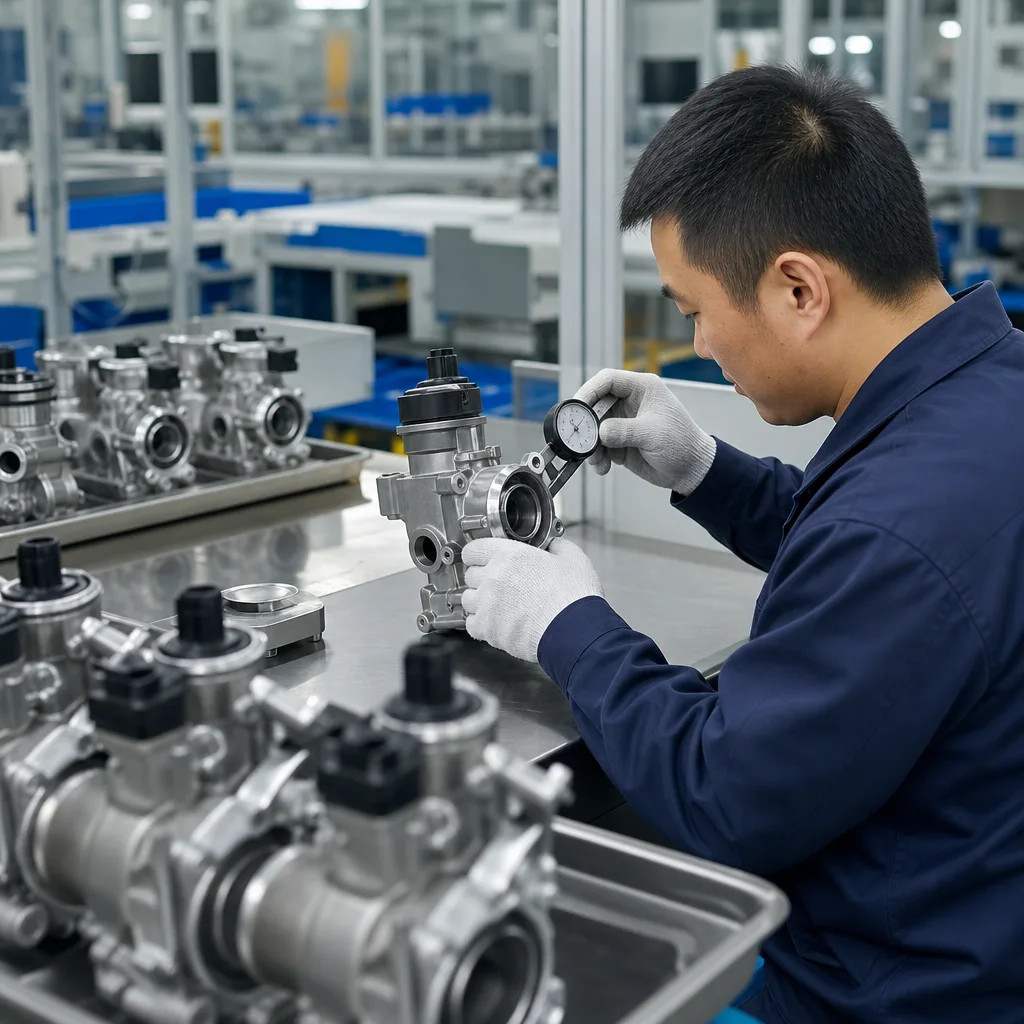
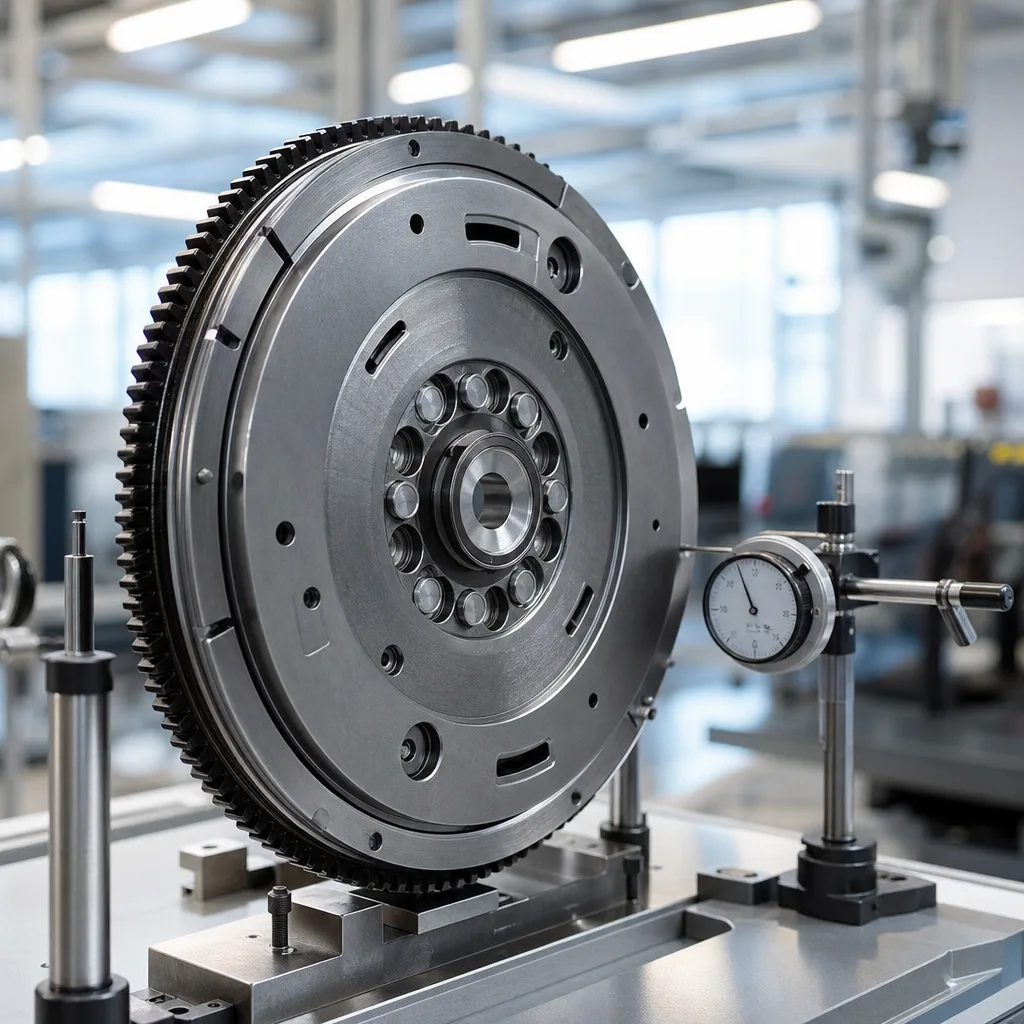
For steel and cast iron pulleys, sample checks should include axial runout, radial runout, bearing-seat diameter, roundness, groove or crown geometry, coating uniformity, burr control, surface roughness, and installed bearing rotation torque. Excessive runout can create belt vibration. Poor bearing-seat control can shorten bearing life, and sharp edges can damage the belt during installation or operation.
Aluminium alloy
Aluminium reduces rotating mass and can improve heat dissipation because it has higher thermal conductivity than steel. It is useful where inertia management matters, where packaging is tight, or where lower mass supports NVH and efficiency targets. The material is softer than steel, however, so the belt-running surface must be protected against wear and handling damage.
Hard anodising, conversion coating, e-coating, or another wear-resistant finish may be required depending on belt path and contamination level. The sourcing team should ask whether the aluminium is cast, forged, or machined from wrought stock; whether heat treatment is specified; and whether belt-wear testing has been completed under the expected load, wrap angle, and temperature. Packaging deserves attention too. Impact marks on the belt-contact surface can become local wear points or noise sources.
Reinforced polymer
A reinforced polymer pulley can reduce mass and transmitted noise, and it removes the risk of red rust. It also allows useful design flexibility, including integrated ribs, controlled wall thickness, moulded lead-in radii, and features that reduce secondary machining. Even so, the material has to be validated for creep, heat ageing, moisture absorption, fibre orientation effects, bearing push-out force, and long-term groove stability.
For polymer pulleys, buyers should confirm the resin family, glass-fibre or mineral reinforcement percentage, moulding process window, drying control, cavity identification, and heat-ageing performance. Dimensional checks should be performed after conditioning and thermal cycling, not only at room temperature immediately after moulding. The bearing insert or bearing seat is especially important because differential thermal expansion between polymer and steel can reduce retention or increase bearing stress. Typical validation evidence should include bearing push-out before and after ageing, runout after thermal cycling, and visual inspection for cracks, sink, voids, or fibre-rich surfaces.
For programme approval, durability testing should match customer requirements and published methods where relevant. Environmental exposure may reference methods such as ASTM B117 or ISO 9227 for neutral salt spray where corrosion performance is specified. Application-specific endurance should include belt-drive cycling, speed/load variation, thermal soak, thermal shock, dust exposure, water spray, belt-slip events, dimensional retention checks, and NVH measurement. The objective is straightforward: prove that the selected tensioner pulley material maintains belt alignment, bearing retention, acceptable noise, and surface integrity throughout the target service interval.
Validation, standards, and documentation
Procurement teams should ask for evidence, not just material declarations. A tensioner pulley material may look acceptable in a sample, but purchasing approval should be based on controlled drawings, repeatable production data, and application-relevant validation results. For customer-specific parts, a PPAP-style file is often the clearest way to connect drawing requirements, process controls, inspection data, material records, and approval samples.
For an exported tensioner pulley programme, the minimum documentation set should usually include:
Material declaration and, where relevant, REACH (EC) No 1907/2006 compliance statement
IATF 16949:2016 or ISO 9001:2015 certification status for the manufacturing site
Material grade certificate or approved supplier material specification
Coating specification, nominal coating thickness, process route, and corrosion-performance report where applicable
Incoming, in-process, and final inspection records with batch identification
PPAP-style dimensional report if the part is customer-specific or drawing-controlled
Control plan covering forming, machining, moulding, heat treatment, coating, bearing assembly, marking, and final inspection
Measurement system evidence for key characteristics such as bearing seat, runout, concentricity, and pulley profile
Salt spray or cyclic corrosion test reports where coating performance is specified
Runout, NVH, belt-wear, bearing-endurance, and thermal-cycling data for the target application
Packaging specification to prevent corrosion, brinelling, deformation, and surface damage in transit
Traceability records linking raw material, bearing lot, process date, inspection lot, and final shipment
A quality file should show traceability from raw material to finished assembly. This is particularly important when the pulley is supplied as a closed assembly with a bearing, seal, bolt, spacer, dust cover, washer, or bracket. A field issue may appear to involve pulley material, while the real cause is bearing contamination, incorrect bearing press force, coating build-up at the bore, insufficient seal protection, transport impact, or an unapproved bearing substitution. Good documentation helps separate these risks before production release.
Buyers should also define critical-to-quality dimensions. For most tensioner pulleys, these include outside diameter, belt-running profile, groove geometry where applicable, pulley width, bearing bore, bearing-seat diameter, bearing shoulder height, axial runout, radial runout, concentricity, surface roughness, balance where specified, and installed bearing rotation. For polymer designs, post-ageing dimensions and bearing push-out force should be treated as critical. For metal designs, coating adhesion, coating thickness, corrosion resistance, and burr control should be included when required by the target market.
Standards such as IATF 16949:2016 and ISO 9001:2015 do not prove that a specific pulley will survive the field duty cycle. They do, however, indicate whether the supplier operates a structured quality-management system. REACH documentation supports chemical compliance for European-market supply. Corrosion, thermal, endurance, and customer-specific belt-drive tests then provide the application evidence. Where no public standard exactly matches the drive system, buyers should approve a test plan based on OE benchmark data, belt load, pulley speed, temperature range, contamination exposure, and target service interval.
If you are assessing a supplier, review the controls described on our quality system page before audit planning. Driventus operates as an independent aftermarket manufacturer; brand names are referenced for fitment only. We do not claim vehicle-manufacturer approval or endorsement.
Sourcing checks for aftermarket, OEM, and service-chain buyers
Different buyer groups may use the same part number for different commercial goals. The sourcing checklist should therefore reflect the sales channel as well as the engineering requirement.
Aftermarket distributors usually prioritise SKU coverage, OE cross-reference accuracy, stable dimensions, competitive landed cost, warehouse-ready packaging, and low return rates.
OEM and Tier-1 buyers usually require controlled drawings, process capability, APQP/PPAP-style approval, traceability, formal change control, and customer-specific validation steps.
Multi-location repair chains usually prioritise consistent fitment, clear installation identification, fast replenishment, predictable warranty outcomes, and batch-level issue containment.
Private-label importers often need a balance of OE cross-reference accuracy, packaging control, country-specific compliance, batch traceability, and repeatable supply over multiple shipments.
When comparing suppliers, ask for:
1. Confirmed OE cross-reference coverage and application list by engine code, model year, belt layout, and tensioner configuration where available 2. Material grade and coating specification for each pulley design, not one generic material statement for the full range 3. Dimensional tolerance chart for outside diameter, width, groove or crown profile, bearing seat, bore, shoulder, and runout 4. Bearing specification, internal clearance, seal type, grease type, temperature rating, and bearing-endurance evidence 5. Minimum order quantity, lead time, annual capacity, tooling ownership, and replenishment plan 6. Sample approval process, dimensional inspection report, fitment check, and test summary 7. Packaging method for sea freight, pallet storage, distributor handling, and corrosion prevention 8. Labelling format, barcode requirements, batch traceability, and private-label options if required 9. Warranty-handling process, failure-analysis method, containment timing, and corrective-action response time 10. Change-control procedure for material, coating, bearing, grease, seal, tooling, process parameters, or sub-supplier changes
A practical sourcing review should include both desk evaluation and physical sample assessment. Desk evaluation confirms drawings, material declarations, certificates, process controls, test reports, and cross-reference data. Sample assessment confirms fitment, finish, bearing rotation, pulley runout, coating quality, belt-contact surface, marking, and packaging. For critical programmes, buyers should request pre-shipment inspection data, retain golden samples, and compare later shipments against the approved sample and drawing revision.
If a programme needs a non-standard hub, face profile, groove design, bearing specification, coating, or polymer grade, use our custom manufacturing capability to align the design with the vehicle duty cycle and target cost. Customisation should be controlled through drawings, tolerance tables, samples, validation plans, approval records, and written engineering change approval. Informal substitutions are a common source of noise complaints and warranty returns. Examples include changing from a named bearing to a lower-cost equivalent, changing coating supplier, or switching polymer grade.
The most common sourcing mistake is choosing the lowest unit price without checking NVH, mass, corrosion resistance, bearing-seat stability, and belt-wear data. The second is assuming one tensioner pulley material fits every engine family. The third is treating a clean visual sample as production approval without reviewing process capability and change control. For standard and special requirements alike, a documented sourcing review is usually cheaper than field failure.
Recommended procurement decision matrix
For purchasing teams, the following matrix is a practical starting point for selecting tensioner pulley material. Use it to narrow the supplier discussion before drawings, testing, and commercial negotiation.
Programme need
Preferred material direction
Why
Additional verification
High belt load
Stamped steel, machined steel, or cast iron
High stiffness and stable groove or crown geometry
Bearing-seat retention, runout, fatigue/endurance cycling, bearing temperature
Tight bearing-seat control
Machined steel or machined aluminium
Better bore roundness and shoulder control when machining is controlled
Bore tolerance, roundness, perpendicularity, press-fit force, bearing rotation after assembly
Application-matched material with full documentation
Lower warranty risk and stronger brand positioning
PPAP-style report, traceability, golden sample, packaging validation, change-control agreement
</tr></thead><tbody> </tbody></table>This matrix is only a screening tool. Final selection must be based on actual belt load, belt wrap, ambient and peak temperature, pulley speed, alignment tolerance, contamination exposure, target service interval, and validation results. Where a part is intended for cross-market supply, confirm conformity with local chemical, labelling, packaging, and performance requirements before release.
A useful procurement workflow is:
1. Identify the OE reference, vehicle application, engine code, belt type, pulley position, and expected duty cycle. 2. Benchmark the original pulley material, mass, dimensions, bearing specification, coating, and belt-contact surface finish. 3. Define critical dimensions, tolerances, material grade, coating requirements, and performance targets before requesting quotes. 4. Compare supplier proposals by material grade, validation evidence, bearing specification, process control, and change-control discipline—not only unit price. 5. Approve samples through dimensional inspection, fitment review, runout measurement, bearing rotation check, coating inspection, and application-relevant testing. 6. Lock the specification and require written approval for future material, coating, bearing, grease, seal, tooling, or sub-supplier changes.
If you need support on tensioner pulley material selection, validation, or private-label supply, request a quote and include the OE reference, vehicle application, annual volume, target market, preferred packaging, and target test standard.
Frequently asked questions
Steel is common because it offers high stiffness, good bearing support, wear resistance, and stable dimensions at a practical production cost. Aluminium and reinforced polymer are also used where mass reduction, corrosion resistance, or NVH targets justify the material and validation cost.
Only if the belt load, pulley speed, temperature exposure, bearing retention, creep resistance, dimensional stability, belt wear, and NVH performance have been validated for the application. A material swap without testing can change press-fit retention, alignment, surface wear, and noise behaviour.
Ask for material declaration, material grade certificate, dimensional inspection data, certification status, coating or corrosion test results, endurance data, bearing information, control plan, packaging specification, and traceability records. For custom or drawing-controlled parts, request a controlled drawing, approval sample, and PPAP-style report where applicable.
If you are comparing tensioner pulley material options for aftermarket or production supply, send the OE reference, drawings, target market, and annual volume for review. Start here: /contact.html