EGR Valve Genesis Manufacturer China: Sourcing Guide
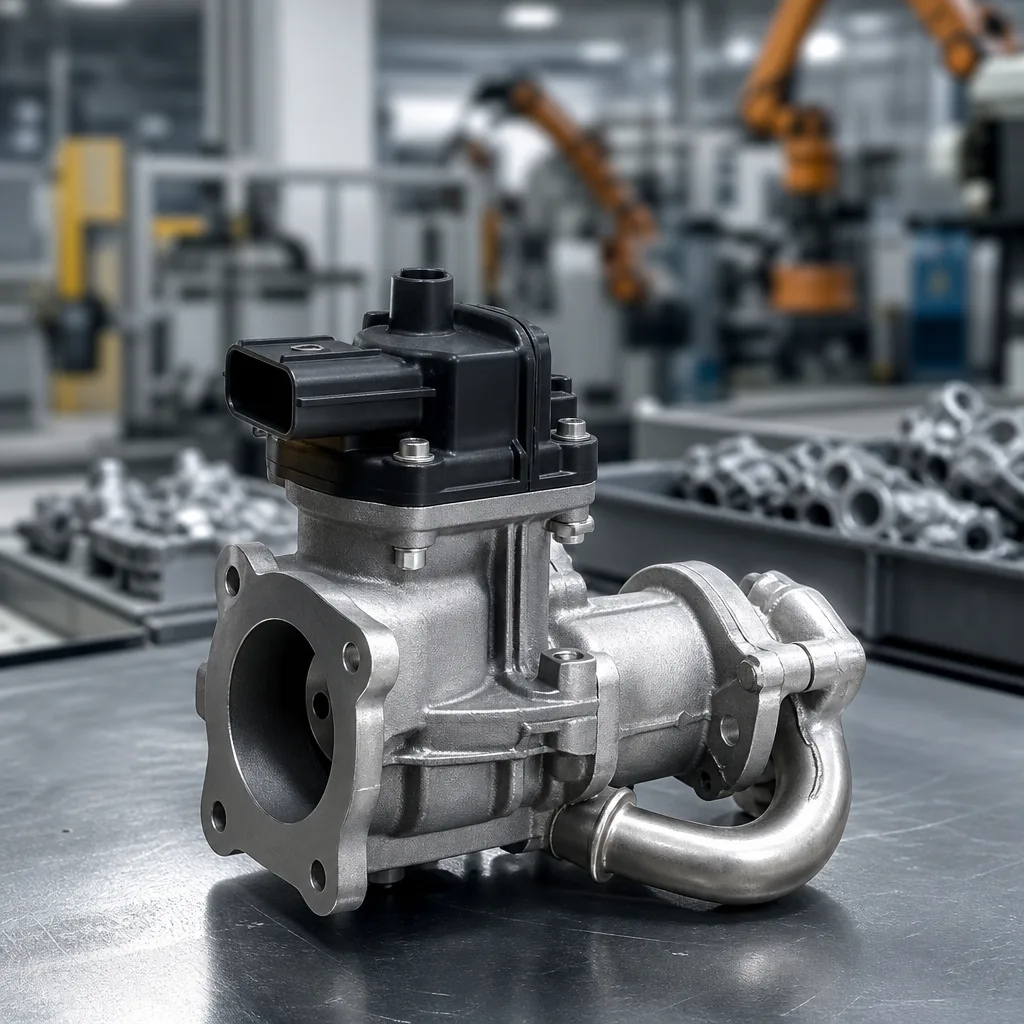
Buyers searching for an egr valve genesis manufacturer china are rarely looking for price alone. They need confidence that the valve will fit, perform consistently, ship with the right documentation, and arrive from a supplier that can explain exactly how each unit is checked. For diesel and petrol programmes, the manufacturer should verify housing geometry, connector keying, sealing interface, actuator type, position-feedback method, flow window, and validation records before purchase. These details affect installation, emissions control, diagnostic trouble-code risk, warranty exposure, and customer confidence after the repair.
Driventus is an independent aftermarket manufacturer; brand names are referenced for fitment only. From Taizhou, Zhejiang, we supply EGR valve and engine component programmes to distributors, repair networks, and OEM supply chains under IATF 16949:2016 and ISO 9001:2015 systems. In regulated or warranty-sensitive markets, buyers should ask how each valve is tested for thermal cycling, soot and condensate contamination, seat leakage, electrical response, and durability under repeated actuation. This guide highlights the sourcing checks that matter when you compare China suppliers, review samples, approve drawings, and move from a trial order to stable production.
Start With Fitment Data, Not Price
A low price only has value after the part is proven to fit the intended application. EGR valves may look similar across engine families, yet differ in connector angle, terminal count, bolt spacing, gasket land, vacuum port position, pintle travel, flap angle, or ECU calibration range. A 1-2 mm mismatch at the mounting face, or a different connector keyway, can lead to installation trouble, exhaust leakage, diagnostic trouble codes, or poor exhaust-gas recirculation control once the vehicle is back in service.
Settle the application data before you discuss pricing. Ask the supplier to confirm engine code, displacement, fuel system, emission level, EGR cooler layout, connector series, vacuum or electronic actuation, and valve mounting pattern. If an OE reference is available, share it with sample photos, but do not rely on the reference number by itself. Cross-reference tables are not always complete, and some market variants use different connectors, housings, or actuator calibrations even when the base engine appears to be the same.
A supplier should confirm:
- sealing face dimensions, flatness requirement, and gasket profile
- spindle, flap, or pintle travel, closed stop, and full-open position
- electrical pinout, terminal count, connector keyway, or vacuum port layout
- bolt pattern, mounting height, housing orientation, and hose clearance
- actuator type, sensor feedback, PWM or stepper control where applicable
- resistance values or feedback signal range where the design requires them
- sample photos matched to the production drawing revision
- packaging label references that match the approved fitment list
For Genesis-related replacement programmes, disciplined application control is the central issue. The part should be matched by measurable geometry and functional requirements, not by a broad catalogue description. Before approving a quotation, ask for a connector-view photo, mounting-face photo, dimensional sketch, and approved interchange list. For electronic valves, confirm that the motor, gear train, return spring, position sensor, and connector are tested as a complete assembly rather than treated as separate cosmetic features.
If you are building a broader engine programme, you can review our catalog and the related engine components range before issuing an RFQ. This reduces drawing churn and helps buyers compare like-for-like offers instead of comparing unrelated housings, mixed revisions, or parts that only match at a headline application level.
Materials And Durability Checks
EGR valves operate in an unforgiving environment: hot exhaust gas, soot, acidic condensate, oil mist, vibration, and constant actuator movement. Exhaust-side temperatures can move from ambient to several hundred degrees Celsius in normal operation, while condensate and soot attack seats, shafts, seals, and bushings. Early failures often trace back to weak material selection, poor sealing, unstable actuator response, or carbon build-up around the pintle, flap, shaft, or seat. On diesel applications, carbon loading deserves particular attention because sticking, leakage, or inconsistent closed-position repeatability can quickly become drivability complaints and emissions-related fault codes.
Typical sourcing checks:
- aluminium die-cast, stainless steel, or iron body material declared on the material sheet
- stainless fasteners and corrosion-protected brackets, clips, and exposed hardware
- shaft, seat, and flap materials selected for heat, wear, and soot exposure
- elastomer and diaphragm compatibility with exhaust condensate, fuel vapour, and oil mist
- connector terminal plating and seal design suitable for engine-bay humidity
- actuator response verified at low, room, and elevated temperature conditions
- leakage rate or flow response recorded against the approved specification
- packaging that prevents seat, connector, sensor, and mounting-face damage in transit
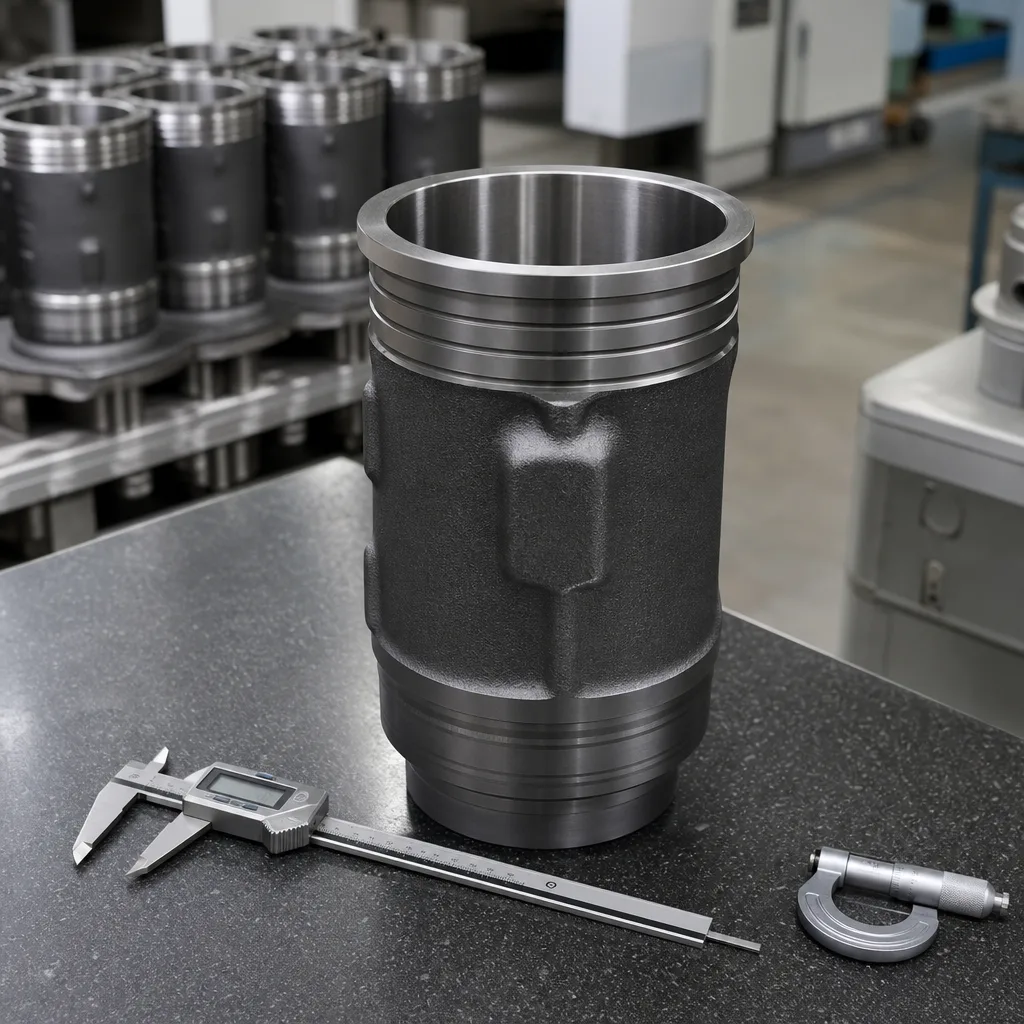
Ask how the manufacturer controls both the valve body and the moving mechanism. Casting porosity raises leakage risk, sealing-face flatness affects gasket compression, and thread quality influences installation torque. Machining quality determines shaft alignment, bushing clearance, valve-seat contact, and repeatable movement. For electronic EGR valves, the actuator, position sensor, solder joints, connector terminals, gear wear, and housing seal should be treated as durability-critical items. For vacuum-operated valves, diaphragm material, spring force, cracking pressure, and port integrity should be checked against the approved sample.
For export programmes, request a material declaration and ask how the part complies with REACH (EC) No 1907/2006. Restricted substances may be present in coatings, greases, adhesives, elastomers, solder, terminal plating, or anti-corrosion treatments, so the compliance review should cover the full assembly, not only the metal housing. If your target vehicle set references ECE R-83, or durability work uses SAE J2527-style environmental exposure, request the matching validation record rather than accepting a verbal statement.
A stronger supplier can walk you through the actual test sequence: incoming casting and actuator checks, sealing-face and critical-dimension inspection, actuator movement, leakage or flow verification, electrical response testing, temperature exposure where required, and final packaging inspection. This level of detail matters because an EGR valve can pass a quick appearance check and still fail under thermal cycling, contamination, vibration, or repeated actuation in service.
Production, MOQ, And Lead Time
Procurement teams usually focus on three commercial variables: sample time, production lead time, and MOQ. The right answer depends on whether you need catalogue supply, private label packaging, or a drawing-based variant. Standard catalogue items may move faster because tooling, machining fixtures, gauges, and end-of-line test criteria already exist. A modified housing, connector, sensor boss, bracket, calibration, or label programme takes longer because each change must be documented and verified before mass production.
A practical manufacturing RFQ should request:
- annual demand forecast and expected order frequency
- target first-order quantity and reorder quantity
- sample quantity, sample deadline, and approval method
- OE or aftermarket reference numbers used only for fitment comparison
- carton, inner box, pallet, and shipping-mark requirements
- label language, barcode format, and traceability rules
- required inspection report format and certificate package
- destination market and any importer-specific compliance requirements
For an EGR valve Genesis sourcing project, separate sample approval from commercial rollout. First approve the fitment, connector, actuator function, leakage or flow result, packaging, and documentation. Then confirm the first production lot size, inspection level, and shipment schedule. This prevents the familiar problem of negotiating a large order before the application data is stable. It also gives both buyer and manufacturer a clear standard for repeat orders.
MOQ is usually shaped by casting or machining batch size, actuator and sensor availability, connector sourcing, packaging customization, and label requirements. Private label packaging can require a higher MOQ than neutral packaging because printed boxes, inserts, and labels are produced in batches. If the order uses a special connector, revised mounting, different bracket, customer-specific test report, or controlled carton mark, the supplier may also need dedicated fixtures, gauges, or extra engineering review.
Lead time should be broken down by stage: sample preparation, dimensional and functional testing, buyer approval, material procurement, machining, assembly, end-of-line inspection, packaging, and export booking. Ask whether the quoted lead time starts from deposit, drawing approval, sample approval, receipt of packaging artwork, or confirmation of the inspection standard. These definitions matter when you are planning a seasonal stocking programme or coordinating multiple engine components in the same shipment.
For buyers that need a modified housing, sensor boss, connector revision, or mounting change, custom manufacturing is usually cleaner than forcing a near-match part into production. It gives the factory one approved geometry to control, inspect, repeat, and audit later.
Quality System, Audit Pack, And Supplier Comparison
Quality is not a certificate on the wall. It is the working combination of incoming checks, in-process control, end-of-line verification, traceability, and corrective action when a problem appears. For EGR valves, the quality system should cover mechanical fit, material control, actuator performance, sealing, flow response, packaging, and lot identification. A supplier that offers only a catalogue image and a price is leaving too much risk with the buyer.
At minimum, ask for:
- IATF 16949:2016 and ISO 9001:2015 certificates within their validity period
- factory profile and production scope relevant to EGR valves and engine components
- approved drawing or controlled dimensional sketch for the sample lot
- dimensional inspection report for critical-to-fit features
- material declaration and component lot traceability records
- functional test criteria for opening, closing, leakage, or flow response
- actuator, position-sensor, and connector test method for electronic valves
- packaging specification, connector protection, and transit-protection approach
- nonconforming-material control and corrective-action process
The audit pack should connect the approved sample to the production lot. The same drawing revision, connector view, test criteria, label reference, packaging specification, and inspection plan should appear in the order file. If the buyer later reports a fitment or field issue, traceability should make it possible to identify the shipment, production date, inspection record, operator or line record where available, and relevant component batch.
Driventus is an independent aftermarket manufacturer; brand names are referenced for fitment only. That distinction matters in B2B sourcing because the purchasing decision should be based on verified compatibility, manufacturing control, and documentation, not on any implication of brand ownership or affiliation.
Use this comparison when you review supplier quotes:
| Quote element | Acceptable answer | Why it matters |
|---|---|---|
| Fitment data | Drawing, sample photos, connector view, application list | Reduces misapplication and catalogue errors |
| Test evidence | Functional report, leakage or flow result, cycle data where required | Confirms repeatability beyond appearance |
| Material control | Declared alloy, elastomer spec, coating, grease, and plating declaration | Supports durability and compliance review |
| Production control | Lot number, inspection plan, approved sample reference | Helps repeat orders match the approved part |
| Packaging | Export-grade carton, connector protection, trace labels | Lowers transit damage and warehouse confusion |
| Audit access | Factory profile, certificates, quality-system summary | Supports sourcing approval and vendor onboarding |
| After-sales response | Corrective-action process and evidence review path | Reduces dispute time when claims occur |