A rear main seal leak and a valve stem seal failure can both lead to oil loss, oil odour, and customer complaints about smoke. They do not, however, fail in the same place or call for the same parts, tools, or labour plan. For procurement teams, distributors, and repair networks, the real task is more than naming the suspect part. It is confirming the failed interface, matching the correct seal family, checking dimensions and material, and avoiding returns caused by symptom-based ordering.
Valve stem seals control oil at the valve stem-to-guide interface, typically on stems in the 5–8 mm diameter range depending on engine design. The rear main seal controls engine oil at the rear crankshaft journal, normally between the crankcase or seal carrier and the transmission bellhousing area. One is a top-end oil-control part; the other is a rotating crankshaft oil seal.
Driventus is an independent aftermarket manufacturer; brand names and OE references are used for fitment identification only. Our valve stem seals are produced under IATF 16949:2016 and ISO 9001:2015 systems, with material control aligned to REACH (EC) No 1907/2006 where applicable. This article explains how to separate a rear main seal leak valve stem seal complaint, inspect the engine with fewer assumptions, and confirm what buyers should check before ordering replacement parts.
Symptom pattern: where the oil appears matters
Start with the oil path. A rear main seal leak normally shows up as external oil at the engine-to-transmission joint. Fresh oil may collect at the lowest point of the bellhousing, on the inspection cover, around the flywheel or flexplate cover, or on the clutch housing of a manual-transmission vehicle. On high-mileage vehicles, road airflow can spread oil along the underbody, so the wet area may look larger than the true leak source.
A valve stem seal fault usually points to oil burning, not an external drip. Oil passes between the valve stem and guide, enters the intake or exhaust port, and reaches the combustion chamber. Typical signs include blue smoke after extended idle, smoke on cold start, smoke after long deceleration followed by throttle input, oil ash on spark plugs, and measurable oil consumption without a matching underbody leak.
Quick comparison
Item
Rear main seal leak
Valve stem seal failure
Main oil location
Bellhousing, flywheel/flexplate cover, lower rear engine area
Usually from oil contacting exhaust or underbody heat shields
Blue exhaust smoke after idle, deceleration, or start-up
Spark plug fouling
Not expected from the rear seal alone
Common on affected cylinders; oil ash or wet oil may be visible
Oil smell
Hot-oil smell from external drip
Burnt-oil smell in exhaust stream
Typical repair scope
Transmission removal or engine/transmission separation
Valve spring removal, in-vehicle top-end service, or cylinder head overhaul
</tr></thead><tbody> </tbody></table>If the vehicle has oil at the bellhousing and blue smoke from the exhaust, resist the urge to force one explanation. A rear main seal leak valve stem seal complaint can involve two unrelated faults: an external leak at the crankshaft rear interface and an internal oil-control problem in the valve train. Verify each one before ordering, because the seal design, quantity, tool set, and labour time are completely different.
What a valve stem seal does, and why it fails
A valve stem seal leaves just enough oil film for the valve stem and valve guide while restricting excess oil from entering the combustion chamber. The seal lip has to stay centred on the valve stem through thousands of opening cycles per minute. At the same time, it is exposed to oil splash, fuel vapour, crankcase vapour, port pressure changes, and repeated thermal cycling. On many engines, intake and exhaust valve stem seals are not interchangeable because the exhaust side sees higher heat load while the intake side sees different vacuum conditions.
Failure starts when the lip hardens, wears, cracks, loses radial preload, or is cut during installation. Once that happens, oil can move past the guide area and enter the port. On intake valves, high manifold vacuum during idle or overrun can draw oil through worn seals or excessive guide clearance. On exhaust valves, temperature can accelerate elastomer hardening, spring relaxation, and carbon build-up around the stem. The result is often smoke that comes and goes, which is why the problem can be missed during a quick look underneath the vehicle.
Common failure drivers include:
Thermal aging from sustained cylinder-head temperature and extended drain intervals
High crankcase temperature, restricted PCV flow, or excessive blow-by
Excessive valve guide clearance, which prevents the seal lip from maintaining stable contact
Contaminated, oxidised, or incorrect lubricant grade
Installation damage from forcing the seal over a keeper groove without a protective sleeve
Incorrect installed height, tilted shell seating, or insufficient shell retention on the guide
Carbon deposits around the valve stem that abrade the lip or restrict stem movement
Incorrect seal selection for intake versus exhaust position
For replacement planning, buyers should verify seal material and dimensions against the engine design. Common aftermarket material families include NBR/HNBR for moderate-temperature applications and FKM/FPM fluoroelastomer for higher-temperature, chemically demanding applications. Some designs use a metal shell for guide retention, a garter spring for lip load control, or an integrated locator to control installed height. The correct specification depends on valve stem diameter, guide outside diameter, seal outer diameter, overall height, installed height, port side, and engine operating environment. Visual similarity is not a reliable sourcing basis.
Inspection steps before ordering parts
Good diagnosis reduces downtime, prevents unnecessary top-end or drivetrain work, and protects the buyer from choosing the wrong seal family. For fleet, distributor, or workshop buyers, document the inspection sequence before purchase approval, especially when the request starts with a symptom rather than a confirmed part number.
1. Check oil level history, top-up frequency, oil grade, drain interval, and whether the complaint appears after cold start, hot idle, overrun, or highway operation. 2. Clean the rear engine area with approved degreaser if it is heavily contaminated, then run the engine and road-test where safe to identify fresh oil paths. 3. Inspect the bellhousing, rear main area, oil pan rear edge, cam plugs, rocker cover, oil filter housing, turbo oil lines, and lower engine cover for leaks that may run downward. 4. Use UV dye and a lamp after a controlled road test where access is limited or old oil residue makes the source unclear. 5. Use a borescope through the bellhousing inspection opening, spark plug holes, intake port, or exhaust port where applicable. 6. Remove and examine spark plugs for wet oil, ash deposits, or cylinder-specific fouling. Compare plug condition cylinder by cylinder. 7. Record smoke timing: cold start, hot restart, extended idle, throttle lift, acceleration, or continuous load. Valve stem seal faults are commonly visible after idle or overrun. 8. Perform compression and leak-down tests to separate valve stem seal leakage from piston ring wear, cylinder bore wear, or valve seating issues. 9. Check PCV valve operation, breather passages, hoses, and crankcase pressure. Excessive crankcase pressure can worsen rear main leakage and increase oil carry-over. 10. Inspect valve guides, valve stems, spring seats, and stem-to-guide play if the cylinder head is removed or if the service procedure allows access. 11. Confirm whether the real source is external gasketage, crankshaft rear oil seal leakage, valve train oil control, turbocharger oil leakage, or another engine oil-control issue.
For engines with OE 06A107065-style cross-reference requests, confirm the exact engine code, model year, cylinder head variant, valve count, intake/exhaust position, valve stem diameter, guide outside diameter, seal overall height, and installed height before placing an order. A single catalogue line is not enough when one platform has multiple head or crankcase variants. Photos, samples, and measured dimensions should support cross-reference confirmation whenever application history is uncertain.
Replacement scope: what buyers should specify
Valve stem seal replacement may be a targeted top-end service, an in-vehicle repair using compressed air and valve spring tools, or part of a full cylinder head overhaul. Define the scope before sourcing so the correct quantity, intake/exhaust mix, packaging format, and supporting parts are ordered. A 16-valve engine may require 16 seals, but the intake and exhaust seals can differ in material, shell height, colour coding, or locator geometry.
Lot traceability, production date code, inspection record availability, and COA/COC requirements
Application match by engine code and cylinder head variant, not just vehicle nameplate
For procurement teams, dimensional consistency across production lots is critical. A seal that looks correct but has the wrong installed height, shell retention, stem lip diameter, or radial preload can increase oil consumption, accelerate valve stem wear, or create excessive valve friction. Incoming validation should include sample-fit checks on a reference guide and stem, dimensional inspection of critical-to-function points, material verification, packaging verification, and where applicable, endurance checks after oil immersion and thermal cycling.
Published quality requirements should align with IATF 16949:2016 and ISO 9001:2015. Where customer programmes require, documentation should also support REACH (EC) No 1907/2006 material control.
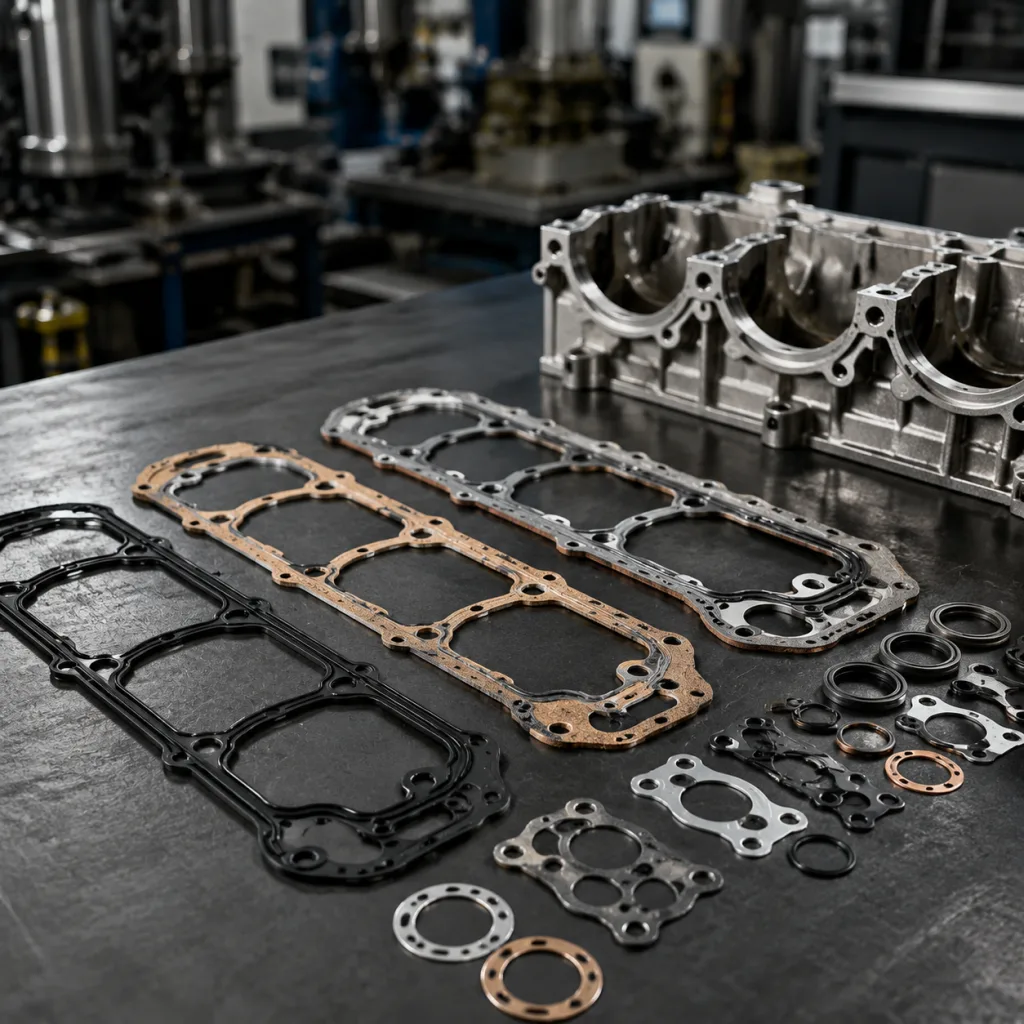
Buyers should define whether the order is for loose valve stem seals, an engine-specific repair set, or a broader gasket and seal kit. If the repair is being bundled with other engine components, review our catalog and the broader engine components range before placing a consolidated order. A clear kit structure helps repair networks avoid partial repairs, incorrect counts, mixed intake/exhaust positions, and returns caused by engine-variant mismatch.
When the rear main seal is the real problem
A rear main seal leak is not a valve train issue. The seal sits at the rear of the crankshaft and controls oil at the crankshaft-to-block, crankshaft-to-carrier, or crankshaft-to-seal-housing interface. It is affected by shaft rotation, crankcase pressure, oil contamination, installation alignment, and the condition of the crankshaft sealing track. If oil appears at the bellhousing and the engine also has high crankcase pressure, include the PCV system, breather passages, blocked hoses, excessive blow-by, and crankshaft journal condition in the diagnosis.
The rear main area is easy to misdiagnose because oil often travels down from higher components. Before committing to transmission removal, inspect the rocker cover, cam carrier, cylinder head rear plug, oil pressure switch, oil pan, turbo oil return, and rear-mounted gallery plugs. Cleaning and rechecking is often cheaper than removing a transmission for a leak that actually starts above the bellhousing.
Replacement usually requires transmission removal and inspection of the flywheel or flexplate area. Before ordering, buyers should confirm:
Seal outside diameter, crankshaft shaft diameter, width, and specified installed depth
Lip material and design, including PTFE dry-install requirements where applicable
Rotation direction, where the lip has directional hydrodynamic features
Crankshaft sealing track condition, including wear groove, corrosion, scoring, and surface finish
Housing bore condition, burrs, ovality, and alignment requirements
Required installation sleeve, depth tool, centring tool, or sealant pattern
Associated gaskets, flange sealant, pilot bearing, clutch components, torque converter fasteners, and one-time-use bolts
Vehicle transmission type, because access, fasteners, and associated parts can differ
If the vehicle is already down for major service, bundling rear seal work with top-end seal replacement can reduce repeat labour. Keep the parts list separated, though, so the correct component family is sourced: crankshaft rear oil seals are not interchangeable with valve stem seals. If the requirement includes private label, kit assembly, or drawing-based changes, use custom manufacturing for application-specific support.
Sourcing notes for distributors and repair networks
For aftermarket buyers, the commercial risk is not only failure in service. Mismatch, inconsistent dimensions, incomplete application data, weak cross-reference control, and poor traceability can all create returns and warranty pressure. A stable supply programme should include documented dimensional control, batch traceability, packaging verification, and a process that separates symptom-based enquiries from confirmed part-number demand.
Driventus supplies valve stem seals for B2B customers across aftermarket distribution, OEM and Tier-1 supply chains, and multi-location repair groups. Buyers can review our catalog, check the quality system, and request a quote for application-specific sourcing. For programmes that include both rear crankshaft seals and valve stem seals, the bill of materials should identify each seal by function, engine location, engine code, dimensions, material, quantity per engine, and pack quantity.
Before purchase approval, ask for:
Material specification, hardness range, and applicable operating temperature range
Critical dimensions and tolerances for stem bore, guide fit, shell OD, and installed height
Dimensional inspection method, gauge type, sampling plan, and measurement points
Sample availability for fitment confirmation on the customer’s guide and valve stem
Lot traceability, production date control, COC/COA availability, and retention sample policy
Lead time by volume, MOQ, forecast handling, and safety-stock options
Packing format for workshop kits, warehouse bulk supply, e-commerce, or private-label channels
OE cross-reference confirmation by engine code, cylinder head variant, and intake/exhaust position
Support for consolidated kits, barcode labelling, carton marking, and batch separation where required
This matters most when the purchase request begins with a symptom phrase such as rear main seal leak valve stem seal instead of a precise part number. Finish the diagnosis before locking in the sourcing decision, and check the catalogue match against the actual engine variant. Driventus is an independent aftermarket manufacturer; brand names are referenced for fitment only.
Frequently asked questions
Usually no. A valve stem seal issue mainly causes blue exhaust smoke, plug fouling, and oil consumption because oil enters the combustion chamber. A rear main seal leak normally leaves external oil near the bellhousing, flywheel, flexplate, or transmission area.
They can be replaced alone if valve guide clearance, valve stem condition, cylinder compression, and leak-down results are acceptable. If the head is removed, buyers should inspect guides, stems, springs, retainers, and related top-end seals before ordering.
Confirm engine code, cylinder head variant, intake/exhaust position, valve stem diameter, guide outside diameter, seal height, material type, quantity per engine, packaging format, and lot traceability. Do not rely on vehicle name alone when multiple variants exist.
If you need application confirmation, dimensional matching, or a quotation for a seal programme, contact our team here: /contact.html