rod bearing · 2026-05-28

Rod Knock Rod Bearing: Diagnosis, Inspection, and Replacement

Rod knock is usually treated as an engine noise problem, but from a parts sourcing perspective it is often a rod bearing failure problem. The sound can start as a light tap at idle, then become louder under load as bearing clearance increases and oil film stability drops. For buyers and workshop managers, the key question is not only what failed, but whether the connecting rod, crank journal, oil supply, and bearing shell size are still within repairable limits. A correct response depends on symptom recognition, teardown inspection, and dimensional verification before any replacement order is placed. Driventus is an independent aftermarket manufacturer; brand names are referenced for fitment only. This article explains how to connect noise diagnosis to bearing condition, what to measure, and when a standard-size or undersize bearing is appropriate. It also outlines the sourcing checks that matter for repeat repairs and fleet maintenance, including material control, shell thickness, and compliance with IATF 16949:2016 and ISO 9001:2015.

What rod knock usually means

Rod knock is the audible result of excessive clearance or damage at the connecting-rod big end. When the bearing shell can no longer maintain a stable hydrodynamic oil film, the rod can impact the crank journal on each combustion event.

Typical causes include:

  • Oil starvation from low oil level, blocked pickup, worn pump, or sludge
  • Contamination from coolant, fuel dilution, or abrasive debris
  • Incorrect bearing clearance after prior repair
  • Crankshaft journal out-of-round or taper beyond service limits
  • Rod distortion after over-rev, hydrolock, or prior seizure

For procurement teams, the critical point is that a bearing is not selected by engine family alone. It must match journal diameter, housing bore, shell thickness, and required oil clearance. If those values are not verified, the replacement may reduce noise temporarily but will not restore durable operation.

Symptoms that point to a connecting-rod bearing

A rod bearing fault usually shows a specific pattern. It is often louder when the engine is warm, and it may increase under throttle load or disappear on deceleration. The sound is commonly deeper than valvetrain ticking.

Common field signs

  • Deep metallic knock from the lower block area
  • Noise that rises with engine speed and cylinder load
  • Oil pressure that may be lower than normal at hot idle
  • Metallic debris in the oil filter or sump
  • Copper-coloured bearing material visible on teardown

Useful checks before disassembly

</tr></thead><tbody> </tbody></table>If the noise is present only at cold start and disappears quickly, diagnosis should also include lifters, timing components, and piston slap. Rod knock is most convincing when the sound remains under load and is strongest from the lower crankcase.

Inspection steps before ordering bearings

A proper teardown is required before replacement. The bearing shell should never be selected by appearance alone.

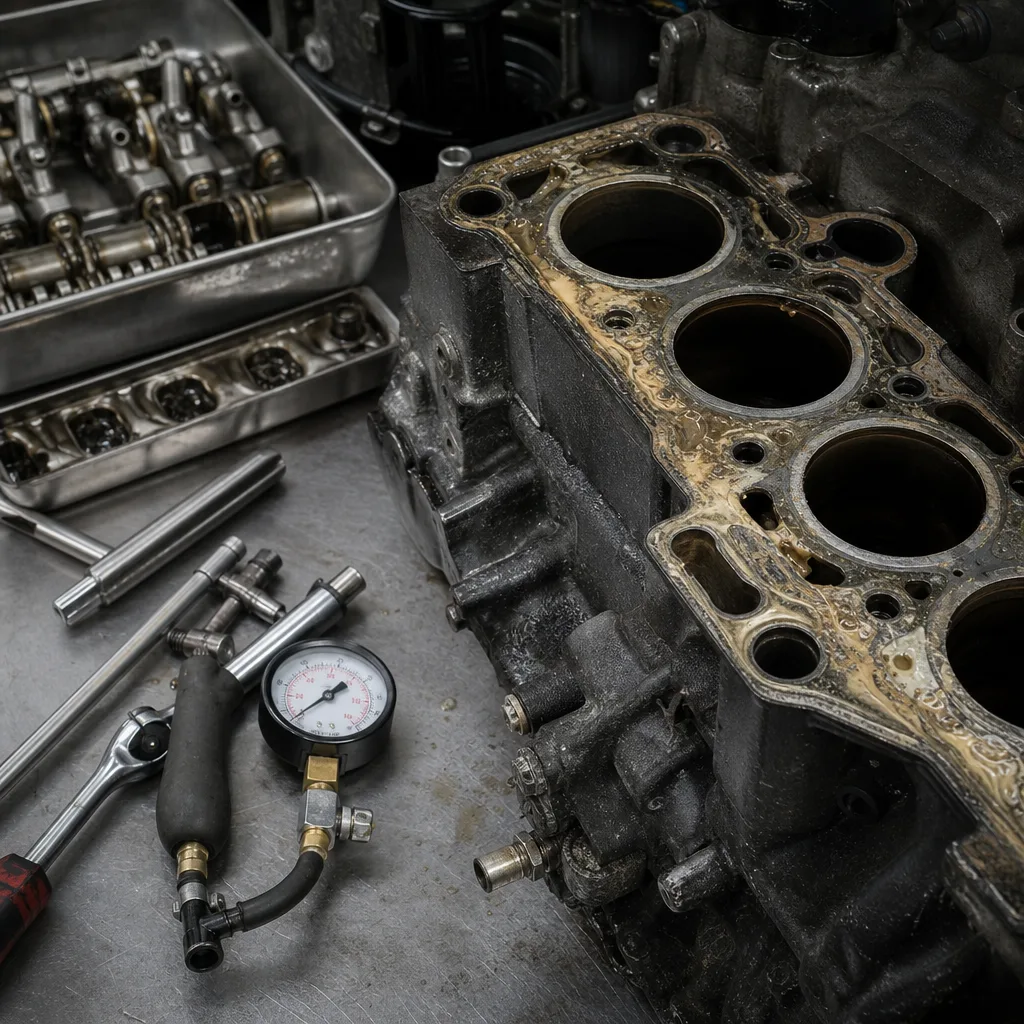
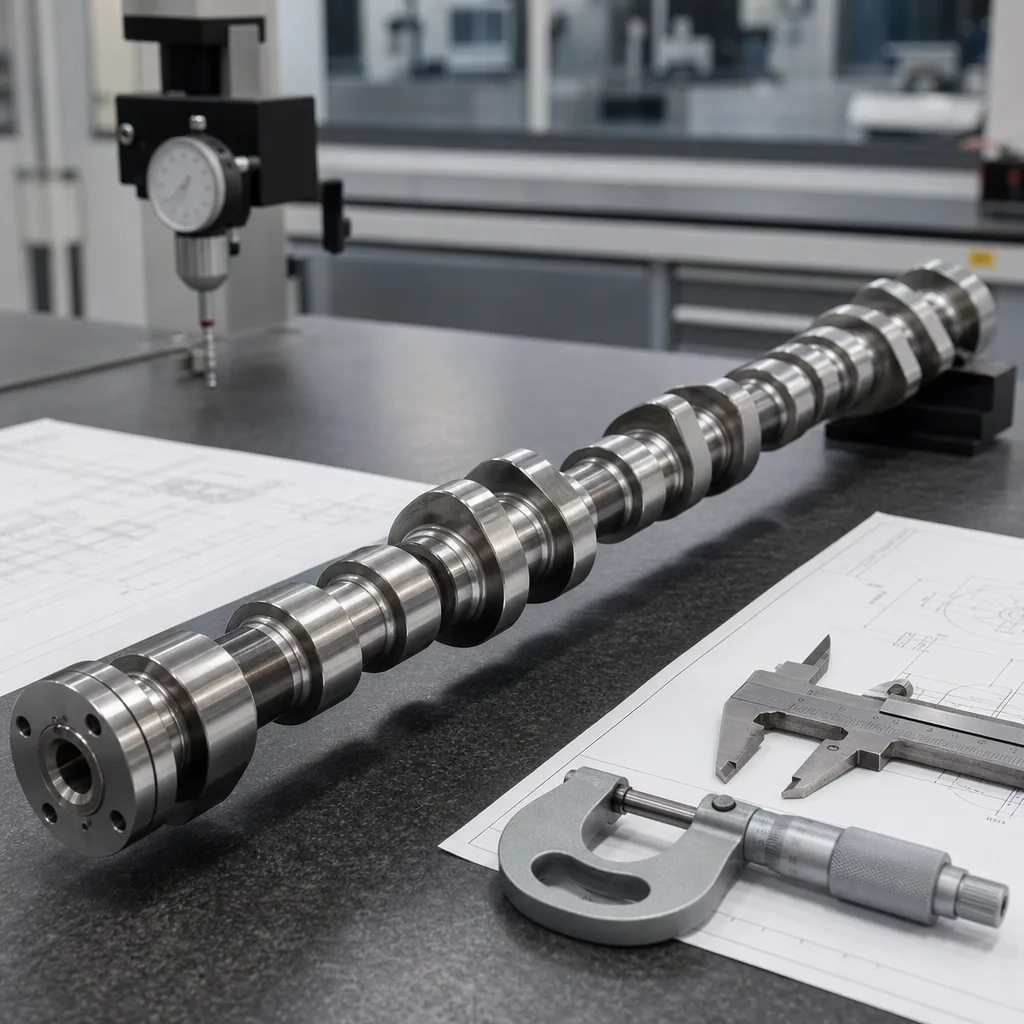
1. Drain and retain the oil and filter media for inspection. 2. Remove the sump and inspect for glitter, copper, or blackened sludge. 3. Check each connecting rod cap for orientation marks and torque history. 4. Measure crank journals with a micrometre at several positions. 5. Check journal taper and out-of-round. 6. Inspect the rod big-end bore for ovality or distortion. 7. Verify bearing crush, shell seating, and cap fretting. 8. Inspect oil passages and the pump for restriction.

Dimensional items to record

  • Journal diameter
  • Journal taper
  • Journal out-of-round
  • Rod housing bore diameter
  • Installed oil clearance
  • Bearing shell width
  • Side clearance at the rod big end

For repair planning, compare results against the service limits in the engine manufacturer data and the bearing supplier specification sheet. If the crank journal is scored beyond polish recovery, undersize bearings alone are not enough; the crank may need regrinding or replacement.

Replacement decisions: standard, undersize, or complete repair

The correct replacement path depends on measured wear, not the noise level alone.

Check What it suggests Why it matters
Hot idle oil pressurePossible bearing clearance lossHelps separate lubrication failure from accessory noise
Oil filter inspectionBearing material or ferrous debrisConfirms internal wear source
Cylinder cut-out testKnock changes with load removalCan identify the affected cylinder
Stethoscope at blockLower-end knock locationDistinguishes rod noise from top-end noise

</tr></thead><tbody> </tbody></table>A good replacement programme includes new shells, verified oil clearance, clean oil galleries, and a flushed lubrication system. If the engine uses OE 06A107065 or a similar cross-reference pattern, the matching part must still be validated by dimensions, not by part number alone. Driventus does not claim OEM approval or endorsement.

What procurement teams should verify with a rod bearing supplier

For aftermarket sourcing, the main risks are dimensional inconsistency, incorrect material pairing, and weak traceability. A supplier should provide repeatable shell geometry and documented process control.

Verify these points

  • Material pairing: steel back with lead-free or tri-metal overlay, as specified
  • Shell thickness consistency across lot samples
  • Correct chamfer, oil groove, and locating features where required
  • Compatibility with the target journal finish and oil clearance range
  • Traceability by batch, date code, and inspection record
  • Packaging that prevents edge damage and contamination

Driventus operates under IATF 16949:2016 and ISO 9001:2015 quality controls. For regulated supply chains, material declarations may also be required under REACH (EC) No 1907/2006. Buyers serving emissions-sensitive markets may ask for documentation aligned to ECE R-83 where applicable to the application, and for durability validation using recognised test methods such as SAE J2527 when relevant to the broader engine programme.

You can review our catalog, read about our quality system, and use custom manufacturing when a non-standard shell geometry or application-specific feature is required.

Validation after installation

After installation, the repair should be validated before returning the engine to service.

  • Prime the lubrication system before first start
  • Confirm oil pressure immediately after start-up
  • Listen for knock at idle and under light load
  • Recheck filter and sump after initial run-in if the engine was badly contaminated
  • Record final clearances and torque values for traceability

If the engine was rebuilt after a severe bearing event, a short controlled run-in period is advisable, followed by an oil and filter change. Any residual metallic debris can damage the new shells or the crank journal. For fleet buyers, repair records should be retained with the engine serial number and bearing batch number so repeat failures can be traced to the root cause rather than treated as isolated incidents.

Frequently asked questions

No. If the crank journal is scored, tapered, or out-of-round, the bearing is only part of the repair. The rod bore, oil system, and debris contamination also need inspection.

Measure the crank journal and rod housing bore first. Standard-size shells suit components still within service limits. Undersize bearings are used only after the crank has been ground to a matching diameter.

Ask for dimensional inspection data, batch traceability, material declaration where needed, and evidence of an IATF 16949:2016 or ISO 9001:2015 quality system. Samples should match the approved drawing and clearance targets.

If you need a matched rod bearing supply or a dimensional review for an application-specific build, please [request a quote](/contact.html).

Request a Quote
Condition found Recommended action Notes
Journal within size and surface finish limitsStandard-size rod bearingVerify clearance with plastigage or micrometre method
Journal slightly worn but grindableRegrind crank and fit undersize bearingMatch bearing size to final ground diameter
Journal heavily scored or heat-damagedReplace or recondition crankshaftBearing replacement alone will not solve the failure
Rod bore distortedReplace or resize connecting rodNew shells will not correct housing geometry
Oil contamination presentFull system clean and filter changeDebris can destroy new bearings quickly