Rear Main Seal How to Replace: Procedure and Checks
Replacing a rear main seal is a decision about fit, condition, and risk control—not just a swap. The job only succeeds when the seal matches the crankshaft diameter, housing depth, lip profile, and engine family, and when the sealing system is checked for wear, pressure, and alignment. In practice, rear main seal how to replace should start with measurement, not teardown: verify journal condition, crankcase pressure, and the seal maker’s dimensional data before removal. This guide gives a repeatable sequence for mixed fleets, with the checks, tolerances, and sourcing logic a buyer or service manager can use. Driventus is an independent aftermarket manufacturer; brand names are referenced for fitment only. Our components are produced under IATF 16949:2016 and ISO 9001:2015 quality controls, with material and traceability checks aligned to export-market expectations. For catalog coverage, see [our catalog](/products.html), and review the [quality system](/quality.html) before sourcing.
Decide whether the seal should be replaced
Before teardown, confirm the engine family, crankshaft diameter, seal housing style, and installation depth. Rear main seals are often blamed when the real issue is dimensional mismatch or crankcase pressure, so the first step is to rule out bad fit and bad conditions before disturbing the drivetrain.
Pre-job checklist
Confirm OE cross-reference if available, for example OE 06A107065 when the application lists it
Check whether the engine uses a one-piece or two-piece seal design
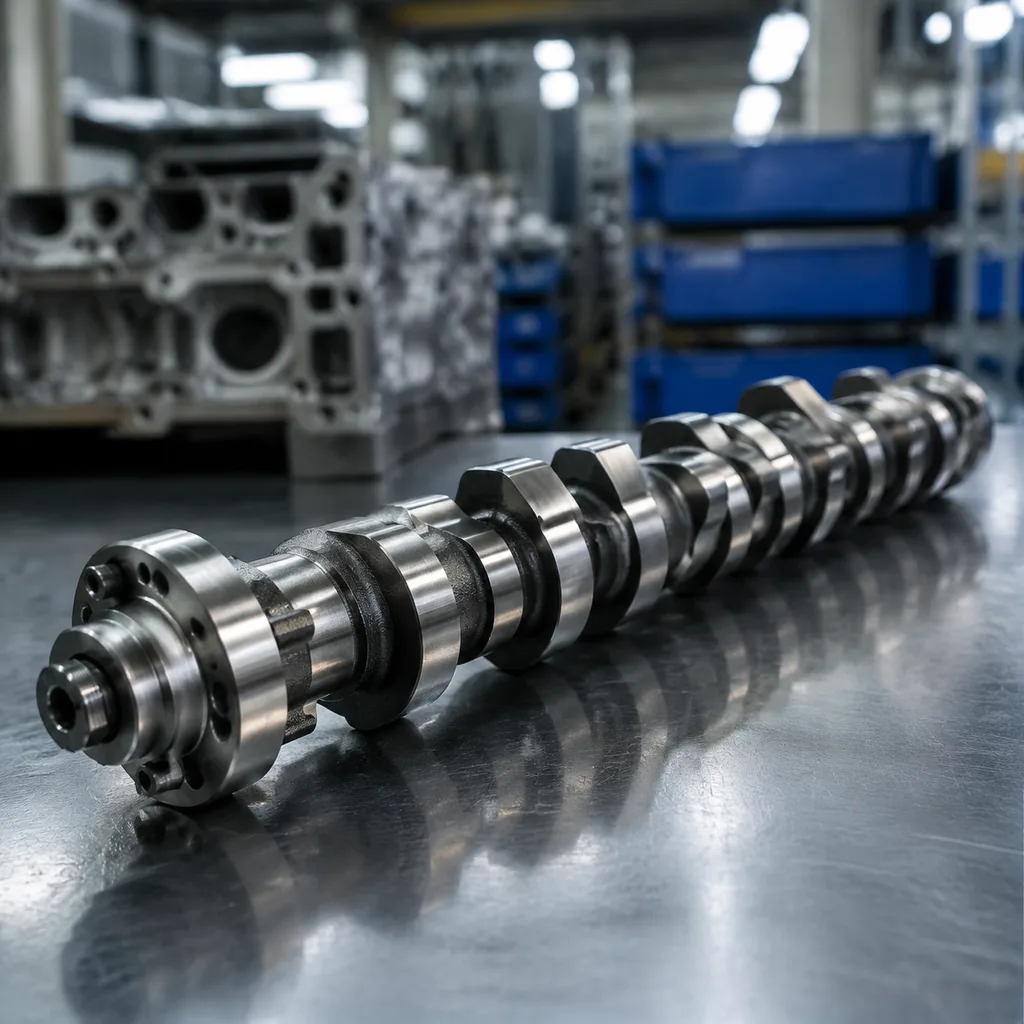
Measure crankshaft seal journal wear and surface finish
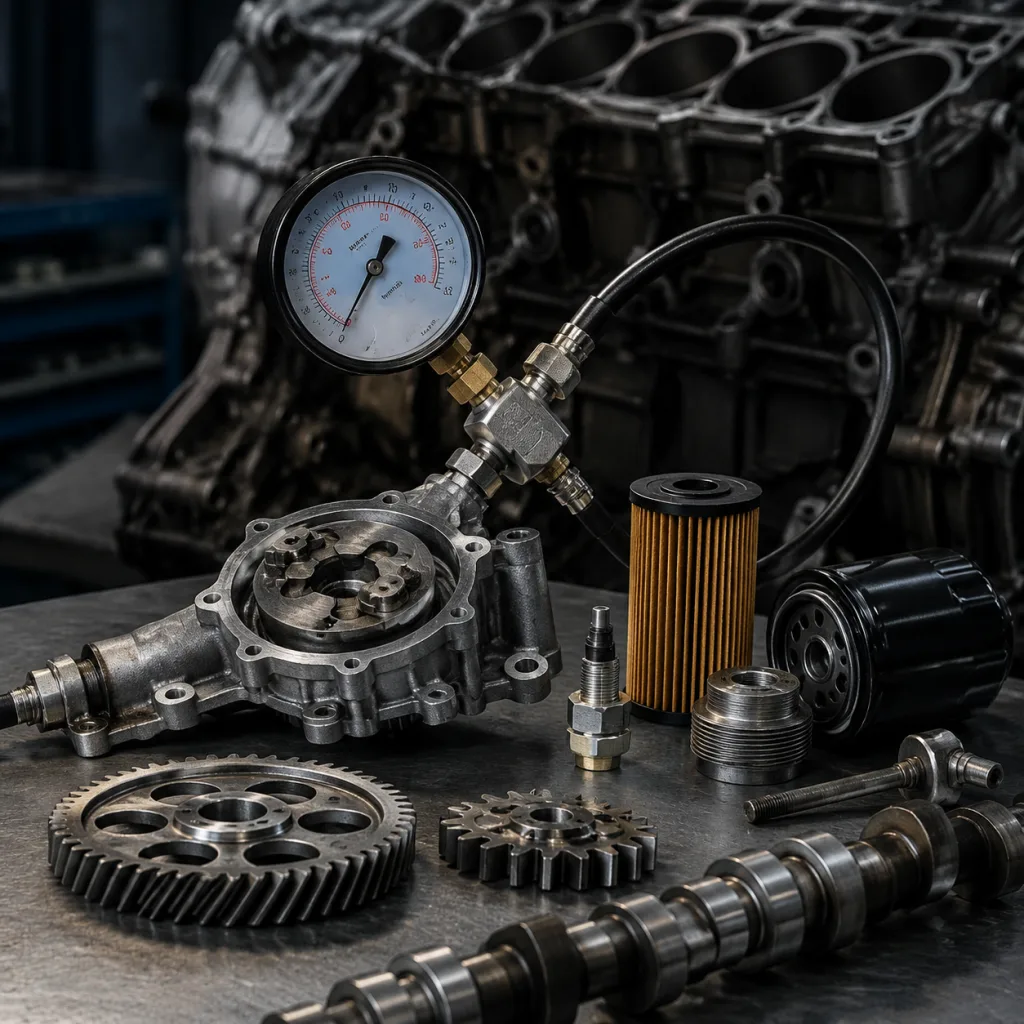
Inspect crankcase ventilation for restriction or excess pressure
Verify whether the housing uses RTV only, a gasket, or a rigid carrier
Record the seal OD, ID, and axial width from the sample or catalog data
Useful target checks
Crankshaft radial runout: keep within the engine maker’s limit; if no OEM value is published, treat visible wobble or measurable variation above 0.03 mm as a rejection trigger for further inspection
Seal journal surface roughness: target a smooth, uniform finish; a practical workshop acceptance band is Ra 0.2–0.8 µm unless the OE spec says otherwise
Installation depth: match the housing datum or flush position specified by the engine design; a typical acceptable variance is within ±0.2 mm when no OE depth is published
Crankcase pressure: correct blocked ventilation before seal replacement if pressure is above normal idle vacuum/low-positive range for the platform
If the vehicle history shows repeated oil leaks, inspect the block and crankshaft for scoring, concentricity issues, or seal lip wear from contamination. For special-fit applications, custom manufacturing is available when drawings or samples are supplied.
Match the seal to the engine spec
Use clean tools and the correct installation aids. A seal driver, micrometer or vernier caliper, torque wrench, non-hardening assembly lubricant, and lint-free wipes are usually required. For imported parts, request material confirmation, hardness data, and dimensional inspection records before release.
Item
Typical requirement
Seal material
NBR, FKM, or PTFE depending on temperature and oil exposure
Lip condition
No nicks, folds, set marks, or storage deformation
Dimensional tolerance
ID/OD and width should match the approved drawing or OE sample, commonly within ±0.10 mm on smaller seals and ±0.20 mm on larger diameters unless the drawing is tighter
Surface finish
Smooth crank journal, free from rust, steps, grooves, or pitting
Packing
Individual protection to prevent lip deformation during transport
Quality controls
IATF 16949:2016, ISO 9001:2015 documentation
Inspection evidence
Lot traceability, incoming dimensional report, and material batch record
</tr></thead><tbody> </tbody></table>For procurement, ask for MOQ, unit price breaks, and lead time before releasing a trial order. A practical sourcing structure is a lower MOQ for sample validation, a mid-tier price for pilot production, and a lower unit price once the annual volume forecast is confirmed. For example, buyers commonly validate with 10–50 pcs, run pilot orders at 100–300 pcs, and move to production lots of 500+ pcs when fitment and failure rate are stable; final MOQ and pricing should still follow the seal size, material, and tooling status. If the application involves emissions-sensitive systems, confirm the broader vehicle configuration against REACH (EC) No 1907/2006 and any relevant local market requirements. Driventus maintains export-focused documentation for B2B buyers; for technical sourcing support, use request a quote.
Replace it in the correct order
1) Prepare the work area
Clean the surrounding area before disassembly. Dirt entering the crankcase or seal bore can cause immediate leakage. Set up a clean bench, mark fastener groups, and keep removed parts covered so the new seal is not installed into a contaminated housing.
2) Remove access components
Remove the transmission, flywheel or flexplate, and related covers as required by the engine layout. Support the drivetrain correctly and record all fastener locations. If the engine uses one-time-use bolts, separate them immediately and plan replacements before reassembly.
3) Remove the old seal
Extract the seal without scoring the crankshaft or housing. If a two-piece seal is fitted, remove both halves and note the offset direction of the lip. Do not pry against the crank surface; even shallow scratches can create a repeat leak path.
4) Inspect the sealing surfaces
Check the crank journal for groove wear, polishing, or a ridge at the lip track. Measure the journal if the specification is available. If the journal is worn beyond the OE limit, or if a replacement sleeve cannot restore the sealing land within tolerance, replace or sleeve the shaft before fitting a new seal.
5) Install the new seal
Lubricate the lip with clean engine oil unless the seal supplier specifies otherwise. Press the seal squarely into the bore to the correct depth. Do not hammer directly on the seal face. A good installation keeps the seal perpendicular to the bore, with no visible tilt; if the design has a spring side, orient it to the oil side exactly as specified by the application.
6) Reassemble and torque
Reinstall the flywheel or flexplate, apply the correct torque sequence, and replace any one-time-use fasteners. Mis-torque can distort the housing and create a secondary leak path. Where the OEM publishes torque values, follow them exactly; if not, use the engine family service data and confirm final torque with a calibrated wrench before startup.
7) Run and inspect
Start the engine, idle to operating temperature, and inspect for seepage around the lower bellhousing area. Recheck after a short road test or dyno run. For acceptance, allow a short stabilization period of 10–15 minutes at idle and inspect again after a 5–10 km road cycle or equivalent load test. Any wetness at the bellhousing seam, drain hole, or flexplate area should trigger immediate leak tracing before the vehicle is released.
Diagnose the repeat-leak failure modes
A new seal does not solve every oil leak. In fleet and workshop use, repeat failures usually trace back to one of four causes: incorrect part match, worn crankshaft surface, blocked crankcase ventilation, or installation damage.
Incorrect seal hardness or lip profile for the engine oil and temperature range
Crankshaft eccentricity or excessive radial play
Surface grooves from previous seal wear
Contamination from sealant, dust, or metal debris
Housing distortion from over-torque or damaged fasteners
Seal installed off-center or at the wrong depth
Excess crankcase pressure from a blocked PCV system
When the vehicle returns with the same complaint, inspect the entire sealing system rather than replacing the seal alone. A practical rework rule is to measure the journal, verify housing roundness, and confirm ventilation flow before authorizing another seal. That approach lowers warranty exposure, improves first-pass repair rate, and reduces avoidable freight and labor claims.
Buy for repeatability, not just fit
For B2B buyers, the main sourcing question is not only whether the seal fits, but whether the fit can be repeated across batches. Ask for dimensional reports, packaging control, and traceability for every lot. If you are buying for a distributor network or a multi-location repair chain, standardize on verified part numbers and approved substitutes, then lock those numbers to an annual demand forecast so price and lead time stay predictable.
Buying logic that works in practice
Sample order: 10–50 pcs for bench fitment and material checks
Pilot order: 100–300 pcs after installation review and leak verification
Production lot: 500+ pcs when the application is stable and the return rate is acceptable
Price tiers: request sample, pilot, and volume pricing separately so you can compare landed cost, not just unit price
Lead time: confirm ex-works production time, packing time, and transit time separately; a fast factory lead time can still miss your dock date if packing or export clearance is not included
Acceptance criteria: require dimensional report, lot code, and photos of the packed units before release
Driventus supplies rear main seals and related engine components with export documentation for EU, UK, US, Canada, Australia, and Brazil channels. Review our catalog for current ranges, and use request a quote when you need part matching, sample evaluation, MOQ confirmation, or private-label support.
How do I know the rear main seal is the correct fit? Match the seal by engine code, crankshaft diameter, housing style, and OE cross-reference where available. A dimensional check is safer than relying on vehicle make alone. For procurement, ask for the seal ID, OD, width, and the applicable engine family before you place an order.
Can I replace the seal without removing the transmission? Some engines allow partial access, but many do not. If the transmission or flywheel blocks the seal housing, full removal is usually required for proper alignment and inspection. As a rule, if you cannot verify seal squareness and depth, the job is not complete enough for release.
Why does a new seal still leak? The most common reasons are crankshaft wear, crankcase pressure issues, housing distortion, or incorrect installation depth. Inspect the full sealing system before fitting another seal, and confirm the journal finish and ventilation condition before authorizing a second repair.
What should a buyer ask for on the quote? Request MOQ, unit price at 10/50/100/500 pcs, lead time by production stage, packing details, and the available inspection records. That gives you a usable landed-cost comparison instead of a single catalog number.
Frequently asked questions
Match the seal by engine code, crankshaft diameter, housing style, and OE cross-reference where available. A dimensional check is safer than relying on vehicle make alone. For procurement, ask for the seal ID, OD, width, and the applicable engine family before you place an order.
Some engines allow partial access, but many do not. If the transmission or flywheel blocks the seal housing, full removal is usually required for proper alignment and inspection. As a rule, if you cannot verify seal squareness and depth, the job is not complete enough for release.
The most common reasons are crankshaft wear, crankcase pressure issues, housing distortion, or incorrect installation depth. Inspect the full sealing system before fitting another seal, and confirm the journal finish and ventilation condition before authorizing a second repair.
If you need fitment support, batch documentation, MOQ confirmation, or a sample comparison, contact Driventus for technical sourcing help and part matching at /contact.html.