camshaft · 2026-06-18

Camshaft for Renault Kadjar OE Equivalent: Sourcing Guide

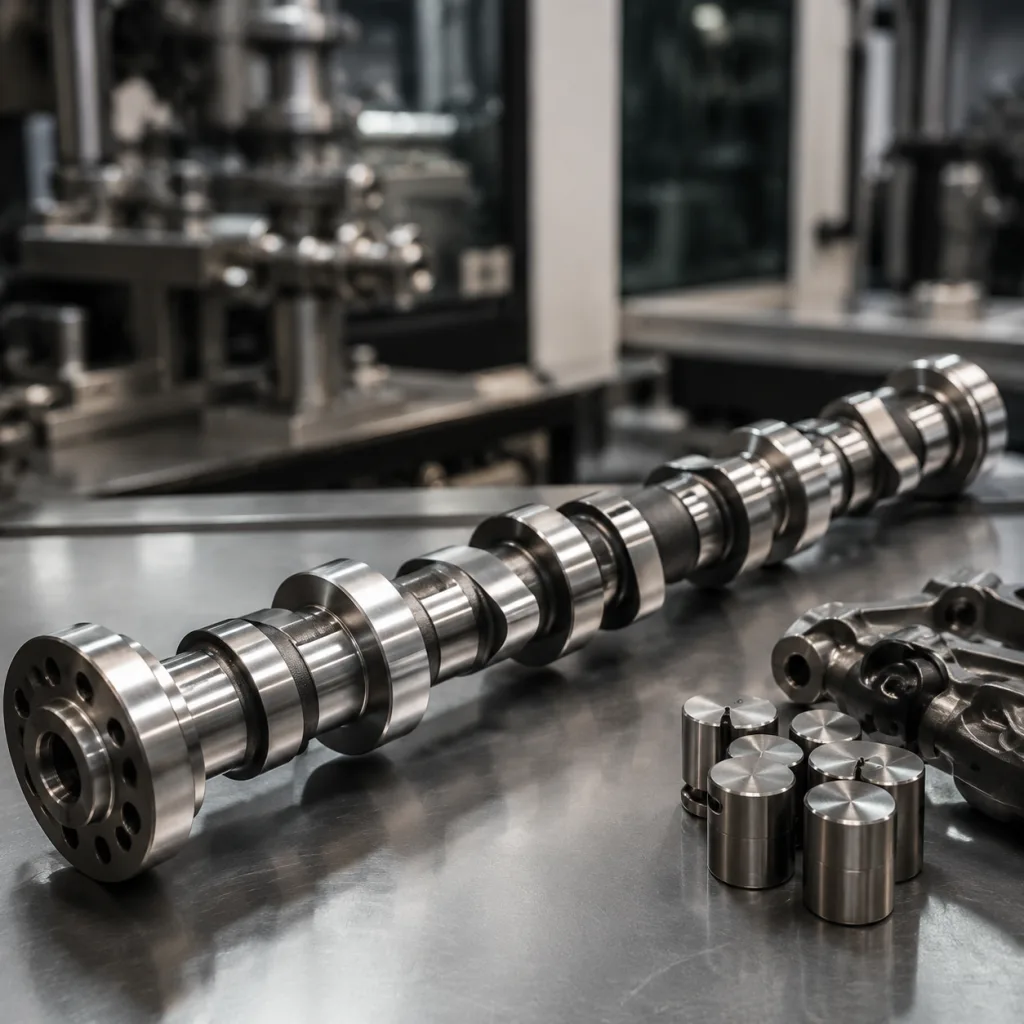
Buying a camshaft for Renault Kadjar OE equivalent is less about a catalogue match and more about proving the part will behave like the original in service. The right replacement has to match profile, journal geometry, phasing, material, and finish, or the risk shifts to timing error, wear, or a costly return. Driventus is an independent aftermarket manufacturer; brand names are referenced for fitment only. Our sourcing approach focuses on dimensional consistency, controlled metallurgy, and verification against OE reference data where available. For procurement teams, that means clearer cross-reference decisions, stronger incoming inspection, and fewer surprises after installation. This guide breaks the decision into fitment checks, failure modes, validation data, and supplier comparison so buyers can screen camshaft offers with less guesswork.

Start with fitment, not the part number

For a replacement camshaft, the first question is whether the part belongs to the exact Renault Kadjar engine variant you are sourcing for. A visual match is not enough, and a catalogue claim alone does not prove compatibility.

Check these items before release:

  • Engine code and valve-train layout
  • OE cross-reference and revision level
  • Journal positions and overall shaft length
  • Lobe lift, base circle, and phasing
  • Drive-end form, trigger features, and keying
  • Oil feed drilling, if the OE design uses internal lubrication paths

The safest assumption is simple: if the engine code is wrong, the rest of the comparison is wasted. For a camshaft for Renault Kadjar OE equivalent, ask for the actual dimensional data, not just a statement that the part “fits.”

Where OE-equivalent claims usually break down

Most sourcing problems start with small specification gaps that are easy to miss during procurement. The part may install, but the engine still suffers from timing drift, unusual lash, or accelerated bearing wear.

Common failure modes include:

1. Journal diameters that are close, but not positionally consistent. 2. Lobe lift that looks acceptable on paper but changes valve motion in practice. 3. Trigger-wheel or drive-end differences that upset phasing. 4. Surface finish that causes break-in damage or scuffing. 5. Packaging and traceability gaps that make it hard to isolate a bad lot.

A part can be “close enough” for a quote and still fail the job in the field. That is why OE-equivalent sourcing should be treated as a verification exercise, not a label review.

Spec checks that matter on paper and at receipt

Use a structured comparison before purchase order release and again when the goods arrive. The goal is to confirm that the supplier’s claim matches the actual part in hand.

</tr></thead><tbody> </tbody></table>For a camshaft for Renault Kadjar OE equivalent, request the dimension sheet by journal position, total indicated runout on the shaft, lobe lift measured with a cam fixture or height gauge, and the tolerance window used for approval. If the supplier cannot state those values, the part is not yet ready for a production-minded buying decision.

What validation evidence to ask a supplier to show

A credible supplier should prove the claim with records, not only a sales description. The exact document set will vary by programme, but these are the items procurement teams should ask for:

  • Incoming and final inspection records
  • Material certificate and heat-treatment summary
  • Runout and concentricity results
  • Surface hardness results where applicable
  • Visual acceptance criteria for lobes, journals, and drive ends
  • Traceability records aligned with IATF 16949:2016 and ISO 9001:2015

If your market requires chemical compliance controls, confirm how packaging, coatings, and any restricted substances are handled under REACH (EC) No 1907/2006. For a first-article approval, a CMM report, hardness data, and photos of the critical features are far more useful than a generic quality statement. If the supplier offers PPAP-style documentation, level 2 or level 3 is usually the most practical starting point for aftermarket sourcing.

Comparison points when you evaluate suppliers

When two offers look similar, compare the support behind the part rather than the headline unit price. The stronger supplier is usually the one that makes verification easier.

Look at:

  • Whether they can cross-reference the OE number to the exact engine variant
  • Whether they can provide sample, drawing, or measurement-based approval
  • Whether batch traceability follows the shipment, not just the invoice
  • Whether packaging is suitable for export handling and warehouse storage
  • Whether claims about test data are tied to the actual camshaft design

On commercial terms, buyers often compare MOQ, landed price, and lead time together. For standard camshaft SKUs, MOQ may begin around 20–50 units for stock items and 100–300 units for custom-programmed parts; sample orders can often be shipped in 1–3 pieces for fitment verification. Typical production lead times are 30–45 days after deposit and sample or drawing approval, while first custom runs may need 45–60 days depending on tooling and machining capacity. Compare quotes on the same packaging basis, because anti-rust oil, boxing, labels, and export cartons can shift both price and damage risk.

How Driventus handles OE-equivalent camshaft programs

Driventus manufactures engine and powertrain components in Taizhou, Zhejiang, with export experience across 60+ countries. For camshaft programmes, we focus on repeatable dimensions, controlled metallurgy, and inspection steps that suit B2B purchasing workflows.

We support:

  • OE part-number cross-references for fitment screening
  • Dimensional matching against approved samples or technical data
  • Batch traceability for distributors and repair networks
  • Private-label and catalogue programmes through our catalog
  • Engineering support through custom manufacturing when the application requires a non-standard profile or packaging specification

For buyers comparing multiple suppliers, our quality system outlines the controls used under IATF 16949:2016 and ISO 9001:2015. If your team also sources related top-end parts, see engine components for adjacent product families. For standard orders, buyers often use tiered quotations at 50, 100, and 300 units to compare true landed cost against packaging, freight, and rework exposure.

Frequently asked questions

No. OE-equivalent means the part is designed to match OE fit, function, and key dimensions. It does not mean the vehicle maker has approved or endorsed the part.

Ask for a dimensional report, material confirmation, batch traceability, and inspection records. For regulated markets, also confirm compliance handling for REACH (EC) No 1907/2006 where relevant.

Yes. We support custom manufacturing for controlled applications, provided the technical data, sample, or OE cross-reference is sufficient to define the requirement.

If you are sourcing a camshaft for Renault Kadjar OE equivalent, we can help verify fitment and supply documentation before you place an order. Please [request a quote](/contact.html).

Request a Quote
Check What to confirm Why it matters
FitmentEngine code, valve train layout, and OE cross-referencePrevents incorrect application
GeometryJournal diameter, lobe height, and phase angleProtects timing and valve lift
MaterialAlloy cast iron or forged steel as specifiedControls wear and fatigue resistance
FinishJournal roughness and lobe surface conditionReduces break-in risk
PackagingRust protection, part label, and batch traceabilitySupports warehouse handling and traceability