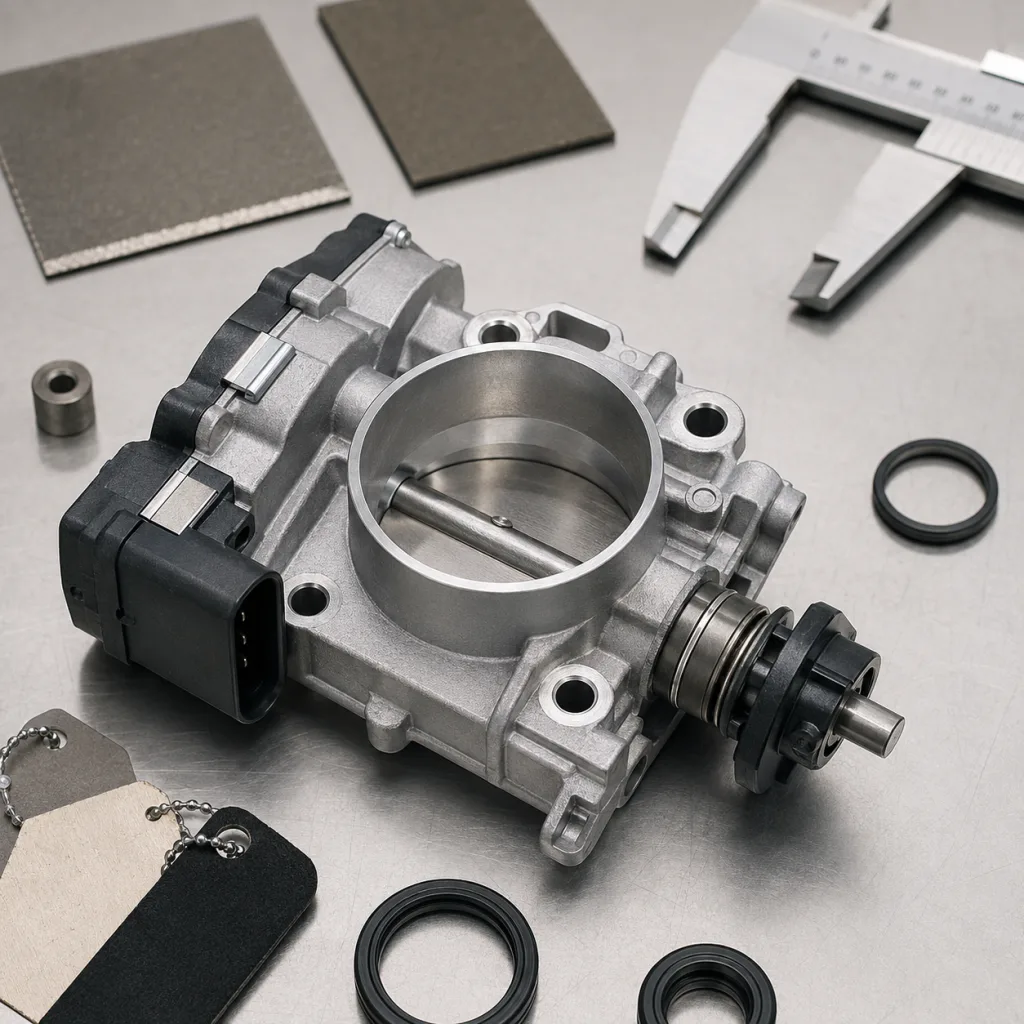
REACH compliance for oil pump sourcing is a substance-control and documentation exercise, not proof that the pump will meet pressure, flow, durability, or vehicle-fit requirements. Buyers need visibility into every material used in the housing, cover, rotor or gear set, shaft, springs, seals, gasket, coating, preservative oil, labels, and packaging. The central question is whether any article or mixture in the supply chain contains substances restricted or reportable under REACH (EC) No 1907/2006, including Substances of Very High Concern (SVHCs) above the applicable threshold.
That matters for finished oil pumps sold into the EU and for supply chains that use REACH-style controls in the UK and other regulated markets. For procurement teams, the practical objective is to build a file that can stand up to a customer audit. The file should connect the bill of materials to supplier declarations, batch traceability, formula-change notices, and part-revision control. It should also sit inside a wider quality record supported by IATF 16949:2016 and ISO 9001:2015 where those systems apply. If you need a starting point before issuing a document request, review our catalog and the engine components range.
What REACH Means for an Oil Pump
REACH is not a single laboratory result, and it is not a vehicle approval. It is the EU framework for chemical registration, evaluation, authorisation, and restriction. For purchased articles such as oil pump assemblies, the buyer’s task is to understand substance content well enough to manage restricted substances, SVHC communication duties, and customer-specific reporting.
For an oil pump, the review cannot stop at the cast housing or machined cover. The rotor set, shaft, spring elements, relief-valve parts, fasteners, elastomer seals, bonded gaskets, coatings, anti-corrosion films, assembly lubricants, cleaning residues, labels, cartons, tapes, inks, and desiccants may all introduce compliance questions. Metal chemistry is usually easier to document than elastomers and process chemicals, which is why a broad material map is essential.
A practical way to structure the review is to separate the pump into three layers:
Base metal structure
Non-metallic functional parts
Surface treatments, processing aids, preservation materials, and packaging
That split makes the evidence easier to collect and easier to audit. It also helps procurement avoid a common weak point: accepting a generic compliance statement for the finished assembly when the real risk may sit in a seal compound, coating bath, anti-rust oil, or adhesive. If the pump is supplied as an aftermarket part, the fitment reference belongs in the application file, while the chemical file should remain material- and revision-based. Driventus is an independent aftermarket manufacturer; brand names are referenced for fitment only.
Map the Bill of Materials Before You Ask for Evidence
Start with a part-level BOM before requesting certificates. A supplier cannot give meaningful evidence for a complete oil pump if the buyer only asks for a single document covering the finished assembly. Break the pump into components, identify the material or process used for each one, and assign the evidence type required.
Component
Typical material or process
Evidence to request
Housing or cover
Cast iron, aluminium alloy, powder metal, or machined steel
Alloy declaration, heat or melt record, coating statement
Packaging material declaration, supplier statement
</tr></thead><tbody> </tbody></table>This is also the right stage to define document format, language, issue date, revision number, and validity expectations. A clear BOM map reduces back-and-forth because the supplier receives one controlled request instead of several broad demands. It also gives the buyer a clean way to identify gaps: if a component appears in the BOM, it should have a matching material or process record.
Collect Supplier Declarations and Traceability Records
Once the BOM is fixed, request a specific file set from each source in the chain. A one-line email saying the oil pump is compliant is too weak for most customer audits because it does not show what was reviewed, which revision was covered, or whether upstream suppliers were included.
A robust file normally includes:
Signed material declaration by part number and revision
SVHC screening statement aligned to REACH (EC) No 1907/2006
Confirmation against relevant REACH restrictions where applicable
Raw material certificates for metal components
Polymer or elastomer specifications for seals and gaskets
Coating, plating, treatment, lubricant, and preservative declarations
SDS for mixtures such as oils, cleaners, coatings, and adhesives where relevant
Lot, heat-number, batch, or purchase-order traceability from incoming material to finished goods
Change-notification commitment for alloy, compound, supplier, coating, lubricant, packaging, or process changes
Current supplier certifications where available, including IATF 16949:2016 and ISO 9001:2015
If the supplier cannot link the finished pump back to raw material batches or controlled process records, the declaration has limited audit value. The same weakness appears when a coating house, seal maker, lubricant supplier, or packaging vendor sits outside the main factory’s document system. For buyers, the chain of evidence matters as much as the signed statement. It shows whether the answer is current, traceable, revision-controlled, and connected to the exact pump being shipped.
Check Coatings, Elastomers, and Preservation Materials
The highest REACH risk in an oil pump often sits outside the visible machined metal. Coatings, elastomer compounds, lubricants, rust inhibitors, cleaners, adhesives, and packaging additives can introduce substances that are not obvious from the drawing. They may also change without a dimensional change to the part, which makes procurement control especially important.
Verify these points before approval:
Coating chemistry, pretreatment, and process route
Seal polymer family, compound revision, and any plasticiser content
Anti-rust oil, assembly lubricant, or preservative composition
Cleaning process and potential residual wash chemistry
Adhesives, sealants, inks, labels, bags, foam, tapes, and desiccants used in packaging
Date of the last formula, supplier, or process change
Do not treat RoHS as a substitute for REACH. RoHS focuses on a defined set of restricted substances in electrical and electronic equipment, while REACH covers a broader chemical-control framework for substances, mixtures, and articles. A pump may have a RoHS-oriented statement and still require a separate REACH declaration and SVHC review.
If the part is entering a customer programme with strict incoming inspection, ask for the latest supplier SDS, the coating process sheet, the elastomer compound reference, and the latest change record. Small process updates can create a new compliance position even when the mechanical drawing, dimensions, and fitment reference remain unchanged.
Build a Buyer File That Can Survive Audit
A good compliance file is not complicated, but it must be complete and controlled. Keep one folder per part number and revision, then make sure every document inside it connects back to the approved BOM. The folder should contain the BOM, supplier declarations, SVHC statements, material certificates, traceability records, coating and elastomer details, SDS where needed, change-control log, approval date, and the contact responsible for each source.
For sourcing teams, the file should answer four operational questions quickly:
Which markets will receive the pump?
Which part revision is currently being shipped?
Which component, material, process, or supplier changed most recently?
Which record proves the current declaration is still valid?
That structure is useful whether you buy standard coverage from our quality system or need custom manufacturing for a specific seal, coating, alloy, or preservation requirement. It also gives QA, sales, and customer-facing teams a clean handover when substantiation is requested.
When the specification is still open, tie the document request first to the pump family, then to the exact market, customer requirement, and validation scope. That avoids collecting unnecessary records while still keeping the chemical file aligned with the parts that will actually ship. For long-running programmes, set a review trigger for supplier changes, coating changes, elastomer updates, packaging updates, or SVHC list revisions.
Practical Procurement Checklist
Use this checklist as a release gate before placing volume orders or approving a new supplier for oil pump production:
1. Confirm the part family, part number, revision, and target market. 2. Collect the full BOM with component-level materials and process notes. 3. Request REACH declarations for the finished assembly and major subcomponents. 4. Check SVHC screening status against the current candidate list used by your customer or market. 5. Verify coatings, seal polymers, lubricants, cleaners, preservation oils, and packaging materials. 6. Match every declaration to a lot, heat number, batch reference, or controlled supplier record. 7. Store the file with revision control, approval dates, and change-notification commitments. 8. Recheck the file after any supplier, compound, coating, lubricant, packaging, or process change. 9. Review the file when the SVHC candidate list changes or when a customer updates its compliance manual.
This process is enough for many buyer audits when the supplier is disciplined and the file is current. It also creates a repeatable standard for new programmes, which matters when the same pump family is sourced across multiple regions or from more than one production site. For buyers who need a tighter fit to a specific vehicle application, the REACH compliance file should sit alongside the dimensional, functional, durability, and PPAP or approval package. It supports sourcing approval, but it does not replace mechanical validation.
Frequently asked questions
Not always. Most buyers start with material declarations, SVHC statements, SDS where relevant, and traceability records. Laboratory testing is usually reserved for unclear coatings, unknown seal chemistry, undocumented process materials, or supplier changes that cannot be verified from records alone.
Ask for the BOM, component material declarations, REACH statement, SVHC screening, coating and elastomer details, relevant SDS, lot or batch traceability, and a change-notification commitment. If the supplier claims IATF 16949:2016 or ISO 9001:2015, request the current certificate copy as well.
Often yes as a master technical file, provided the substance data, traceability, and revision control are accurate for the parts being shipped. You should still check the statement wording for each destination market and adapt the compliance declaration where local requirements differ.
If you need a document set matched to your oil pump BOM, send the target market list, current drawing set, and material requirements. Start here: [request a quote](/contact.html)