aftermarket replacement parts · 2026-06-15

Purchase Car Parts Online: B2B Buying Guide

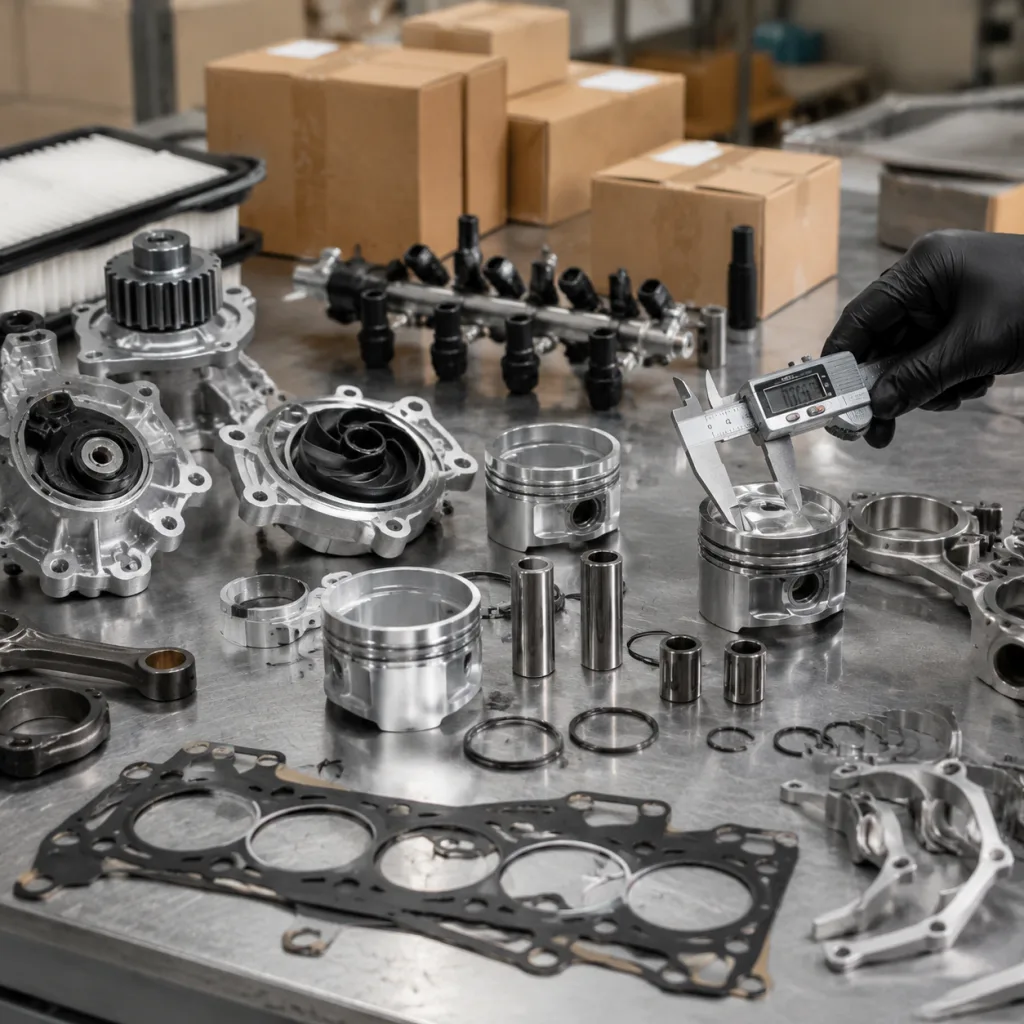
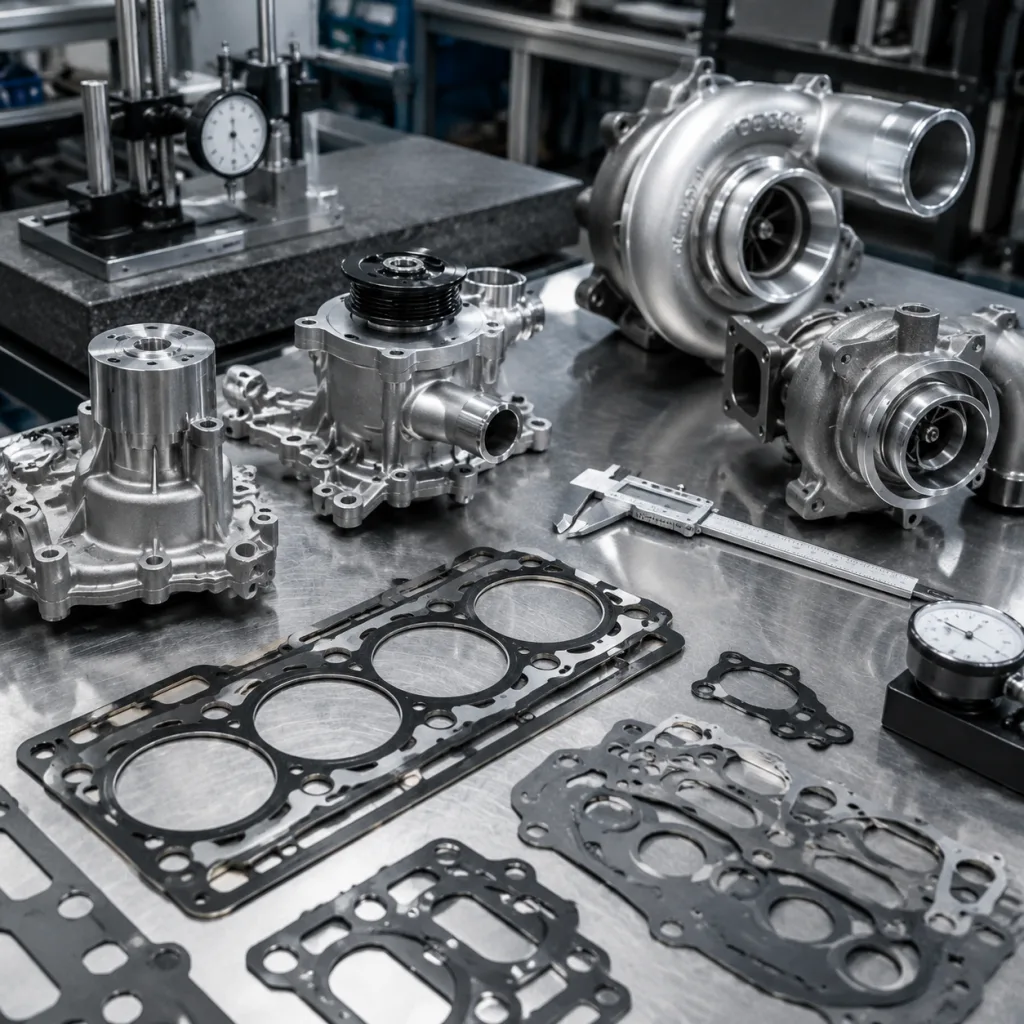
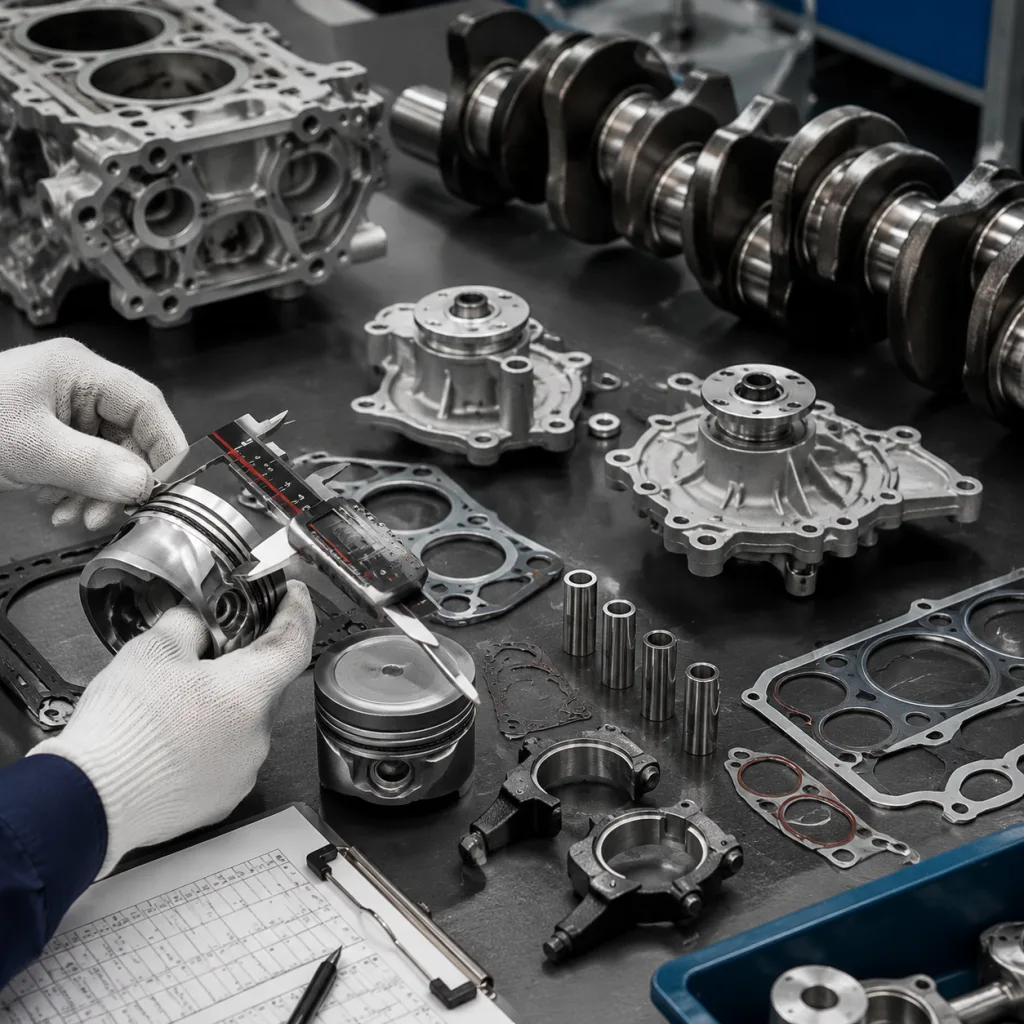
When procurement teams purchase car parts online, the main risk is rarely the payment process. The larger risk is approving parts with incomplete fitment data, weak process control, unclear material traceability, or packaging that cannot survive international transport. For aftermarket distributors, repair-chain buyers, and OEM or Tier-1 sourcing teams, online sourcing should be managed with the same discipline as supplier qualification. Before price becomes the deciding factor, the purchase process needs to confirm OE-equivalent dimensions, batch control, compliance documents, delivery terms, and after-sales handling. Driventus manufactures aftermarket replacement engine and powertrain components in Taizhou, Zhejiang, and exports to more than 60 countries. Our product scope includes pistons, crankshafts, gaskets, water pumps, turbochargers, bearings, timing components, and related assemblies. Driventus is an independent aftermarket manufacturer; brand names are referenced for fitment only.

Build the Buying File Before Comparing Prices

A reliable online purchase starts with a complete buying file. Procurement teams should avoid sending only a vehicle model name or a photo, because model names vary by market, production year, emission version, engine code, and local trim level. The buying file should give the supplier enough information to check fitment without assumptions.

Minimum information should include:

  • Part name and system location, such as water pump, piston set, full gasket set, turbocharger, timing kit, bearing set, or crankshaft.
  • Vehicle application, production year range, engine displacement, fuel type, and engine code where available.
  • OE part-number cross-reference if known, for example OE 06A107065 or OE 11251… when already used in the buyer’s reference data.
  • Required quantity, forecast volume, reorder pattern, and shipment destination.
  • Target packaging format: neutral, customer label, palletised bulk, retail box, or mixed-SKU carton.
  • Compliance, labelling, and document requirements for the destination market.

For broad part-family searches, buyers can review our catalog before sending a request. The catalog should be treated as the first filter, not the final approval step. Final confirmation should still be made against dimensions, materials, drawings where available, and batch inspection criteria.

For multi-location repair chains, the buying file should also define service expectations: fill rate, mixed-SKU orders, reorder cycle, warranty claim format, barcode structure, and delivery-window requirements. For distributors, MOQ and carton quantities may be as important as unit price because they affect working capital, warehouse slotting, picking efficiency, and slow-moving inventory risk.

Verify Fitment, Materials, and OE-Equivalent Function

Aftermarket replacement parts must match the function and installation interface of the original application. That does not mean the supplier is approved or endorsed by a vehicle manufacturer. It means the replacement part is engineered to fit the stated application and perform within defined operating conditions.

Key verification points differ by product family:

</tr></thead><tbody> </tbody></table>A buyer should request enough data to confirm that the part is not merely similar in appearance. Dimensional reports, material statements, hardness checks, leakage tests, and balance records are more useful than catalogue pictures. For brake-related products, standards such as SAE J2527 may be relevant when testing friction performance, but buyers should apply only standards that match the product family. For emissions-sensitive applications, regulations such as ECE R-83 may affect vehicle compliance, although component sourcing still requires application-specific assessment.

For engine and powertrain components, process stability matters because small deviations can create high warranty cost. A gasket bead-height error, a water-pump seal material mismatch, or incorrect piston-ring tension may not be visible during incoming inspection. Supplier controls therefore need to cover design validation, production batch control, and change notification.

Assess Supplier Capability, Not Only Website Listings

Online sourcing platforms and supplier websites make comparison easier, but they can also make trading companies and controlled manufacturers look similar. Procurement teams should separate listing breadth from real production capability, technical support, and accountable quality control.

A structured supplier review should include:

Product family Critical checks Typical procurement risk
Pistons and ringsBore size, compression height, pin diameter, ring groove width, coating, weight groupingNoise, oil consumption, cylinder wear
CrankshaftsJournal diameter, fillet radius, straightness, hardness depth, balanceBearing failure, vibration, low oil pressure
GasketsLayer design, bead height, material grade, oil/coolant passage alignmentLeakage, compression loss, premature failure
Water pumpsImpeller material, bearing specification, seal material, pulley geometryCoolant leakage, overheating, belt misalignment
TurbochargersCHRA balance, actuator setting, turbine/compressor wheel material, oil-feed interfaceLow boost, overspeed, oil leakage

</tr></thead><tbody> </tbody></table>Driventus operates under IATF 16949:2016 and ISO 9001:2015 quality-management systems. Buyers can review our quality system when preparing supplier audit documents or internal vendor approval files.

Certification alone is not enough. Procurement teams should check whether the certificate scope is relevant to the purchased parts, whether the legal entity matches the invoice entity, whether the issuing body is recognised, and whether the expiry date is current. For regulated markets, buyers may also need chemical and material declarations aligned with REACH (EC) No 1907/2006. If parts include rubber, coatings, adhesives, lubricants, plated surfaces, or surface treatments, material restrictions should be discussed before purchase-order release.

Price, MOQ, Lead Time, and Landed Cost

Unit price is only one line in the sourcing calculation. When buyers purchase car parts online for wholesale, fleet, or repair-chain use, landed cost should include MOQ, carton quantity, defect allowance, payment terms, freight, duty, warehousing, inventory holding cost, and warranty handling.

Typical commercial variables include:

  • MOQ by SKU and by order, especially for slow-moving applications.
  • Sample availability, sample cost, and sample lead time before production approval.
  • Production lead time for standard items versus made-to-order or private-label items.
  • Packaging cost for neutral boxes, customer branding, barcode labels, desiccants, separators, and pallet protection.
  • Incoterms, commonly EXW, FOB, CIF, or DAP depending on buyer preference and logistics control.
  • Currency, payment schedule, price-validity period, and exchange-rate exposure.
  • Spare capacity for seasonal demand, fleet maintenance cycles, or repair-chain promotional programmes.

A low quoted price may be uneconomic if MOQ forces excess stock or if packaging is not suitable for long-distance transport. Heavy engine parts such as crankshafts and cylinder heads need impact protection, corrosion prevention, and moisture control. Precision parts such as pistons, bearings, and turbocharger cartridges need separation to prevent surface damage. Gaskets require flatness protection to avoid creasing, bead distortion, or layer separation.

For distributors serving the EU, UK, US, Canada, Australia, Brazil, and other multi-brand markets, mixed-container planning is often more valuable than single-SKU price optimisation. A supplier that can consolidate pistons, gaskets, pumps, timing components, bearings, and related powertrain parts under one shipment can reduce administration, customs-document handling, and inbound freight complexity.

Quality Documents to Request Before Purchase Order Release

Before issuing a purchase order, buyers should agree which documents are required with samples, first production, and mass shipments. Confirming the document pack early prevents disputes after goods arrive and gives the supplier a clear release standard.

Recommended document pack:

  • Quotation sheet with part description, cross-reference, MOQ, price, Incoterms, lead time, and packaging.
  • Technical confirmation sheet showing dimensions, materials, application notes, and any known exclusions.
  • Sample inspection report or first-article inspection report when applicable.
  • Batch inspection report for mass-production shipments.
  • Material declaration where required, including REACH (EC) No 1907/2006 considerations.
  • Packing list with carton count, gross weight, net weight, pallet dimensions, and carton markings.
  • Warranty claim template and response procedure, including required photos, batch numbers, mileage, and installation details.

For custom SKUs, private-label programmes, or parts not yet in the standard range, buyers should confirm drawing control and change approval. Driventus supports custom manufacturing for selected engine and powertrain components, including specification review, sample development, packaging alignment, and production control planning.

Procurement teams should also define acceptance criteria. Visual defects, corrosion limits, dimensional tolerances, functional leakage limits, balance limits, surface damage, and packaging damage thresholds should be measurable. If no criteria are written, the supplier and buyer may interpret acceptability differently after shipment, especially when parts have already entered distribution channels.

A Practical Online Purchasing Workflow

A controlled process reduces errors without slowing procurement. The same workflow can be used for a first supplier evaluation, a new SKU launch, or a repeat replenishment order.

1. Screen the product range. Identify whether the supplier covers the required part families and vehicle applications. 2. Send a structured RFQ. Include part names, application details, OE cross-references where available, quantity, destination, packaging, and compliance needs. 3. Confirm technical fitment. Review dimensions, materials, photos, drawings, samples, or application notes before commercial approval. 4. Check supplier controls. Review certificates, process capability, batch traceability, inspection records, and export experience. 5. Approve samples. Use sample inspection, test fitting, bench testing, or field validation depending on risk level. 6. Release the purchase order. Confirm price, lead time, Incoterms, packaging, labels, document requirements, and change-control expectations. 7. Inspect and record. Maintain incoming inspection records and connect any claim to batch numbers, application data, installation details, and shipment records.

For repeat orders, the workflow can be shortened, but technical changes should still be controlled. Buyers should ask suppliers to notify changes in material, sub-suppliers, tooling, machining process, coating, packaging, inspection method, or production location. This is particularly important for engine sealing, rotating assemblies, timing systems, and cooling-system components where small changes can affect service life.

Driventus is an independent aftermarket manufacturer; brand names are referenced for fitment only. We do not claim approval or endorsement by any vehicle manufacturer.

Frequently asked questions

Send the part name, vehicle application, year range, engine code if available, OE cross-reference where known, quantity, destination country, packaging requirements, and any compliance documents needed. Photos are helpful, but they should not replace dimensional data, application notes, or technical confirmation.

Use structured RFQs, confirm dimensions and materials, request samples for high-risk items, and require batch traceability. For engine and powertrain parts, fitment should be verified against application data, technical records, and defined acceptance criteria rather than catalogue images or model names alone.

Yes, for selected product ranges. Driventus can discuss neutral packaging, customer labels, barcode requirements, carton specifications, and specification-based development. Custom projects depend on part family, volume, tooling requirements, and validation scope.

If you are preparing an RFQ for aftermarket engine or powertrain parts, share your part list, target market, forecast volume, and packaging requirements. Our team can review fitment and supply options when you [request a quote](/contact.html).

Request a Quote
Review area What to request Why it matters
CertificationIATF 16949:2016 and ISO 9001:2015 certificates where applicableConfirms audited quality-management framework
Process controlControl plan, inspection flow, key equipment list, calibration recordsShows how repeatability is maintained
TraceabilityBatch number format, material lot control, inspection record retentionSupports warranty analysis and recall response
Export experienceCountry list, Incoterms capability, packaging method, shipping documentsReduces customs, documentation, and logistics risk
Engineering supportDrawing review, sample validation, reverse-engineering scopeHelps resolve application gaps before orders scale