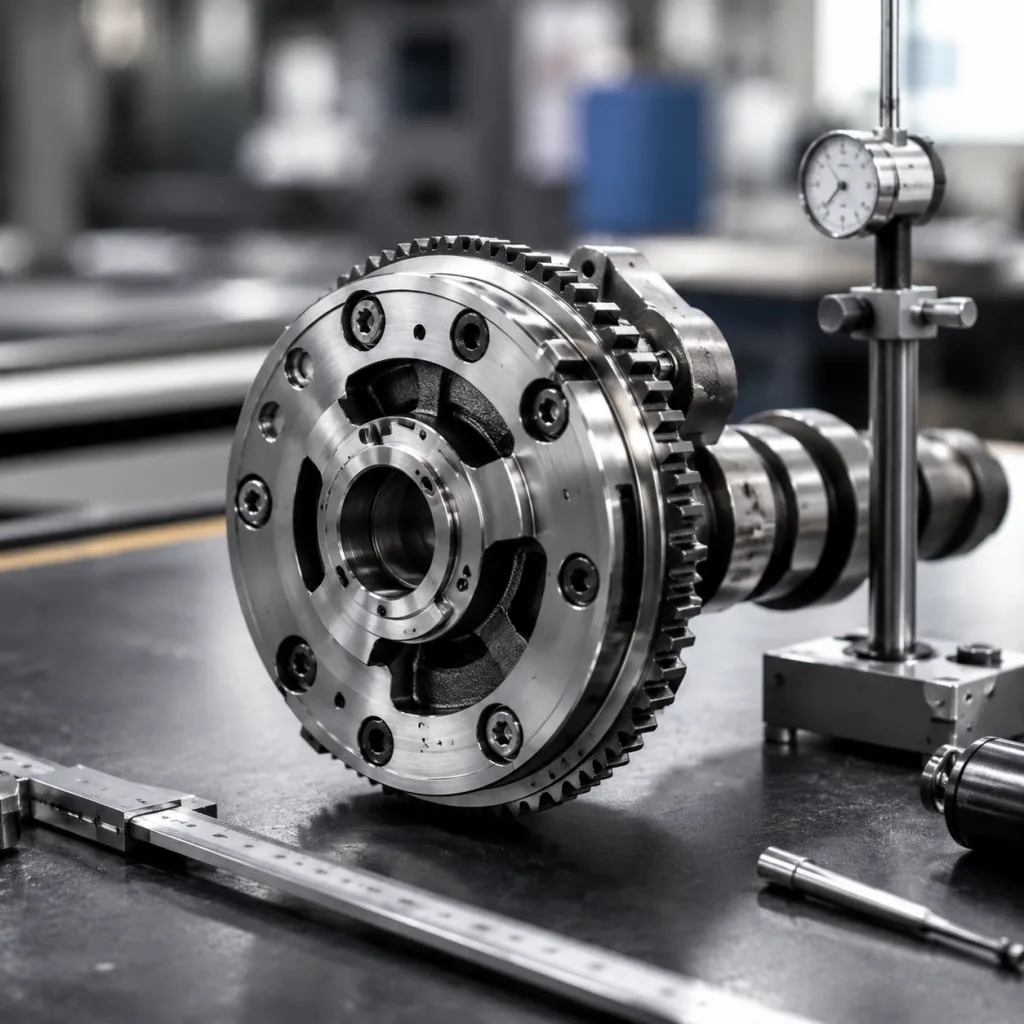
Timing Belt Kit Dimensions: Specification and Fit Checks
Timing belt kit dimensions decide whether a kit fits cleanly, tensions correctly, and lasts the intended service interval. For procurement teams, the real risk is not just belt length. It is the full dimensional stack: pitch, width, tooth profile, pulley diameters, offset, bore size, tensioner travel, and the hardware included in the box. A mismatch of even 1-2 mm can create noise, edge wear, or early failure. Driventus is an independent aftermarket manufacturer; brand names are referenced for fitment only. We supply timing belt kits for distributors, repair networks, and OEM-linked programmes under IATF 16949:2016 and ISO 9001:2015 controls. This article shows which dimensions matter most, how they fail in practice, and what to compare before placing a production order.
Timing Belt Kit Dimensions: What to verify first
Start with the complete assembly, not the belt alone. A kit can look correct on paper and still miss the engine by a small but costly margin.
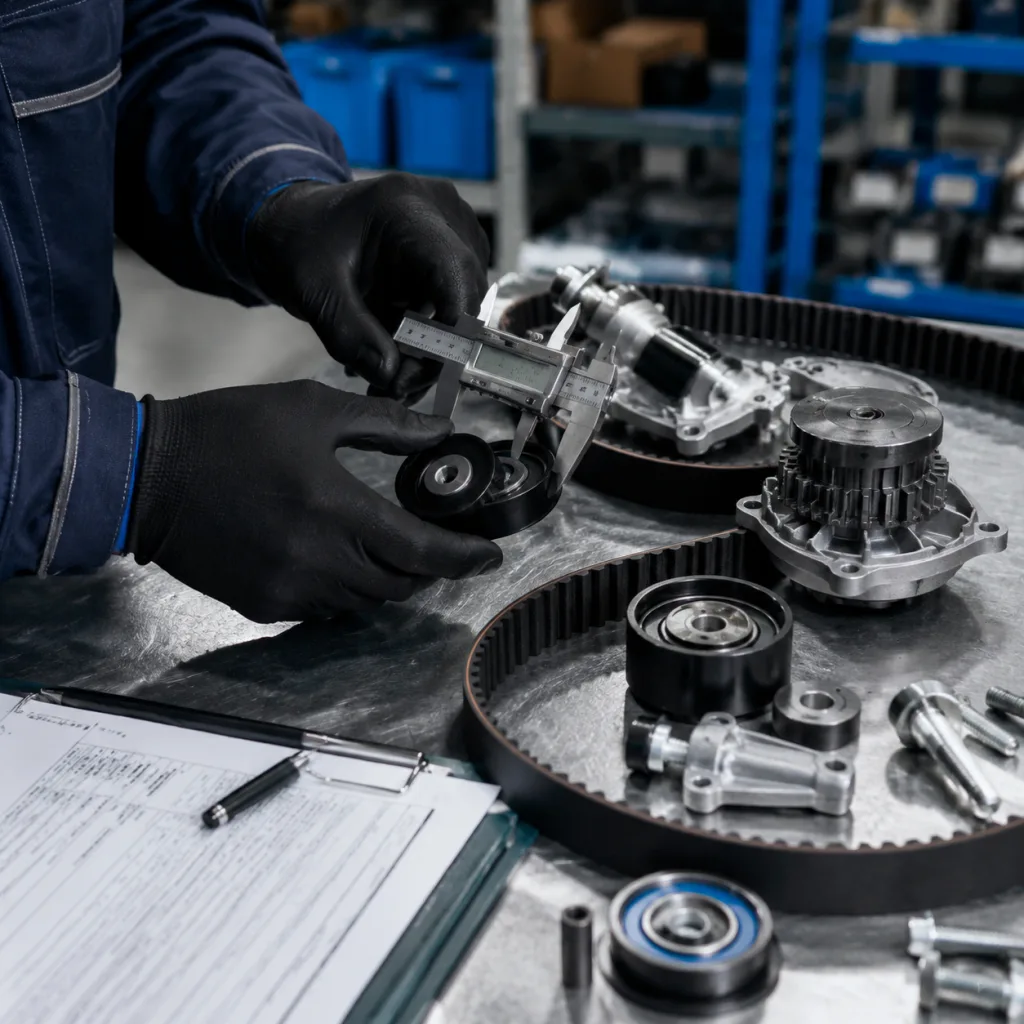
The first check is the dimensional data set. Ask for a drawing or inspection sheet that covers the belt, each pulley, the tensioner, and any included water pump or hardware. Catalogue fitment notes are useful, but they are not enough for release.
Component
Dimension to verify
Why it matters
Timing belt
Length, pitch, width, tooth profile
Controls synchronisation and tracking
Tensioner
Pulley OD, offset, travel, spring force
Sets installation range and belt load
Idler pulley
OD, bore, face width, runout
Maintains wrap angle and alignment
Water pump, if included
Flange thickness, impeller depth, bolt circle
Changes stack height and belt path
Hardware
Bolt length, thread, washer diameter
Affects clamp load and assembly security
</tr></thead><tbody> </tbody></table>Ask for dimensions in mm, plus the method used to measure them. For sourcing teams, that extra line matters. It separates a fit claim from a verifiable specification. Where OE cross-references such as 06A107065 are used, the measured kit dimensions should still be listed separately so receiving inspection can confirm the build before release.
Where kits fail: the mismatch patterns that matter
Most timing belt kit problems do not come from one dramatic defect. They come from small mismatches that add up.
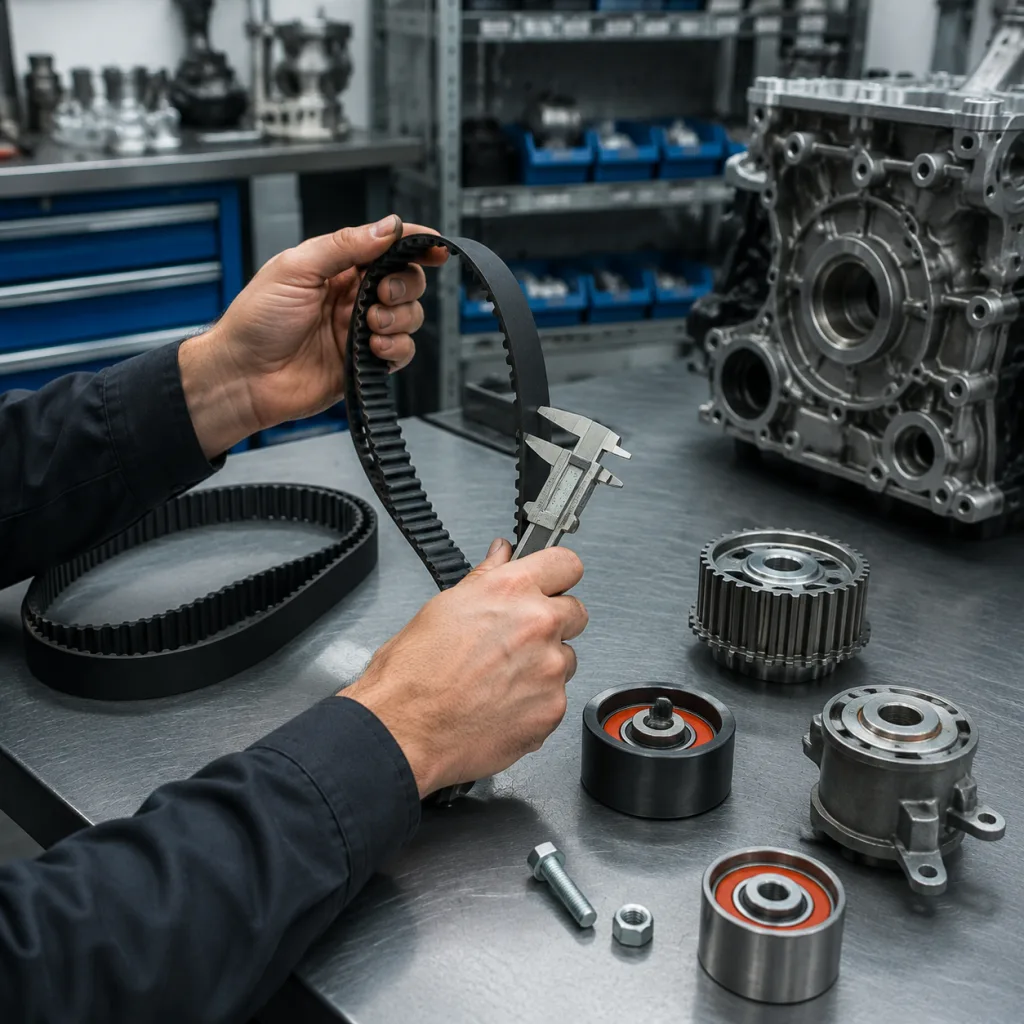
A belt that is slightly narrow may track toward the edge of the pulley. A tensioner with the wrong travel may install near its limit, leaving no buffer for wear. A pulley with excess runout can create a recurring whine even when the nominal size looks correct. One millimetre here, another there, and the kit becomes noisy, hot, or unstable.
The failure patterns buyers should watch are predictable:
Belt width below the application requirement can cause edge loading.
Incorrect pitch or length can shift timing or leave the tensioner out of range.
Pulley face offset can push the belt off-center under heat soak.
Excess radial runout can drive vibration, noise, and wear.
Wrong bore or mounting depth can change alignment across the full front end.
Included hardware with the wrong grip length can distort clamp load.
The key point is stack-up. A 1 mm offset error plus a slightly narrow belt may pass a cold bench check and still fail in service. That is why buyers should look at the whole kit as a dimensional system, not a list of individual parts.
Tolerance checks: step-by-step for procurement
For purchasing and quality teams, the best approach is a short verification sequence. It keeps approval practical and stops vague supplier data from slipping through.
1. Confirm the nominal application and OE cross-reference. 2. Compare the supplier drawing against the engine service requirement. 3. Check belt width, pitch, and length against the stated tolerance band. 4. Verify pulley OD, face width, bore size, and offset. 5. Confirm tensioner travel covers the installation window with reserve. 6. Review runout, bearing spec, and seal arrangement. 7. Ask for first-article dimensional data on a measured sample set. 8. Validate fitment with one installation sample before volume release.
Typical controls to request include belt width tolerance, pulley runout limit, and minimum/maximum tensioner position. Practical bands vary by programme, but the important part is consistency. If the supplier cannot state the acceptance criteria, the dimensions are not really controlled.
For production screening, dimensional inspection should be paired with a short functional check. Noise, tracking, and installation effort often reveal problems that raw numbers miss.
Dimension data: what to ask suppliers for
A clean supplier pack should let technical and sourcing teams approve the same version. If the documents do not line up, the purchase order will not either.
Request these items before sign-off:
Assembly drawing with revision level and units in mm
Belt drawing showing tooth profile, pitch, width, and length
Pulley and tensioner drawings with offset, bore, face width, and center distance
First-article sample report with measured values, not just nominal values
Material declaration for polymer, steel, grease, and gasket compounds
Installation note with torque values, if hardware is supplied
Packing list and photo record of the shipped kit contents
Country of origin and traceability details
REACH (EC) No 1907/2006 compliance statement where relevant
If the kit includes a water pump or gasket set, also confirm gasket thickness, flange flatness, and seal bead profile. Even 0.2-0.3 mm can matter when the gasket contributes to stack height. For EU and UK supply chains, document control is part of procurement due diligence. Our quality system page explains how we manage incoming inspection, in-process checks, and final release.
Nominal vs verified: why catalogue data is not enough
Procurement teams often receive a short catalogue entry with only belt length and application notes. That is useful for screening, but not enough for approval.
Data field
Nominal catalogue entry
Verified engineering record
Belt length
Yes
Yes
Belt width
Sometimes
Yes, with measured value and tolerance
Tooth pitch
Sometimes
Yes, with inspection method
Tensioner travel
Rarely
Yes, with min/max position
Idler OD
Rarely
Yes, with measured sample data
Pulley runout
No
Yes, with stated limit
Sample photos
No
Yes, with part labeling visible
Material declaration
No
Yes, with batch traceability
Packaging configuration
No
Yes, with kit contents per carton
Lead time
Sometimes
Yes, with sample and production split
MOQ
Sometimes
Yes, with volume-tier pricing
</tr></thead><tbody> </tbody></table>When comparing offers, look for the verified engineering record, not just the lowest unit price. A cheap quote is not a good quote if it comes with weak dimensional evidence, poor carton consistency, or a long delay to first-article approval. You can review related product families in our catalog, including timing-system kits built around matched engine components.
Export programmes: keeping dimensions stable in shipment
Export supply adds another layer of risk. A kit can pass inspection at the factory and still fail in the field if parts are mixed, labels are wrong, or components move during transit.
Good control usually includes:
Component-level bagging for belts, pulleys, and hardware
Lot traceability tied to inspection records
Corrosion protection for metal parts in humid lanes
Clear identification for torque-critical fasteners
Final carton verification against the approved bill of materials
Barcode or lot-code labels matching the packing list
Retained shipping samples for dispute checks
Commercially, buyers should align dimensional control with sourcing strategy. Sample orders justify a higher unit price because engineering review is heavier. Pilot runs usually need one locked revision. Mass replenishment should improve on price, but only if lead time and carton consistency stay stable.
For custom or first-time builds, a 30-50% deposit is common, with balance before shipment. Repeat export accounts may move to agreed credit terms after performance is established. Lead time should be split into sample time, production time, and transit time. If you need a programme-specific pack, request a quote with the engine code, OE cross-reference, annual volume, target delivery window, MOQ target, and whether you need sample, pilot, or mass-production pricing.
Frequently asked questions
Belt width, tooth pitch, overall length, pulley diameter, tensioner travel, and mounting offsets matter most. Buyers should also confirm runout, bore size, and hardware length on the complete kit.
No. OE references help with fitment, but buyers should still request measured dimensions, drawings, tolerance limits, and sample inspection data before approval. A quote should also show MOQ, unit price by volume tier, and lead time split for samples versus production.
At minimum, look for IATF 16949:2016 and ISO 9001:2015. For material compliance and environmental testing, REACH (EC) No 1907/2006 and SAE J2527 may also be relevant, along with a first-article dimensional report for the specific kit.
If you need a dimensional sheet, sample inspection record, MOQ and price ladder, or programme pricing, send the engine reference and target volume through /contact.html.