Piston Ring Failure Piston Pin: Diagnosis and Replacement
Ring breakage often begins as a clearance or load-path problem, not as a ring-only defect. In a piston ring failure piston pin investigation, the pin, pin bore, rod small end, ring grooves, piston skirt, and cylinder bore need to be reviewed as one loaded assembly. When the piston pin wears, binds, loses lubrication, or runs out of alignment, the piston starts to rock in the bore. The ring pack then sees higher temperature, uneven side loading, and irregular contact pressure. What looks like a sealing fault can quickly become blow-by, oil consumption, cracked top lands, scuffed skirts, and broken rings.
This article is for procurement teams, rebuild shops, engine remanufacturers, and export programme buyers that need a practical failure review before ordering replacements. Driventus is an independent aftermarket manufacturer; brand names and OE numbers are referenced for fitment only. The right answer is usually to inspect the pin, pin bore, ring grooves, rod small end, cylinder condition, and piston skirt together, then source parts that match the drawing revision, material grade, heat treatment, clearance class, surface finish, cleanliness level, and packaging requirement.
Typical failure pattern
When ring damage follows pin wear or pin misalignment, the sequence is often visible before the ring finally breaks. The first complaint may be noise, oil use, or crankcase pressure rather than a clean mechanical failure. That is why a piston ring failure piston pin review should start with the pattern of symptoms across cylinders, not only with the damaged ring on the bench.
Common warning signs include:
cold start rattle, knock, or piston slap that reduces as the engine warms and skirt clearance closes
rising blow-by under load or increased crankcase ventilation flow measured at the breather or oil filler
oil consumption without an external leak, especially after a short rebuild interval
carbon packing in the top groove or oil control ring groove that restricts ring movement
broken top ring, chipped ring land, or collapsed ring groove after a short service period
aluminium transfer on the piston skirt, pin boss, or pin bore
polished, fretted, or blue-discoloured areas on one side of the pin rather than even wear around the full circumference
Symptom
Likely cause
First check
Ring breakage on one cylinder
Local pin seizure, oval pin bore, or rod small-end wear
Measure pin diameter, pin bore roundness, and rod bushing ID with a micrometer and bore gauge
Heavy carbon in the top groove
Excess blow-by, ring flutter, or oil control failure
Check groove clearance, ring side clearance, and end gap in the actual bore
Scuffed skirt plus broken ring
Piston rock from excessive pin, boss, rod bushing, or skirt clearance
Inspect pin boss, rod small end, and thrust-side skirt contact pattern
Broken ring soon after rebuild
Incorrect ring gap, wrong pin clearance, dirty assembly, or poor bore finish
Compare installed clearances against the drawing and honing specification
Wear concentrated on one pin side
Rod misalignment, bent rod, twisted rod, or uneven pin bore loading
Check rod straightness, twist, centre distance, and pin bore alignment
</tr></thead><tbody> </tbody></table>The pin may not be the only cause, but it is often the first hard evidence that the ring failure is secondary. A broken top ring can be the final result of oil starvation at the pin boss, incorrect bushing clearance, debris in the small end, a pin OD outside tolerance, or a pin surface finish that could not support boundary lubrication at start-up. For buyers and remanufacturers, that distinction matters. Replacing the ring pack alone can send the same piston geometry back into service and create a repeat warranty claim.
Inspection sequence at teardown
A reliable teardown separates evidence from assumptions. Clean parts, measure them in a controlled order, and keep cylinder-by-cylinder records so the failed unit can be compared with adjacent cylinders. If the engine is part of a fleet or repeat repair programme, photograph the wear pattern before washing the parts. Keep the piston, pin, rings, bearing shells, and rod together as a matched set until the root cause is confirmed.
1. Clean the piston, pin, ring grooves, and rod small end before measurement. Carbon hides wear and can create a false tight spot. 2. Mark the piston orientation, cylinder number, thrust side, and anti-thrust side before disassembly records are lost. 3. Measure pin OD in at least three positions across the length and at two axes per position; record taper, out-of-round, scoring, blueing, and polished wear bands. 4. Measure the pin bore in both piston bosses and the rod small end or bushing ID; compare total operating clearance against the OE drawing or approved aftermarket drawing. 5. Check whether the pin slides freely at the specified inspection temperature. A full-floating pin that feels acceptable cold may bind when thermal expansion, oil viscosity, and bore distortion change under load. 6. Inspect ring groove side clearance, groove parallelism, groove wear steps, and top-land cracks. Use feeler gauges or a groove gauge rather than visual judgement only. 7. Measure ring end gap in the cylinder bore at the correct depth with the ring squared in the bore, not only on the bench. 8. Inspect the oil control ring return holes and drain slots for carbon blockage, varnish, or cleaning-media residue. 9. Confirm cylinder bore taper, out-of-round, surface finish, glazing, and ridge condition, because a glazed or tapered bore can make a sound pin look guilty. 10. Check lubrication evidence at the pin boss, including blueing, varnish, dry polishing, smeared aluminium, debris marks, blocked oil drillings, or bushing overlay transfer.
Do not skip the rod
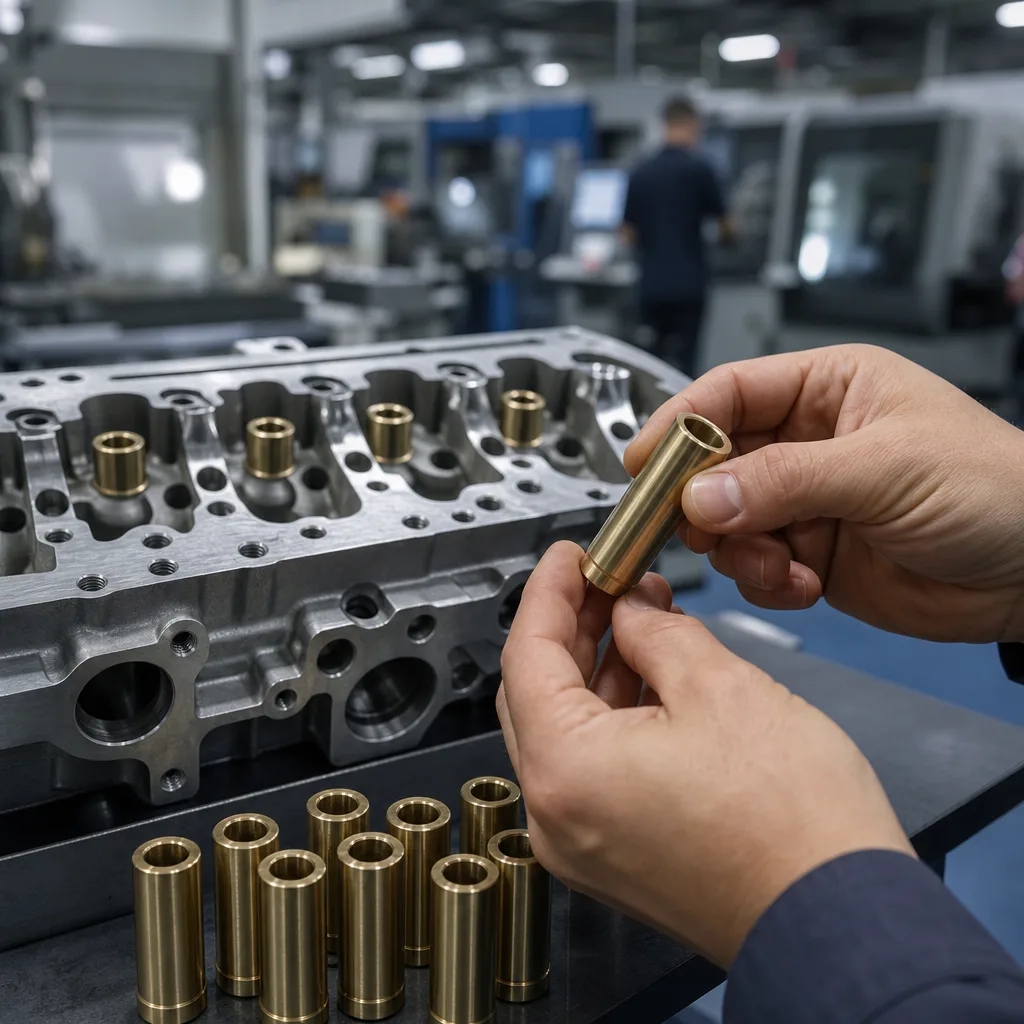
A straight, correctly hardened pin can still fail if the rod small end is oval, the bushing is worn, the oil feed is blocked, or the rod is twisted. Rod misalignment changes the load path through the pin and pushes the piston into the bore at an angle. That increases skirt contact and destabilizes the rings. In a remanufacturing environment, rod small-end bushings should be checked after pressing and reaming, because a bushing that is nominally the right size can still be tapered, bell-mouthed, or out of line with the big end.
For B2B inspections, the teardown record should include measured values, not only pass/fail notes. A supplier or quality team can review a table of pin OD, pin bore ID, small-end ID, ring groove clearance, ring gap, bore taper, bore out-of-round, and surface finish much faster than a verbal description of a broken ring. Those numbers also help decide whether the correct replacement is a ring set, a pin, a piston-pin-ring assembly, a rod bushing service, or a complete matched engine component package.
How pin issues turn into ring damage
The piston pin transfers combustion load from the piston into the connecting rod while allowing controlled angular movement. If the pin galls, bends, binds in the boss, rotates poorly, or runs with excessive clearance, the piston no longer travels squarely in the bore. It can rock at top dead centre, shift under combustion pressure, and slap on the thrust face during deceleration. That motion changes ring face loading and can make the top ring flutter instead of sealing evenly.
Once the ring loses stable contact, hot combustion gas escapes past the ring face. Blow-by raises ring temperature, oxidises oil into hard carbon, and can pack deposits behind the ring. The ring then loses radial movement, sticks in the groove, and sees higher bending stress. In severe cases, the top land cracks, the ring ends butt from heat expansion, or the ring breaks where it has already been weakened by flutter, detonation, poor groove support, or abrasive wear.
Common root causes include:
insufficient oil delivery to the pin boss or rod small-end bushing
blocked oil holes, carbonized oil, cleaning grit, or assembly debris in the small end
wrong pin material, hardness, case depth, or heat treatment for the engine duty cycle
poor bearing-surface finish, incorrect chamfer, burrs, or a sharp edge at the pin end
excessive or insufficient pin-to-bore clearance after accounting for coating thickness and operating temperature
oval, tapered, bell-mouthed, or misaligned pin bore in the piston boss
worn, incorrectly reamed, or poorly aligned rod bushing
detonation, pre-ignition, over-fuelling, injector fault, or abnormal combustion that overloads the top land
high exhaust temperature, coolant restriction, or oil degradation that reduces oil film strength
incorrect ring gap, ring orientation, ring coating, or groove clearance during rebuild
In failure analysis, a cracked ring land usually points to a combination of mechanical shock and thermal load, not a single defect. A seized pin can create side load; excessive clearance can create impact; poor combustion can add heat; and an incorrect bore finish can prevent the rings from bedding correctly. The practical sourcing lesson is simple: the piston pin and ring pack must be matched to the engine duty cycle and measured geometry, not treated as unrelated replacement items.
Replacement specs buyers should verify
For procurement, the key question is not only whether the pin fits. It also has to match the duty cycle, drawing revision, validation file, and assembly process. A pin that is close on catalogue size can still cause a piston ring failure piston pin claim if hardness, surface finish, chamfer, cylindricity, coating build-up, or packaging cleanliness is wrong. Buyers should ask suppliers to confirm the exact specification behind the cross-reference, especially when consolidating purchases across engine families or markets.
Item
What to verify
Why it matters
Pin diameter and length
Match the OE drawing, tolerance band, and drawing revision; verify with actual lot measurements
Controls working clearance, side location, and rod alignment
Wall thickness and internal profile
Confirm hollow pin design, mass, end geometry, and internal chamfer
Affects reciprocating mass, stiffness, and fatigue resistance
Material and hardness
Alloy steel grade, heat treatment, case depth, core hardness, and surface hardness per spec
Prevents galling, fretting, bending, and premature wear
Surface finish
Controlled bearing surface with specified Ra range, correct chamfer, and burr-free edge break
Reduces scuffing at start-up and protects the pin bore and bushing
Roundness and cylindricity
Measured on the actual production lot, not only from a catalogue value
Avoids local loading in the pin bore and rod bushing
Pin-to-bore clearance
Confirm with piston boss and rod small-end dimensions at the inspection temperature
Prevents binding when too tight and impact loading when too loose
Ring pack compatibility
Check ring thickness, radial depth, coating, end gap, free gap, and groove clearance
Keeps the ring stable under heat and load
Coating or treatment
Use only when the design calls for it; confirm coating thickness and compatibility
Wrong treatment can change clearance, oil retention, or break-in behaviour
Cleanliness and preservation
Confirm rust prevention, washing, VCI or oiling method, and sealed packaging
Protects bearing surfaces before assembly and long storage
Traceability
Lot number, inspection record, material certificate, and packing label control
Supports warranty review, recall isolation, and repeat-order control
</tr></thead><tbody> </tbody></table>When a cross-reference is listed, such as OE 06A107065, verify the pin, rings, piston bore, rod small end, and cylinder dimensions together before buying on part number alone. Cross-references are useful for fitment screening, but they do not replace drawing control or batch inspection. This is especially important where engines share a family name but use different piston compression heights, ring packs, pin diameters, coatings, emissions calibrations, or market-specific build levels.
Technical files should also show IATF 16949:2016 and ISO 9001:2015 control, plus REACH (EC) No 1907/2006 material declarations where required. Where applicable, durability references may include SAE J2527 or ECE R-83, but only if they are relevant to the application and supported by the validation file. For critical programmes, buyers should request PPAP-style documentation, control plans, inspection reports, measurement system evidence, and sample approval before releasing a repeat order.
Sourcing and validation for repeat repair
B2B buyers should ask for dimensional reports, material certificates, lot traceability, and packaging confirmation before placing repeat orders. This is especially important for export programmes, engine remanufacturing, distributor networks, and multi-location repair chains that need consistent fitment across batches. A repeat piston ring failure piston pin claim is rarely only a workshop inconvenience; it can become a warranty, inventory, and customer-confidence problem across the network.
Use our catalog to compare part families, or review engine components when you are matching a complete assembly. Our quality system explains how incoming inspection, process control, and final measurement are managed. If the programme needs drawing control, private label packing, sample reverse engineering, special inspection records, or a non-standard pin geometry, custom manufacturing is the right starting point.
A good replacement package should include:
dimensional report for pin OD, length, roundness, cylindricity, taper, wall thickness, and chamfer
hardness or heat-treatment confirmation, including case depth and core hardness where specified
material certificate linked to the production batch and steel grade
surface finish and visual inspection for scoring, burrs, rust, dents, and handling damage
ring pack specification covering thickness, radial depth, coating, end gap, free gap, and groove compatibility
fitment confirmation against the engine family, piston drawing, rod small-end design, and cylinder bore specification
traceable packaging by lot, with clear labels for distributors and branch warehouses
corrosion protection suitable for sea freight, long storage, or humid markets, such as sealed bags, VCI paper, or approved preservation oil
sample approval or first-article inspection for new programmes before bulk release
For remanufacturers, validation should also include an assembly-side check: pin fit at the piston boss, bushing condition, ring groove wear, bore finish, ring gap in the actual cylinder, and lubrication path cleanliness. For distributors, validation should focus on stable cross-reference data, batch traceability, packaging accuracy, and clear separation between similar pins that differ by only a small diameter, length, chamfer, or coating change.
If those records are missing, the risk is not only another ring failure; it is also a returns problem that spreads across every branch or distributor in the network. The strongest sourcing approach is to buy the pin, ring pack, and related piston components as a controlled package when the failure history shows connected wear. That gives procurement, quality, and the repair team the same evidence base before the next engine is assembled.
Frequently asked questions
Yes. Excess pin clearance, seizure, binding, taper, or ovality can make the piston rock in the bore, changing ring loading and cracking the top ring or land. Check the pin, pin bore, rod small end, ring grooves, skirt pattern, and cylinder bore condition together before replacing only the rings.
Start with the pin diameter, pin bore, rod small end, ring groove clearance, ring end gap, and cylinder bore condition. Record actual measurements for taper, out-of-round, side clearance, and bore finish. Carbon, glazing, oil starvation, and debris can hide the real fault. If the wear is local to one cylinder, compare it against the others before ordering parts.
Yes. We can supply by drawing, sample, or OE cross-reference, with brand names used for fitment only. For export programmes, we normally confirm dimensions, hardness, surface finish, lot traceability, packaging, and fitment data before release.
If you need a matched pin, ring pack, or drawing review, contact us here: [request a quote](/contact.html).