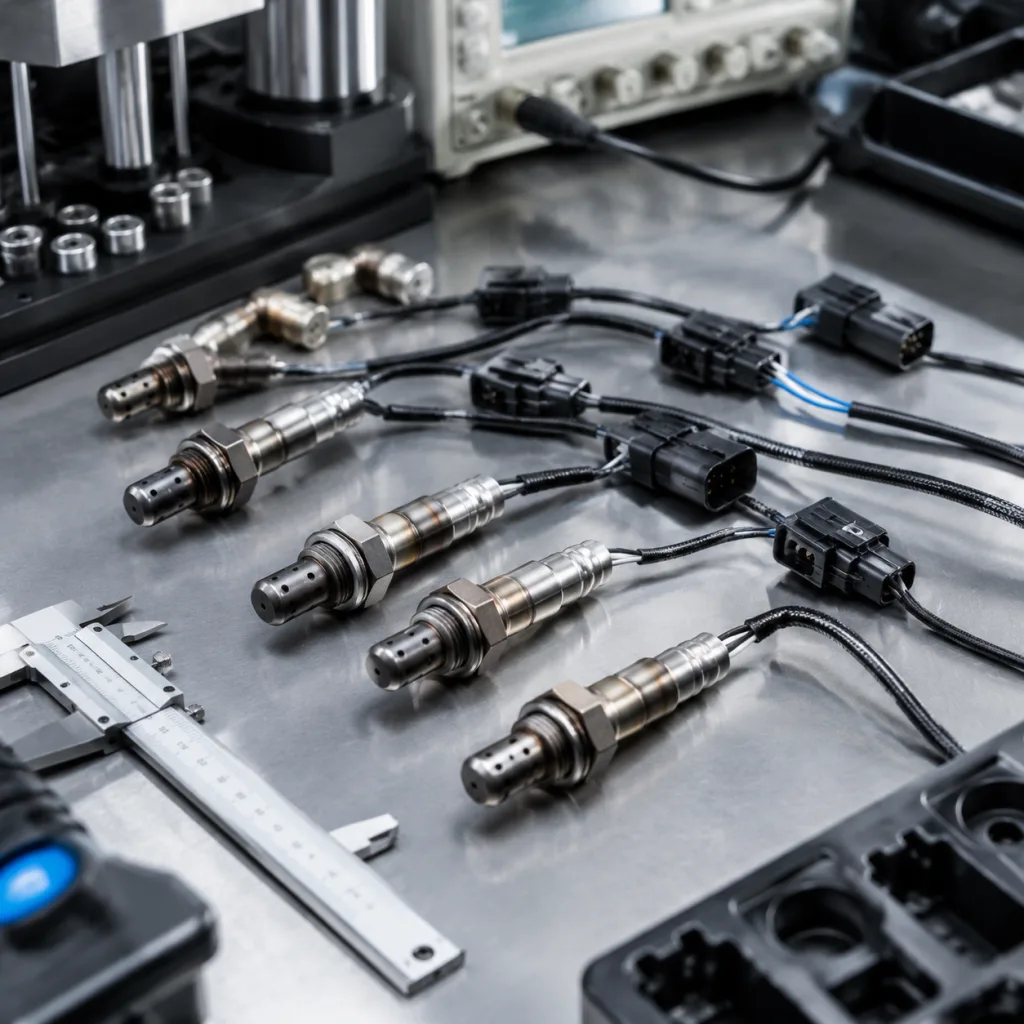
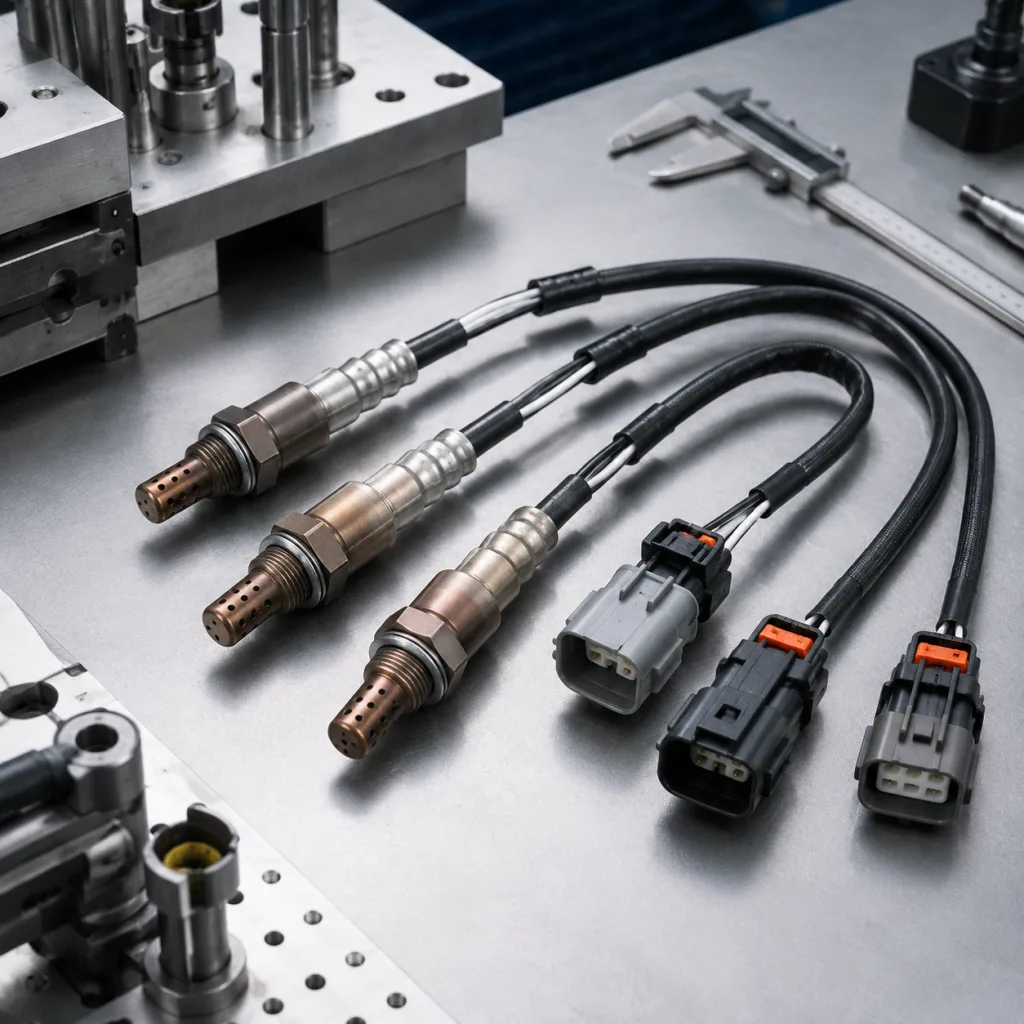
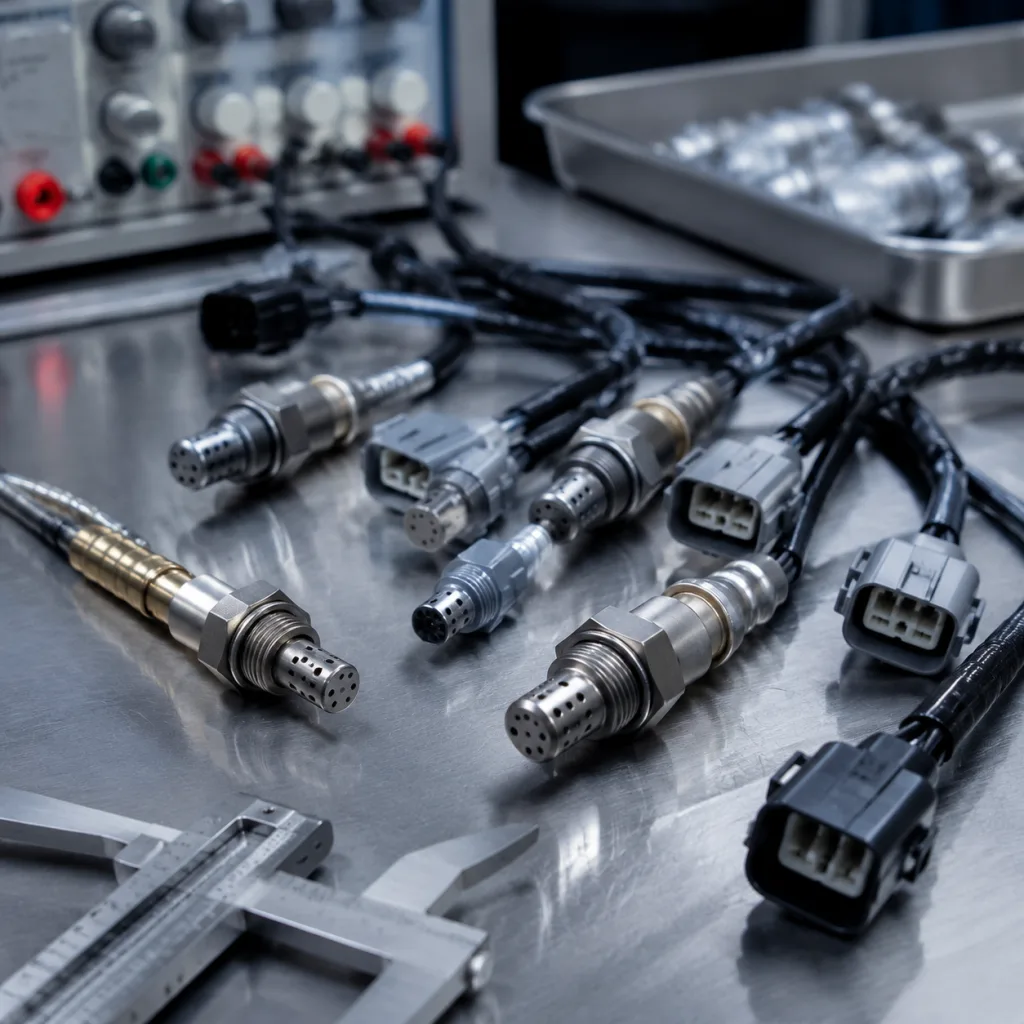
Oxygen sensor replacement price is often framed as a retail repair bill, but procurement teams need a broader total-cost view. The useful calculation includes sensor technology, connector and harness design, heater performance, emissions-market requirements, packaging, defect rate, warranty exposure, freight, duties, and supply continuity. For distributors, repair chains, and Tier-1 sourcing teams, a low unit price can become costly when fitment data is incomplete, connector details are wrong, or heater circuits fail early in service. Driventus manufactures oxygen sensors and related engine components in Taizhou, Zhejiang, with IATF 16949:2016 and ISO 9001:2015 systems supporting production control, inspection, and traceability. This guide explains what sits behind replacement oxygen sensor cost, how to compare quotes on equal terms, and which validation evidence buyers should request before supplier approval. Driventus is an independent aftermarket manufacturer; brand names are referenced for fitment only.
What Drives Replacement Cost in the Supply Chain
For B2B buyers, the invoice price is only the starting point. A narrowband zirconia sensor with a simple four-wire harness usually has a lower production cost than a wideband air-fuel ratio sensor that uses a calibration resistor, more complex connector geometry, and tighter signal-stability controls.
Cost also changes with programme structure. A distributor ordering mixed SKUs in small cartons pays a different per-sensor cost than a national repair chain consolidating demand by vehicle platform. OEM and Tier-1 sourcing teams may require PPAP-style documentation, special packaging, additional durability evidence, or customer-specific reporting. These requirements should be priced transparently instead of being hidden inside a generic unit cost.
Cost factor
Typical procurement impact
What buyers should check
Sensor technology
High
Narrowband, planar, wideband, air-fuel ratio type
Harness and connector
Medium to high
Length, keyway, terminal plating, clip position
Heater specification
High
Cold resistance, current draw, warm-up time
Fitment coverage
Medium
Application data, OE cross-reference logic, supersession control
Validation level
Medium to high
Thermal cycling, response time, leak testing, vibration
Packaging
Low to medium
Private label, barcode, country-of-origin marking
Warranty allowance
Medium
Historical return rate and claim process
Freight and duties
Medium
Incoterms, carton density, destination market
</tr></thead><tbody> </tbody></table>When comparing oxygen sensor replacement price across suppliers, separate the physical sensor bill of materials from service additions such as labelling, stocking agreements, catalogue mapping, market-specific compliance files, and warranty support.
Typical Price Bands by Sensor Type
Published market prices vary widely because “oxygen sensor” can refer to several part families. Repair chains may compare installed job value, wholesalers may compare ex-works unit cost, and importers may compare landed cost after freight and customs. For sourcing work, classify each sensor by construction, position, and emissions function before negotiating.
Sensor family
Common configuration
Relative part cost
Common buying risk
Universal narrowband
1–4 wires, splice connection
Low
Incorrect installation or poor crimp quality
Direct-fit narrowband
Vehicle-specific connector and harness
Low to medium
Connector key mismatch or short harness
Planar heated sensor
Fast light-off, compact element
Medium
Heater resistance outside ECU tolerance
Wideband / air-fuel ratio
5–6 wires, precise mixture feedback
High
Signal drift, calibration mismatch, high return cost
Post-catalyst monitor sensor
Downstream emissions monitoring
Low to medium
Slow response causing diagnostic trouble codes
</tr></thead><tbody> </tbody></table>Universal sensors can reduce SKU count, but they shift part of the installation risk to the technician. For multi-location repair chains, direct-fit sensors are usually more predictable because installation time is shorter and wiring errors are less likely. For distributors, a balanced assortment is common: direct-fit coverage for high-moving references and universal options for long-tail applications.
Procurement teams can review broader fitment coverage in our catalog and confirm whether oxygen sensor SKUs should be supplied as direct-fit, universal, or private-label packaged assortments.
Landed Cost Model for Importers and Distributors
A practical cost model goes beyond the supplier’s invoice. Buyers importing into the EU, UK, US, Canada, Australia, Brazil, or other regulated markets should model landed cost by SKU family and order profile. Oxygen sensors are compact compared with many engine parts, but fragmented low-volume orders can still create inefficient freight, handling, and inspection costs.
A structured landed-cost calculation normally includes:
Ex-works unit price: sensor assembly, connector, harness, protective cap, anti-seize compound where specified, and primary packaging.
Tooling or engineering charge: connector moulds, harness fixtures, private-label artwork, and fitment data work for new references.
Compliance documentation: material declarations, REACH (EC) No 1907/2006 screening where applicable, and customer-specific restricted substance lists.
A low quoted unit price can lose value if minimum order quantities create slow-moving inventory. Buyers should ask suppliers to state MOQ by SKU, MOQ by connector family, and MOQ by order value. Grouping similar harness and connector types can reduce set-up losses and stabilise lead time without forcing excess stock into unpopular references.
For new programmes, Driventus can discuss fitment range, labelling, MOQ, and lead-time assumptions through custom manufacturing.
Validation Requirements That Affect Price
Oxygen sensors work in a severe environment that includes exhaust heat, condensate, vibration, fuel additives, road salt, and repeated thermal shock. Price discussions should therefore be tied to validation scope. A cheaper sensor with limited testing may suit some low-risk aftermarket channels, but it is less suitable for repair chains carrying labour warranty exposure.
Common validation items include:
Heater resistance and insulation resistance at defined temperatures.
Sensor response time from rich-to-lean and lean-to-rich transitions.
Signal output stability under controlled gas concentration.
Thread accuracy, sealing surface control, and shell plating inspection.
Harness pull strength, terminal retention, and connector engagement force.
Thermal cycling from ambient to high exhaust-temperature conditions.
Vibration resistance, water splash exposure, and leak checks.
Traceability by lot, date code, and production line.
Quality planning should align with IATF 16949:2016 for automotive production controls and ISO 9001:2015 for documented quality management. Emissions-related service parts should also be evaluated against the regulatory context of the destination market. ECE R-83 is relevant to vehicle emissions requirements in markets applying UNECE rules, while US programmes may require customer-specific validation aligned with local emissions service-part obligations.
Driventus maintains a documented quality system covering incoming material checks, in-process controls, final inspection, and corrective action. Buyers should request a control plan, inspection report format, and sample test data before approving bulk production.
How to Compare Supplier Quotes Objectively
A useful quote comparison normalises the same technical and commercial assumptions. Otherwise, procurement may compare a direct-fit sensor with a universal sensor, or a validated production part with an early sample. The result can look like savings on paper but turn into returns, installation complaints, or catalogue corrections after launch.
Use a quote comparison sheet with these fields:
Comparison field
Required detail
Why it matters
Part type
Upstream, downstream, narrowband, wideband
Defines ECU function and cost level
Cross-reference format
Generic OE references such as OE 06A… only where supplied by buyer
Prevents unsupported fitment claims
Connector
Pin count, keyway, seal colour, terminal material
Avoids installation mismatch
Harness
Total length, sleeve material, clip locations
Controls dimensional fit
Thread and hex
M18 x 1.5 is common, but confirm each SKU
Prevents exhaust boss fit issues
Test evidence
Response, heater, leak, vibration checks
Reduces field-return risk
MOQ and lead time
Per SKU and per shipment
Supports inventory planning
Warranty process
Claim data required and response time
Controls after-sales cost
</tr></thead><tbody> </tbody></table>The buying team should also estimate defect cost. A sensor with a 0.5% higher field return rate can be more expensive than a higher-priced alternative once labour reimbursement, reverse logistics, replacement handling, and customer dissatisfaction are included. For repair chains, installed warranty risk is often the largest hidden cost in oxygen sensor programmes.
When requesting a quote, provide annual volume, target markets, packaging requirements, sample quantity, and any existing cross-reference list. This helps the supplier price the correct scope rather than return a generic number.
When Replacement Price Should Not Be the Only Decision Point
Some applications justify a higher part cost because the cost of failure is high. Wideband sensors, upstream sensors on tightly controlled engines, and sensors in difficult installation positions can create repeat visits if performance is unstable. In these cases, the procurement target should be the lowest validated total cost, not the lowest invoice value.
Buyers should focus on three areas. First, dimensional match: connector orientation, harness length, grommet position, and thread engagement must suit the application. Second, electrical behaviour: heater warm-up and sensor output must remain within the ECU’s expected range. Third, catalogue accuracy: incorrect upstream/downstream assignment causes returns even when the sensor itself is functional.
For aftermarket distributors, catalogue discipline is a major cost control. Fitment tables should show engine code, model year range, sensor position, connector details, and supersession notes where available. For private-label programmes, barcode structure and carton labels should be agreed before mass production to avoid warehouse relabelling.
Driventus can support oxygen sensor sourcing as part of a wider engine and powertrain parts programme, including pistons, gaskets, water pumps, turbochargers, and related engine components. The aim is to reduce sourcing fragmentation while keeping technical approval evidence visible to the buyer.
Frequently asked questions
For B2B planning, treat the figure as a landed-cost range rather than a single number. Sensor type, connector design, validation scope, packaging, MOQ, freight, duties, and warranty assumptions all affect the final cost. Wideband and air-fuel ratio sensors normally cost more than direct-fit narrowband sensors.
Universal sensors usually have a lower unit price and reduce SKU count, but they add installation risk because wires must be joined correctly. Direct-fit sensors cost more, but they reduce labour time, wiring errors, and fitment complaints, which can be important for repair chains.
Request IATF 16949:2016 and ISO 9001:2015 certificates, control plan, inspection report, sample test data, material compliance information, packaging specification, and traceability format. For regulated markets, also confirm that the supplier can support destination-specific emissions and restricted-substance documentation.
If you are building an oxygen sensor sourcing programme, share your SKU list, target markets, annual volume, and packaging requirements. Driventus can review the scope and help you [request a quote](/contact.html).