Oil sumps look simple, but they are sensitive parts to source at scale. A stamped steel or cast aluminium pan must seal reliably, clear the chassis and exhaust, resist corrosion, protect drain plug integrity and keep oil pickup stable under real operating conditions. For distributors, OEM service programmes and repair-chain supply, the biggest commercial risk is often not a single failed part. It is batch-to-batch variation that creates returns, fitment disputes and warranty administration. This guide sets out practical oil sump specifications for sourcing teams evaluating aftermarket replacements or custom-manufactured parts. It covers dimensional control, material selection, coating requirements, gasket-interface checks and validation records commonly requested during supplier qualification. Driventus manufactures engine components in Taizhou, Zhejiang under IATF 16949:2016 and ISO 9001:2015 systems, supplying B2B customers across Europe, North America, Australia and Brazil. Driventus is an independent aftermarket manufacturer; brand names are referenced for fitment only.
Core data to define before sourcing
A purchase drawing or RFQ should define more than the vehicle application. For oil pans, small differences in flange flatness, baffle position, drain boss geometry or thread depth can create installation problems even when the outer profile appears correct.
Procurement teams should include the following data in the RFQ and inspection plan:
Application and engine family reference, with OE part-number cross-references only where relevant, such as OE 06A… or OE 11251… formats supplied by the buyer.
Material type: stamped low-carbon steel, cast aluminium alloy or fabricated assembly.
Nominal wall thickness and accepted tolerance range.
Flange flatness requirement measured after forming, welding and coating.
Internal baffle, windage tray and pickup clearance dimensions.
Surface treatment, salt spray expectation and packaging corrosion protection.
Required documentation: drawing, PPAP-style dimensional report, material certificate, coating test record and leak test record.
For catalogue-based programmes, buyers can start from our catalog and then confirm whether the required pan is a direct aftermarket item or a drawing-controlled project.
Material and process comparison
Oil sump material selection is normally driven by engine platform, underbody clearance, production volume and target market. Stamped steel remains common in cost-sensitive aftermarket programmes because tooling and part cost can be efficient at volume. Cast aluminium is used where stiffness, cooling surface area, thread strength or structural integration is required.
Specification item
Stamped steel sump
Cast aluminium sump
Procurement note
Typical material
Low-carbon steel sheet
Aluminium casting alloy
Confirm grade on drawing or material certificate
Typical wall thickness
0.8–1.5 mm
2.5–5.0 mm
Do not compare weight without functional context
Main forming process
Press forming, trimming, welding
Die casting or gravity casting, machining
Tooling cost and lead time differ significantly
Sealing face control
Forming accuracy and flange planishing
Machining or post-cast finishing
Flatness is a critical incoming inspection point
Corrosion protection
E-coat, powder coat or zinc-rich coating
Conversion coating or painted finish where required
Market climate and road salt exposure matter
Repair-chain risk
Dents, flange distortion, coating damage
Porosity, thread damage, casting variation
Define packaging and leak-test requirements
</tr></thead><tbody> </tbody></table>Steel pans require control of draw marks, corner thinning, weld consistency and coating coverage around formed features. Aluminium pans require control of porosity, machining datum stability, gasket-face finish and insert or thread quality. For either construction, the supplier should be able to explain process controls, not only submit a visually acceptable sample.
Dimensional specifications and inspection tolerances
A practical inspection drawing should separate safety-critical, fitment-critical and appearance-related characteristics. Not every dimension needs the same tolerance, but sealing and mounting areas require disciplined control because small deviations can become oil leaks, bolt misalignment or underbody interference.
Typical control points for oil sump specifications include:
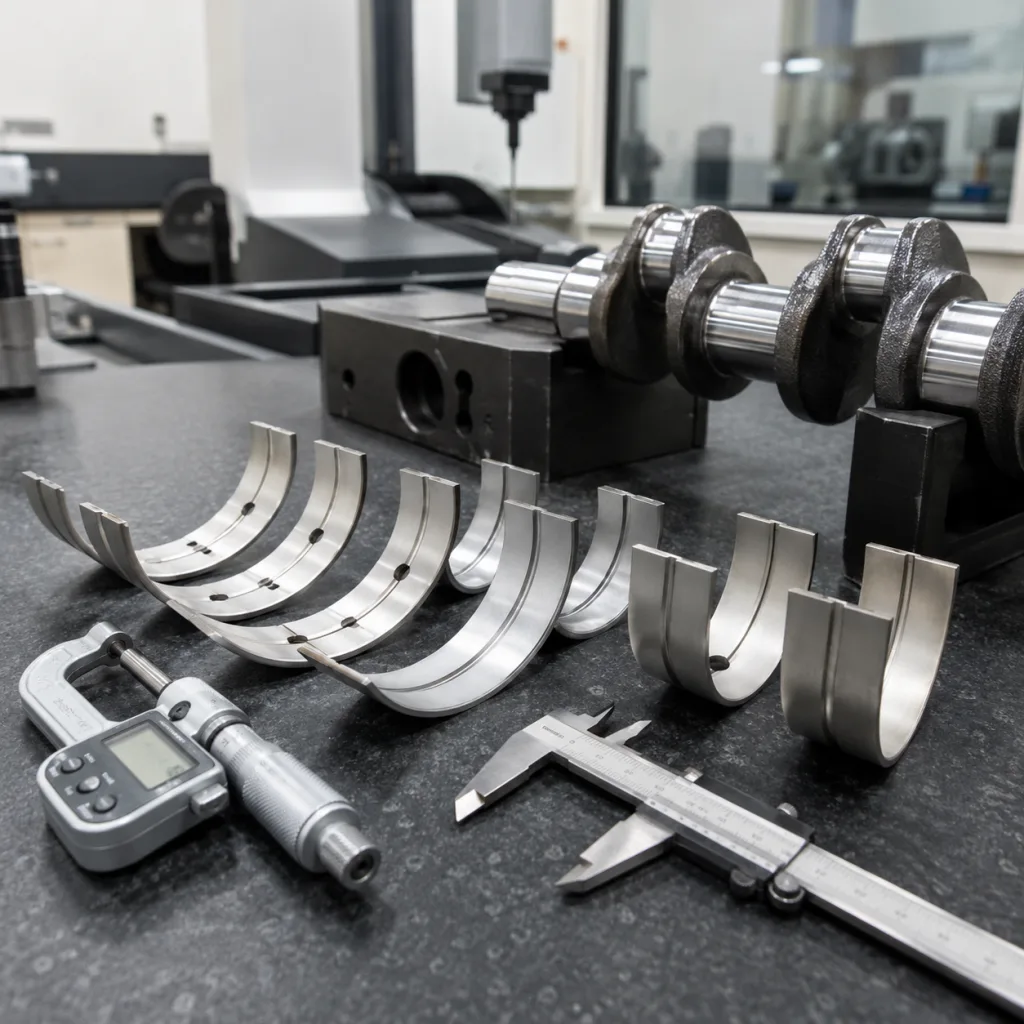
Mounting hole position: commonly checked against a datum scheme using CMM or fixture gauges.
Flange flatness: measured across the full gasket interface, with special attention around bolt holes and corners.
Drain boss perpendicularity: important for plug seating and washer compression.
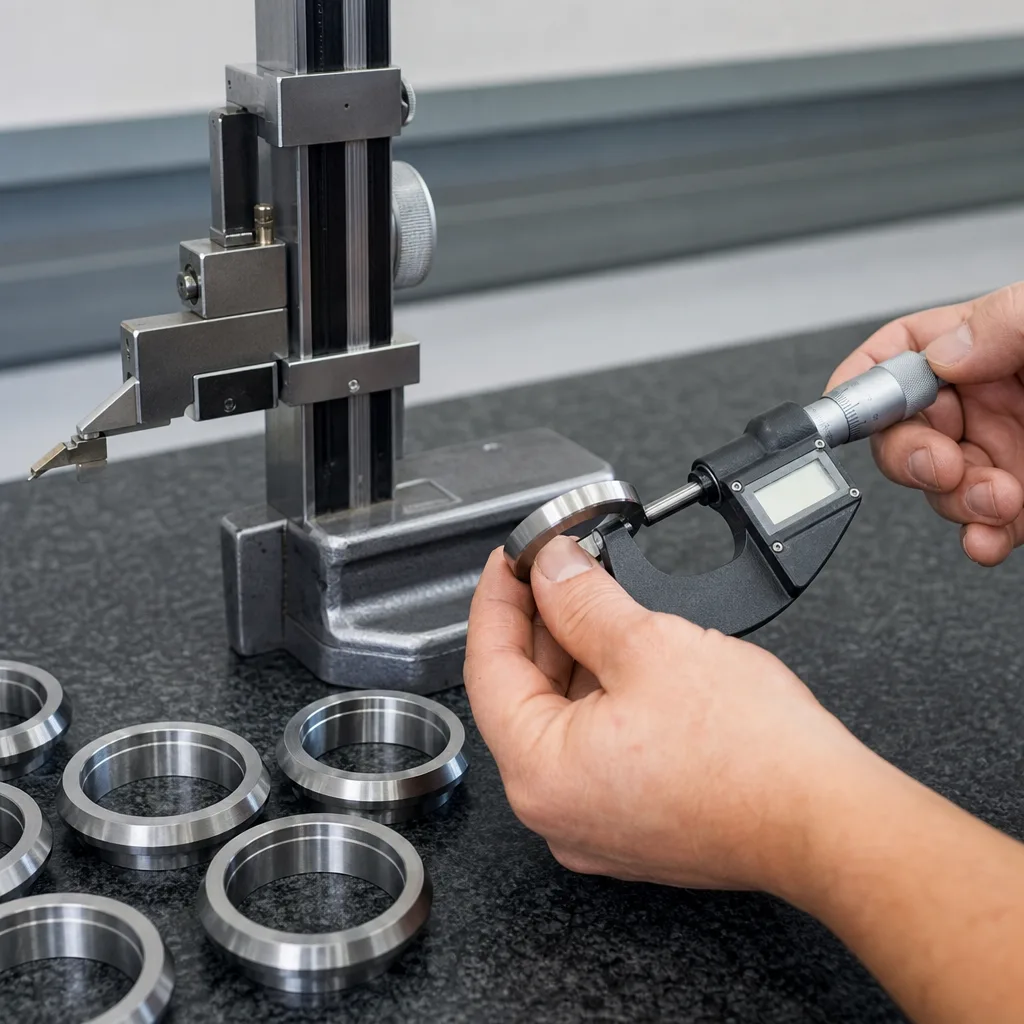
Thread quality: checked with GO/NO-GO gauges and minimum engagement depth.
Internal baffle location: verified to maintain oil pickup clearance and prevent contact.
Sensor port geometry: inspected for sealing surface finish, thread form and connector clearance.
Overall depth: checked to avoid underbody, exhaust, steering rack or subframe interference.
A useful supplier drawing will include datum references instead of isolated dimensions only. In most cases, the block mounting face should act as the primary datum, with selected bolt holes or machined features as secondary and tertiary datums. This allows repeatable comparison between first article samples, production lots and customer complaint samples.
Surface finish should also be specified at sealing areas. For machined aluminium flanges, roughness requirements should be compatible with the gasket or RTV sealing system used by the application. For stamped steel, burr limits around bolt holes and drain openings should be defined because burrs can affect clamping load, washer seating and service safety.
Coating, cleanliness and compliance requirements
Oil sumps operate below the engine and are exposed to water, road salt, stones, oil residue and cleaning chemicals. Coating requirements should therefore be written as measurable acceptance criteria rather than broad colour descriptions.
For steel pans, typical coating controls include adhesion, film thickness, edge coverage, coverage inside corners and corrosion resistance testing. Salt spray testing is often referenced using ASTM B117 or ISO 9227, depending on the customer region and internal quality policy. These tests do not perfectly reproduce road conditions, but they provide a comparative process-control method for coating performance.
For aluminium pans, casting cleanliness, machining residues and sealing surface contamination are frequent concerns. Buyers should require cleaning after machining and protection of threaded holes during finishing. Residual metal chips inside the pan are unacceptable because they can enter the oil system during installation.
Chemical and market-access requirements may also apply. For European supply chains, material declarations and restricted-substance controls should consider REACH (EC) No 1907/2006. Where customers require broader compliance documentation, the RFQ should state whether IMDS, material safety data, coating declarations or country-of-origin documentation are needed.
Driventus controls production and inspection under a documented quality system aligned with IATF 16949:2016 and ISO 9001:2015. These standards do not replace product validation, but they define a framework for traceability, corrective action and process control.
Validation tests buyers should request
Validation requirements depend on whether the part is a catalogue replacement, a private-label aftermarket item or a custom manufacturing programme. The test list below is commonly used for supplier qualification, tooling approval and production release.
Test or check
Purpose
Typical evidence requested
Dimensional first article inspection
Confirms geometry against drawing or master sample
Full dimensional report with datum references
Leak test
Detects weld porosity, casting porosity or drain boss leakage
Pressure or vacuum test record by batch
Flange flatness check
Reduces gasket sealing complaints
Fixture or CMM report
Thread gauge inspection
Confirms drain plug and sensor port fit
GO/NO-GO gauge record
Coating adhesion check
Verifies paint, powder coat or e-coat bonding
Cross-hatch or customer-approved method record
Corrosion exposure check
Compares coating durability
ASTM B117 or ISO 9227 report where specified
Packaging drop or handling review
Reduces flange damage in transit
Packaging specification and trial record
</tr></thead><tbody> </tbody></table>For custom projects, validation should begin before tooling release. A drawing review can identify missing bolt-hole datum definitions, unclear baffle weld requirements, unsuitable sealing-face roughness or incompatible drain plug specifications. Driventus supports custom manufacturing for drawing-based parts, reverse-engineered samples and private-label programmes where the buyer provides the technical target.
Supplier documentation for purchasing files
A sourcing decision should be based on repeatability and documentation, not unit price alone. Importers and category managers should request a documentation package that supports incoming inspection, batch release and later warranty investigation.
Recommended supplier file contents:
Business licence, export experience summary and applicable factory certifications.
IATF 16949:2016 and ISO 9001:2015 certificate copies where applicable.
Product drawing or controlled specification sheet.
Material certificate showing grade, thickness or casting alloy.
Process flow diagram covering forming, welding, machining, coating, cleaning and packing.
Control plan with inspection frequency and sampling method.
First article report for new tooling or new supplier approval.
Batch traceability method and date-code or lot-code format.
Packaging specification, including separator material and corrosion protection.
Corrective action procedure for nonconforming parts.
For aftermarket distributors, this information helps separate similar-looking products. For OEM and Tier-1 purchasing teams, it supports APQP-style review and supplier risk assessment. For repair chains, it reduces operational disruption by improving fitment consistency across locations.
Driventus is an independent aftermarket manufacturer; brand names are referenced for fitment only. If your team is comparing oil sump specifications for an existing programme, you can request a quote with drawings, samples, annual volume and required documentation level.
Frequently asked questions
The sealing flange is usually the highest-risk area. Flatness, bolt-hole position and surface condition determine whether the pan seals correctly against the engine block or gasket. Drain plug thread quality and internal baffle clearance are also critical.
Use the construction specified for the engine application unless there is an approved engineering reason to change. Steel is cost-effective and common in aftermarket supply. Aluminium can provide stiffness and integration benefits but requires closer control of casting and machining quality.
Request the drawing, material certificate, first article inspection report, leak test record, coating evidence, control plan, certification copies and packaging specification. For European programmes, also confirm REACH (EC) No 1907/2006 documentation where applicable.
Send drawings, samples or application lists if your team needs a controlled specification review. Driventus can respond with feasibility, documentation scope and pricing through /contact.html