Oil in Coolant: Oil Pump Assembly Diagnosis and Replacement
Oil in coolant is often blamed on a head-gasket failure, but an oil pump assembly can also be part of the problem. On engines with coolant-fed oil coolers or integrated filter housings, a cracked housing, worn sealing face, or pressure imbalance can allow oil to migrate into the cooling system. The result is contaminated coolant, reduced heat transfer, overheating risk, and accelerated wear in bearings, hoses, thermostats, and related components. For procurement teams and workshop buyers, the priority is to identify the actual failure path before ordering replacement parts.
Driventus is an independent aftermarket manufacturer; brand names are referenced for fitment only. This article explains how contamination develops, which inspection points matter most, and what to verify when replacing an oil pump assembly in an oil in coolant oil pump assembly contamination case. For related engine parts, see our catalog, review our quality system, and use custom manufacturing when a standard build does not match the required specification.
Where the contamination starts
Oil and coolant should remain fully separated. When they mix, the source is usually one of three areas: a heat exchanger, a gasketed interface, or a cracked casting around the lubrication circuit. In engines that use a combined oil cooler and filter housing, pressure differences can push oil into the coolant circuit before any external leak becomes visible.
An oil pump assembly is not always the direct source, but it can contribute when:
The pump housing is cracked or porous
The mounting face is distorted beyond 0.05 mm over the sealing length
The integrated cooler port seals are damaged or compressed below the specified 70–90% squeeze range
The pump has been installed with incorrect torque or sealant
The lubrication circuit has sustained overpressure from blockage or sludge
If the vehicle shows milky coolant, swollen hoses, or repeated coolant loss, do not assume the pump is sound without a pressure check and a housing inspection. As a practical threshold, any visible oil sheen in the expansion tank plus a cold-engine pressure decay greater than 0.1 bar in 10 minutes warrants closer inspection of the pump-side circuit.
Symptoms that point to a pump-side fault
The symptom pattern matters. Oil in coolant caused by an oil pump assembly issue often appears alongside one or more of the following:
Symptom
What it can indicate
Inspection focus
Oily film in expansion tank
Cross-contamination in cooler or housing
Check cooler core, pump body, seals
Coolant loss with no external drip
Internal passage leak
Pressure test cooling circuit to the OE cap rating or service pressure, typically 1.0–1.5 bar
Overheating at highway load
Reduced coolant heat transfer
Check radiator, thermostat, oil cooler
Sludge in hoses or tank
Long-term contamination
Flush history, elastomer compatibility
Low oil pressure warning
Pump wear or pickup restriction
Measure pressure; compare idle and 2,000 rpm readings against the OE spec, often around 0.8–1.2 bar idle and 3.0–5.0 bar at 2,000 rpm depending on engine
</tr></thead><tbody> </tbody></table>A pump assembly replacement is justified when the housing is cracked, warped, scored at the sealing face, or out of dimensional tolerance. If the issue is only a separated cooler core, the replacement scope may be different, but the entire contamination path still needs verification. For buyers, that means matching the exact failure mode to the part scope before raising a PO, not assuming a full assembly is required by default.
Inspection sequence before ordering parts
Use a structured inspection process before approving replacement. That reduces comebacks and avoids changing a serviceable pump.
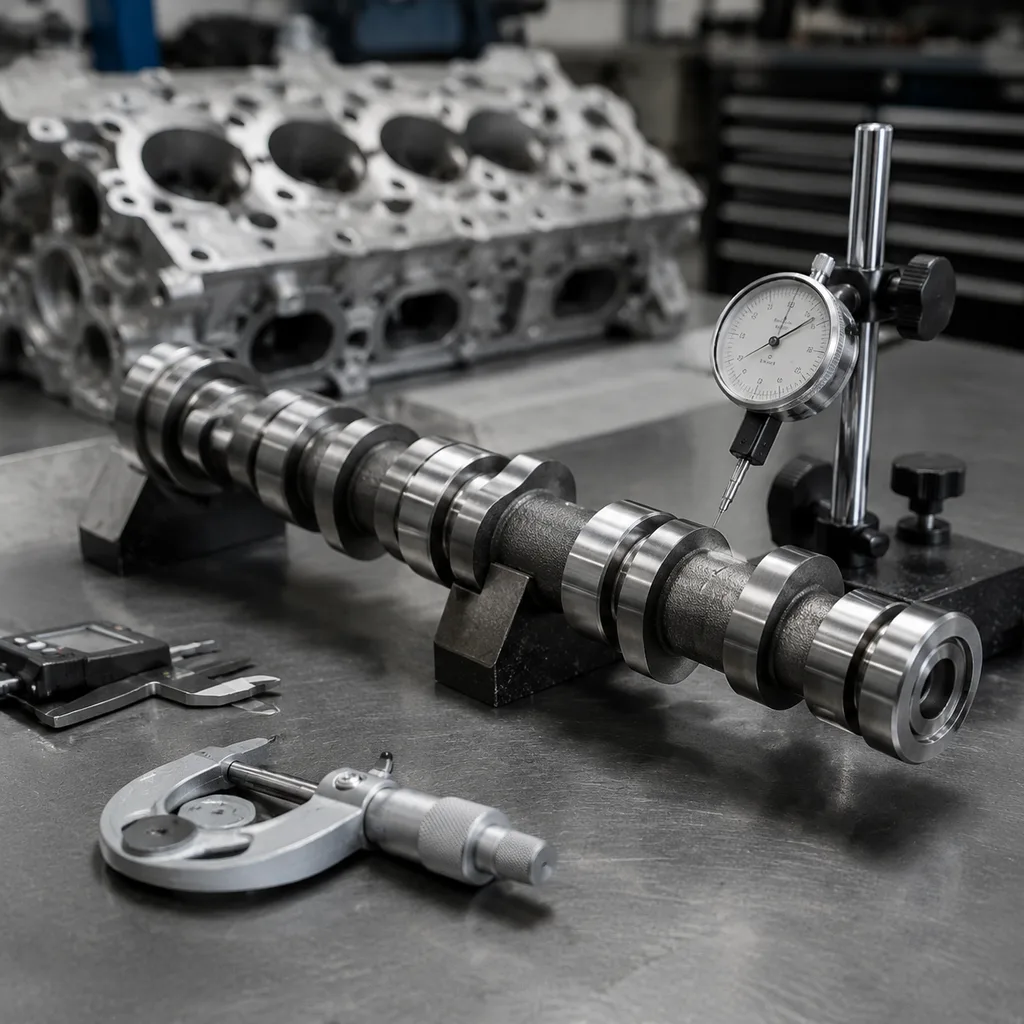
1. Drain and sample both fluids. Confirm whether the contamination is one-way or cross-system. 2. Pressure test the cooling system to the vehicle maker’s service pressure. Hold the system for 10–15 minutes and record any drop greater than 0.1 bar. 3. Inspect the oil cooler, if fitted, for internal leakage. 4. Check the pump body for casting cracks, thread damage, and warped faces. 5. Measure the mating surface flatness and compare with the applicable OE reference; many pump housings require flatness within 0.03–0.05 mm. 6. Confirm oil pressure at idle and under load.
If the engine uses an OE cross-reference such as `OE 06A107065`, confirm that the replacement matches the exact port layout, mounting depth, and drive interface. Small dimensional differences can change oil pressure and sealing performance even when the part appears visually similar. In procurement terms, request the dimensional drawing, critical-to-quality list, and sample approval report before confirming the order.
Replacement requirements for procurement teams
For B2B sourcing, the buying decision should be based on fitment control, material control, and validation evidence, not catalogue photos. A proper replacement oil pump assembly should be checked against the following:
Housing material and coating specification
Gear profile and shaft clearance
Relief valve opening pressure, typically verified within ±0.1 bar of target or the OE tolerance band
Mounting face flatness and bore concentricity, often requiring ≤0.03 mm face variation and ≤0.02 mm concentricity at critical bores
Seal groove dimensions and elastomer compatibility
Corrosion resistance for coolant-adjacent surfaces
Traceability to IATF 16949:2016 and ISO 9001:2015 processes
Where coolant compatibility is critical, the buyer should also check chemical resistance documentation aligned to REACH (EC) No 1907/2006. For heat-ageing and seal durability, request test evidence relevant to the application, including thermal cycling, pressure retention data, and leak testing after 100–300 thermal cycles depending on application severity. For commercial sourcing, ask for MOQ, unit price by tier, and lead time by lot size before sampling. Typical OEM/aftermarket programs should state sample quantity, mass-production MOQ, and standard production lead time separately so the buyer can compare prototype, pilot, and release conditions. Driventus can support these requirements through documented inspection and our quality system.
How Driventus supports validated sourcing
Driventus manufactures engine and powertrain components in Taizhou, Zhejiang, with in-house control over machining, assembly, and final inspection. That matters when the sourcing problem is not just availability, but repeat failure after installation.
For contamination-related replacements, we can support:
OE-matched dimensional review before sampling
Batch traceability and incoming material verification
Torque and sealing specification review for the assembly interface, including fastening sequence and target torque windows where applicable
Export support for aftermarket distributors, OEM suppliers, and repair chains
If you are consolidating supply or replacing a discontinued design, start with our catalog and then send the OE reference, engine code, and failure photos. When the application is not a direct match, use request a quote so the team can confirm feasibility, sample cost, MOQ, production lead time, and validation path before release. For high-volume programs, buyers should also request PPAP-style documentation or equivalent approval records, plus confirmation of packaging quantity per carton and pallet to support inbound planning.
What to document after the repair
After replacement, the repair record should show that the contamination path was addressed, not just the visible symptom. Keep the following on file:
Source of contamination identified
Pressure test results before repair
Part number and batch code installed
Coolant flush method used
Oil pressure readings after assembly
Follow-up inspection interval
Post-repair leak check duration and acceptance result
For fleet and distribution customers, this documentation supports warranty control and reduces repeat claims. It also helps distinguish a true oil pump assembly fault from a cooler failure, gasket issue, or block crack that would require a different corrective action. As a field standard, recheck coolant condition after 100–200 km or one heat cycle pair, and confirm that the oil pressure and coolant level remain stable.
Frequently asked questions
Yes, if the housing, sealing face, or integrated cooler connection leaks internally. In many engines the pump is not the only possible source, so the cooling system and oil cooler should be pressure tested first. A failure is more likely when the pressure test shows decay, the sealing face is out of flatness, or the cooler port seals are compressed or damaged.
Not always. Replace the failed component set that matches the measured fault. If the pump housing or seal face is damaged, complete pump replacement is usually safer than partial repair. If the cooler is separate and the housing dimensions are within tolerance, a cooler-only replacement may be acceptable when the OE procedure allows it.
Look for controlled production under IATF 16949:2016 and ISO 9001:2015, plus materials and chemical compliance relevant to REACH (EC) No 1907/2006. Request inspection records and fitment confirmation for the exact application, including flatness, concentricity, pressure data, and lot traceability. For commercial buying, also confirm MOQ, sample policy, and quoted lead time before approval.
If you need a verified replacement for a contamination case, send the OE reference, engine details, and photos for review. Contact Driventus to validate fitment, MOQ, price tier, and lead time at [request a quote](/contact.html).