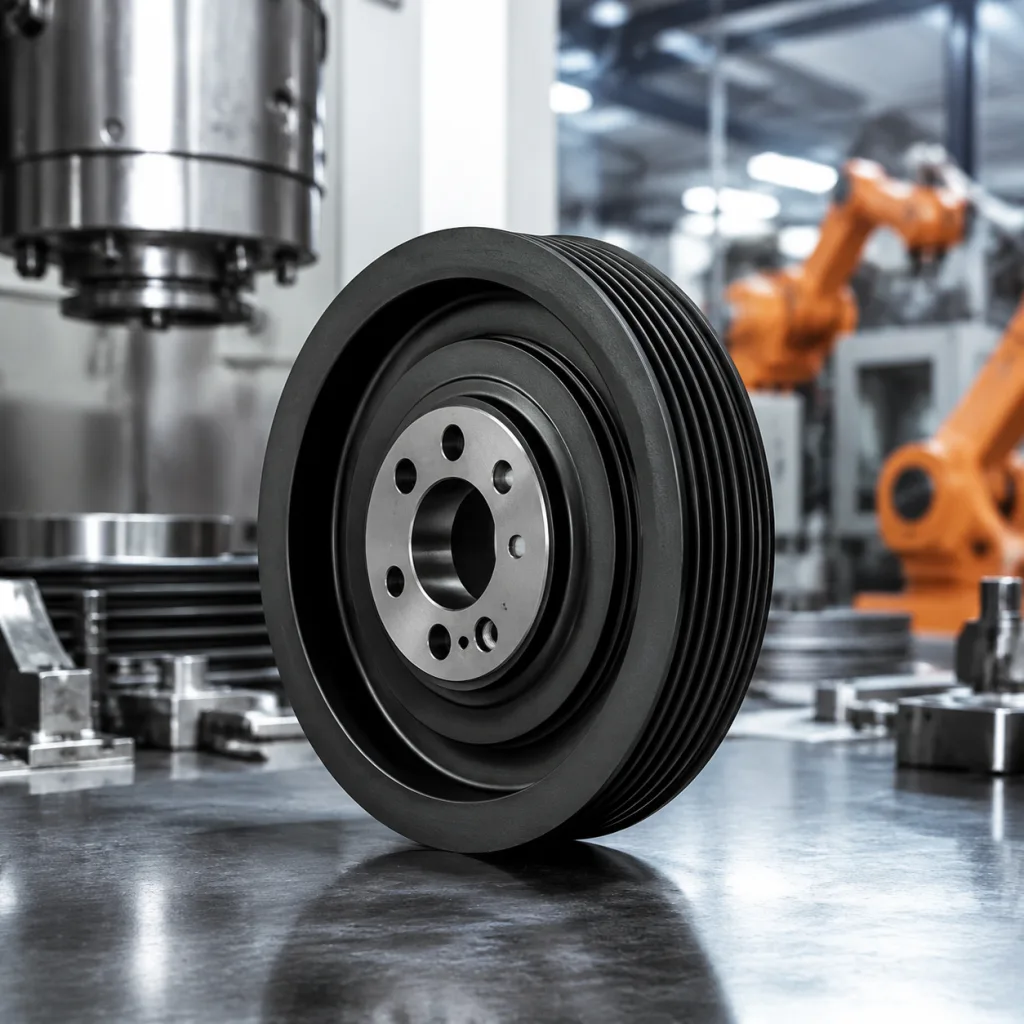
Oil Filter Housing Specifications for Procurement Teams
Oil filter housing specifications determine fit, sealing, service life, and whether a part can move from sample approval to stable production. For procurement teams, the issue is not only whether the housing matches the engine block, but whether the drawing, material definition, tolerance stack, and validation plan are complete enough for repeatable supply. That matters even more when the housing integrates a filter cap, oil cooler ports, sensor bosses, or thermostat passages. Driventus is an independent aftermarket manufacturer; brand names are referenced for fitment only. Buyers working across passenger car and light commercial programs should expect controlled dimensions, documented material traceability, and validation against the approved drawing rather than assumptions from a visual match. The sections below outline the specification points that usually drive quality, cost, and lead time, and show what to request before approving an annual supply contract.
What Buyers Should Specify First
Start with the functional envelope, not the outer shape. A housing can look correct and still fail if the port clocking, sensor boss angle, cap depth, or gasket land does not match the engine bay. The first pass should define what the part must do in service, how it interfaces with the engine, and which features are mandatory versus optional.
For an initial sourcing review, compare the application against our catalog and confirm that the supplier backs the samples with a documented quality system. That is a useful check, but it is not enough on its own. You should also confirm whether the program is a direct OE-fit replacement, a revised aftermarket design, or a new housing family that will need fresh validation.
Key items to lock down:
Mounting pattern, bolt size, bolt circle, and any locating dowels or anti-rotation features
Hose, cooler, and bypass port position, size, and clocking relative to the mounting face
Sealing land width, gasket type, and compression range
Filter cartridge depth, cap engagement, bypass valve setting, and service access clearance
Sensor ports, thermostat passages, bleed points, and drain features where applicable
Required markings, part number format, packaging, and traceability for pilot and production lots
If the drawing is incomplete, stop there. The cheapest part to change is the print, not the tooling. A complete requirement set at the quotation stage prevents later disputes over fit, warranty returns, and unintended redesigns.
Core Dimensions And Tolerance Targets
The most useful oil filter housing specifications are the ones that affect sealing and assembly first. Cosmetic finish matters, but it does not prevent a leaking joint or a misaligned port. Procurement teams should insist on a dimension list that identifies the critical-to-function features, the measurement method, and the inspection frequency.
Specification item
Typical procurement target
Why it matters
Gasket face flatness
<= 0.05 mm across the sealing land
Reduces leak risk under thermal load
Port center position
+/- 0.10 mm to drawing
Prevents hose, cooler, or bracket mismatch
Bore concentricity
<= 0.03 mm
Supports cartridge alignment and stable fit
O-ring groove depth
+/- 0.05 mm
Controls compression and seal life
Thread form and class
Per approved drawing and gauge
Confirms tool engagement and serviceability
Cap seat depth
Per drawing with controlled gauge check
Prevents loose caps and seal damage
Pressure test result
No leakage at 1.5x maximum working pressure
Verifies casting, machining, and assembly integrity
</tr></thead><tbody> </tbody></table>A coordinate measuring machine report should show the datum scheme, revision level, sample quantity, and whether results came from first article inspection, process capability study, or routine lot control. If the supplier measures against a different datum set, the numbers are not directly comparable. For mixed-material assemblies, also ask which dimensions are measured before and after insert pressing or final torque, because assembly load can change the final geometry enough to affect fit.
For threaded features, ask for the gauge class and acceptance criteria, not just nominal thread size. For sealing grooves, define groove width, depth, radii, and surface finish together; a good depth number alone does not guarantee seal performance if the edge break or roughness is out of spec.
Materials, Finishes, And Seal Compatibility
Material choice affects mass, corrosion resistance, machining effort, and seal behavior. It also affects how the part ages under oil temperature, thermal cycling, and service tools. Buyers should define the base material, any inserts, and all surface treatments in the specification package, not after sample approval.
Cast aluminum is common for higher-temperature programs. It supports stable machining on the gasket face, reliable thread performance, and good heat transfer when the housing shares an oil cooler path. It is usually the best choice when the design includes multiple machined interfaces and repeated service removal.
Glass-fiber reinforced polyamide can reduce mass and part count, but it needs validated oil and coolant compatibility, heat-age testing, and controlled insert design for threaded interfaces. It is more sensitive to process control, moisture conditioning, and long-term creep under clamp load.
Hybrid assemblies, with a cast body and polymer cap or separator, need clear responsibility for each sealing joint. Buyers should request a joint map that identifies which seal closes which cavity, the tightening sequence, and the service replacement procedure.
For broader engine programs, the same material logic often applies to adjacent engine components. Surface finish, anodizing, e-coat, or conversion coating should be specified on the drawing, not left to buyer interpretation. If the coating is functional, define the required salt-spray or corrosion performance, because a decorative finish may not protect the part in a winter road environment.
For seals, buyers usually specify NBR, FKM, or HNBR by temperature range and oil package. Chemical compliance should include REACH (EC) No 1907/2006 declarations and a restricted-substance statement for gaskets, coatings, adhesives, and any thread-locking compounds. If the housing includes a plastic cap or coolant-exposed polymer section, ask for media compatibility data covering oil, coolant, fuel vapor, and cleaning agents used in service.
The supplier should also state the molding or casting route, because process choice affects porosity, knit lines, flash risk, and repeatability. For aluminum castings, request confirmation of alloy family, heat treatment condition, and porosity control method. For polymer parts, request resin grade, glass content, and moisture-conditioning requirements before final measurement or leak testing.
Validation Tests And Standards
Validation should be built into the control plan, not treated as a one-time sample check. For oil filter housing specifications, the most useful tests are dimensional, pressure, thermal, and corrosion checks under documented process control. The right test package depends on whether the part is a pure oil filter mount, an integrated cooler module, or a housing with sensors and thermostat passages.
`IATF 16949:2016`: traceability, preventive action, change control, and production part approval discipline
`ISO 9001:2015`: documented process control and corrective action structure
`SAE J2527`: corrosion validation for coated metal parts when the customer specifies it
`REACH (EC) No 1907/2006`: substance declarations for metals, plastics, seals, and coatings
`ECE R-83`: reference point when the housing is part of a wider engine validation file tied to emissions-related development
A practical test set is 1.5x maximum working pressure for leak confirmation, thermal cycling from -40 C to 150 C, and a salt-corrosion exposure window of 500 to 1,000 cycles or the agreed equivalent, depending on duty cycle. For programs with repeated service removal, add torque-retention and thread-strip checks after thermal exposure. For polymer housings, also ask for hot-oil soak and clamp-load retention data, because material creep can reduce sealing force over time.
Record the test medium, hold time, acceptance criteria, sample count, and the exact revision of the part that was tested. Without that, the data is not comparable across suppliers. A supplier should also state whether failures were isolated to one cavity, one process shift, or one lot, because that distinction affects whether the issue is a one-off defect or a process capability problem.
Where the housing contains a pressure-relief or bypass valve, include opening pressure, hysteresis, and reseat performance in the validation plan. If the module includes a thermostat element, request response temperature, full-open temperature, and cycle durability data. Those details matter more than a generic pass/fail statement because they define how the part behaves in the vehicle.
Sourcing, Change Control, And OEM Alignment
Procurement teams usually get better results when the RFQ asks for the full package, not only a price. A complete request should include the 2D drawing revision, 3D file, annual volume, target market, material restrictions, seal material, coating requirement, packaging method, and the required inspection report format. It should also state whether the program accepts equivalent materials, alternate coatings, or design-for-manufacture suggestions from the supplier.
That package lets the supplier quote tooling, machining, leak testing, and label control separately. It also helps determine whether standard production is enough or whether custom manufacturing is needed for sensor bosses, coolant ports, or a different thermostat layout. If the buyer intends to source across multiple regions, specify the market compliance stack up front so the supplier does not quote a part that later requires rework for another jurisdiction.
Driventus supports this process through documented development and production control, with change notices tied to the approved revision. If the program needs a new housing family, ask for a pilot plan, dimensional report, material declaration, and PPAP-style sample set before committing annual volume. Change control should cover tooling changes, resin or alloy substitutions, coating changes, and even revised packaging if that packaging affects corrosion or contamination risk.
For commercial purchasing, the key question is repeatability. A lower unit price is not useful if the sealing face shifts, the thread gauge changes, or the supplier cannot hold the same result across lots. Buyers should confirm how the supplier reacts to engineering changes, how long obsolete stock remains in circulation, and whether lot traceability can isolate warranty issues quickly.
If the sourcing model includes service parts, ask for a last-time-buy policy and an obsolescence notice period. For long-life vehicle platforms, that can matter as much as unit price because tooling and raw material changes often occur before the end of the aftermarket support window.
Frequently asked questions
The sealing face flatness, port clocking, thread class, cap seat depth, and internal bore alignment matter most. These control leaks, hose fit, and filter engagement. If the drawing does not define them clearly, request a revised print before sampling.
Ask for a material declaration, dimensional inspection report, traceability record, test method summary, and compliance statements for REACH and any other market-specific requirements. For serial supply, add revision control, change notification rules, and evidence of the inspection gauges used.
Yes, when the print is complete and the target volume is clear. Driventus is an independent aftermarket manufacturer; brand names are referenced for fitment only. Match is confirmed by drawing, physical sample, and test results, not by branding.
If you need a drawing review, sample plan, or volume quote, use [request a quote](/contact.html).