Mass Air Flow Sensor Replacement for B2B Buyers
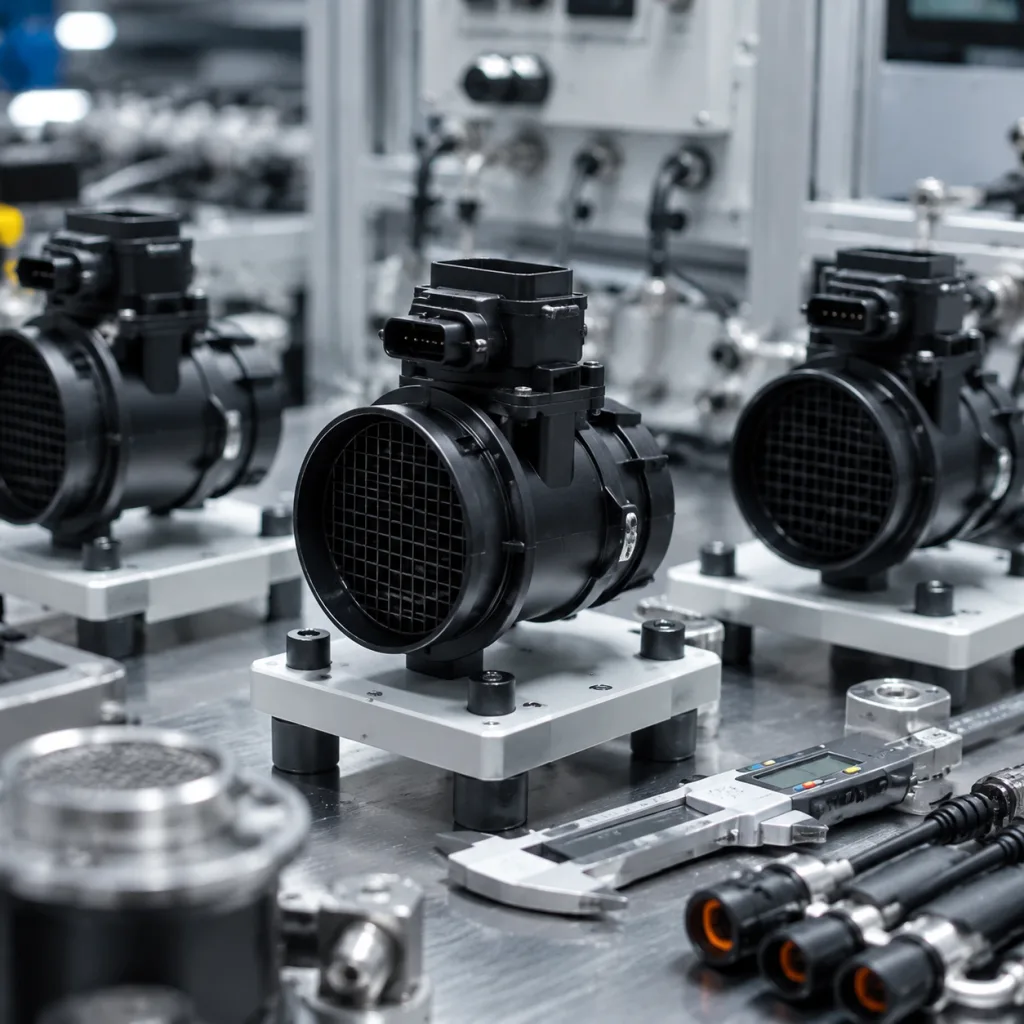
Mass air flow sensor replacement is a steady aftermarket requirement because the sensor directly influences air-fuel calculation, drivability, emissions performance and fuel consumption. For distributors, repair chains and sourcing engineers, the sourcing question goes beyond whether a part fits the intake duct. A replacement MAF sensor must match the OE housing geometry, connector interface, sensing element position, output curve and durability expectations across temperature, vibration and humidity exposure. Poorly matched sensors can cause unstable idle, hesitation under load, excessive fuel trim correction, diagnostic trouble codes or failed emissions inspection. Driventus supplies mass air flow sensors for B2B aftermarket programmes with dimensional verification, electrical testing and batch traceability. This guide explains the procurement checks that matter when evaluating replacement MAF sensors, including OE-equivalence, validation evidence, quality controls and supplier documentation for import programmes in the EU, UK, US, Canada, Australia and Brazil.
Replacement Criteria Buyers Should Specify
A replacement programme should define fitment, signal behaviour and durability, not vehicle coverage alone. A mass air flow sensor measures intake air mass and sends a voltage, frequency or digital signal to the engine control unit. If the output curve differs from the OE reference, the ECU may compensate through fuel trims until the correction limit is exceeded, often leading to drivability complaints or repeat fault codes.
Procurement teams should request a drawing or controlled sample comparison that covers the housing, sensing element position, connector keying, mounting flange and sealing surface. For insert-type sensors, probe length and orientation are especially important because the sensing element must sit in the correct airflow path, not just inside the duct.
Key specification points include:
- Housing material: glass-filled PBT, PA66 or equivalent heat-stabilised engineering polymer
- Connector: terminal count, key position, latch geometry and plating requirement
- Sealing: O-ring material, compression height and groove dimensions
- Output type: analogue voltage, frequency-based or digital, matched to application
- Operating temperature: typically -40 °C to +125 °C, depending on engine bay location
- Supply voltage: commonly 5 V or 12 V system interface, application dependent
- Traceability: lot number, production date and inspection record per shipment
Driventus is an independent aftermarket manufacturer; brand names are referenced for fitment only.
OE-Equivalent Fit and Signal Validation
OE-equivalence in this category has two parts: physical interchangeability and calibrated electrical behaviour. A sensor may lock into the air duct correctly but still produce inaccurate load readings if the sensing element, circuit board or calibration curve is not controlled. For mass air flow sensor replacement programmes, this distinction is critical because the ECU calculates fuel delivery from the measured air mass, not from the part’s appearance.
For sourcing approval, buyers should compare samples against OE references by part family, vehicle application and connector variant. Cross-reference data should be treated as fitment guidance, then confirmed through dimensional and electrical validation. Where customer data includes OE-style references, use generic forms such as OE 06A… or OE 11251… only as internal cross-reference formats unless the exact reference is supplied by the buyer.
| Validation item | What to verify | Typical procurement evidence |
|---|---|---|
| Housing geometry | Mounting hole pitch, duct diameter, probe depth, flange flatness | CMM report or sample inspection record |
| Connector interface | Terminal position, latch retention, keying, plating | Connector gauge check and visual record |
| Output curve | Signal response at defined airflow points | Bench flow test report |
| Thermal stability | Signal drift after hot/cold exposure | Environmental chamber report |
| Vibration resistance | No intermittent signal or housing crack | Vibration test summary |
| Sealing | No bypass leakage around O-ring or gasket | Leak or fitment inspection record |
| Control stage | Main control point | Buyer value |
|---|---|---|
| Incoming materials | Plastic resin, terminals, PCB, sensing element, O-rings | Reduces drift, cracking and connector defects |
| Moulding and assembly | Housing dimensions, burr control, terminal insertion | Improves installation fit and sealing |
| Electrical calibration | Output at defined airflow or simulated signal points | Supports ECU compatibility |
| Environmental screening | Heat, cold and humidity exposure where required | Reduces early-life failures |
| Final inspection | Connector, label, traceability, packaging | Supports warehouse and warranty control |
| Shipment review | Lot record, carton mark, packing list | Simplifies importer quality audits |