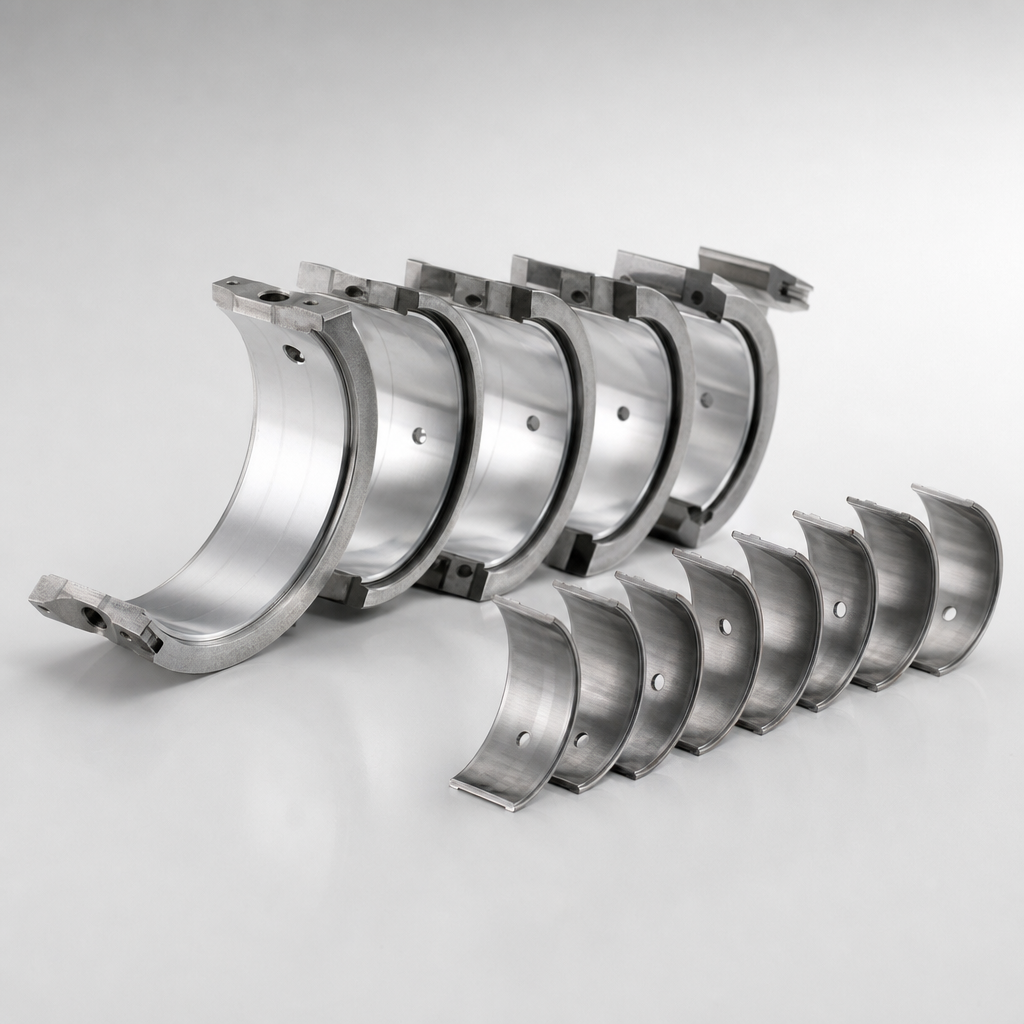
Intercooler Material Grade Comparison for B2B Buyers
Selecting the right aluminium grade for an intercooler is not a line-item exercise. It changes thermal performance, durability, manufacturing yield, and landed cost at the same time. Many buyers start with raw material price. The better approach is to ask where the assembly can fail, which parts need which properties, and how the joining process limits material choice.
For aftermarket and OE-adjacent charge-air cooler programmes, grade selection affects more than performance on paper. It influences brazing stability, burst margin, corrosion life, scrap rate, validation scope, and batch-to-batch consistency. This article gives a practical framework for intercooler material grade comparison across the alloys most often used in tube-and-fin and bar-and-plate designs. It is written for sourcing engineers, category managers, and import buyers who need a sharper way to compare supplier claims. Driventus is an independent aftermarket manufacturer; brand names are referenced for fitment only.
Start with the failure mode, not the alloy name
An intercooler is a material stack-up, not one material. Tubes, fins, headers, side plates, end tanks, bosses, and brackets may all use different alloys or tempers. So a useful intercooler material grade comparison begins with one question: what is each part expected to survive?
For procurement, the first comparison points are usually:
Thermal conductivity: affects heat rejection and the cooling/pressure-drop balance; common intercooler alloys are roughly 120-235 W/m·K depending on grade and temper
Brazeability: essential for stable controlled-atmosphere or vacuum brazing; confirm clad alloy, clad ratio, flux system, and furnace window
Mechanical strength: matters for boost pressure, vibration, and burst margin; compare retained post-braze strength, not only base alloy family
Corrosion resistance: important for road salt, humidity, condensate, and coastal service; ask for actual test hours and failure criteria
Formability: affects stamping, folding, and tank-forming yield; minimum bend radius and crack rate matter in production
Material availability: drives lead time and MOQ; special gauges or uncommon clad combinations can add 4-8 weeks
Cost per finished assembly: should include scrap, rework, and warranty exposure; a cheaper alloy can still raise total cost if brazing yield falls by 2-5%
A practical part-by-part split looks like this:
Core tubes and fins: conductivity, brazeability, thin-wall forming
Headers and side plates: braze compatibility, stiffness, burst support
End tanks and bosses: strength, weldability, fatigue resistance, machining where needed
Brackets and mounts: vibration durability, dimensional repeatability
That is why broad descriptions such as "aluminium intercooler" are not enough at RFQ stage. Ask for the material stack-up by component, including nominal gauge, minimum gauge, temper, clad thickness %, joining method, and mill source. Without that detail, you are not comparing like with like.
Where each common grade actually fits in an intercooler build
The grades below appear often in sourcing discussions, but they do not compete on equal terms. Each tends to solve a different manufacturing or duty-cycle problem.
Material grade
Typical intercooler use
Approx. thermal conductivity
Typical thickness/gauge in use
Main advantages
Main limitations
3003 aluminium
Fins, some tubes, formed parts
~160-190 W/m·K
Fins often 0.08-0.20 mm; formed parts 0.6-1.5 mm
Good corrosion resistance, good formability, widely available
Lower strength than 5xxx or 6xxx grades
4343 clad layer
Brazing clad on tubes/sheets
~150-170 W/m·K
Clad layer often 5-12% per side
Low melting point supports brazing flow; typical solidus around 577°C
Used as clad, not usually as standalone structural alloy
3003/4343 clad sheet
Tubes, headers, fins
Composite depends on clad ratio
Tube stock often 0.20-0.40 mm; header stock 1.5-3.0 mm
Good brazeability, common in mass production, stable CAB processing
Moderate strength only
5052 aluminium
End tanks, side plates, formed covers
~130-150 W/m·K
Commonly 1.2-3.0 mm
Better strength than 3003, good corrosion resistance, good weldability
Lower thermal conductivity than 3xxx series
6061 aluminium
Bar-and-plate sections, machined tanks, performance units
~150-170 W/m·K
Commonly 2.0-6.0 mm plate/extrusion
High strength, good machinability, structural stability
Less suited to thin complex brazed cores; higher material cost
6063 aluminium
Extruded sections
~190-220 W/m·K
Extrusions often 1.5-4.0 mm wall
Good extrusion characteristics, reasonable surface finish
Lower strength than 6061
</tr></thead><tbody> </tbody></table>In high-volume brazed tube-and-fin production, the default is often 3xxx-series core stock with 4xxx-series brazing clad. When the design moves into fabricated tanks, bosses, brackets, or extruded features, 5xxx or 6xxx grades become more relevant.
Practical interpretation
Most buyer confusion comes from comparing these grades as if they were direct substitutes.
3003/4343 vs 5052: the first usually fits brazed core stock; the second is more often used for welded or formed tanks that need more strength
5052 vs 6061: 5052 is generally easier to form and weld for tank shells; 6061 is stronger for machined flanges, billet tanks, and rigid sections
6061 vs 6063: 6061 typically wins on strength; 6063 often wins on extrusion quality, surface finish, and sometimes conductivity in profile sections
Temper matters too:
5052-H32 is a common formed-tank choice
6061-T6 is common for machined or extruded high-strength parts
Post-braze core stock should be judged by retained properties after the furnace cycle, not by incoming sheet condition alone
So the real comparison is not "which grade is best?" It is "which grade makes sense for this part, this joining route, and this load case?"
The decision framework buyers can use in 10 minutes
If you need to screen suppliers quickly, use a simple decision path.
1. Identify the cooler architecture
Tube-and-fin usually points toward brazed 3xxx/4xxx clad core material
Bar-and-plate more often involves thicker sections, welded assemblies, and greater use of 5xxx/6xxx grades
2. Check the joining route
CAB or vacuum brazed builds need material systems compatible with clad sheet and furnace control
TIG welded or mixed-process assemblies usually allow more freedom with tank and structural grades
3. Link grade to the stressed parts
If the highest risk is leakage after brazing, focus on clad, gauge control, cleanliness, and header flatness. If the risk is tank deformation or cracking, focus on 5052/6061 selection, wall thickness, forming route, and weld validation.
4. Compare total assembly economics
Material cost alone is a poor decision tool. Review:
scrap rate
braze yield
weld rework
tooling cost
MOQ
lead time
warranty exposure
A quote that is lower because it changed alloy, temper, gauge, clad %, leak-test method, or test scope is not really lower on the same basis.
5. Ask one control question
What problem is this grade solving in this exact part?
If the supplier cannot answer clearly, the comparison is still too generic.
How material choice changes performance on the bench and yield in the factory
Grade selection affects field performance and factory stability at the same time.
Heat transfer and pressure duty
For the core, conductivity matters. But it is only one variable. Cooling performance also depends on fin density, tube geometry, internal turbulator design, airflow path, and frontal area. A stronger alloy does not automatically cool better. A more conductive alloy does not rescue a weak core design.
Ask suppliers to tie material choice to actual targets such as:
Charge-air temperature drop target at a stated flow rate, such as 20-50°C under defined inlet and ambient conditions
Pressure drop limit, often around 5-20 kPa depending on application and core size
Operating pressure and burst pressure; many passenger-vehicle intercoolers may see working pressure in the 1.5-3.0 bar range, while burst validation can be targeted at 4x or more of max operating pressure depending on programme standards
Pressure-cycle durability, for example 100,000-500,000 cycles or customer-specific pulse testing
Joining route matters
If the supplier uses controlled atmosphere brazing, the material system has to fit clad behaviour, filler flow, and furnace parameters. If the unit is TIG welded or built as fabricated bar-and-plate, 5xxx and 6xxx grades may be more practical.
Useful process questions include:
Is the core brazed, welded, or mixed-process?
Which parts use clad sheet, and what is the clad thickness range, for example 5-12% per side?
Are tanks stamped, folded, extruded, cast, or machined?
What is the nominal wall thickness by component?
What burst and cyclic pressure tests are applied?
How is distortion controlled after brazing or welding?
A capable supplier should also be able to discuss details such as:
Tube mill or folded-tube process and gauge tolerance, often around ±0.02 to ±0.05 mm on thin core stock depending on mill capability
Header plate flatness after stamping and before braze
CAB furnace profile, typically with a peak metal temperature near the clad melting range and controlled residence time
Flux application rate, cleanliness controls, and dew-point management
Weld sequence and fixturing for tank-to-header or boss welding
Helium or air-under-water leak testing, commonly at 2-5 bar for leak screening, with customer-specific thresholds
Within an IATF 16949:2016 and ISO 9001:2015 framework, those controls should be documented and lot-traceable. You can review our quality system for the type of controls expected in serial production.
Cost, MOQ, and lead-time logic
Material choice changes the commercial model too:
Standard 3003/4343 clad stock usually gives the best supply depth and lowest MOQ risk for serial tube-and-fin programmes
Non-standard gauges, uncommon clad ratios, or special extrusion dies can push MOQ to 1,000-3,000 pcs or require mill minimums by tonnage
Prototype runs using 6061 billet or plate may cost more per unit but avoid long tooling lead times
Stamped 5052 tanks may need tooling that only pays back once volume is stable
In short: the right grade is the one that meets test targets while keeping the process inside a stable production window.
A sourcing checklist that catches the problems generic RFQs miss
Use a structured review. Do not compare alloy names in isolation.
1. Define the cooler type Confirm whether the design is tube-and-fin or bar-and-plate.
2. Map each component to its grade Request alloy and temper for tubes, fins, headers, tanks, brackets, bosses, and connectors.
3. Verify the joining method Check whether the assembly is vacuum brazed, controlled atmosphere brazed, welded, or mixed-process.
5. Review corrosion controls Ask whether the supplier runs salt spray, condensate, or cyclic corrosion validation. Where coatings are used, verify compliance with REACH (EC) No 1907/2006.
6. Confirm pressure validation Request burst pressure, leak-test, and pressure-cycle data linked to the exact material stack-up being quoted.
7. Assess the service environment Coastal fleet, commercial diesel, motorsport, and high-heat turbo petrol applications may justify different material choices.
8. Compare total cost, not sheet price Include scrap rate, brazing yield, weld rework, packaging protection, freight density, and warranty risk.
9. Audit traceability Mill certificates, incoming inspection records, and lot segregation should be available.
10. Freeze the specification in the RFQ If the quote only says "aluminium intercooler," the specification is still incomplete.
Add numerical criteria wherever possible, for example:
Tube wall thickness: e.g. 0.25 ± 0.03 mm
Fin stock thickness: e.g. 0.10 ± 0.02 mm
Header thickness: e.g. 2.0 ± 0.10 mm
Tank wall thickness: e.g. 1.5 ± 0.10 mm for stamped tanks or 3.0 ± 0.20 mm for machined/welded tanks
Mounting hole position tolerance: e.g. ±0.20 mm
Core overall flatness/parallelism: define allowable deviation over full length
Burst pressure minimum: e.g. >= 8 bar, >= 10 bar, or customer-specific
Leak test criterion: define pressure, hold time, and max allowable leak rate
Salt spray or cyclic corrosion target: define hours and pass criteria
Commercial checks should be standardised as well:
MOQ per reference and MOQ per shipment
Tooling charge for tanks, brackets, or extrusion dies
Sample lead time and mass-production lead time
Price break quantities, such as 100 / 500 / 1,000 pcs
Material surcharge mechanism if the aluminium index moves
Packaging type, units per carton, and units per pallet
Typical buying patterns vary by programme:
Prototype/custom build: MOQ can be 1-20 pcs, with lead time often 2-6 weeks depending on welding, machining, and fixture readiness
Aftermarket range fill: MOQ often 100-300 pcs per SKU for practical freight economics
Container-scale sourcing: mixed SKUs may be consolidated, but each part number still needs to meet factory minimum run size
OE-adjacent serial supply: MOQ may be tied to kanban, forecast lock, or blanket-order terms rather than one-off PO quantity
This approach reduces substitution risk during supplier transfer, resourcing, or range expansion. It also makes technical comparisons easier when evaluating options from our catalog or discussing custom manufacturing for a private-label programme.
Substitution traps: where a cheaper grade turns into a claim
Material substitution is where many avoidable failures start. A lower-cost grade can look fine in early samples, then show up later as leak rate issues, braze voids, tank cracking, fatigue failures, or corrosion in service.
Common risk points include:
Different forming behaviour: stronger grades may crack in sharp radii, deep draws, or stamped tank corners; ask for minimum inside bend radius and forming trial data
Different brazing response: unsuitable clad combinations or surface conditions can weaken joints; confirm clad chemistry, clad percentage, cleanliness, and furnace validation
Different galvanic behaviour: mixed alloys may shift sacrificial corrosion patterns inside the assembly
Different weldability: welding parameters for 5052 and 6061 are not interchangeable without revalidation
Different supply consistency: nominally identical grade claims still need certificate review and incoming verification
Different temper condition: the same alloy can behave very differently depending on temper and post-process heat exposure
The substitution issues buyers should actively screen for are usually very specific:
Reducing tank thickness while keeping the same alloy name on the drawing
Changing from clad stock to non-clad stock plus manual filler compensation
Replacing 5052 with a lower-cost formed grade without repeating burst and vibration validation
Switching 6061-T6 to another supply condition that changes hardness, machinability, or weld response
Using recycled or mixed-source material without stable mill certification and incoming checks
Where the intercooler affects emissions-relevant engine performance, stable charge-air temperature control also matters at vehicle level, even though the intercooler itself is not usually certified separately under standards such as ECE R-83. By contrast, SAE J2527 applies to brake friction testing and is not relevant here. Request methods specific to heat-exchanger durability, leak integrity, vibration resistance, and corrosion performance.
As a control measure, require revalidation whenever a supplier changes any of the following:
alloy designation
temper
clad ratio or clad supplier
sheet or tube gauge
welding filler
brazing atmosphere or furnace profile
tank forming route
mill source
Small changes can move the assembly outside the validated window. In practice, one field failure campaign costs more than the saving from a cheaper substitution.
What to request before you release a volume order
Before nomination or first container release, ask for a compact technical pack. It should include:
Material grade list by component
Temper condition where relevant
Braze-clad specification for core materials
Nominal and minimum wall-thickness values
Burst pressure and leak-test criteria
Corrosion test summary
Dimensional inspection plan
PPAP-style documentation if required
Mill certificates or equivalent traceability records
For aftermarket buyers managing multiple references, also confirm packaging, labelling, pallet protection, and carton compression data. Intercoolers are vulnerable to fin damage and corner impact in transit.
One question matters more than it sounds: does the validation data belong to the exact build being quoted, or only to a similar family? For a credible intercooler material grade comparison, that distinction is critical.
The pack should ideally include real values, not only compliance statements, for example:
Core material stack-up: tube, fin, header, side plate, and tank alloy/temper by part number
Clad detail: alloy type and % clad per side
Gauge tolerance by component
Critical dimensions and GD&T points relevant to installation
Leak test method: pressure, medium, hold time, rejection limit
Burst test result: minimum, average, and failure mode
Pressure-cycle test result: cycles completed and pressure range
Corrosion result: test method, duration, failure criteria, actual result
Surface treatment or coating where applicable
Traceability format: heat number, coil number, batch code, production date
Commercially, request:
MOQ by SKU and by order
Sample cost and whether it is refundable against tooling or first mass order
Tooling cost and ownership terms
Unit price breaks at multiple volumes
Current lead time for sample, pilot, and SOP supply
Incoterm basis and packaging assumptions
Annual capacity for the quoted line or product family
Scrap/rework policy for incoming claims or serial defects
A practical approval sequence is usually:
1. drawing and stack-up review 2. quote alignment on alloy, gauge, process, and test scope 3. sample approval 4. validation sign-off 5. packaging approval 6. pilot batch 7. volume release
Driventus supports distributor, OEM-adjacent, and repair-chain procurement programmes across engine cooling and air-management categories. If you need a material review for a new range build, a supplier comparison matrix, or a quote against your drawing and validation targets, use the details on our request a quote page.
Frequently asked questions
For high-volume brazed tube-and-fin cores, 3xxx-series material with 4xxx-series braze clad is the most common choice because it balances conductivity, corrosion resistance, formability, and brazeability. In many programmes this means 3003-based core stock with 4343 clad, with tube gauges often around 0.20-0.40 mm and fin stock around 0.08-0.20 mm. The exact stack-up still depends on tube geometry, wall thickness, and production settings.
No. 6061 offers higher strength, but it is not automatically the better option for every intercooler component. In thin brazed cores, 3003-based clad materials are often more suitable because they support heat-exchanger forming and brazing. 6061 is usually a better fit for structural, extruded, or machined components such as billet tanks, flanges, or heavy-duty bar-and-plate sections. The right comparison is part-by-part, not alloy-by-alloy in isolation.
Ask for mill certificates, component-level material declarations, clad specifications where applicable, inspection records, and validation data for burst, leak, and corrosion performance. Buyers should also request temper identification, nominal and minimum wall thickness, and confirmation of the exact build tested. Those documents should match the quoted build configuration, not just a generic product family or catalogue reference.
If you are comparing intercooler builds by alloy, process, and cost, Driventus can review the specification with your sourcing team. Contact us through /contact.html.