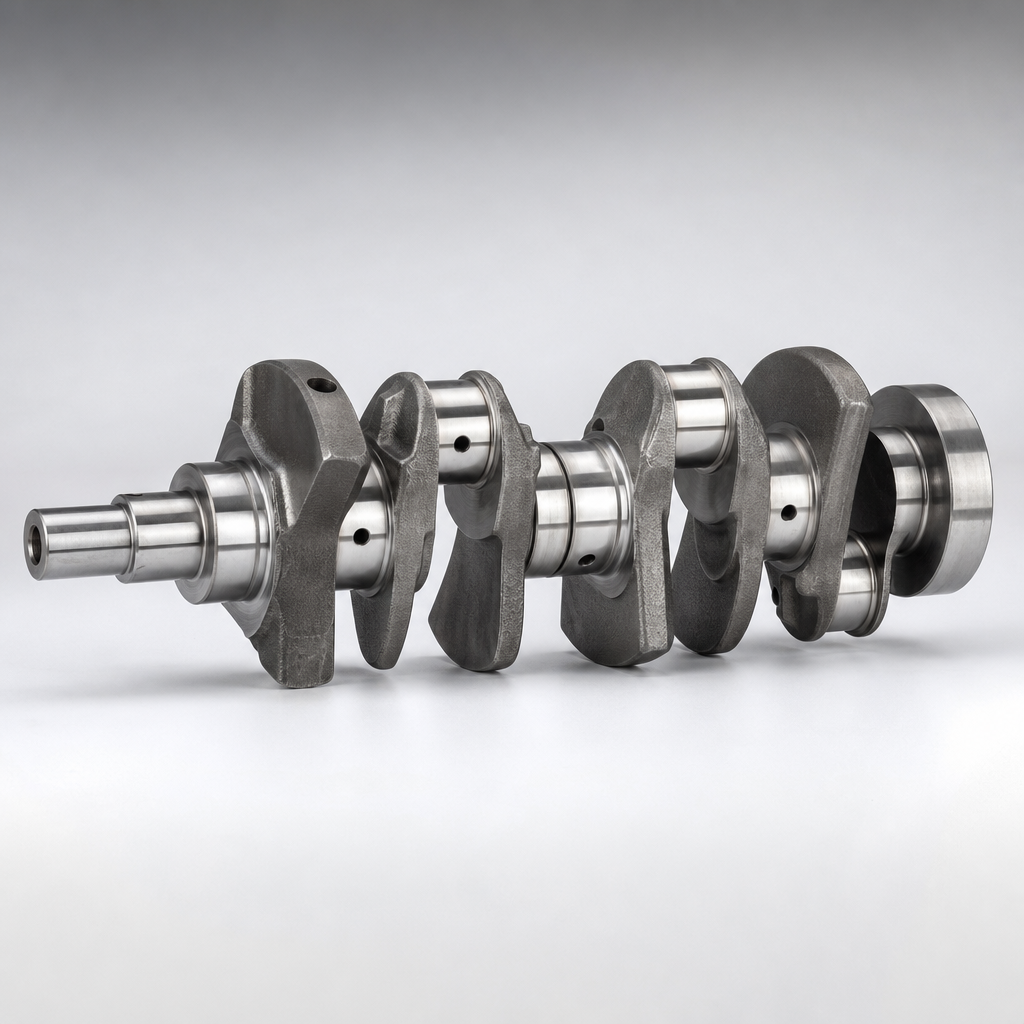
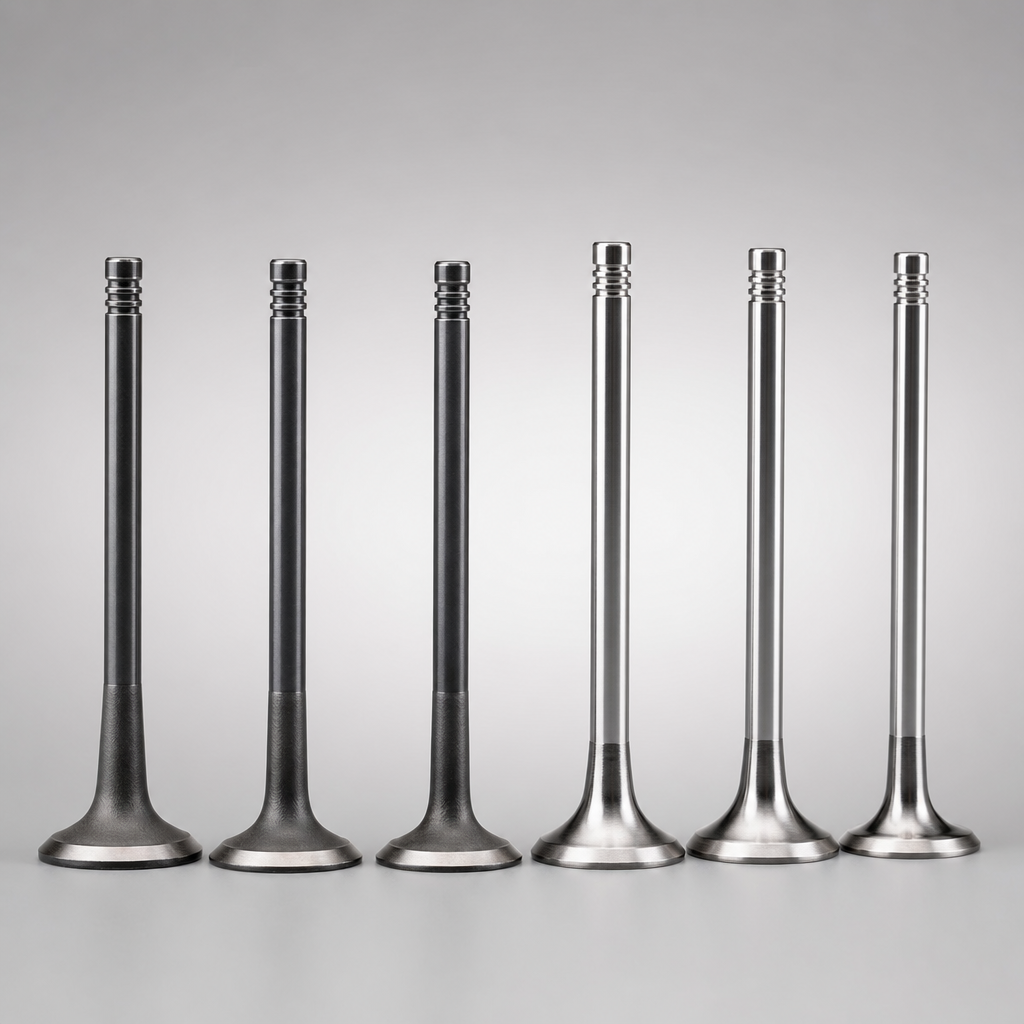
Camshaft Iveco OEM Supplier: How B2B Buyers Separate Real Manufacturers from Quote Traders
Choosing a **camshaft iveco oem supplier** is less about finding a low quote and more about controlling downstream failure risk. For Iveco-fit programmes, the real issue is repeatability: can the supplier hold metallurgy, lobe geometry, heat-treatment control, runout, traceability, and packing discipline from batch to batch as demand changes?
That is the standard serious buyers should apply. Distributors, OEM/Tier suppliers, and repair-chain procurement teams are not buying a photo or a promise; they are buying stable output over time.
At Driventus, camshafts sit within a wider engine-components programme supported by IATF 16949:2016 and ISO 9001:2015 controls. That matters because field performance depends on the whole route, not just the finished profile. Blank quality, heat-treatment window, grinding accuracy, surface finish, hardness verification, packaging, and lot identification all affect wear, fit, and claim rates. In practical sourcing terms, buyers should expect measurable controls: journal diameter tolerances in the low-micron range, lobe profile verification against a master trace, runout commonly below 0.03-0.05 mm depending on design, and hardness checks linked to batch and furnace load. This article gives a more useful way to assess a camshaft iveco oem supplier before nomination, pilot order, or long-term approval.
Start with one question: is this a manufacturer with controls, or a trader with a price sheet?
The fastest way to improve supplier selection is to answer that question early. Many RFQs in this category look similar on the surface. The difference shows up when you ask how the part is actually made and controlled.
A credible camshaft iveco oem supplier should be able to explain the route from raw-material intake through machining, heat treatment, grinding, inspection, cleaning, and packing. If the response stays at catalogue level, that is a warning sign.
Verify these points first:
Certification: current IATF 16949:2016 and ISO 9001:2015 certificates, with scope relevant to automotive or engine-component production
Material control: incoming-material verification, heat/lot records, chemical review, and retention practice where applicable
Process capability: machining, lobe grinding, journal finishing, hardness testing, runout inspection, washing, and final cleaning
Traceability: part code, batch number, production date, furnace lot, and inspection linkage through to shipment
PPAP/APQP readiness: for OEM or Tier business, support for control plans, PFMEA, MSA, dimensional layouts, capability studies, and submission packs
Export support: packing lists, origin documents, and compliance paperwork needed by the destination market
Ask for a sample inspection report. Even with values masked, the format tells you a lot. It should show disciplined measurement of journal diameter, lobe lift, phase angle, runout, and hardness. On production camshafts, buyers often expect controls such as journal diameter around ±0.005 to ±0.015 mm, total indicated runout around 0.03 mm, and bearing-journal surface roughness commonly in the Ra 0.2-0.8 µm range, depending on print.
One useful RFQ question is simple: does the quoted price assume existing tooling and a validated process? If yes, sample lead time may be 2-4 weeks. If new grinding masters, fixtures, or gauges are needed, first approved samples may take 6-10 weeks.
The comparison framework buyers actually use: what matters, what to ask, what can go wrong
Unit price belongs on the scorecard, but not at the top of it. A sourcing decision usually comes down to whether the supplier can combine process stability with workable commercial terms.
Use a comparison framework like this when reviewing each camshaft iveco oem supplier:
Criterion
What to ask for
Why it matters
Manufacturing route
Forged or cast blank, machining flow, grinding capability
Affects durability, repeatability, and lead-time stability
Material and metallurgy
Material grade, incoming verification, heat/lot traceability
Helps control fatigue strength, wear resistance, and consistency
On-site or remote audit acceptance, record-sharing readiness
Indicates transparency and operational maturity
</tr></thead><tbody> </tbody></table>The commercial side needs context too. In this category, buyers often see structures like prototype/sample 1-20 pcs, pilot batch 50-100 pcs, and production MOQ 100-300 pcs per reference where standard processes already exist. Pricing usually improves at 200 pcs, 500 pcs, and annual call-off volume because setup and grinding cost are spread more efficiently.
A quote that is 3-8% higher can still be the better buy if it reduces rework, emergency freight, warranty claims, and disruption once volume starts. Cheap supply is expensive when the batch is unstable.
Where camshaft programmes fail: the technical controls that prevent wear, noise, and claims
Most camshaft problems do not begin in the field. They begin in production, where small variation gets missed.
Camshafts operate under sliding contact, cyclic load, and strict timing requirements. A small shift in lobe form, hardness, journal finish, or runout can change wear behaviour, oil-film stability, noise, and valve-event accuracy. This is where the depth of a camshaft iveco oem supplier becomes visible.
A capable supplier should be ready to discuss these controls in specific terms:
Blank integrity: controlled casting or forging input, with defect rules for porosity, inclusions, cracks, and structural issues
Heat treatment: defined furnace parameters, cycle control, quench discipline where applicable, and records linked to batch
Lobe grinding accuracy: profile tolerance, indexing accuracy, and phase consistency across lobes
Journal geometry: diameter tolerance, cylindricity, concentricity, and runout control
Surface condition: roughness control on journals and lobes to support lubrication and reduce abnormal wear
Cleanliness: post-machining washing, debris control, and protected handling before packing
The audit questions are straightforward:
1. What hardness test method is used on finished camshafts? 2. How is runout measured, recorded, and sampled? 3. Is lobe profile verified against a master standard or digital trace? 4. How are nonconforming parts or batches quarantined, reviewed, and traced?
Push for actual numbers. Typical examples include surface hardness verification by Rockwell or Vickers, target windows fixed on the control plan, and sampling by furnace lot or production batch rather than by shift only. Depending on material and process route, lobe-area hardness may be controlled within ranges such as HRC 55-62 or an equivalent microhardness requirement. Journal diameter is often held within 5-15 µm. Lobe phasing may be checked within roughly ±0.25° to ±0.5°, subject to print. Final runout is commonly measured on V-blocks or centres with dial or digital indicators, with records retained by lot.
If a supplier skips part of that discussion, ask whether the process is outsourced and how it is controlled.
Those answers should also fit the supplier’s wider quality system. For buyers, the business value is simple: better control means less batch variation, fewer claims, and fewer urgent replacement shipments.
MOQ and lead time in the real world: how to avoid buying the right part under the wrong commercial model
A technically acceptable supplier can still be the wrong choice. That happens when MOQ is too high, mixed-SKU support is weak, export packing is inconsistent, or replenishment timing is unreliable.
When evaluating a camshaft iveco oem supplier, review logistics with the same discipline used for metallurgy and inspection.
Clarify these points:
Trial order MOQ: sample or pilot quantity before volume approval
Standard production MOQ: per part number, per batch, and per shipment where relevant
Mixed order flexibility: whether several references can move in one cycle or one container
Normal lead time: often shaped by blank availability, machining load, grinding capacity, and inspection queue
Forecast handling: whether the supplier accepts monthly or quarterly forecasts for capacity planning
Safety stock options: supplier-held stock or dedicated customer stock for repeat references
Packaging and freight readiness: anti-rust measures, carton specification, pallet stability, and sea-freight suitability
In practice, aftermarket buyers often negotiate pilot MOQs of 20-50 pcs per reference for validation, then production MOQs of 100-300 pcs where standard blank and tooling are already in place. New-development items or low-demand references may need higher MOQ to recover setup cost.
Lead time usually breaks into three stages: sample/development 3-8 weeks, first production after approval 4-6 weeks, and repeat orders 30-45 days under stable forecast conditions. If blanks are imported, heat treatment is outsourced, or grinding capacity is tight, ask what pushes lead time beyond 45-60 days.
This is where total cost matters more than piece price. A low ex-works number may look attractive until slow-moving SKUs tie up cash and long storage increases rust risk. In many programmes, a mixed container with several part numbers at moderate MOQ performs better than a single-SKU bulk buy even if nominal unit price is slightly higher.
At Driventus, MOQ and lead time are usually reviewed against drawing status, process complexity, annual demand, and packaging method rather than forced into one fixed rule. That helps distributors with broad SKU portfolios and repair networks that need stable replenishment. For long sea transit, buyers should specify expectations such as VCI bagging, anti-rust oil, end protectors, individual sleeves, and palletisation suitable for 30-60 day ocean freight.
If you need private labelling, bespoke packaging, drawing-based development, or batch-specific documentation, see our custom manufacturing page.
Documentation is not admin work; it is part of fitment control and claim prevention
In export programmes, paperwork is not secondary. It is part of product control.
Professional buyers usually purchase camshafts on drawing control, material declaration, inspection records, and traceable shipment data. Any camshaft iveco oem supplier serving EU, UK, and other regulated markets should support that side of the transaction with the same consistency expected in production.
Relevant topics may include:
IATF 16949:2016 process management for automotive production environments
ISO 9001:2015 quality management requirements
REACH (EC) No 1907/2006 communication on substances where applicable to supplied materials or coatings
Material certificates and test records linked to batch number
Inspection reports for key dimensions, runout, and hardness
Packing specifications and anti-corrosion measures suited to sea freight or long transit routes
For OEM/Tier and structured aftermarket accounts, buyers may also request a defined document pack per shipment or batch. That often includes commercial invoice, packing list, certificate of origin if required, batch label format, material statement, and inspection summary. If the programme is drawing-controlled, the supplier should confirm revision management so that gauges, dimensions, and packaging instructions follow the latest approved issue.
A simple check is often the best one: can the lot number on the carton be traced back to the inspection record and furnace or process batch within minutes?
Fitment references need the same discipline. Buyers should expect independent aftermarket descriptions and careful cross-reference formatting. If a listing uses a pattern such as OE 06A107065, it should be used strictly as a fitment reference where relevant, not as a claim of origin, brand ownership, or vehicle-maker approval. Catalogue control should also include dimensional reconciliation where references supersede or differ by engine family. Incorrect mapping creates warranty exposure even when the part itself is manufactured correctly.
Driventus is an independent aftermarket manufacturer; brand names are referenced for fitment only.
A practical shortlist process: from document screen to pilot order without wasting a quarter
Shortlisting should reduce uncertainty, not create paperwork for its own sake. The goal is to see whether a camshaft iveco oem supplier can repeat its claimed standard under normal production conditions.
A workable process looks like this:
1. Collect baseline documents: certifications, company profile, export-market experience, and process list 2. Review technical scope: material control, grinding capability, hardness testing, dimensional inspection, and traceability method 3. Request sample evidence: inspection reports, packaging photos, batch labels, and sample shipment documents 4. Evaluate commercial terms: MOQ, lead time, payment terms, mixed-order flexibility, and claims handling procedure 5. Audit the factory: on-site or remote, focusing on incoming control, machining, final inspection, warehouse management, and nonconformance handling 6. Run a pilot order: confirm dimensional consistency, packaging quality, documentation accuracy, and on-time delivery
To make that usable, score suppliers against weighted criteria. A common model is 30% quality/process, 25% technical capability, 20% commercial terms, 15% delivery/logistics, and 10% documentation/compliance.
During pilot review, do not stop at part acceptance. Check whether the shipment arrived on time, labels matched paperwork, corrosion protection survived transit, and quantity variance stayed within tolerance. For example, some buyers expect 0% short shipment on pilot and a packaging defect rate below an agreed threshold.
The pilot should reflect a real buying case, not a token sample. A good test might be 30-50 pcs across one or two references, with full export packing and an inspection report covering journal diameter, runout, hardness, and key timing features. If the supplier cannot keep documents and packing under control there, it is risky to assume performance will improve at 200-500 pcs production volume.
This is usually the point where buyers separate catalogue traders from manufacturers with accountable production systems.
If you are evaluating a supplier for camshaft programmes or related valvetrain parts, you can request a quote with your target references, annual demand, and destination market.
Frequently asked questions
At minimum: IATF 16949:2016 and ISO 9001:2015 certificates, company profile, process overview, sample inspection report, packing specification, and traceability method. OEM/Tier buyers may also request PPAP-related documents. A stronger RFQ pack also includes sample values for key checks such as journal diameter, runout, hardness, and packaging label format.
Very important. High MOQ can increase inventory cost and slow SKU expansion. Buyers should compare trial MOQ, standard MOQ, and mixed-part order flexibility alongside unit price and lead time. In practice, many buyers target pilot quantities around 20-50 pcs and production MOQs around 100-300 pcs per reference where tooling is already established.
OE-style references may be used for fitment cross-reference where relevant, such as OE 06A107065 format, but they should not imply vehicle-maker endorsement or original-source approval. Buyers should also verify that any cross-reference is supported by correct dimensional and application control.
If you need a documented manufacturing partner for Iveco-fit camshaft sourcing, send your target references, annual volume, required MOQ, inspection points and destination market to our team. Contact us here: /contact.html