Idler Pulley Material: Materials, Tolerances, and Validation Tests
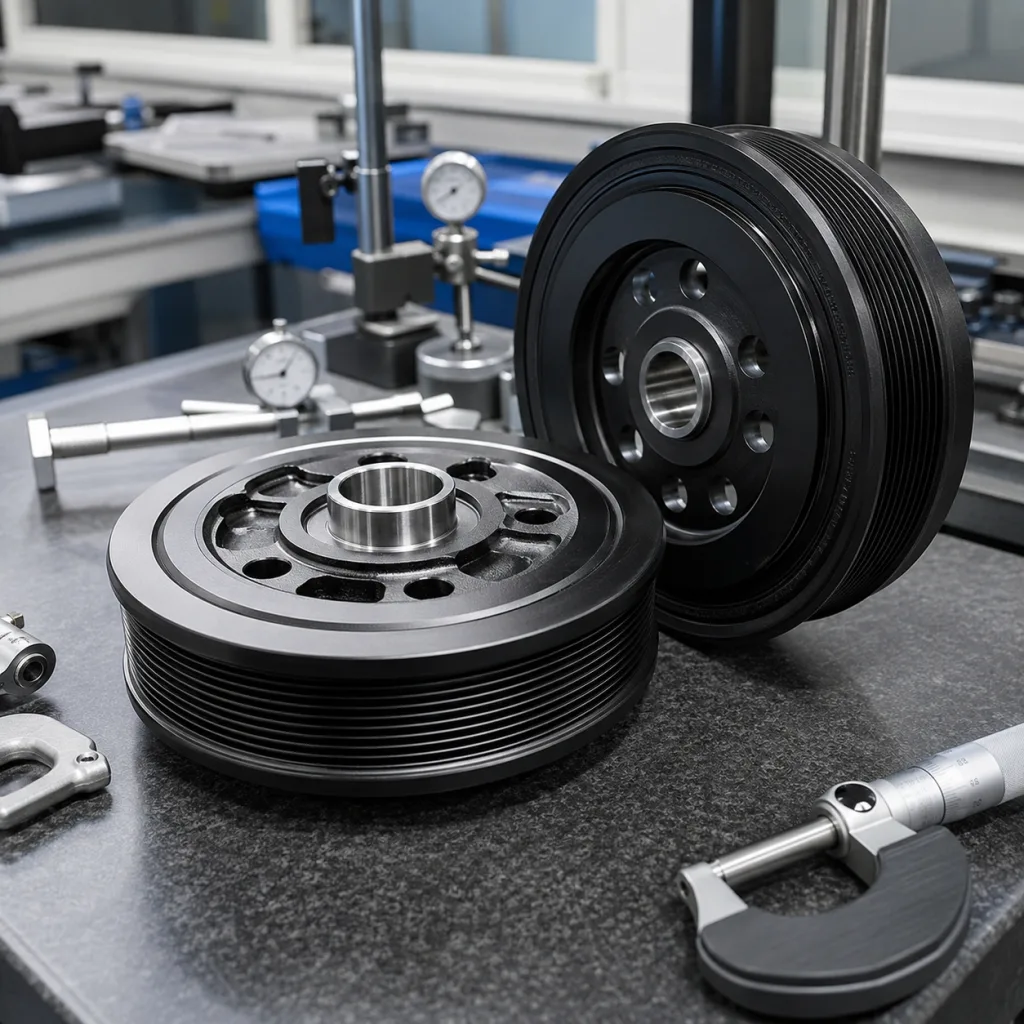
Idler pulley material affects belt tracking, bearing life, noise, corrosion margin, and temperature stability. For replacement and production sourcing, the decision is not simply steel versus polymer. The selected substrate must keep groove geometry, runout, bearing fit, and clamp load within specification throughout the vehicle duty cycle. Passenger-car and light-commercial applications commonly use stamped or machined steel, glass-filled PA66, aluminium, or engineered polymer-composite bodies with a pressed-in sealed bearing. Each construction changes rotational mass, thermal expansion, corrosion strategy, NVH behaviour, and unit cost. Driventus qualifies pulleys under IATF 16949:2016 and ISO 9001:2015 controls, with material compliance reviewed against REACH (EC) No 1907/2006 where applicable. Driventus is an independent aftermarket manufacturer; brand names are referenced for fitment identification only.
What the material controls
The body material sets the mechanical and environmental ceiling for the idler pulley. Steel offers high stiffness and strong groove retention under belt tension, which helps on long accessory drives, high-wrap layouts, and engines exposed to heat soak after shutdown. Glass-filled polymer lowers mass and can damp high-frequency vibration, making it useful when rotational inertia and NVH targets are important. Aluminium provides a useful balance of weight, stiffness, and machinability, but it places more emphasis on corrosion protection and bearing-seat roundness.
The bearing system is often the limiting feature, even when the shell material is robust. A small bore error can create uneven bearing preload after pressing, leading to higher drag torque, heat build-up, grease stress, and early noise. Retainer design, shield type, grease grade, press-fit allowance, and housing stiffness all influence whether the pulley remains quiet and aligned in service.
For sourcing teams, the practical objective is to specify a construction that keeps the belt path stable under the worst credible mix of temperature, contamination, speed, and load. The best idler pulley material is therefore the one that supports the drawing requirements and validation plan, not the one that looks strongest on a material datasheet alone.
Material options compared
Material
Best fit
Advantages
Trade-offs
Stamped or machined steel
High-load accessory drives, fleet service, hot engine bays
High stiffness, strong groove retention, broad supplier base, good abuse tolerance
Higher mass, requires coating or plating for corrosion control
Glass-filled PA66
Noise-sensitive applications, lower-mass targets, many passenger-car drives
Low weight, reduced rotational inertia, good mouldability, useful vibration damping
Requires heat-ageing, creep, and chemical-exposure validation
Light, dimensionally precise when controlled, good heat transfer
Bearing-seat quality, galvanic risk, and coating integrity must be managed
Polymer-composite blends
Cost-sensitive programmes with moderate load and integrated features
Tunable stiffness, part consolidation, moulded geometry flexibility
Needs programme-specific validation for coolant, oil, heat, and long-term load
</tr></thead><tbody> </tbody></table>For an OE-style replacement part, idler pulley material should be reviewed together with the bearing specification. A low-cost body paired with an underspecified bearing is a false economy because wobble, spin noise, and drag usually appear first at the bearing interface. The same principle applies in reverse: a premium bearing will not compensate for poor bore control, unstable offset, or a belt-contact surface that changes shape after thermal cycling.
When comparing quotations, ask suppliers to identify the substrate grade, reinforcement level for polymer parts, coating system for metal parts, and bearing source. These details make cost differences easier to interpret and reduce the risk of approving visually similar parts that perform differently on the vehicle.
Dimensions and tolerances to lock down
Critical dimensions
Outside diameter: define the nominal OD and the acceptable stack-up against the belt path.
Belt face width: match the rib count or flat belt width exactly.
Bore and press fit: specify the bearing OD, housing bore, and interference separately.
Offset and face position: control pulley alignment to the engine bracket and adjacent pulleys.
Groove or crown geometry: define the belt-contact profile, radius, and datum scheme.
Surface finish: state the required roughness on the groove, crown, or contact face.
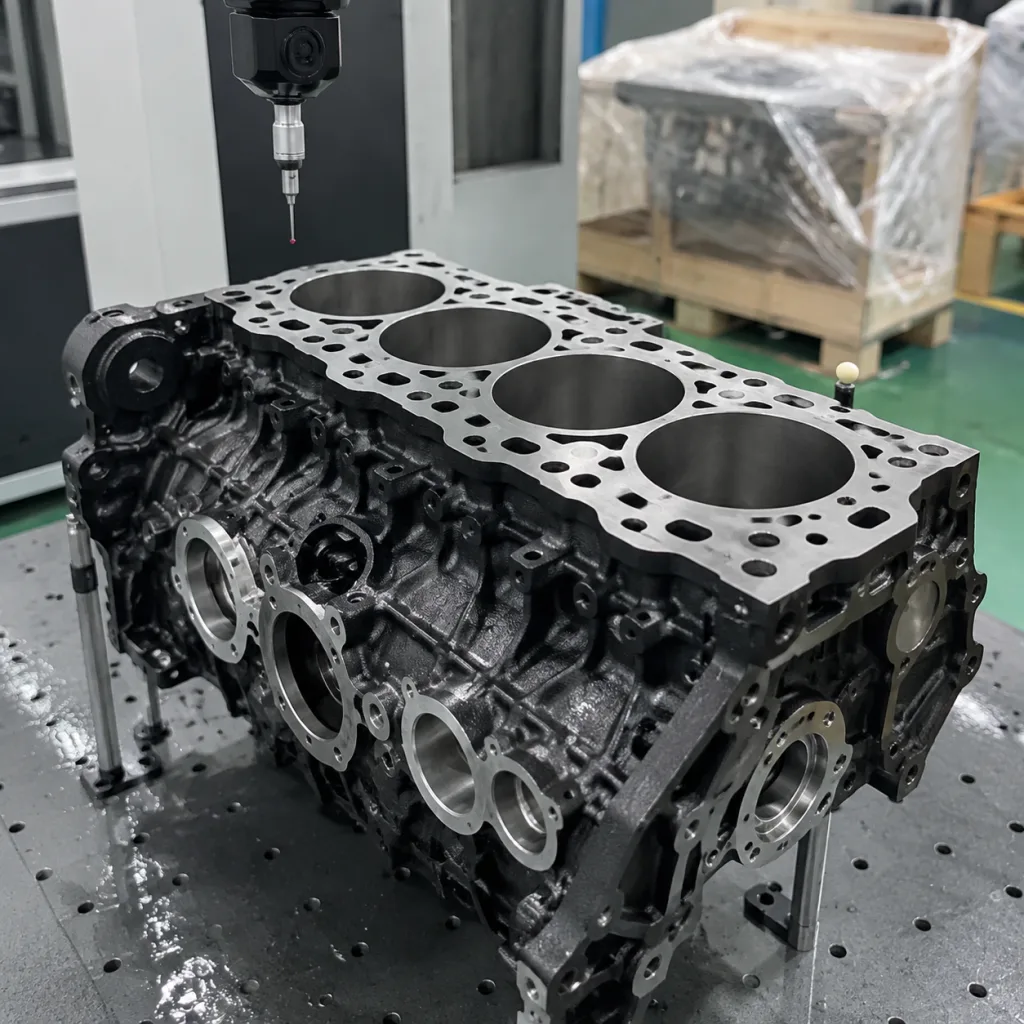
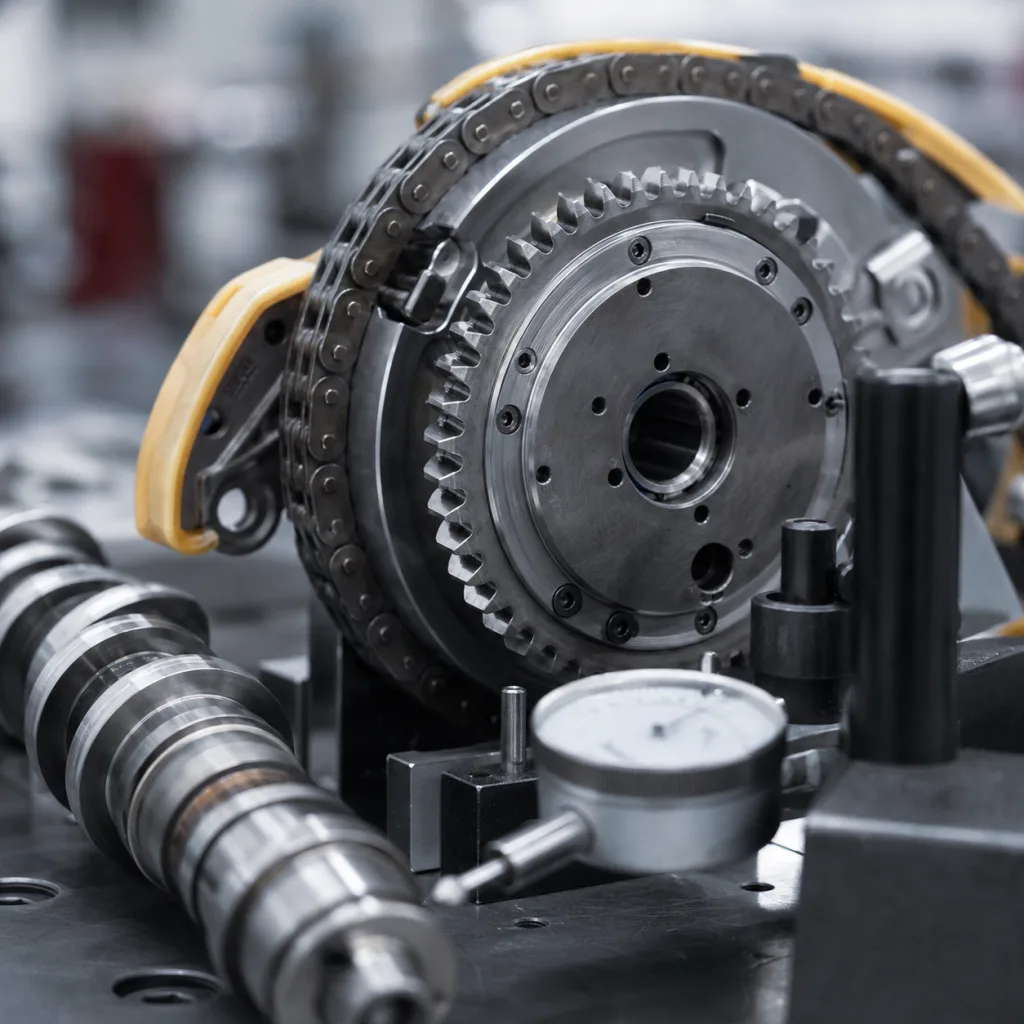
A practical specification package should include radial runout at the pulley OD, face wobble, bearing drag torque, and any post-assembly limits that apply after the bearing is pressed. For many serpentine-drive programmes, radial runout at the OD is commonly held to 0.05 mm or better, while face wobble is often controlled within 0.10 mm unless the customer drawing sets a tighter value. Flat-belt idlers, multi-rib pulleys, and heavily loaded accessory drives may need different limits, so the drawing should always take priority over generic targets.
Coatings and moulded surfaces deserve separate attention. If a steel or aluminium pulley is coated, specify coating thickness, corrosion requirement, and permitted build-up on the belt-contact surface so final geometry remains inside tolerance. For polymer designs, confirm shrinkage control, glass-fibre orientation risk, and dimensional stability after heat ageing.
If one part number is intended to cover several vehicle platforms, do not rely on the label alone. Confirm the bearing series, flange form, offset, fastener interface, belt profile, and installed clearance before release. Small dimensional differences can move the belt off centre, increase edge wear, or create noise that is wrongly blamed on the belt or tensioner.
Validation and compliance
Material choice only has value when the assembled pulley survives validation. A credible test plan normally covers incoming material checks, dimensional inspection, bearing drag torque, spin noise, thermal cycling, speed endurance, contamination exposure, and corrosion resistance. For corrosion screening, SAE J2527 is a useful published reference method when the programme requires accelerated cyclic exposure. For material declarations and restricted substances, REACH (EC) No 1907/2006 should be part of the document set when supplying into relevant markets.
Production controls should sit under IATF 16949:2016 and ISO 9001:2015, with traceability by lot, cavity or tooling position, coating batch, and bearing source where applicable. If the pulley belongs to a wider accessory-drive package tied to regulated engine families, the surrounding vehicle validation plan may reference ECE R-83. The pulley still needs its own evidence for dimensional capability, durability, noise behaviour, and material conformity.
Useful acceptance data includes runout before and after thermal cycling, bearing drag trend over test intervals, noise change after contamination exposure, and corrosion condition at the bearing shield, retainer, coating edge, and mounting interface. These values are more useful than a simple pass/fail statement because they show whether the design has margin or is only just meeting the limit.
For B2B sourcing, the strongest supplier response is not only a certificate package. It should connect the selected idler pulley material to the drawing tolerances, bearing system, process controls, and inspection plan. That link helps purchasing, engineering, and quality teams make the same decision from the same evidence.
Sourcing checklist for replacement and OEM programs
Before release, capture the following on one drawing or RFQ pack:
OE cross-reference, if one exists, and the intended vehicle fitment range.
Pulley OD, belt face width, offset, groove or crown profile, and mounting interface.
Body material, substrate grade, bearing series, grease grade, and shield or seal type.
Runout, wobble, press-fit, drag-torque, and surface-finish requirements.
Corrosion requirement, coating system, salt-spray or cyclic-corrosion target, and packaging standard.
Annual volume, service market, inspection level, and traceability requirements.
Review our catalog and the engine components range before finalising the bill of materials. The quality system page explains the document control, inspection, and traceability structure used in production. If the standard part does not match the drawing, custom manufacturing is the correct route for changes in OD, offset, substrate, bearing specification, coating, or finish.
Driventus is an independent aftermarket manufacturer; brand names are referenced for fitment identification only. That distinction matters when a buyer needs an OE-equivalent replacement without implying approval, sponsorship, or endorsement by a vehicle manufacturer.
A good RFQ should make the expected duty clear: vehicle class, belt layout, temperature range, contamination risk, corrosion target, and annual volume. With those inputs, the supplier can recommend whether steel, glass-filled PA66, aluminium, or a validated composite construction is the best idler pulley material for the programme.
Frequently asked questions
Steel is usually the safest choice for higher belt loads, hot engine bays, and fleet duty because it holds geometry well and tolerates abuse. The final decision still depends on bearing size, coating system, corrosion life, and the vehicle duty cycle.
Only if the full stack-up is validated. OD, width, offset, bearing press fit, temperature exposure, chemical exposure, and drag torque all need to match the application. A polymer shell can be a strong option, but it is not an automatic substitute.
Ask for dimensional drawings, material declarations, bearing details, test summaries, traceability records, and the production control plan. For OEM or wholesale programmes, PPAP-style evidence or equivalent validation data is also useful.
If you need a drawing review, OE-style replacement match, or programme-specific idler pulley material recommendation, send the part data and target volume here: [request a quote](/contact.html).