How to Diagnose Water Pump Leak: Symptoms and Checks
A coolant loss complaint does not automatically mean the water pump is the only fault. Leaks can start at the pump seal, gasket, hose joint, thermostat housing, radiator, or a crack in the surrounding casting, and the visible stain often sits away from the actual source. This guide shows how to separate those cases with simple checks that a workshop or procurement team can use before ordering parts. It is written for buyers and technical staff who need a clear diagnosis, not a guess. Driventus is an independent aftermarket manufacturer; brand names are referenced for fitment only. If the pump is confirmed as the source, the next step is to verify the housing, impeller type, sealing face, and coolant specification so the replacement matches the application and the failure mode.
Start With The Symptom Pattern
If the vehicle has an auxiliary electric coolant pump, the same logic applies, but the leak path may be hidden by hoses or a plastic carrier. Use a torch and a mirror before removing hardware.
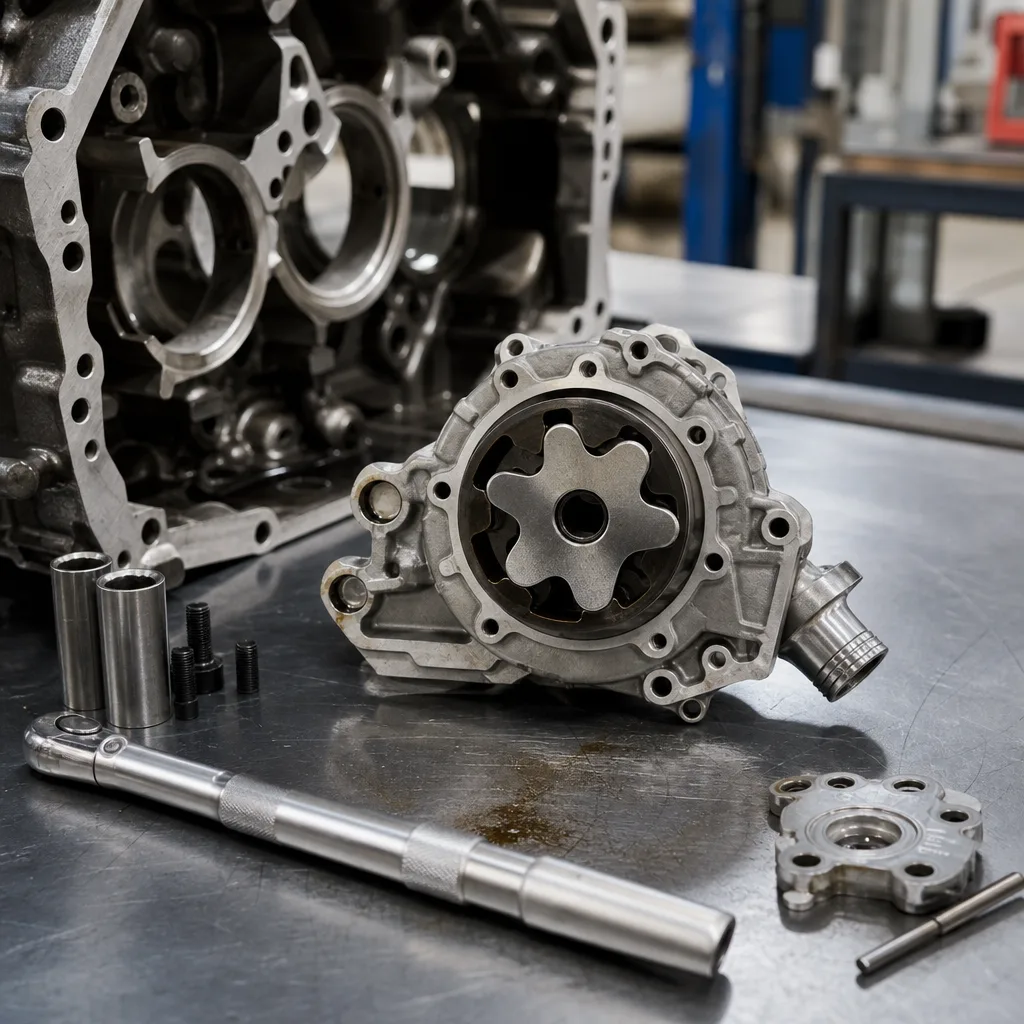
Inspect The Leak Path Before You Replace Parts
For a broader parts search, start with our catalog and confirm whether the application sits in engine components.
Separate Pump Failure From Nearby Faults
Where the issue is installation related, document the bolt pattern, sealant use, and surface condition before ordering a replacement. That evidence helps separate product failure from assembly error.
Decide When Replacement Is The Correct Action
If you need process or material control data, review our quality system and ask for custom manufacturing support when the application needs a specific flange, seal, or impeller configuration.
Specify The Replacement Correctly
If you need pricing, samples, or fitment confirmation, use request a quote once the dimensions and application data are confirmed.
Frequently asked questions
Fresh coolant at the weep hole or a damp gasket line after cleaning and pressure testing is the clearest sign. Noise or belt contamination can support the diagnosis, but they are not proof on their own.
Yes. Coolant can travel along the front cover or splash onto the pump housing. Clean the area, pressure-test the system, and check the hose ends, clamps, and nearby housings before replacing the pump.
Not always, but it is often efficient when the pump is driven by the timing system. Replace it if access is labour-heavy, the bearing shows wear, or the fleet policy requires preventive renewal.
If you have a failed sample or need an OE-equivalent replacement review, send the part data and application details. For sourcing support, sample requests, or volume supply, contact Driventus at /contact.html.
Request a Quote