A failed compression test is a diagnostic finding, not the final diagnosis. Low or uneven cylinder pressure can be caused by worn piston rings, damaged cylinder walls, burnt valves, leaking head gaskets, incorrect valve timing, or simple test setup errors. Before ordering parts, confirm the basics: battery strength, cranking speed, gauge condition, fuel and ignition disablement, and throttle position where applicable. Then compare cylinder-to-cylinder results and use wet compression and leak-down testing to identify where pressure is escaping. For procurement teams, repair planners, and remanufacturing buyers, the goal is to turn test data into a practical bill of materials: which components are worn, which can be machined or reused, and which parts should be replaced together to prevent a repeat teardown. Driventus is an independent aftermarket manufacturer; brand names are referenced for fitment only. We supply engine and powertrain components built under IATF 16949:2016 and ISO 9001:2015 controls, with export documentation suitable for international B2B sourcing.
What a low compression reading actually means
A compression gauge measures the pressure developed in each cylinder while the starter motor cranks the engine through the compression stroke. The pattern matters as much as the number. One low cylinder, two adjacent low cylinders, and low readings across the whole engine usually point to different fault groups.
Reading pattern
Likely cause group
First inspection
One cylinder low
Burnt valve, damaged piston ring, local head gasket leak, valve seat issue
Leak-down test, borescope inspection, wet test
Two adjacent cylinders low
Head gasket breach between cylinders, cracked cylinder head, deck sealing problem
Cooling system pressure check, leak-down test, head inspection
Battery load test, cam timing check, repeat test with verified setup
One cylinder improves with oil
Ring seal issue, bore wear, ring sticking
Wet compression test, bore measurement
No improvement with oil
Valve sealing problem, head gasket leakage, cracked head or block
Leak-down test, coolant pressure test
</tr></thead><tbody> </tbody></table>Before parts are ordered, verify the test conditions. The engine should normally be at operating temperature unless the service manual specifies a cold test. Disable fuel and ignition, remove all spark plugs, and hold the throttle open on engines where airflow restriction affects cranking pressure. Cranking speed must be steady from the first cylinder to the last. A weak battery, partially closed throttle, loose hose connection, or inaccurate gauge can create a false failure and lead to unnecessary engine work.
Also compare results against the manufacturer’s specification where available. Many workshops use the lowest cylinder, the highest cylinder, and the percentage variation between cylinders to judge severity. A slightly low but even set of readings can suggest test method or general wear, while one cylinder far below the rest needs targeted mechanical diagnosis.
Step-by-step diagnosis workflow
1. Record dry compression readings for every cylinder. Do not base the repair plan on the lowest number alone. 2. Repeat the test with the same gauge and the same cranking procedure to confirm the result is repeatable. 3. Check battery voltage and cranking speed. Charge or support the battery if speed drops during testing. 4. Perform a wet test on the low cylinder. Add a small measured amount of clean engine oil through the spark plug or injector opening and retest. 5. If pressure rises noticeably, suspect piston rings, cylinder wall wear, ring sticking, or piston damage. 6. If pressure does not rise, move to leak-down testing to locate the leakage path. 7. During leak-down testing, listen for air at the intake, exhaust, crankcase, and coolant bottle or expansion tank. 8. If compression is low across several cylinders, check camshaft and crankshaft timing marks before assuming internal wear. 9. Inspect coolant and oil for cross-contamination, which can indicate head gasket, cylinder head, or block sealing failure. 10. Use a borescope where access allows. Piston crown marks, washed areas, vertical bore scoring, and valve damage can confirm the direction of the repair.
Practical interpretation
Air heard at the throttle body or intake manifold usually indicates an intake valve sealing problem.
Air at the tailpipe usually points to an exhaust valve that is burnt, bent, carboned, or not seating correctly.
Air from the oil filler, dipstick tube, or crankcase breather suggests blow-by past piston rings, bore wear, or piston damage.
Bubbles in the coolant indicate leakage into the cooling system, commonly from the head gasket, cylinder head, or block.
Air movement between adjacent cylinders can indicate a gasket breach between bores or a deck sealing issue.
If the engine has overheated, do not assume the gasket is the only failed part. Aluminium cylinder heads can warp, valve seats can lose proper contact, and severe heat can damage piston crowns, rings, and timing components. A good workflow prevents the repair from stopping at the first visible fault and missing the root cause.
Common causes by symptom and inspection result
A compression test failure becomes easier to diagnose when the gauge readings are matched with symptoms, service history, and physical inspection.
Hard starting with a misfire on one cylinder: inspect spark plugs, injectors, coils, wiring, and fuel delivery first, then confirm compression and leak-down results.
Rough idle with no fault code: compare all cylinders and look for small but consistent differences that may not trigger a diagnostic trouble code.
Misfire after overheating: inspect the head gasket, cylinder head flatness, cooling passages, thermostat, and water pump condition.
Blue smoke with high oil consumption: suspect piston ring wear, bore wear, stuck oil control rings, or crankcase ventilation faults.
Backfiring through the intake or exhaust: check valve sealing, valve timing, camshaft position, and possible bent valves.
Low compression after timing belt or chain work: verify cam timing, crank timing, tensioner installation, and whether valve-to-piston contact occurred.
Low readings after long storage: consider stuck rings, corrosion in the bore, or valves not seating due to deposits.
High-mileage engines should be evaluated by wear pattern, not by a single failed part. For example, replacing only a head gasket may not solve low compression if the head is warped or the rings are worn. Replacing only rings may not be enough if the bore is tapered or scored. In many repair programmes, the safer decision is a matched set of parts: piston rings, gaskets, valve stem seals, head bolts where specified, and sometimes timing or cooling components if overheating or timing drift contributed to the failure.
For buyers and workshop groups, this is where accurate diagnosis reduces comeback risk. A symptom-based order can miss critical parts, while a test-based repair scope helps match inventory to the actual engine condition.
Parts commonly replaced after compression loss
Once the leakage source is confirmed, replacement should follow the inspection result rather than the symptom alone. Compression loss can be top-end, bottom-end, cooling-system related, or timing-related, and the parts list should reflect that root cause.
Commonly replaced parts include:
Full top-end gasket set
Cylinder head gasket
Head bolts or studs where torque-to-yield fasteners are specified
Intake and exhaust valve stem seals
Intake and exhaust valves when burnt, bent, or pitted
Valve guides or valve seats if wear or poor seating is confirmed
Pistons and piston rings
Cylinder liners or sleeves where the engine design uses replaceable liners
Connecting rod bearings if overheating, debris, or oil contamination is present
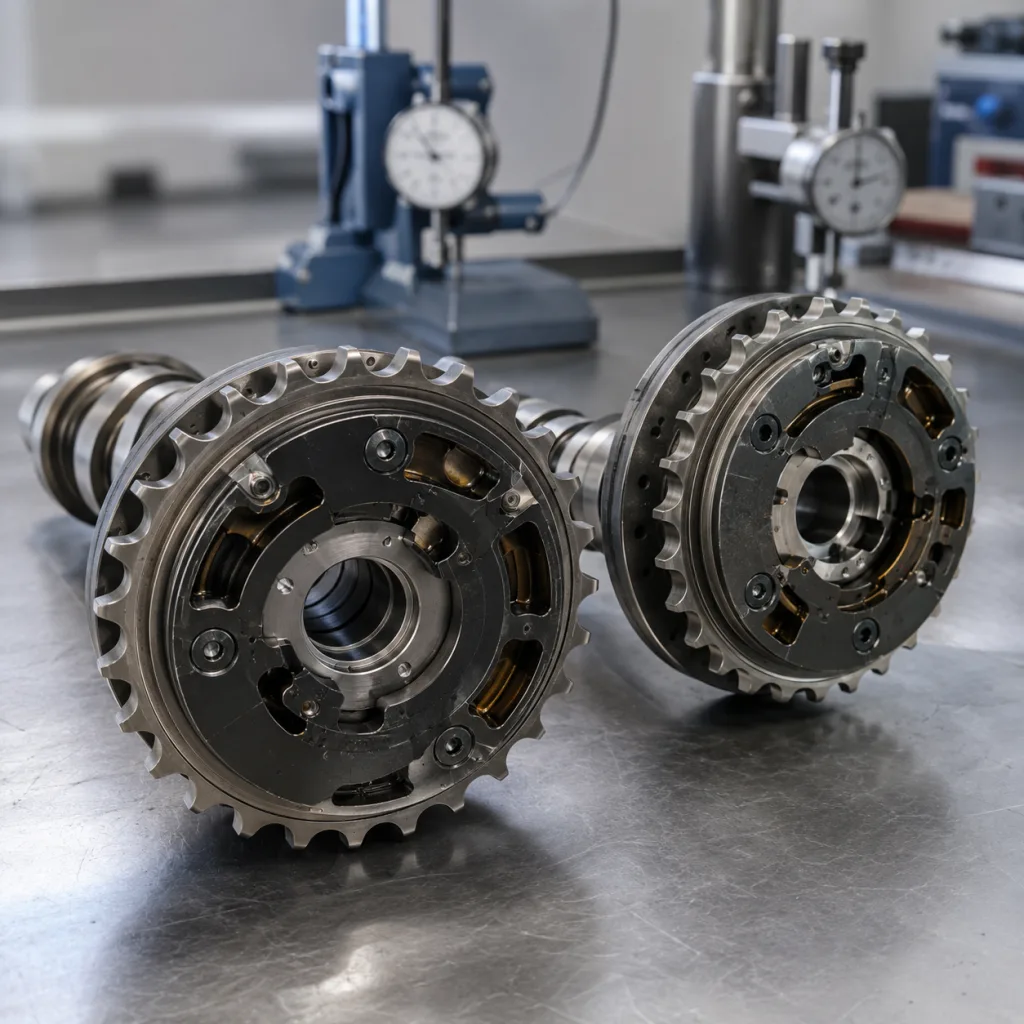
Timing belt, timing chain, guides, tensioners, and sprockets when valve timing is incorrect or service life is uncertain
Water pump and thermostat when overheating caused or contributed to the failure
Seals, O-rings, and ancillary gaskets disturbed during teardown
Driventus supplies engine components for repair programmes, aftermarket distribution, and remanufacturing workflows, with dimensional and material controls aligned to IATF 16949:2016 and ISO 9001:2015. For international sourcing, published compliance references may also include REACH (EC) No 1907/2006 where chemical substance control is relevant, along with customer test specifications for endurance, corrosion resistance, sealing performance, and pressure retention.
For catalog review, see our catalog and quality system. If a project needs application-specific development, private label packing, kit configuration, or export packaging changes, custom manufacturing is available.
How to decide between repair and replacement
Repair decisions should consider the leakage path, the engine family, parts availability, machining limits, downtime cost, and the risk of a second failure. A cylinder with a valve sealing issue may be repairable with head work and a top-end parts set. An engine with bore scoring, piston damage, and repeated overheating may require a larger rebuild or replacement assembly.
Use replacement or major rebuild when:
The cylinder wall is scored, cracked, or tapered beyond service limits.
The cylinder head is cracked or warped past machining limits.
Multiple cylinders fail leak-down in different directions, showing widespread wear.
There is piston crown damage, broken ring lands, or evidence of detonation, not just normal ring wear.
Overheating has affected the head, gasket, valve train, and cooling system together.
Oil pressure, bearing condition, or debris inspection indicates bottom-end damage.
Use targeted repair or rebuild when:
Compression loss is localised and the block is structurally sound.
The cylinder head can be resurfaced within the manufacturer’s limit.
Bore condition is acceptable after measurement, honing, or liner inspection.
Bottom-end oil pressure and bearing condition remain within specification.
Timing components can be corrected or renewed without evidence of major internal damage.
For procurement teams, the key step is aligning the diagnostic result with the correct bill of materials. Ordering only a gasket without confirming valve, head, and bore condition can create a second teardown. Ordering a complete engine set without measurements can add unnecessary cost. Driventus supports OE part-number cross-references when provided by the buyer, and brand names are referenced for fitment only.
Test data to record before ordering parts
Keep a clear diagnostic record so the supplier, workshop, and buyer are working from the same facts. This is especially important for fleet repairs, warranty reviews, remanufacturing batches, and international parts sourcing.
Record the following before placing an order:
Cylinder-by-cylinder dry compression readings
Cylinder-by-cylinder wet compression readings
Leak-down percentage for each suspect cylinder
Where leakage was heard during the leak-down test: intake, exhaust, crankcase, coolant, or adjacent cylinder
Coolant pressure test result
Oil pressure reading at idle and load, if relevant
Spark plug condition, deposit pattern, and cylinder location
Borescope images of piston crown, valves, and cylinder wall
Cam and crank timing verification notes
Vehicle mileage, operating hours if applicable, overheating history, and recent service work
Any evidence of oil/coolant cross-contamination or debris in the sump, filter, or coolant passages
This record helps separate an electrical misfire from a mechanical compression problem. It also supports warranty review, replacement planning, and kit selection. When sourcing from China or consolidating multi-country stock, ask for documentation, batch traceability, product marking, packing controls, and agreed inspection standards before placing the order. For enquiries on fitment, volume supply, or private label programmes, request a quote.
Frequently asked questions
Worn piston rings, burnt valves, and head gasket leakage are the most common mechanical causes. Test setup errors are also common, so confirm battery condition, cranking speed, throttle opening, and gauge accuracy before planning repairs.
Yes, if ring wear, bore wear, or ring sticking is suspected. If pressure rises after adding a small measured amount of oil, the sealing problem is likely around the rings or cylinder wall. If the reading does not change, inspect valve sealing, head gasket condition, and possible head or block leakage.
Replace matched components when overheating, high mileage, bore wear, piston damage, or cross-cylinder leakage suggests broader engine wear. A partial repair can fail again if the head, gasket, timing system, cooling system, or bore condition is not addressed.
If you need engine parts matched to a confirmed compression fault, review the options and send your specification through /contact.html for a prompt reply.