Camshaft for Vauxhall Insignia OE Equivalent: Buyer Guide
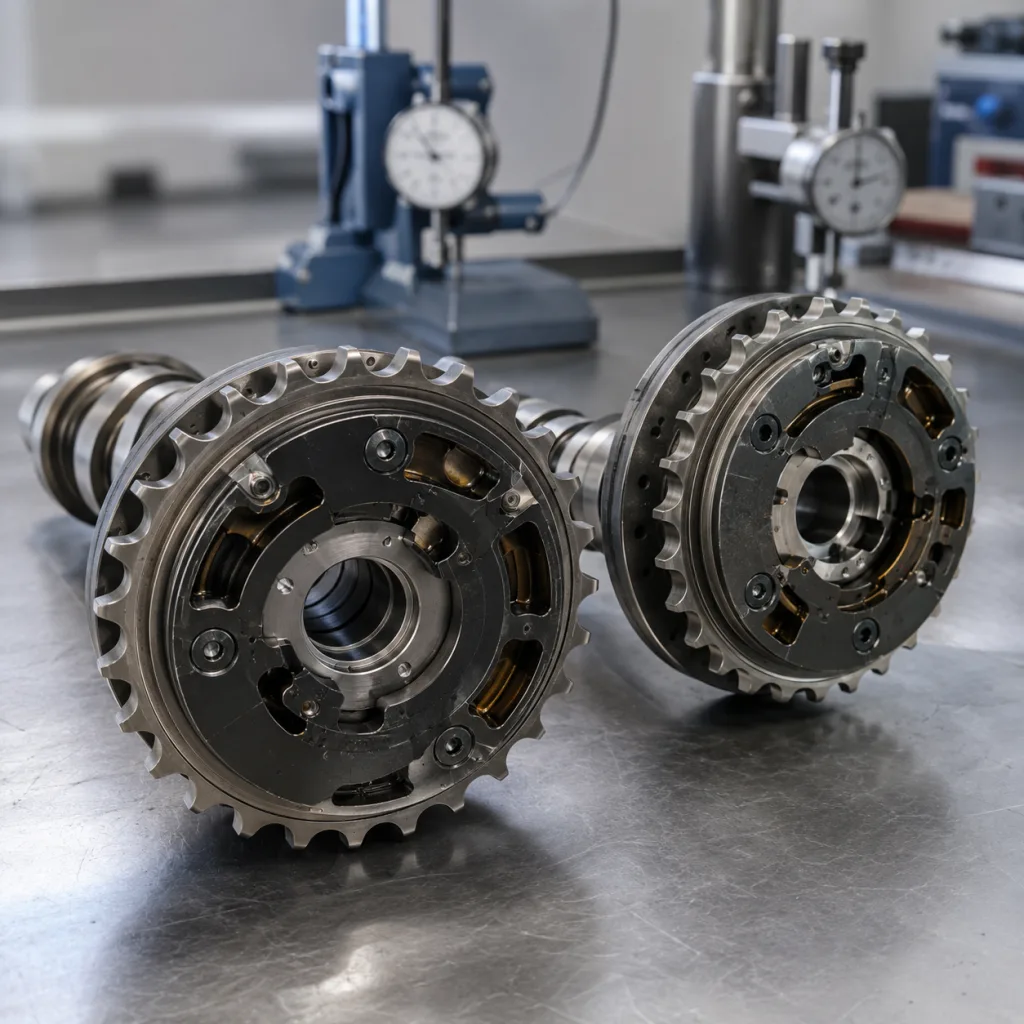
Procurement teams sourcing a camshaft for Vauxhall Insignia OE equivalent need more than a part name match. The replacement must align with the exact engine code, cylinder-head layout, valve-train design, cam sensor features, and production specification being supplied. Key technical checks include cam profile geometry, bearing journal diameters, lobe lift, phasing features, surface hardness, and lubrication-related surface finish.
A correct OE-equivalent camshaft should install without machining, operate with the original followers or tappets specified for the engine, and meet the same functional requirements as the original part under normal service conditions. OE-equivalent does not mean OEM-approved; it means the part is engineered to match fit, function, and performance requirements for the intended aftermarket application.
Driventus is an independent aftermarket manufacturer, and vehicle brand names are referenced only for fitment identification. For buyers in the EU, UK, US, Canada, Australia, Brazil, and other export markets, the most reliable sourcing process is measurable and repeatable: confirm the OE cross-reference, validate critical dimensions, review material and heat-treatment data, and check quality documentation under IATF 16949:2016 and ISO 9001:2015. This guide explains what to verify before ordering, how OE-equivalent camshafts are assessed, and how Driventus supports B2B replacement supply.
What OE-equivalent means for this application
For this part family, OE-equivalent means the camshaft is designed to match the original function, fitment, and operating envelope without claiming approval from the vehicle manufacturer. It should install in the correct cylinder head, maintain the intended valve timing, and preserve the engine calibration assumptions where the original specification is unchanged.
For a camshaft for Vauxhall Insignia OE equivalent, the focus should be on engineering match rather than catalogue wording. Small differences in journal diameter, cam lobe form, sensor target position, or end feature can create oil-clearance problems, timing faults, poor idle quality, accelerated wear, or a no-start condition.
Key checks for a sourcing team include:
- Correct OE cross-reference, such as the applicable OE number family shown in verified catalogue or technical data
- Same bearing journal count, journal width, and journal diameter
- Matching base circle, lobe lift, lobe separation, and timing relationship
- Correct end features, sensor trigger details, or phasing interfaces where used
- Compatible thrust control and axial location features
- Surface finish and hardness suitable for boundary lubrication during start-up
- Compatibility with the intended followers, tappets, rockers, and lubrication path
A supplier should be able to provide dimensional drawings, material specification, and incoming/outgoing inspection records. That evidence is the practical basis for OE-equivalent replacement. Marketing language alone is not enough for procurement approval.
Main specification points to verify before purchase
The camshaft must be checked against the engine code, not only the vehicle model. Vauxhall Insignia applications can vary by displacement, fuel system, turbocharged or naturally aspirated configuration, emissions generation, and production year. In some markets the same vehicle name may also be associated with different Opel, Vauxhall, GM, or regional catalogue references, so the cross-reference process needs to be controlled.
| Verification item | What to confirm | Why it matters |
|---|---|---|
| OE cross-reference | Match to the correct OE number family and engine code | Prevents misfit across engine variants |
| Overall length | Measured end to end, including relevant end features | Ensures correct cylinder-head installation |
| Journal diameter | Match to OE drawing tolerance | Controls oil clearance, oil pressure, and wear |
| Journal count and spacing | Confirm bearing positions and widths | Prevents binding or misalignment in the head |
| Lobe lift and duration | Compare with the OE cam profile | Affects breathing, combustion, emissions behaviour, and drivability |
| Base circle | Confirm compatibility with the valve train | Helps maintain correct tappet or follower geometry |
| Sensor or drive feature | Presence, orientation, and location of tone wheel, target, slot, or drive end | Required for ECU timing input and correct synchronization |
| Material and heat treatment | Alloy, hardness, case depth if applicable, and process route | Supports durability under repeated contact loading |
| Surface roughness | Verified on journal and lobe surfaces | Reduces break-in risk and supports oil-film stability |
| Runout and straightness | Check against drawing tolerance | Prevents vibration, uneven loading, and premature wear |