Choosing an engine valve supplier is a technical sourcing decision, not just a unit-price exercise. Intake and exhaust valves work under repeated combustion load, high temperature, seat impact, stem wear, and corrosive exhaust exposure. If the supplier lacks process control, the result can be warranty returns, machining rework, unstable fill rates, and weak importer margins. Procurement teams should assess material traceability, manufacturing capability, dimensional control, validation testing, packaging, and commercial reliability before committing to volume orders. This guide gives aftermarket distributors, OEM/Tier-1 buyers, and repair-chain category teams a practical way to compare factories, samples, and quotations on equal terms. It also shows what to include in an RFQ so price discussions follow technical qualification instead of replacing it. Driventus is an independent aftermarket manufacturer; brand names are referenced for fitment only.
Define the valve programme before contacting factories
Begin with a clear purchasing scope. Engine valve supply can mean a mixed aftermarket range, a private-label repair line, or a platform-specific OE-equivalent development project. A factory cannot quote accurately, reserve capacity, or select the right process route if the application list, volume assumptions, and technical requirements are incomplete.
At minimum, prepare:
Engine family, displacement, fuel type, and emission generation
Valve type: intake, exhaust, sodium-filled, hollow stem, or solid stem where applicable
Head diameter, stem diameter, overall length, keeper groove form, and seat angle
Required material grade, surface treatment, or performance requirement
Annual demand by SKU and expected order frequency
Packaging format: bulk, boxed set, repair kit, or private-label carton
Market compliance expectations, such as REACH (EC) No 1907/2006 for substances in articles
Commercial terms: Incoterms, target MOQ, forecast horizon, and required documentation
If the valve is part of a wider engine rebuild line, cross-check related items in our catalog, including pistons, gaskets, timing components, and water pumps. Consolidated sourcing can reduce shipment fragmentation and supplier-management workload, but each engine valve specification still needs its own technical review, sample approval, and traceability rules.
Check certification, traceability and audit readiness
A reliable supplier should be able to show how quality is controlled from raw bar stock through forging, heat treatment, machining, finishing, inspection, and packing. Certification does not prove that a specific valve will perform in service, but it does indicate that the management system is structured, audited, and supported by documented procedures.
Ask for current certificates for IATF 16949:2016 and ISO 9001:2015 where automotive production is claimed. Review the certificate scope rather than the logo alone. The scope should cover manufacturing activities relevant to engine components, not only trading, warehousing, or general metal parts distribution.
During supplier qualification, verify the following records:
Area to verify
Evidence to request
Why it matters
Material traceability
Mill certificates, heat numbers, incoming inspection records
Links each production batch to metallurgy and supplier lot
Process control
Control plan, process flow chart, PFMEA where available
Shows defined controls for forging, heat treatment, machining and finishing
Measurement system
Gauge calibration records, MSA summaries for critical dimensions
Reduces risk of accepting unstable stem or groove dimensions
</tr></thead><tbody> </tbody></table>Audit readiness is especially important when a supplier is new to your range or when the programme has warranty exposure. A factory should be able to walk through batch records, inspection points, rework limits, and final release criteria without relying on verbal assurances. Driventus operates under a documented quality system aligned with automotive component manufacturing requirements. Buyers should still perform their own supplier approval process based on risk, volume, and market requirements.
Evaluate metallurgy and manufacturing capability
Engine valves do not all operate under the same conditions. Intake valves generally need strength, controlled mass, stem wear resistance, and stable geometry. Exhaust valves face higher thermal load, oxidation, hot corrosion, and repeated seat impact. A qualified supplier should explain material selection by application rather than offering a single grade for every engine.
Common technical checkpoints include:
Austenitic heat-resistant steel for many exhaust valve applications
Martensitic or alloy steel options for selected intake applications
Stellite or equivalent hardfacing where severe seat wear is expected
Chrome plating, nitriding, or other stem surface treatments where required
Friction welding capability for bimetal valves where specified
Controlled heat treatment with batch records and hardness verification
Tip-end hardening or cap design compatibility where applicable
Do not rely on material names alone. Request chemical composition ranges, hardness targets, heat-treatment parameters, microstructure checks where relevant, and surface-treatment thickness limits. If a supplier claims an OE-equivalent valve, ask how it controls repeatability across different production lots, not only how it made the approval sample.
Manufacturing capability should also match the commercial model. A supplier for a broad aftermarket range needs stable tooling, low-volume flexibility, and dependable mixed-SKU packing. A supplier for a platform-specific project may need tighter documentation, PPAP-style submissions, and stricter change-control discipline. For development projects, custom manufacturing should include drawing review, manufacturability feedback, prototype sampling, validation planning, and agreed change-control rules before serial production.
Inspect dimensions, surface finish and validation testing
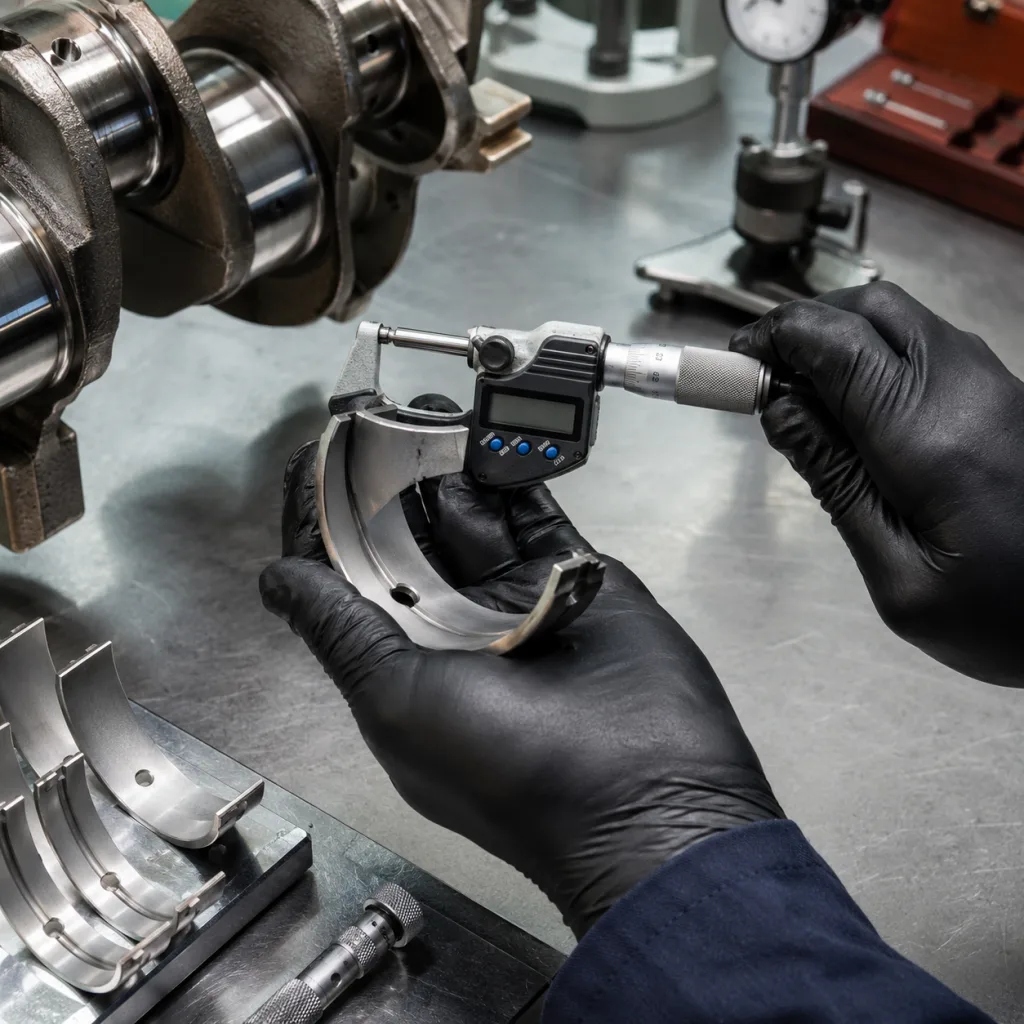
Valve failures often begin with small deviations. An undersize stem can accelerate guide wear. Excessive runout can reduce seat sealing. Incorrect keeper groove geometry can create assembly risk. Poor surface finish may shorten guide life or hide grinding damage. Procurement teams should therefore ask for actual measurement data, not only catalogue fitment claims.
A practical incoming sample review should include:
Overall length
Head diameter
Stem diameter at multiple points
Seat face angle and width
Valve head runout
Stem straightness
Keeper groove position and profile
Tip hardness and surface condition
Stem roughness and coating quality where applicable
Visual checks for laps, cracks, forging folds, and grinding burns
Testing requirements depend on application, order volume, warranty exposure, and customer approval rules. Typical validation may include dimensional layout, hardness testing, tensile or material verification, metallographic review, coating thickness measurement, fatigue or impact-related evaluation, and salt spray testing where corrosion protection is relevant. For critical parts, agree in advance which tests are required for sample approval, which checks apply to every batch, and which records must accompany shipment.
For emissions-linked engine programmes, buyers should understand the target vehicle’s regulatory environment, such as ECE R-83 for light-duty emissions type approval in markets where it applies, without treating that regulation as a valve test standard. Likewise, standards such as SAE J2527 are relevant for brake friction evaluation, but they do not apply to engine valves. Use standards only where they are technically applicable and avoid broad compliance claims that cannot be linked to the part being purchased.
Compare commercial terms without losing technical control
The lowest unit price can become expensive if MOQ, lead time, scrap rate, packaging defects, or documentation gaps disrupt supply. A strong sourcing process separates technical qualification from commercial negotiation. First confirm that the supplier can make and control the valve correctly; then compare landed cost, service level, and scalability.
Evaluation factor
Low-risk supplier signal
High-risk signal
MOQ
MOQ by SKU and mixed-container policy clearly stated
MOQ changes after sample approval
Lead time
Standard production lead time and peak-season limits documented
Vague promise without capacity data
Sampling
PPAP-style or documented sample report available when required
Samples shipped without measurement data
Packaging
Export cartons, corrosion protection and label rules confirmed
Packaging only decided after order placement
Forecasting
Accepts rolling forecast and safety stock discussion
Produces only against urgent purchase orders
Warranty handling
Written claim review and 8D response process
Informal replacement without analysis
</tr></thead><tbody> </tbody></table>For distributors, balanced MOQ matters because valve ranges often include many slow-moving SKUs alongside a smaller number of high-volume references. For OEM/Tier-1 projects, process approval, traceability, and change control usually matter more than catalogue breadth. For repair chains, fill rate, packaging consistency, barcode accuracy, and clear part identification are critical because an incorrect pick can stop workshop throughput.
When comparing offers, calculate more than ex-works price. Include freight efficiency, carton configuration, inspection cost, claim handling, payment terms, safety stock, and the cost of carrying a wider SKU range. A supplier that is slightly higher on unit price may be lower-risk if it gives stronger documentation, shorter corrective-action cycles, and more stable replenishment.
Use a structured RFQ and final approval checklist
A structured RFQ makes quotations easier to compare and reduces disputes after tooling, sampling, or first shipment. Include drawings where available, sample parts if legally and commercially appropriate, application data, annual volume, packaging requirements, inspection expectations, and any customer-specific documentation rules. State whether the quotation is for standard aftermarket supply, private-label distribution, or an OE/Tier-style approval route.
Before awarding business, complete this checklist:
1. Certificate scope reviewed for IATF 16949:2016 and ISO 9001:2015. 2. Material specification, heat treatment and surface treatment confirmed. 3. Sample inspection report reviewed against drawing or agreed reference dimensions. 4. Critical tolerances and measurement methods agreed in writing. 5. Packaging, labelling and corrosion protection approved. 6. MOQ, lead time, payment terms and Incoterms confirmed. 7. Change-control and warranty response process documented. 8. Substance compliance expectations, including REACH (EC) No 1907/2006 where relevant, communicated. 9. Fitment references and any OE-style cross-reference format checked without claiming vehicle manufacturer approval. 10. First production lot inspection plan agreed.
If a buyer asks how to choose a engine valve supplier for a new product line, the practical answer is to qualify the factory first, validate the parts second, and negotiate scale third. Price matters, but it should be reviewed after the supplier has passed the technical gate and shown that it can repeat the approved result in production.
To discuss drawings, samples, or an application list, request a quote with your target SKUs, annual volume, market requirements, and preferred packaging format.
Frequently asked questions
Request current IATF 16949:2016 and ISO 9001:2015 certificates where applicable, material specifications, process flow, control plan, inspection method, packaging proposal and commercial terms. For higher-risk programmes, ask for batch traceability examples, gauge calibration records and previous 8D corrective action samples.
The quantity depends on SKU risk, annual volume and customer requirements. For standard aftermarket items, buyers often review dimensional layouts from multiple pieces and perform material or hardness checks. For OEM/Tier-1 projects, sampling should follow the customer’s approval process, with documented first-article or PPAP-style evidence where required.
Yes, references may be used for fitment identification where legally appropriate, but they must not imply vehicle manufacturer approval. Driventus is an independent aftermarket manufacturer; brand names are referenced for fitment only. Use generic fitment and application data unless a customer provides authorised cross-reference requirements.
If you are qualifying a new engine valve source, Driventus can review drawings, samples, annual demand and packaging requirements before quotation. Send your RFQ details through /contact.html