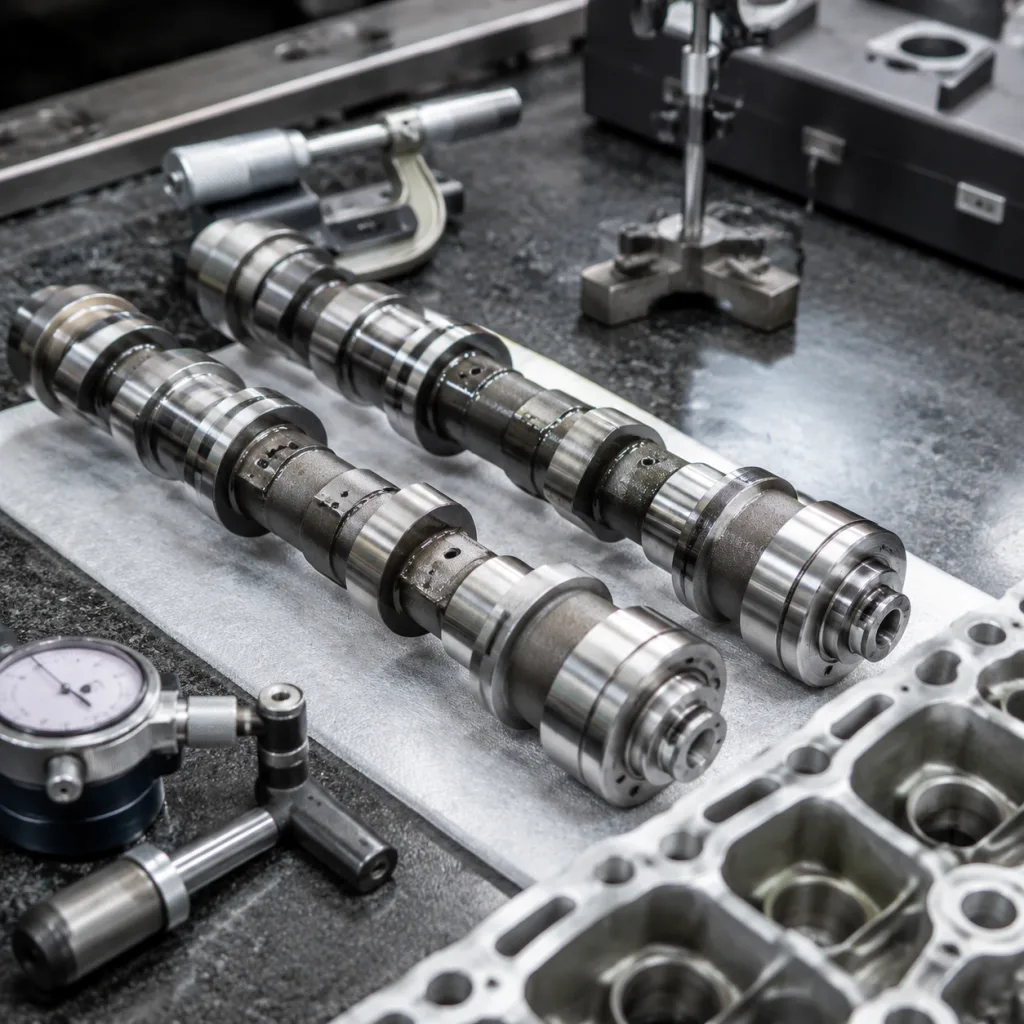
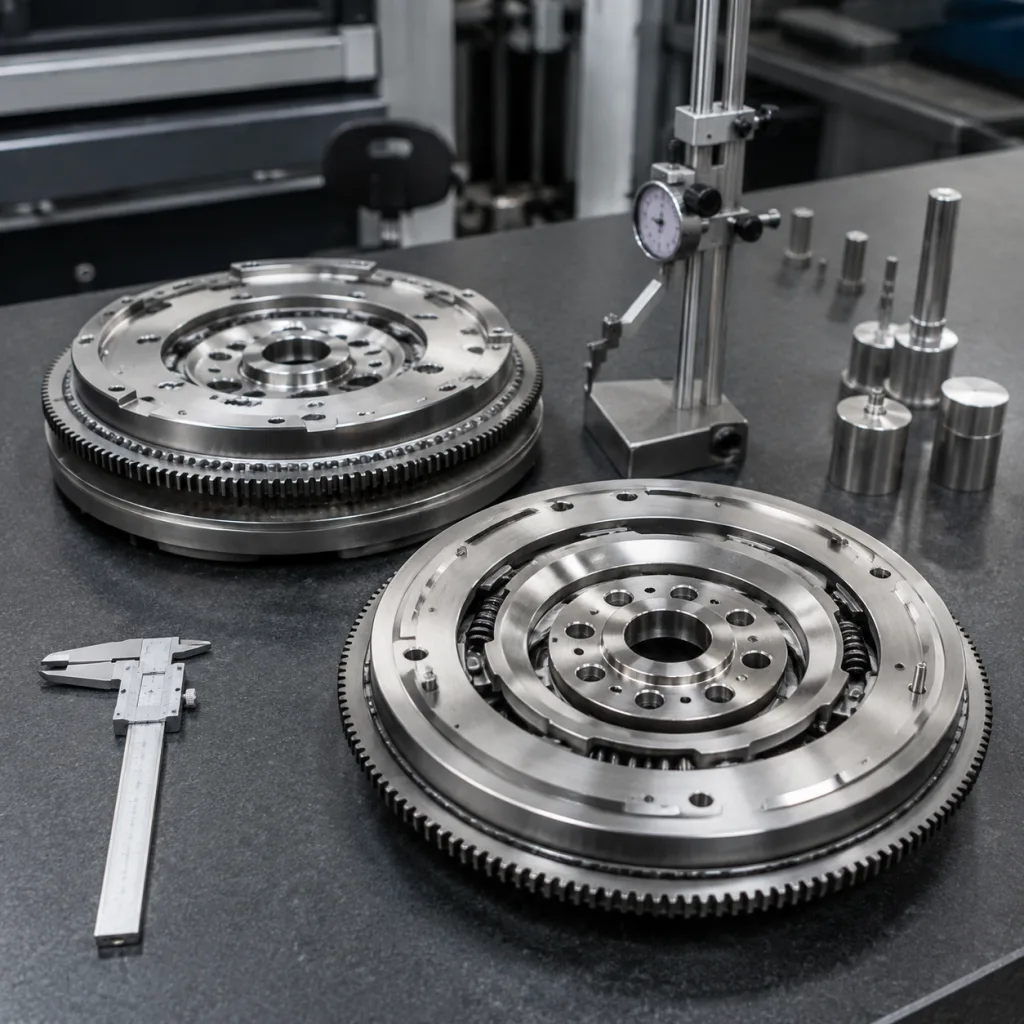
Crankshaft RAM wholesale sourcing is a technical procurement decision, not only a price comparison. Buyers need dimensional accuracy, suitable metallurgy, dependable replenishment and fitment data that can be checked across catalogues, inspections and repeat orders. For distributors, importers and repair-chain buyers, the cost of a poor programme includes returns, warranty exposure, warehouse confusion and inventory that cannot be confidently cross-referenced.
Driventus Auto Parts manufactures engine and powertrain components in Taizhou, Zhejiang, and exports to more than 60 countries. Our crankshaft programmes support aftermarket distribution, private-label supply and made-to-specification projects for selected OEM and Tier-1 requirements. Production and inspection are managed under IATF 16949:2016 and ISO 9001:2015 frameworks, with controls for forging or casting selection, heat treatment, journal grinding, balancing, traceability and export packing. Driventus is an independent aftermarket manufacturer; brand names are referenced for fitment only.
Sourcing Priorities for RAM Crankshaft Programmes
For wholesale buyers, a crankshaft should not be treated as a generic commodity SKU. It is a rotating structural component exposed to bending force, torsional load, oil-film variation and repeated thermal cycling. A useful sourcing file therefore goes beyond unit price and vehicle application.
Key items to confirm before placing bulk orders:
Vehicle and engine coverage by displacement, fuel type, model year range and crank sensor configuration.
OE part-number cross-references where available, using buyer-provided or verified references only.
Material route: forged steel, cast iron or ductile iron, depending on application load and target price point.
Main journal, rod journal, thrust face, oil-hole and crankshaft gear or reluctor requirements.
Heat-treatment method, hardness range and surface-finish target.
Undersize or repair-size availability if the market requires it.
Packaging method for sea freight, inland transport and warehouse handling.
Batch traceability linked to inspection records.
A procurement team can review crankshaft coverage through our catalog and broader engine component families at /products/engine-components.html. For engineered drawings, sample development or regional private-label specifications, Driventus also supports custom manufacturing.
Wholesale Terms: MOQ, Lead Time and Forecast Planning
Crankshaft RAM wholesale programmes usually work best when buyers consolidate demand by engine family instead of ordering isolated references one by one. Consolidation improves machining setup efficiency, inspection scheduling, raw-material planning and packaging utilisation.
Procurement item
Typical B2B consideration
What Driventus confirms during RFQ
MOQ
Often 50–200 pieces per reference, depending on tooling and stock status
SKU-level MOQ and mixed-container options
Sample lead time
Commonly 30–45 days for non-stock references
Drawing review, material route and inspection plan
Mass production lead time
Commonly 45–75 days after sample approval or deposit
Capacity window and shipment schedule
Packing
Individual anti-corrosion protection plus carton, pallet or wooden case
Export packing method and pallet configuration
Documentation
Inspection report, packing list, commercial invoice, certificate where applicable
Buyer-specific paperwork requirements
</tr></thead><tbody> </tbody></table>For distributors, rolling forecasts reduce urgent air-freight decisions and lower the risk of stockouts on fast-moving references. A practical forecast separates stable replenishment items from slow-moving long-tail coverage. If annual demand is uncertain, buyers can begin with a pilot order, validate sales and return data, then move selected references into scheduled production.
Manufacturing Controls and Inspection Points
A crankshaft procurement audit should examine process control, not only final inspection. Final measurement can identify an out-of-tolerance part, but it cannot fully offset unstable heat treatment, weak traceability or inconsistent grinding control.
Driventus manages crankshaft production through controlled manufacturing steps that may include raw material verification, rough machining, heat treatment, straightening, finish grinding, oil-hole processing, dynamic balancing, cleaning and anti-rust protection. Inspection points are defined according to the drawing, application and batch risk.
Typical specification checkpoints include:
Main journal diameter, roundness and cylindricity where specified.
Connecting rod journal diameter, taper and width.
Stroke, crankpin indexing and phase accuracy.
Thrust width and thrust-face finish.
Fillet radius and transition geometry.
Oil-hole position, chamfer and cleanliness.
Hardness and effective hardened depth where specified.
Runout and dynamic balance.
Surface roughness on journal and sealing areas.
Visual checks for cracks, dents, burrs and corrosion before packing.
Quality management is aligned with IATF 16949:2016 and ISO 9001:2015. Buyers can review our quality system when preparing a supplier audit or internal vendor approval file.
Materials, Heat Treatment and Dimensional Expectations
Material selection must match the engine load profile, OE design route and market position. Forged steel may be preferred for higher-load diesel or performance-sensitive applications, while cast or ductile iron may be suitable for standard replacement coverage when the original design uses that route. The procurement question is not which material is universally better; it is whether the replacement part matches the intended engine application, price segment and validation plan.
A typical crankshaft supply specification may include:
Material: forged steel, cast iron or ductile iron according to drawing and application.
Heat treatment: induction hardening, nitriding or another specified method where required.
Journal finish: controlled roughness to support oil-film formation and bearing compatibility.
Dimensional tolerance: drawing-based limits for journal diameter, taper, roundness, width and stroke.
Balance: dynamic balance check according to application requirement.
Marking: batch or traceability code without vehicle manufacturer logos.
Corrosion protection: rust-preventive oil, VCI bag, sealed packaging or desiccant depending on shipment route.
Environmental and market-access requirements should be discussed before quotation is finalised. For European importers, material declarations may need to consider REACH (EC) No 1907/2006 and related restricted-substance obligations. For North American, UK, Australian and Brazilian buyers, requirements are often linked to importer documentation, customs classification, labelling rules and customer-specific restricted-substance lists.
Factory Audit Questions for Importers and Distributors
A useful supplier audit is specific. General claims about capacity or experience do not prove that a crankshaft line can deliver repeatable geometry across multiple batches.
Useful audit questions include:
1. What is the route from raw material receipt to final packing, and which steps are outsourced? 2. How are heat-treatment batches recorded and linked to finished parts? 3. Which gauges are used for journal diameter, roundness, runout and surface finish? 4. How often are measuring instruments calibrated, and are calibration records available? 5. Are non-conforming parts physically segregated and dispositioned under documented procedures? 6. Can the factory provide first article inspection reports for new references? 7. How are engineering changes, drawing revisions and customer approvals controlled? 8. What packaging drop, corrosion or transport checks are used for export orders?
For private-label buyers, packaging artwork, barcode rules, label language and carton strength should be confirmed early. For OEM or Tier-1 sourcing teams, PPAP-style documentation may be requested depending on the project, even when the applicable customer standard is not publicly named. Driventus can align documentation to the buyer’s technical file where commercially and technically feasible.
RFQ Data Needed for Accurate Pricing
Accurate pricing depends on fitment precision, material route and inspection scope. A vague enquiry may receive a broad estimate, but it increases the risk of later price revision, sample delay or incorrect application matching.
For a crankshaft RAM wholesale RFQ, provide the following where available:
Engine code or engine family.
Vehicle application and model year range.
Fuel type and displacement.
OE cross-reference if known, using buyer-provided references only.
Required order quantity and annual forecast.
Target destination port or delivery term.
Material, drawing or performance requirement if controlled by the buyer.
Sample requirement and target launch date.
Packaging requirement: neutral, private label or bulk export.
Required inspection documents and compliance declarations.
Any market-specific labelling, barcode or customs documentation rules.
Driventus does not claim approval, sponsorship or endorsement by any vehicle manufacturer. We can provide aftermarket fitment references, dimensional checks and production documentation for buyer review. To start a sourcing discussion, send your part list, forecast and destination market through request a quote.
Frequently asked questions
MOQ depends on the reference, tooling status, stock level and packaging requirement. Many wholesale crankshaft projects are quoted from 50–200 pieces per SKU, with mixed-container planning available for selected multi-reference orders.
Yes. Driventus can support neutral or private-label export packaging, subject to artwork approval, carton specification, marking rules and order quantity. Brand-owned logos are not used unless the buyer provides lawful authorisation.
Typical documents include a commercial invoice, packing list and inspection records. Depending on the project, material, dimensional or compliance declarations may also be prepared for buyer review.
If you are building a crankshaft sourcing file, send your application list, forecast quantity and inspection requirements. Driventus will review the project and reply with practical supply options at /contact.html