How to Choose an Engine Block Supplier for B2B Sourcing
Choosing an engine block supplier is both a technical and commercial decision. The block is the foundation for cylinder geometry, crankshaft alignment, cooling performance, oil control and long-term engine durability. For distributors, repair-chain buyers and OEM sourcing teams, the wrong supplier can create warranty exposure, installation delays, excess receiving inspection and difficult claim disputes. This guide explains how procurement teams can evaluate a prospective supplier before placing a production order. It covers application definition, material control, casting quality, CNC machining accuracy, dimensional inspection, certification, capacity, packaging and export readiness. Driventus manufactures engine and powertrain components in Taizhou, Zhejiang, and exports to more than 60 countries. Driventus is an independent aftermarket manufacturer; brand names are referenced for fitment identification only.
1. Define the application before discussing price
Start with a controlled technical brief. Engine block sourcing often goes wrong when the buyer sends only a photo, a market name or an incomplete fitment list. A qualified supplier should quote against measurable requirements rather than assumptions.
At minimum, provide:
Engine family, displacement and fuel type
Target market: aftermarket replacement, remanufacturing, OEM service, or private-label programme
OE part-number cross-reference format, if applicable, such as OE 06A… or OE 11251…
Casting material requirement: grey cast iron, compacted graphite iron, or aluminium alloy
Main bearing cap design and fastener specification
Required machining state: semi-finished, fully machined, honed, or assembled short block basis
Annual forecast, first order quantity and release schedule
Destination country and preferred Incoterms
Clarify the commercial model at the same time. A distributor replenishing catalogue items, a repair chain replacing high-failure units and an OEM service buyer managing phased releases may need different stock levels, inspection records and packaging. If the programme involves private-label supply, define label artwork, carton markings, traceability format and claim-handling expectations before samples are ordered.
2. Verify material, casting and machining capability
A credible engine block supplier should control more than final packing. Ask whether the company manages foundry sourcing, casting inspection, CNC machining and final measurement under one quality plan. Coordinated process control reduces hand-off errors, especially on bore alignment, deck flatness, main tunnel geometry and oil-gallery cleanliness.
Key technical checks include:
Area
What to verify
Why it matters
Material
Chemical composition, hardness range, tensile properties
Supports wear resistance, machinability and structural load capacity
Helps prevent coolant leakage, oil leakage and weak main web areas
Heat treatment or ageing
Stress relief method, ageing time, hardness consistency
Improves dimensional stability during and after machining
Machining
CNC process route, tool control, datum strategy
Protects bore position, deck height and crankshaft alignment
Cylinders
Bore diameter, roundness, taper and surface finish
Affects ring sealing, oil consumption and compression
Main bearing tunnel
Alignment, diameter, cap seating and fastener condition
Protects crankshaft rotation, oil-film stability and bearing life
Deck face
Flatness, roughness and bolt-hole accuracy
Supports gasket sealing and correct clamping load
Oil and coolant passages
Deburring, washing and contamination checks
Reduces early engine failure caused by debris or blocked flow
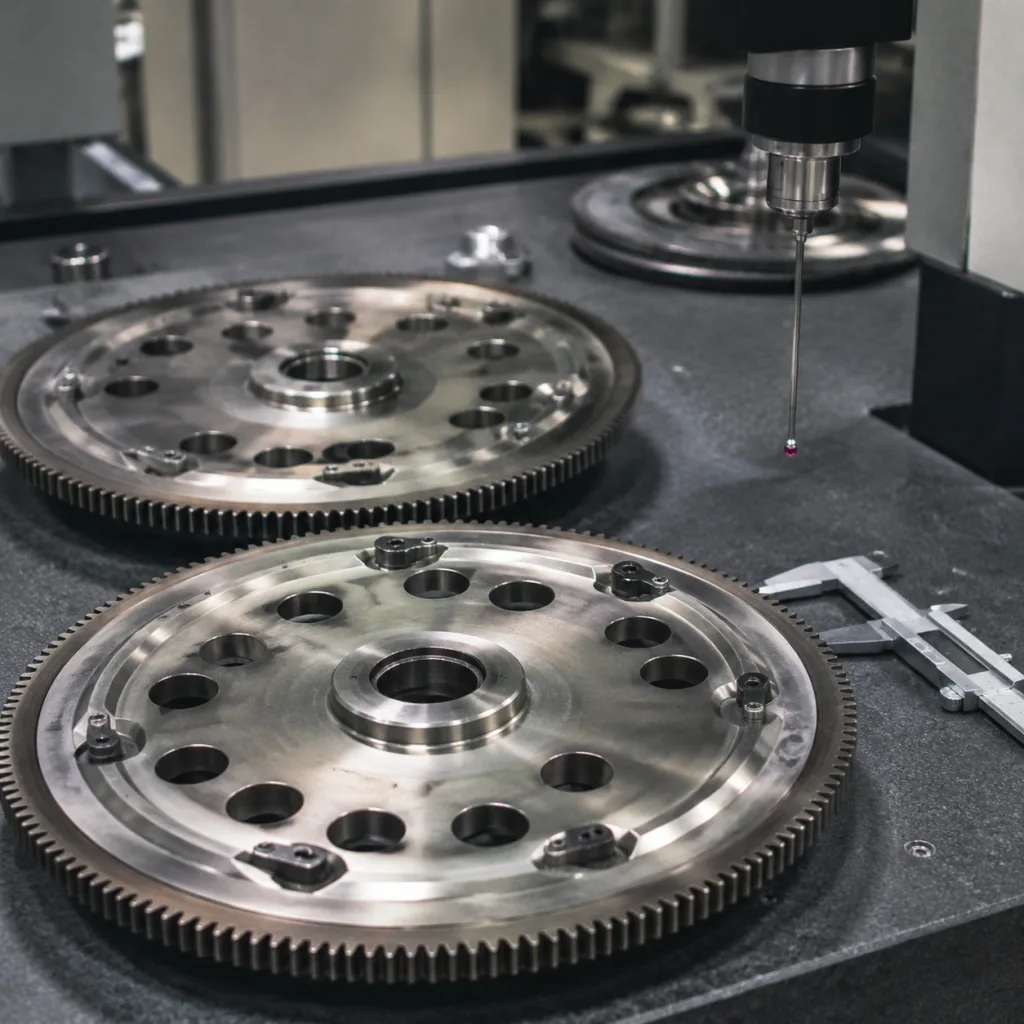
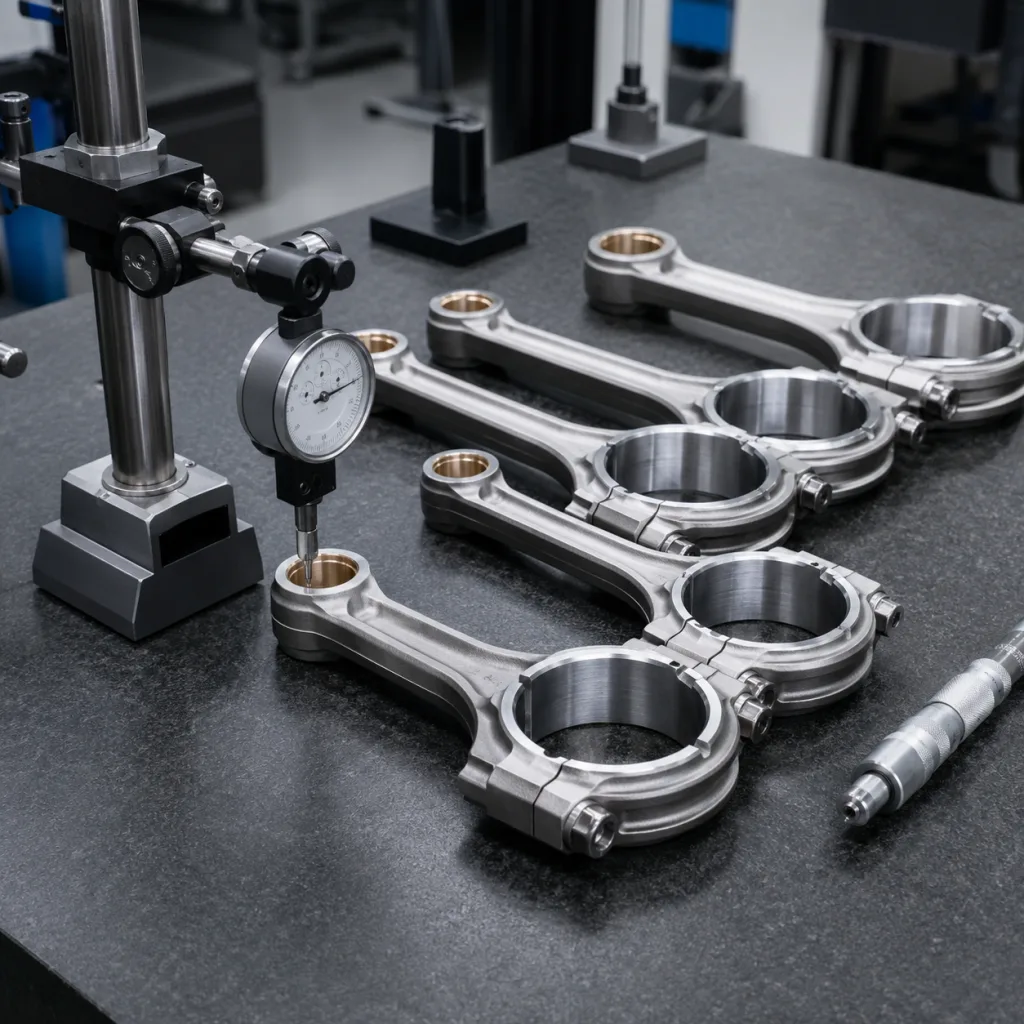
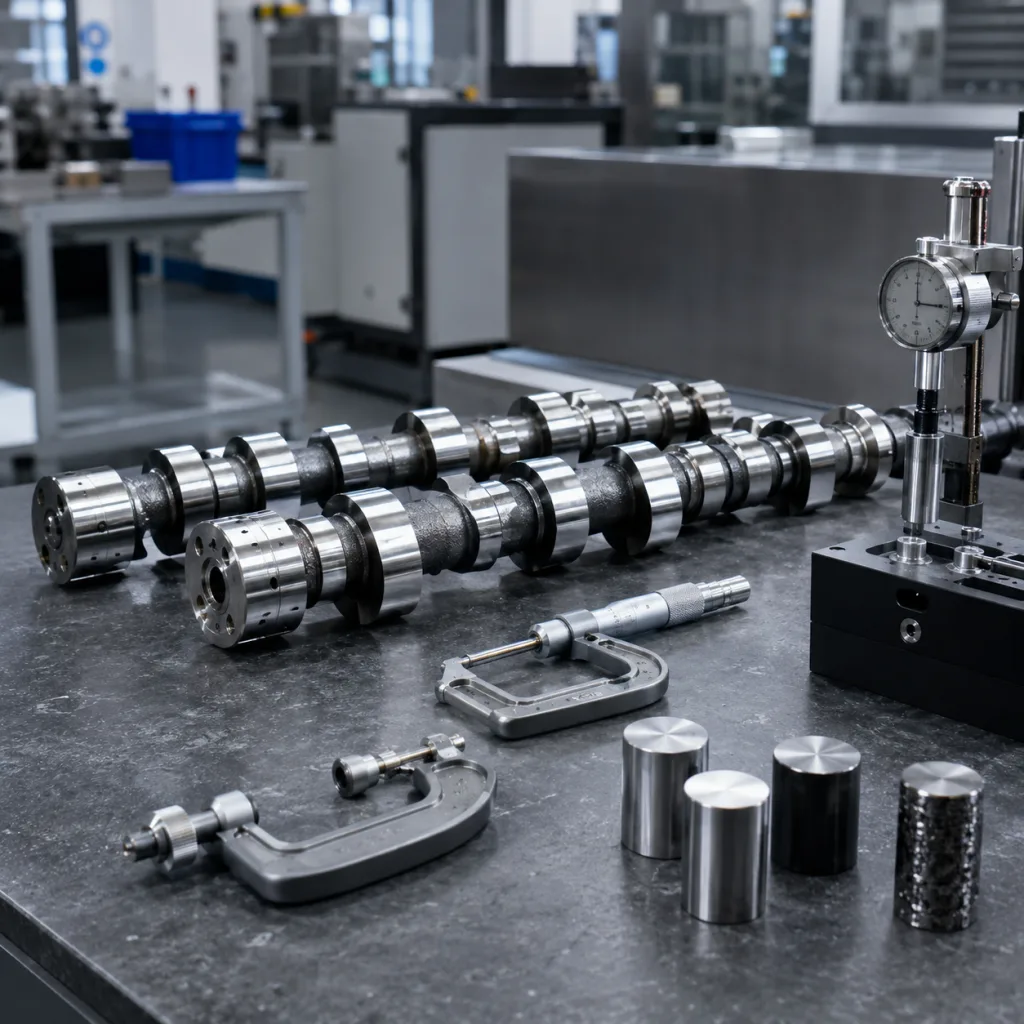
</tr></thead><tbody> </tbody></table>For machined blocks, request measurement reports from coordinate measuring machines, bore gauges, thread gauges and surface roughness equipment. The supplier should state the inspection method and sampling frequency rather than relying on broad claims such as “100% checked” without supporting records. If the block is supplied semi-finished, confirm which operations remain for the buyer and which datum surfaces are already established.
When comparing factories, look for evidence that casting and machining data are connected. A supplier that tracks recurring casting defects, tool wear, fixture variation and final inspection results can usually support stable repeat orders better than a supplier that only sorts parts after production.
3. Check certification, documentation and compliance
Certification does not prove that every block is correct, but it indicates whether the supplier works under a controlled management system. For automotive sourcing, ask for current certificates and confirm the scope, site address, issuing body and expiry date. A certificate for a trading office or unrelated workshop is not the same as certification for the manufacturing site producing the blocks.
Relevant references may include:
IATF 16949:2016 for automotive quality management systems
ISO 9001:2015 for quality management systems
REACH (EC) No 1907/2006 for chemical substance obligations in the EU
RoHS requirements where electrical or sensor-related assemblies are included
Customer-specific PPAP-style documentation when required by OEM or Tier-1 programmes
Typical documents for an engine block order should include:
Dimensional inspection report
Material certificate or chemical composition report
Hardness report where applicable
Pressure or leakage test report for water jackets and oil galleries, when specified
Cleaning and visual inspection record
Packaging specification
Batch traceability record
Certificate of origin or export documents when needed for customs clearance
Driventus operates under IATF 16949:2016 and ISO 9001:2015. Buyers can review our quality system before requesting a quotation. Do not rely only on a certificate image sent by email; ask for the full PDF certificate, certificate number, issuing body and manufacturing site scope.
Compliance should also be matched to the destination market. EU importers may need REACH-related declarations, while buyers in other regions may place more emphasis on origin documentation, labelling rules, customs codes or local warranty documentation. Confirm these requirements before production so the supplier can prepare records with the shipment instead of after goods arrive at port.
4. Audit the supplier’s process and quality controls
A remote or on-site audit should focus on process evidence. For engine blocks, the key question is whether variation is measured and controlled at each critical operation, not whether the factory can show a clean sample room.
Use this audit checklist:
Is there an incoming inspection procedure for castings?
Are casting defects classified with clear acceptance criteria?
Are machining datums defined on the process sheet?
Are CNC programmes controlled by revision?
Are fixtures, cutting tools and gauges managed under documented control?
Are gauges calibrated and traceable?
Are bore, deck, main tunnel and threaded holes measured at defined intervals?
Is cleaning validated after machining?
Are nonconforming parts segregated physically?
Is rework authorised and recorded?
Is final inspection linked to batch traceability?
Are corrective actions reviewed when repeat defects occur?
Critical tolerances to discuss
Exact tolerances depend on the engine design and drawing. However, buyers should request documented limits for cylinder bore diameter, bore roundness, bore taper, deck flatness, main bearing tunnel alignment, head bolt thread quality, gasket surface roughness and oil-gallery cleanliness. A supplier that cannot explain these controls may not be suitable for high-volume or warranty-sensitive programmes.
Also review how the supplier handles engineering changes. Engine blocks can be affected by small differences in core design, machining datum, thread depth, plug type, sensor-port configuration or surface finish. Change approval should be documented before the supplier modifies tooling, process routes, inspection methods or purchased materials.
For private-label or buyer-drawing projects, define whether Driventus or the buyer owns tooling, gauges and design records before trial production begins.
5. Compare commercial terms beyond unit price
The lowest quoted block is not always the lowest landed cost. Heavy cast and machined components create cost in inspection, rejects, warehousing, freight, corrosion prevention and warranty administration. A sourcing comparison should include engineering support, supply stability and the supplier’s ability to solve problems after the first shipment.
Sourcing factor
Questions for the supplier
Procurement impact
MOQ
What is the minimum order by part number and shipment?
Affects stock exposure and cash flow
Lead time
What is the sample, trial and mass-production lead time?
Determines launch timing and replenishment risk
Capacity
How many pieces can be produced per month for this family?
Reduces shortage risk during demand spikes
Tooling
Is existing tooling available, or is new tooling required?
Changes upfront cost and development schedule
Packaging
Is export packaging suitable for sea and road freight?
Reduces breakage, corrosion and handling damage
Traceability
Can each batch be linked to inspection records?
Supports warranty investigation
Change control
How are design or process changes communicated?
Prevents unapproved variation
After-sales response
What is the claim review process?
Reduces dispute time and replacement delays
</tr></thead><tbody> </tbody></table>Packaging deserves special attention because engine blocks are heavy, machined and vulnerable to impact on sealing faces and threaded areas. Confirm whether the supplier uses rust prevention, protective caps, pallet reinforcement, corner protection, moisture control and clear handling marks. If goods move by sea, inland trucking and warehouse transfer, the packaging specification should reflect the full logistics route.
For distributors, ask whether mixed-container shipments are possible with related engine components such as crankshafts, pistons, gaskets and water pumps. Consolidation may reduce freight cost per unit, simplify import planning and improve container utilisation.
6. Run samples, inspection and pilot orders before scaling
A structured validation sequence is safer than moving directly from quotation to container volume. This is especially important when learning how to choose a engine block supplier for a new market, new engine family or warranty-sensitive application.
Recommended sourcing sequence:
1. Send technical brief, target quantity and destination market. 2. Confirm fitment scope, OE cross-reference format and machining condition. 3. Review certificates, inspection capability and packaging method. 4. Order samples or first-article parts. 5. Perform incoming dimensional inspection against agreed characteristics. 6. Build or test the block in a controlled workshop environment. 7. Record gasket sealing, bore finish, thread quality and passage cleanliness. 8. Place a pilot order with agreed inspection records. 9. Review field feedback before increasing volume.
During sample review, separate fitment issues from manufacturing issues. Fitment checks confirm whether the block matches the intended engine application, while manufacturing checks confirm whether the part was produced consistently against agreed dimensions and surfaces. Both matter, but they require different evidence and different corrective actions.
For repair-chain and distributor programmes, define warranty handling before shipment. State whether returns will be inspected locally, by an independent lab, or by the manufacturer after return. Evidence should include installation records, photographs, failure description and batch number. A clear claim process protects both parties and prevents every field problem from becoming an unstructured commercial dispute.
When specifications, drawings and target quantities are ready, buyers can request a quote with the required documentation attached.
Frequently asked questions
Send the engine family, displacement, material requirement, machining condition, OE cross-reference format if used, annual forecast, first order quantity, target market and destination country. Drawings, measured samples and required inspection characteristics improve quotation accuracy.
It is not always a legal requirement for aftermarket sales, but it is a strong sourcing filter. IATF 16949:2016 indicates automotive process control, traceability, corrective action and risk management expectations.
Yes, Driventus can discuss custom manufacturing for buyer-owned drawings, samples or defined specifications. Tooling, validation, inspection reports, packaging and traceability requirements should be agreed before trial production.
If you are evaluating a new engine block programme, send the fitment scope, quantities and technical requirements for review. Driventus can respond with feasibility, documentation needs and quotation options at /contact.html