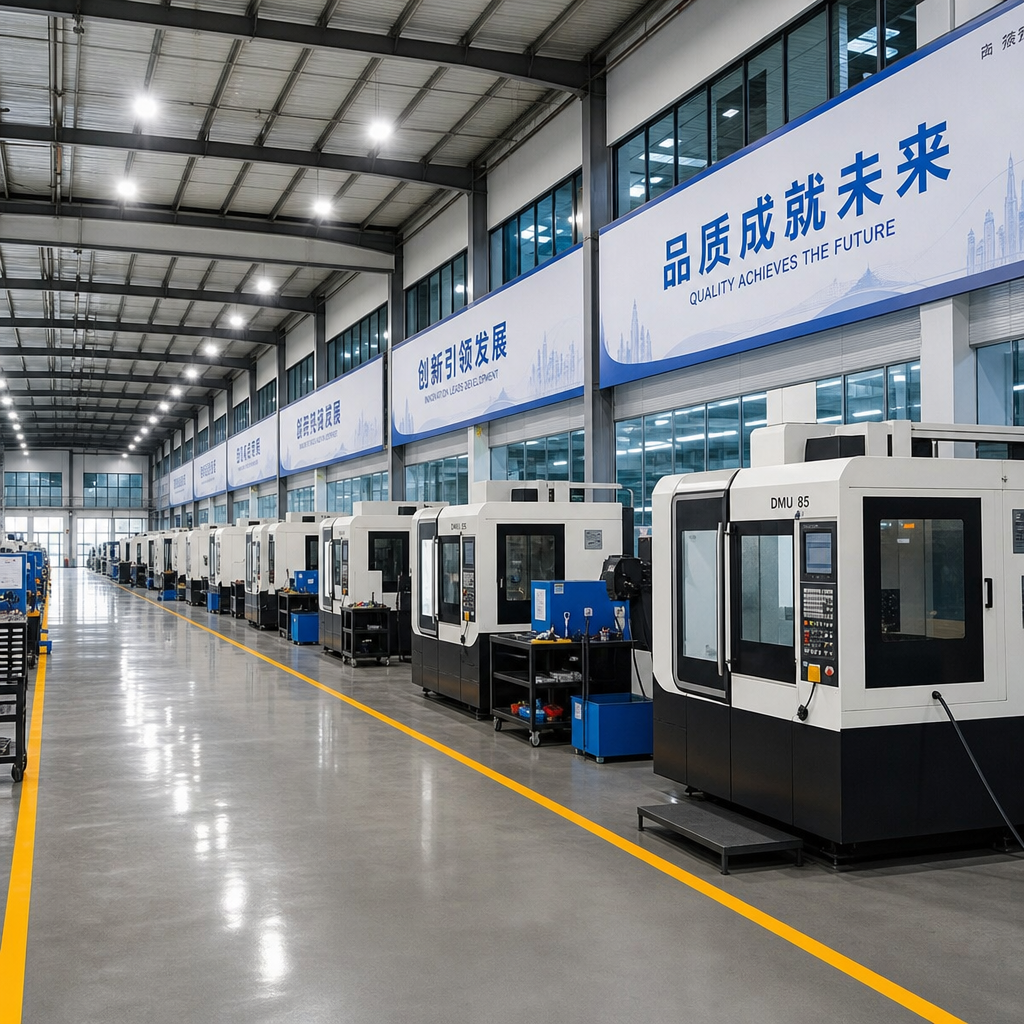
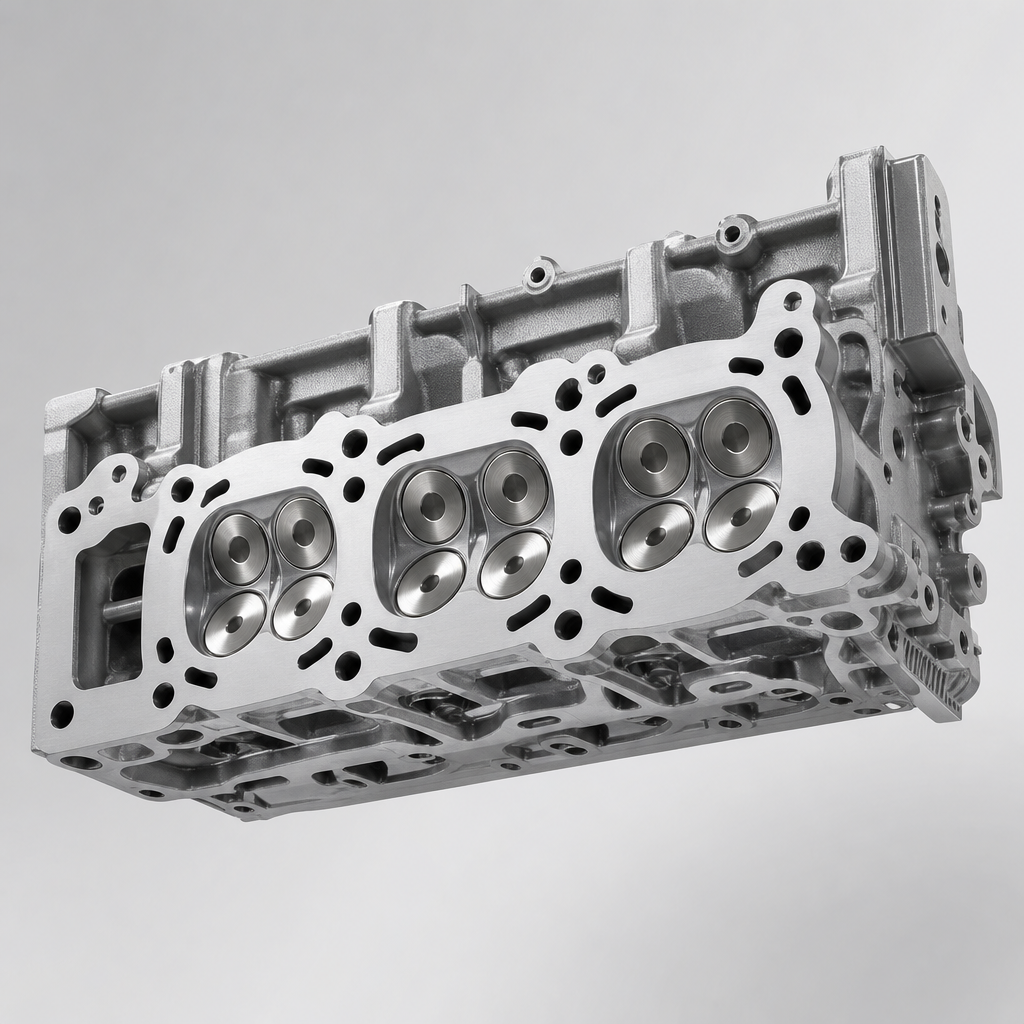
Selecting an oil pressure sensor supplier is a risk-control exercise, not a catalogue exercise. For distributors, OEM purchasing teams, and repair-chain sourcing managers, the wrong source can lead to warranty returns, fitment disputes, unstable lead times, and compliance exposure. A credible supplier should be able to show process control, repeatable sensor calibration, material traceability, and clear documentation before commercial terms become the main topic.
Oil pressure sensors work in a demanding environment: hot engine oil, vibration, pressure cycling, and connector exposure. In many programmes, the part must hold calibration within a defined band, seal at working pressure without weep, and maintain connector integrity after thermal cycling and salt exposure. Small deviations in thread tolerance, sealing performance, switch-point accuracy, analogue output linearity, or terminal plating thickness can create field failures that are expensive to diagnose and even more expensive to recover from. That is why procurement teams should assess suppliers against measurable criteria such as quality certification, validation data, PPAP readiness where required, batch traceability, and stable replenishment logic. This guide explains how to choose a oil pressure sensor supplier using a practical sourcing checklist that helps compare candidates, quantify risk, and reduce launch issues. Driventus is an independent aftermarket manufacturer; brand names are referenced for fitment only.
Decision First: define the sensor you are actually buying
Most bad RFQs fail before the supplier replies. The buyer asks for an oil pressure sensor by vehicle name, the factory quotes a nearby match, and the argument starts later during sampling.
If you want a useful comparison, lock the application definition first.
For oil pressure sensors, confirm:
Pressure range and switching threshold, or the required analogue output curve
Thread specification, such as metric or NPT, including tolerance requirements
Hex size, body envelope, and installed clearance
Connector type, pin count, terminal plating, and locking geometry
Operating temperature range and compatibility with engine oil and additive packages
Sealing method: thread sealant, copper washer, O-ring, or tapered thread
Required voltage, resistance range, or ECU signal characteristics
Vehicle or engine family coverage, plus any known OE references supplied by the buyer
Give the supplier numbers, not just applications. A switch-type part may need 0.3 bar +/-0.05 bar, 0.5 bar +/-0.1 bar, or 1.2 bar +/-0.1 bar, with defined hysteresis so the warning lamp does not chatter. An analogue sender may need 10-184 ohm, 0.5-4.5 V, or another ECU-specific curve, with tolerance stated at several pressure points.
Mechanical detail matters just as much. The supplier should know whether the thread is M10 x 1, 1/8-27 NPT, or 1/4-18 NPTF; whether the seal sits on a washer, taper, or O-ring; and what torque window applies in service. A small mismatch in thread class, reach, or seat geometry is enough to create seepage, cracked housings, or false returns.
If your brief only lists a vehicle application, ask for two documents before sampling starts: a dimensional drawing and an electrical performance sheet. Those should identify the critical-to-function features and the tolerances the supplier will actually build to. At minimum, the drawing should call out thread size, thread tolerance or standard, insertion length, hex width across flats, connector orientation, overall body length, seal seat dimensions, and any restricted zones for installed clearance.
Pressure cycling, leak test, thermal shock, salt spray
Packaging spec
Unit pack, label content, carton quantity
</tr></thead><tbody> </tbody></table>Ask the supplier to state the exact tolerance they will build to. Typical examples may include:
Switch point tolerance: +/-0.05 to +/-0.15 bar, depending on design
Resistance/output tolerance at key checkpoints: often +/-3% to +/-5% or customer-defined
Thread major diameter and pitch tolerance to the applicable standard
Leak test acceptance: 0 visible leakage at specified pressure and dwell time
Connector terminal retention force and mating/unmating force range
If your sourcing programme covers multiple variants, ask whether the factory can consolidate references onto one controlled platform. One diaphragm and body architecture can sometimes support several thread or connector variants under separate controlled bills of material. That reduces tooling complexity, lowers MOQ exposure on slow-moving references, and makes future line extensions easier through custom manufacturing.
Failure Mode Check: can the supplier control what usually goes wrong?
Certificates matter. They are not enough.
For automotive components, suppliers should at minimum show a working quality management framework aligned to IATF 16949:2016 or ISO 9001:2015, depending on programme requirements. Then go past the certificate and look at the process controls tied to actual failure modes.
Points to verify during supplier assessment:
Incoming inspection for brass, steel, plastic resin, seals, and terminals
Calibration control for pressure test benches and electrical test equipment
In-process leak testing and end-of-line functional testing
Lot traceability from raw material to finished shipment
Control plan, PFMEA, and reaction plan for out-of-spec results
Non-conformance handling and 8D response capability
Retention samples and documented change control
For this product family, the discussion should get specific fast. A competent supplier should be able to explain how they control diaphragm forming, spring rate consistency, laser marking or label traceability, crimp height, torque on assembled housings, and terminal insertion quality. Those are direct drivers of switch-point drift, oil leakage, and intermittent electrical faults.
Audit questions that expose weak control
Request evidence from recent production lots, not blank templates. A capable supplier should be able to show:
Recorded switch-point results by batch
Leak-test parameters and pass/fail limits
Gauge calibration records with due dates
Traceability labels linking carton, inner pack, and production lot
Corrective action records from previous customer claims
Ask one direct question: is the process using 100% end-of-line test or only sampling inspection?
For oil pressure sensors, buyers typically prefer 100% testing for:
Electrical continuity or output verification
Switch open/close point confirmation at defined pressure steps
Air or oil leak test at defined pressure and dwell time
Short/open detection on terminal circuits
A typical end-of-line routine may pressurise each unit to the specified threshold, check the switch state or output value, then hold a leak test for several seconds. Higher-spec programmes may also record individual test values or at least batch statistics such as mean, min, max, and Cpk on critical characteristics.
Calibration discipline matters too. Pressure benches, digital gauges, multimeters, torque tools, thread gauges, and dimensional fixtures should have calibration IDs, due dates, and traceable standards. For critical gauges, many buyers expect intervals around 6 to 12 months, sometimes shorter if usage is heavy or drift history is poor.
If a supplier can show only final inspection reports and cannot provide process-level data, risk rises quickly. Oil pressure sensors are sensitive to variation in diaphragm assembly, spring characteristics, crimping, and sealing. Those problems need to be controlled upstream, not discovered at packing.
When considering how to choose a oil pressure sensor supplier, review the published quality system information, then ask for part-family-specific control documents for the exact sensor under discussion. The real question is not whether the supplier has a certificate. It is whether they can prove repeatability lot after lot.
Spec Deep-Dive: what validation data should exist before you trust the part?
A dependable supplier should support product claims with validation data. The exact test plan will vary between a simple pressure switch and a sensor with an output curve, but the buying logic stays the same: confirm that the part survives real operating conditions and remains within specification.
Typical validation items include:
Burst pressure test
Pressure pulse or cycle endurance
High- and low-temperature exposure
Thermal shock
Vibration resistance
Insulation resistance and continuity stability
Salt spray resistance for exposed terminals or housing surfaces
Oil-immersion compatibility for seals and plastics
Ask for the test method and the numeric acceptance standard. A report that only says "passed" is weak. A useful report states the stress level, duration, sample size, and post-test result.
Depending on design and application, common validation logic may include examples such as:
Leak test at 5 bar, 10 bar, or higher, with a defined dwell time
Burst pressure substantially above working pressure, often with a safety margin of several times rated operating pressure
Pressure cycling for 100,000 to 1,000,000 cycles depending on application severity
Thermal shock across ranges such as -40 degrees C to 125 degrees C or customer-defined limits
Salt spray exposure of 48 to 240 hours depending on terminal exposure and corrosion expectations
Oil immersion in representative engine oil at elevated temperature, then re-check of seal swell, hardness change, and function
Vibration testing across defined frequency and acceleration ranges with no loss of signal or leakage
For electrical and environmental testing, buyers may reference recognised automotive practices where relevant, such as SAE J1455 for heavy-duty electronic equipment environmental considerations. Corrosion expectations are often aligned with OEM internal requirements or established salt spray methods. Material compliance should also be reviewed against REACH (EC) No 1907/2006 and, where applicable to electrical content declarations in the destination market, RoHS requirements.
Ask for a concise validation matrix showing:
Test
Method / basis
Requirement
Result
Leak test
Internal procedure
No leakage at specified pressure
Pass/Fail
Pressure cycling
Internal or customer spec
Defined cycles without drift
Pass/Fail
Thermal exposure
Internal or customer spec
Output remains within tolerance
Pass/Fail
Salt spray
Applicable corrosion method
No critical corrosion at terminal
Pass/Fail
</tr></thead><tbody> </tbody></table>Then ask for the missing details behind the summary table:
Sample quantity tested, for example 5 pcs, 8 pcs, or 30 pcs
Drawing revision and BOM revision used for the test
Pre-test and post-test switch-point or output measurements
Failure criteria, such as drift exceeding tolerance or visible leakage
Date of testing and whether the report applies to current production build
If you supply private-label aftermarket channels, confirm that the supplier can hold the same validated build across future lots. One acceptable sample is not the same as a stable production process. Also confirm engineering change control: if the supplier changes a seal compound, plating subcontractor, resin grade, or spring source, you need written notice and revalidation logic proportionate to the change.
Comparison Framework: when the cheapest quote is not the lowest-risk option
Technical acceptance does not remove supply-chain risk. Once a candidate can make the part, compare how each supplier actually supports the programme.
Use the following checklist when reviewing commercial fit:
Standard MOQ by part number and by mixed order
Tooling cost for new connector or housing variants
Sample lead time and mass-production lead time
Safety stock policy for terminals, seals, and machined bodies
Forecast visibility required from the customer
Container optimisation and export packaging standard
Incoterm flexibility and port of loading
Claim handling window and replacement policy
A practical comparison table helps when screening multiple sources:
Criterion
Supplier A
Supplier B
Supplier C
Quality certification
End-of-line 100% test
Traceability by batch
MOQ per reference
Sample lead time
Production lead time
Validation data available
PPAP support if requested
Engineering change notice process
</tr></thead><tbody> </tbody></table>Ask for MOQ in a usable structure, not a vague answer. For example:
Stock reference MOQ: 200 to 500 pcs
Private-label packaging MOQ: 500 to 1,000 pcs per label set or artwork version
New or customised sensor MOQ: often 1,000 to 3,000 pcs depending on tooling and test fixture requirements
Mixed container or mixed pallet allowance by order: for example 10 references x 200 pcs each
Lead time should also be broken down by stage:
Drawing review or feasibility response: 2 to 5 working days
Sample build from existing tooling: 2 to 4 weeks
New tooling or customised connector development: often 4 to 10 weeks
Mass production after approval: commonly 30 to 45 days, but longer if special terminals or plated parts are constrained
Transit time by sea or air from loading port to destination market
Price logic is only meaningful when linked to volume bands and quality scope. Ask suppliers to quote by break levels such as 500 pcs, 1,000 pcs, 3,000 pcs, and 5,000 pcs, and to state clearly whether the price includes:
100% functional and leak testing
Export carton and inner-box packaging
Private label or neutral label
Compliance declarations and routine batch records
Spare samples or golden samples for approval retention
A low unit price can hide weak assumptions. If Supplier A quotes 8% lower but requires 3,000 pcs MOQ with a 45-day lead time, while Supplier B accepts 500 pcs MOQ with a 21-day replenishment window, Supplier B may produce a better annual inventory turn and lower obsolescence risk, especially for long-tail aftermarket references.
Supply continuity deserves its own check. Ask whether the supplier holds safety stock for brass bodies, diaphragms, seals, and terminals; how many approved sub-suppliers exist for critical items; and what happens if one plating or machining source fails. Useful answers include target coverage such as 2 to 4 weeks of component safety stock for stable runners, or a dual-source plan for terminals and seals.
For aftermarket buyers, mix flexibility is often as important as unit price. A supplier with slightly higher pricing but steady fulfilment and lower claim rates may deliver a better total landed cost over 12 months.
It is also worth checking the supplier's wider range in our catalog. If the same manufacturer can supply related engine and electrical categories, vendor count can be reduced and freight consolidation becomes simpler.
Approval Workflow: how to sample a supplier without wasting a launch cycle
Do not approve a supplier from a quotation sheet alone. Run a controlled sample review with documented acceptance criteria and a clear sign-off path.
A sound sample approval process should include:
1. Visual and dimensional inspection against drawing 2. Thread gauge verification and sealing-face check 3. Connector fit test with the mating harness 4. Bench test for switch point or output signal 5. Leak test at the specified pressure range 6. Installation trial on the target engine or test fixture 7. Packaging and labelling review for warehouse handling
Where relevant, request supporting documents such as:
Material certificates for critical components
Initial sample inspection report
Process flow chart
Control plan
PPAP elements if the programme requires them
Make the sample process numeric.
For example:
5 to 10 pcs for early engineering review
20 to 30 pcs for dimensional, bench, and installation validation
Additional retained samples for future claim comparison or golden-sample control
During the bench review, specify the exact checkpoints. For a switch, that may mean recording open and close pressure on every sample and verifying hysteresis against the target band. For an analogue sensor, it may mean checking output at multiple points such as 0%, 25%, 50%, 75%, and 100% of rated pressure. If the supplier reports only one nominal reading, the approval is too weak.
Leak and fitment checks should also be defined. That may include:
Thread ring or plug gauge confirmation to the drawing standard
Torque installation check at the intended tightening range
Leak hold at operating pressure and, where relevant, an over-pressure verification point
Harness mating check for lock engagement, pin depth, and terminal drag feel
During sampling, ask whether the factory controls critical characteristics through automatic test equipment or manual inspection. For oil pressure sensors, 100% end-of-line testing is generally preferred because functional drift is difficult to identify visually.
A disciplined sign-off process usually includes three gates:
1. Engineering approval of drawing, fit, and function 2. Quality approval of inspection report, test data, and traceability method 3. Purchasing approval of MOQ, lead time, packaging, and change-control terms
If your business depends on cross-reference accuracy, confirm how application data is maintained and updated. Fitment errors create avoidable returns even when the sensor itself meets specification. When a supplier references an OE number supplied by the buyer, verify that the mapping is linked to a controlled bill of materials and drawing revision.
Before releasing a first order, ask for the approved sample status to be documented against part number, revision, date, and signed acceptance criteria. That record becomes the baseline if later lots show drift in switch point, plating appearance, thread quality, or connector fit.
Final Call: score risk before you negotiate price
The final decision should combine technical, quality, and commercial evidence into one simple scorecard. Procurement teams often overweight price because it is easy to compare. In this category, that is expensive.
A low quoted price can disappear quickly through warranty claims, unstable calibration, or delayed shipments.
A practical supplier scorecard can assign weighted points to:
Product conformity and validation: 35%
Quality system maturity and traceability: 25%
Delivery performance and planning flexibility: 20%
Commercial terms and total landed cost: 20%
This structure helps internal approval because the decision rests on evidence rather than assumption. It also supports second-source approval for business continuity.
To make the scorecard actionable, define the pass logic in advance. One workable method is to score each line item from 1 to 5 and require both:
An overall weighted score, for example 80/100 or higher
No failure on critical gates such as leak performance, switch-point tolerance, traceability, or change notification
Typical measurable criteria can include:
Switch-point or output capability against the drawing tolerance
Evidence of 100% end-of-line testing
Pressure cycle and thermal validation coverage
Batch traceability from raw material to shipment label
MOQ fit against your monthly demand profile
Confirmed production lead time versus your reorder window
Claim response time, such as initial containment within 48 hours and 8D closure within an agreed period
Price stability period, for example 90 days or 180 days
You can also estimate total landed risk, not just total landed cost. A supplier with a lower unit price but higher MOQ may force excess stock, while weak process control can produce a 2% claim rate that wipes out the nominal savings. By contrast, a supplier with tighter calibration control, better packaging discipline, and faster replenishment may reduce emergency freight, returns handling, and line-down exposure.
If you are evaluating sensor supply alongside broader engine-component sourcing, review whether the manufacturer can support related categories and engineering changes through one contact point. That can shorten development cycles and reduce communication gaps.
When teams ask how to choose a oil pressure sensor supplier, the most reliable answer is straightforward: score measurable risk before you negotiate price. Driventus supports B2B buyers with oil pressure sensor sourcing, technical review, and programme-based supply discussions. You can review our manufacturing scope, documentation approach, and related product coverage through our catalog and discuss project requirements through request a quote.
Frequently asked questions
Start with the technical drawing and electrical specification. Those documents confirm thread, envelope, connector, pressure threshold or signal curve, and declared tolerances. Without them, price comparisons are not technically meaningful. A usable first package should also show switch-point tolerance, hysteresis or output checkpoints, and the sealing method.
If the programme is high volume, private label, or operationally sensitive, yes. Full PPAP may not always be required for aftermarket supply, but a control plan, process flow, initial inspection data, capability or test records on critical features, and change control records are valuable for reducing risk.
Use a weighted scorecard covering validation data, certification, end-of-line testing, batch traceability, MOQ, lead time, and claim response. Add volume-break pricing, sample lead time, replenishment lead time, and inventory impact. This gives a more accurate picture of total sourcing risk than unit price alone.
If you are reviewing oil pressure sensor supply for distribution, OEM support, or private-label programmes, send your drawings or target applications for a technical review. Contact the team here: /contact.html