head bolt set · 2026-06-05

Head Bolt Set Specifications for B2B Engine Sourcing

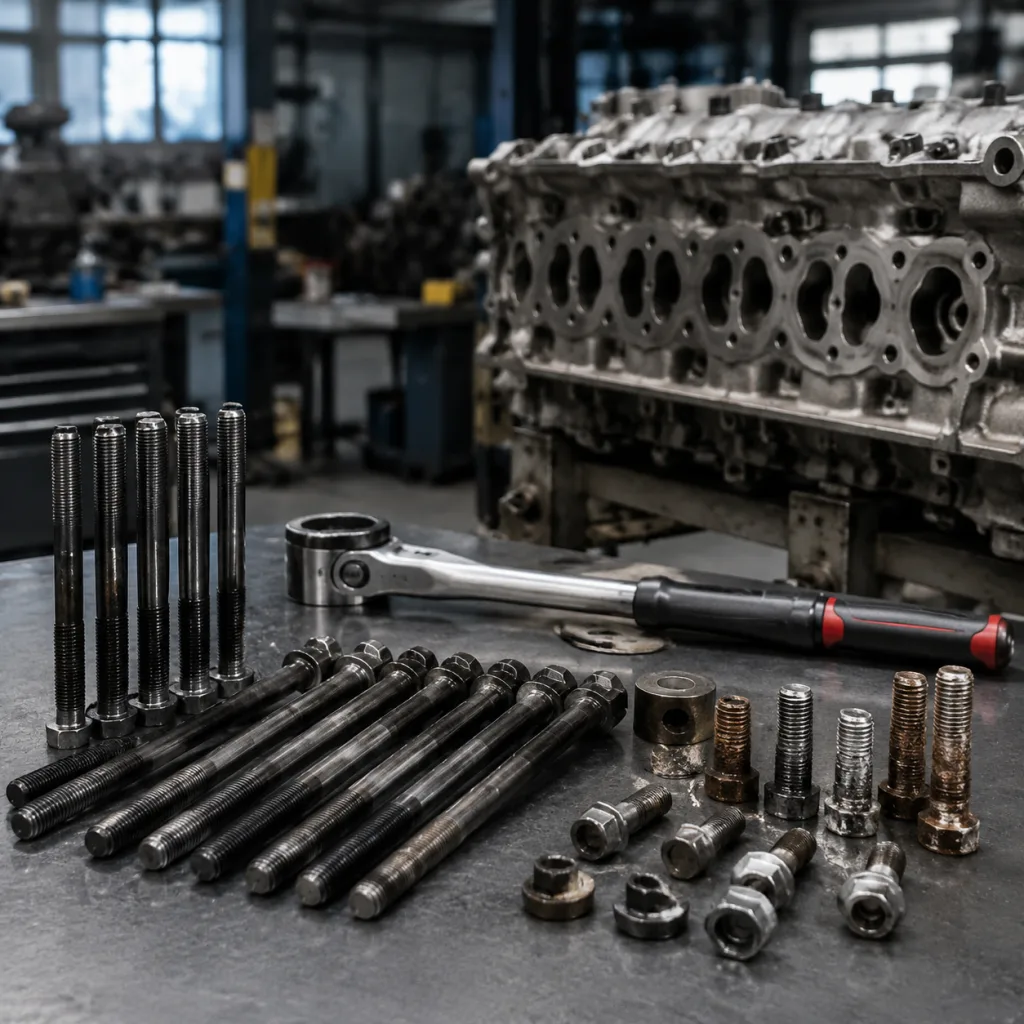
For B2B buyers, a head bolt set is not just another hardware line. When procurement teams search for **head bolt set specifications**, they usually need far more than thread size and pack count. A usable data sheet should define dimensional limits, material condition, coating, friction behavior, validation method, and set content, because cylinder-head clamp load depends on the full joint system, not simply on nominal diameter. This article outlines the details import managers and sourcing engineers should request before approving a supplier or comparing offers. The focus is practical: what belongs on the drawing, what needs to be confirmed in the test report, and which standards are commonly referenced for compliance and process control. The same checks apply whether the requirement is for aftermarket kits, private-label distribution, or an OEM service program. They also help distinguish reusable high-strength bolts from single-use torque-to-yield designs.

In practice, head bolt set specifications sit at the intersection of product engineering, manufacturing control, and sourcing discipline. A quote that looks competitive on unit price can still drive major downstream cost if the supplier cannot hold under-head length, cannot reproduce the released coating friction range, or cannot prove lot traceability through heat treatment and final packing. That is why experienced buyers review the full specification package instead of relying on a short catalog description. The goal is not merely to buy a bolt that fits a thread. It is to buy a validated fastening set that delivers the intended preload consistently across production lots and installation conditions.

Core dimensions buyers should request

Many procurement failures start with an incomplete dimensional callout. A supplier quote based only on `M10 x 1.25` and overall length does not control bearing geometry or installed clamp position. In cylinder-head fastening, small dimensional changes can alter installed stretch, tool engagement, seat pressure, and washer behavior, all of which affect gasket sealing reliability.

At minimum, buyers should request:

  • Thread diameter, pitch, and tolerance class, with the mating thread standard referenced to `ISO 965-1` where applicable.
  • Under-head length and finished tolerance. For many passenger-vehicle programs, buyers expect a controlled window around `±0.20 mm` to `±0.30 mm`, but the released drawing always takes precedence.
  • Plain shank diameter, transition radius under the head, and any waisted-shank geometry used to tune elastic elongation.
  • Head height, drive type, and wrench engagement depth.
  • Washer presence, captive or loose style, outside diameter, inside diameter, and thickness.
  • Seat form at the cylinder-head interface: flat, flange, or washer-bearing.
  • Set content by engine, including the count of long and short bolts in the same kit.

A correct cross-reference depends on the full joint stack, not on thread size alone.

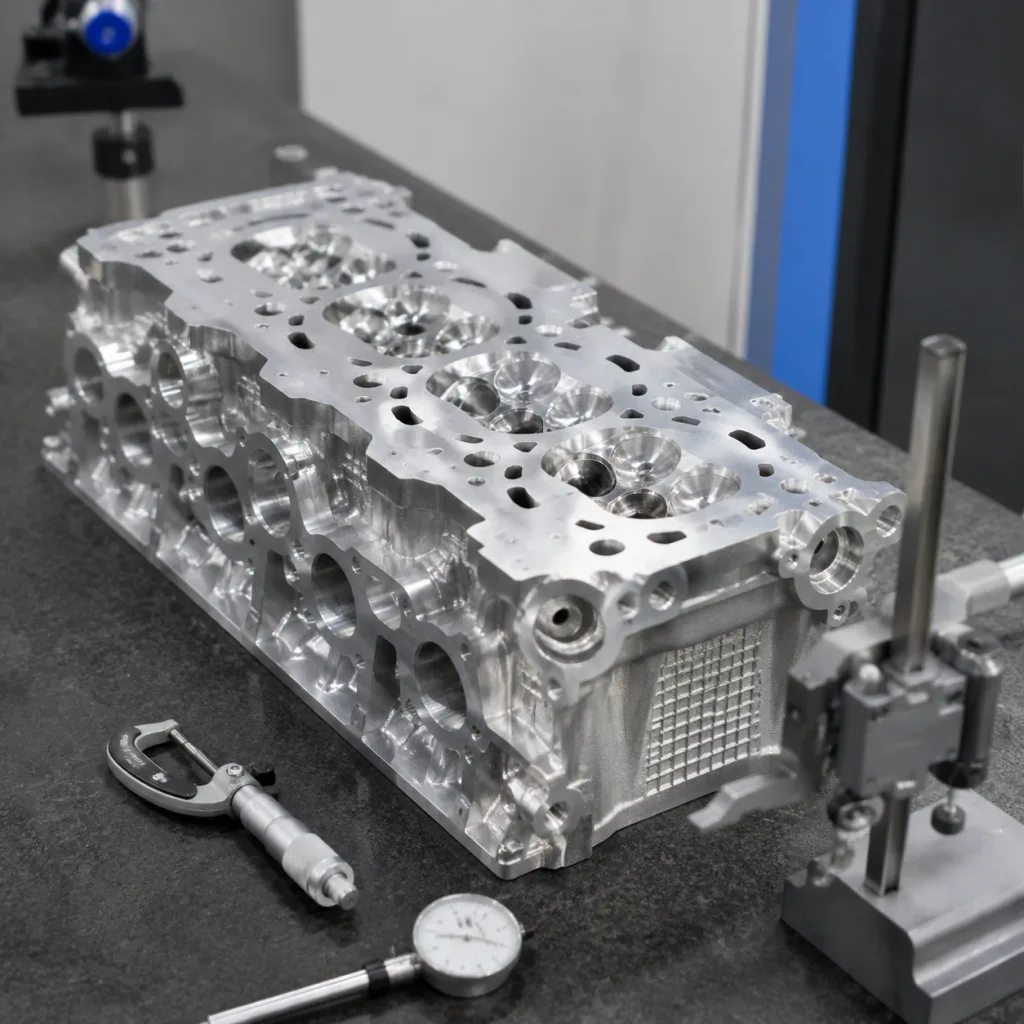
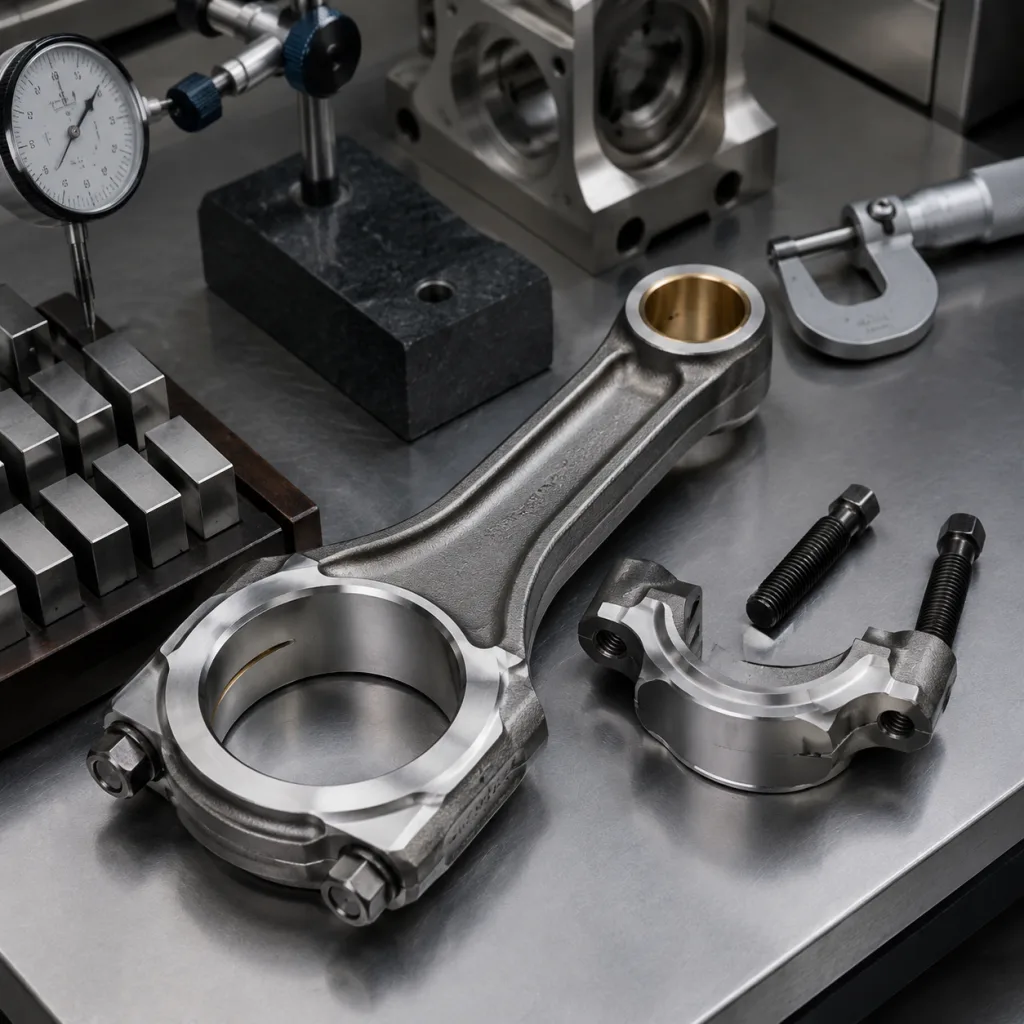
In a complete sourcing package, dimensional control should also identify which characteristics are critical and how they are measured. For example, under-head length may be measured from a defined datum plane rather than with a general caliper check, and the under-head fillet radius may require optical comparator or profile-projector verification if it is a special characteristic. Buyers should not assume every supplier interprets bolt length the same way, especially when drawings combine local conventions with international standards.

The dimensional areas that usually need the closest control are:

1. Thread section: major diameter, pitch, pitch diameter class, thread length, runout, and thread start condition. A short effective thread length can reduce engagement in the block, while excessive runout can interfere with installation or damage the first mating thread. 2. Grip section: plain shank diameter, straightness, and any reduced-shank profile. This section often determines how the bolt stretches under load, especially in torque-to-yield applications. 3. Head and drive: head diameter, flange shape, head height, socket depth, and socket form. A drive depth problem may not show up in a lab inspection, but it can create field complaints when tools cam out or cannot reach specification torque cleanly. 4. Bearing interface: washer thickness, washer hardness, captive retention, and seat flatness. Even when the bolt body is correct, a different washer geometry can change bearing stress and friction. 5. Set composition: exact quantity per engine, any mix of long and short bolts, and any side-specific or location-specific parts.

Where the product is sold as a service kit, the buyer should also confirm whether the kit contains only bolts or also includes washers, sealant-treated fasteners, or installation instructions. In many engine families, one visually similar bolt variant differs only by washer diameter or shank length, and that difference alone is enough to make the kit non-interchangeable.

A strong RFQ or drawing package should therefore identify not only nominal dimensions, but also:

  • Drawing revision and issue date
  • Units of measure
  • Critical-to-function dimensions
  • Inspection method for special characteristics
  • Acceptable substitution rules, if any
  • Engine or cylinder-head application code tied to the set

That level of detail reduces the risk of a supplier quoting a generic standard fastener when the real requirement is a controlled engine-fastener geometry.

Material, heat treatment and surface protection

Material choice influences both tensile capacity and the torque-angle window. Many head bolt sets use quenched and tempered alloy steel, but the procurement file should describe the required mechanical outcome, not just a generic steel name. From a sourcing standpoint, buyers are not purchasing raw bar stock. They are purchasing a finished fastener that must deliver a defined combination of tensile strength, proof stress, ductility, hardness, surface condition, and corrosion performance.

</tr></thead><tbody> </tbody></table>For torque-to-yield designs, friction consistency matters almost as much as strength. If lubrication or topcoat changes, the torque-angle result can shift enough to invalidate the released tightening procedure. Property class alone should never stand in for application validation.

From a B2B sourcing perspective, material and process control should be reviewed in layers.

Base material and chemistry

A supplier should be able to declare the steel grade or internal material specification used for production, together with chemistry control and incoming mill certification. Even when the released purchase requirement references mechanical class rather than a named steel, buyers still benefit from knowing whether the source uses a stable alloy route suitable for high-strength fasteners. Unexpected changes in steel source, cleanliness, or inclusion level can affect fatigue and fracture behavior.

Heat treatment discipline

Heat treatment is often where nominally similar products separate into reliable and unreliable supply. Buyers should ask for:

  • Target hardness range after quench and temper
  • Furnace control method and calibration status
  • Decarburization limits and verification method
  • Temper embrittlement prevention controls where relevant
  • Lot identification linking formed parts to heat-treatment batches

For head bolts, decarburization control is especially important because it can reduce thread flank strength or alter installed preload behavior. Poor quench uniformity can also create lot-to-lot variation in proof load or yield behavior.

Surface finish and friction behavior

Coating is not only a corrosion topic. In engine fasteners, the finish directly affects tightening consistency because input torque is split between thread friction, under-head friction, and useful preload. Buyers should therefore request a declared finish system such as phosphate and oil, zinc flake with integrated lubricant, or another specified coating package. Where the application is sensitive, the supplier should also define the intended total friction coefficient window used during validation. For many critical fastener programs this is controlled within a band such as `µtot 0.08–0.16`, although the released requirement governs.

Useful questions include:

  • Is the lubricant integrated into the topcoat, applied separately, or expected during installation?
  • Does the finish cover both the thread and the bearing face in a controlled way?
  • Is the washer coated together with the bolt, or separately?
  • Has the friction behavior been validated after packing, storage, and transport?

A coating change that looks minor commercially may be major functionally. A zinc-flake system with one lubricant package may behave very differently from phosphate and oil, even if both pass a basic corrosion screen.

Hydrogen embrittlement and plating risk

Where electroplated finishes are proposed for high-strength bolts, buyers should review hydrogen embrittlement control with particular care. The process route, post-plate bake timing, and audit records all matter because delayed brittle failure can occur hours or days after installation. That is why many engine-fastener programs prefer non-electrolytic systems or require strong process discipline under `ISO 4042` or an equivalent customer standard.

Compliance and aftermarket market access

For importers serving the EU, UK, or other regulated markets, the material specification file should also include declarations on restricted substances and chemical compliance. `REACH (EC) No 1907/2006` is commonly requested, and some buyers also ask for statements regarding hexavalent chromium, cadmium, lead, or customer-specific restricted-substance blacklists. These documents may not affect clamp load directly, but they do affect customs acceptance, customer audit readiness, and legal marketability.

In short, complete head bolt set specifications should tie material, heat treatment, and finish into one validated system. A high-strength bolt with uncontrolled hardness, unverified decarburization, or variable coating friction is not equivalent to a properly specified engine-fastener program.

Functional validation before release

A mill certificate is not enough. The release package should show how the supplied set behaves in use, especially if the bolt is a single-use torque-to-yield design. Head bolt set specifications only become meaningful when they are backed by test evidence confirming that the manufactured part matches the drawing, the material requirement, and the intended installation method.

Typical validation points include:

  • `GO/NO-GO` thread gauging, shank diameter, under-head radius, and washer dimensions against the drawing.
  • Tensile, proof-load, and hardness verification to the relevant clauses of `ISO 898-1` and hardness testing such as `ISO 6508-1`.
  • Metallographic checks for decarburization, quench quality, and surface defects at the fillet.
  • Torque/clamp load or torque-angle correlation testing using `ISO 16047` methodology where clamp performance is critical.
  • Coating thickness and corrosion verification. When salt spray is specified, buyers commonly reference `ISO 9227`, while noting that salt-spray hours are a comparative lab test, not a direct service-life prediction.
  • Lot traceability from raw material through heat treatment, coating, and final packing.

For critical programs, many buyers ask for process capability data on special characteristics and a multi-sample tightening study before start of production.

A useful validation plan generally covers three levels: dimensional conformity, material and mechanical conformity, and application performance.

1. Dimensional conformity

Basic inspection confirms that every physical feature in the drawing is present and within tolerance. This should include not only major dimensions, but also features that often drive fit or preload variation, such as:

  • Thread effective length
  • Under-head radius or fillet profile
  • Shank straightness
  • Head socket depth and form accuracy
  • Washer retention force for captive designs
  • Seat-face perpendicularity or flatness where specified

For sourced kits, buyers should also verify that the packaging matches the approved bill of materials. A mechanically correct bolt does not help if the pack contains the wrong quantity of long and short bolts.

2. Mechanical and metallurgical conformity

The next level is proving that the bolt body and thread can withstand the intended load. Test reports should identify the applicable standard, sample quantity, lot number, and acceptance criteria. Depending on the program, buyers may request:

  • Ultimate tensile test results
  • Proof-load test results
  • Yield-related elongation data
  • Hardness values by location
  • Microstructure confirmation after heat treatment
  • Decarburization and carburization checks
  • Surface crack or seam inspection at critical transitions

This is particularly important in high-strength engine fasteners because many failures start at threads, under-head fillets, or other geometry transitions where metallurgical defects are amplified by service loading.

3. Installation and clamp-load performance

For engine head bolts, application testing often decides whether the part is truly acceptable. Two bolts may both pass tensile and hardness tests yet behave differently in tightening if friction differs. That is why torque-angle or torque-tension testing is so valuable. A proper study should define:

  • Mating joint stack and test fixture
  • Lubrication condition
  • Tightening method and sequence
  • Torque stage, angle stage, and acceptance range
  • Number of samples tested per lot or validation round
  • Clamp-load variation observed across the sample set

Where the bolt is torque-to-yield, the study should also confirm that elongation and tightening window match the service specification without premature necking, thread distress, or unstable friction behavior. On critical joints, buyers often expect a statistically useful sample count such as `n=10` to `n=30` per condition for comparative tightening studies, rather than a single demonstration sample.

Corrosion and surface-performance checks

Corrosion testing should be read correctly. Salt spray under `ISO 9227` is useful as a comparative quality check for coating consistency, but it is not a direct prediction of installed engine-bay life. Buyers should therefore use corrosion results together with coating thickness, adhesion, appearance, and friction data, rather than treating salt hours as a stand-alone approval criterion.

Traceability and release discipline

A good validation file links every test back to a specific production lot. That means the supplier can connect:

  • Raw material heat number
  • Forming lot
  • Heat-treatment batch
  • Coating batch
  • Final inspection record
  • Packing date and shipping label

Without that chain, corrective action becomes difficult when a field complaint or incoming inspection issue appears. For established automotive-style programs, buyers may also request PPAP-style documentation, initial sample inspection reports, process flow charts, and control plans. These are not only paperwork requirements; they show that the validated result can be repeated in serial production.

In short, release approval should answer a practical question: not merely *does the bolt meet a catalog description*, but *does this exact production process consistently produce a head bolt set that delivers the required clamp load and fitment in the target engine application*?

RFQ and approval data that reduce sourcing risk

Good RFQs save time later in PPAP and incoming inspection. The best sourcing outcomes usually come from buyers who define the commercial scope and the technical scope at the same time. When head bolt set specifications are vague at the RFQ stage, suppliers naturally fill in the gaps with assumptions, and those assumptions often show up later as price changes, approval delays, or non-conforming samples.

At quotation stage

Provide the engine application, drawing revision, required set count, annual volume, packaging format, label content, Incoterms, and whether the bolts are reusable or torque-to-yield single-use parts. If a standard range is acceptable, review our catalog and the related engine components. If the kit content, coating, or packaging needs to be modified, that normally moves into custom manufacturing.

To make quote comparisons meaningful, the RFQ should also include:

  • Full dimensional drawing or approved sample reference
  • Target mechanical class or performance standard
  • Required coating system and any friction expectation
  • Validation and inspection requirements
  • Packaging quantity per inner box and outer carton
  • Market destination, especially if labeling or compliance rules vary by region
  • Forecast volume, launch timing, and sample timing
  • Whether mixed-length bolts must be packed in a controlled sequence or identified separately

At this stage, buyers should also state whether the program is for aftermarket replacement, private-label resale, service kit supply, or a more tightly controlled OEM-related channel. The commercial and documentation expectations may differ significantly between those channels.

At approval stage

Ask for a ballooned drawing, control plan, material and heat-treatment certificates, coating declaration, dimensional report on critical characteristics, and sample tightening data. For automotive buyers, these controls should sit inside an auditable quality system aligned with `IATF 16949:2016` and `ISO 9001:2015`. If the program will be sold into the EU or UK aftermarket, also confirm chemical compliance documentation and label traceability.

A robust approval checklist often includes:

  • Approved part drawing with revision status
  • Initial sample inspection report or full dimensional layout
  • Mechanical test report by lot
  • Hardness and metallography report where required
  • Coating identification and process declaration
  • Corrosion or coating thickness report if specified
  • Torque-angle or clamp-load study for critical applications
  • Packaging approval sample with label artwork
  • Carton marking standard and traceability format
  • Corrective-action process and escalation contact list

Commercial details that should be fixed early

Many sourcing problems are not purely technical. Buyers should align early on:

  • Whether washers are included, captive, or separate
  • Whether kit labels need vehicle application text, batch code, or barcode format
  • Whether private-label branding changes the pack dimensions or insert requirements
  • Whether the supplier must hold safety stock for mixed-variant kits
  • Whether the quoted price includes validation, tooling, packaging artwork, or one-time test costs

These details matter because a technically approved bolt can still be commercially unworkable if the final pack does not match warehouse handling or customer labeling requirements.

Why this data reduces total sourcing cost

A supplier that cannot define revision status, lot traceability, and test method usually creates avoidable cost at receiving inspection. If commercial terms depend on a non-standard pack or mixed-bolt kit, lock that detail in before you request a quote.

The reason is straightforward: clear RFQs reduce re-quotation, cut engineering clarification loops, lower sample rejection rates, and reduce incoming inspection disputes. For B2B importers and distributors, that translates directly into faster launches, fewer line stops, and lower warranty exposure. Well-defined head bolt set specifications are therefore not just an engineering exercise; they are a sourcing control tool.

Common interchange risks in cross-border supply

Interchange errors usually come from small features missing from the cross-reference file. Common examples include mixed long and short bolt counts within one set, different washer bearing diameters, a missing pre-applied sealant patch, or a change from a reusable design to a torque-to-yield design. Head height and drive depth also matter; a tool-access problem can create field complaints even when the thread and length match.

For import buyers, the practical check is simple: compare drawing revision, set content, tightening method, coating, washer geometry, and traceability label before approving an alternate source. A supplier that states only nominal thread size is not providing enough data for a controlled substitution.

Driventus is an independent aftermarket manufacturer; brand names are referenced for fitment only.

In cross-border sourcing, interchange risk tends to increase when products move between catalogs, languages, regional standards, and multiple production sites. A bolt listed under the same engine family in one market may still differ in installation instructions, coating system, or washer arrangement in another. That is why buyers should treat interchange as a technical validation exercise rather than a simple catalog-matching exercise.

Typical interchange failure points

The following issues appear frequently when an alternate source is approved too quickly:

  • Length mix-up within one kit: long and short bolts are visually similar and can be packed incorrectly.
  • Different washer specification: outside diameter, thickness, or hardness changes can alter seating behavior and torque response.
  • Reduced drive engagement: the socket or external drive form may be too shallow for field tools, leading to rounding during installation.
  • Changed friction system: a new coating or lubricant package changes torque-to-clamp behavior even though dimensions are unchanged.
  • Sealant omission: some fasteners require pre-applied patch or sealant for specific locations.
  • Reuse status mismatch: replacing a reusable design with a torque-to-yield type, or the reverse, can create service failures or incorrect installation practices.
  • Thread tolerance differences: nominal size matches, but class of fit or thread finish does not.
  • Label and traceability inconsistency: the pack lacks the lot coding needed for field containment or warranty analysis.

Why cross-border substitutions are especially sensitive

Global sourcing often introduces additional variables:

  • Different interpretation of drawing notes or translation of engineering terms
  • Local equivalents used in place of customer-nominated process standards
  • Multiple subcontractors handling heat treatment or coating
  • Pack relabeling by trading companies rather than original manufacturers
  • Incomplete transfer of revision history when tooling moves between plants

These factors do not always show up in the nominal specification line of a quotation. They tend to appear later as inconsistent installation feel, variable incoming inspection data, or fitment complaints in the field.

A practical approval method for alternate sources

Before approving interchange, buyers should compare at least these points side by side:

1. Drawing number and latest revision 2. Full dimensional layout, including washer geometry and drive depth 3. Mechanical class and hardness results 4. Heat-treatment and coating process declaration 5. Tightening method used in the service documentation 6. Whether the bolt is reusable or single-use 7. Set composition and inner-pack configuration 8. Lot code structure and carton traceability 9. Validation test method used to approve the alternate source

Where possible, a direct sample-to-sample comparison with tightening trials is preferable to a paperwork-only review. This is especially true for head bolt set specifications because preload behavior is influenced by the full installation system, not just by one dimension on a print.

Managing aftermarket cross-reference risk

For distributors and private-label importers, the safest approach is to maintain an internal cross-reference file that records not only OEM or market numbers, but also the approval basis for each interchange. That file should note:

  • Which drawing or sample was compared
  • Which differences were found and accepted
  • Which validation tests were reviewed
  • Which packaging version was approved
  • Which date and engineer approved the substitution

This creates a defendable sourcing history and helps prevent the same validation work from being repeated or forgotten when volumes increase, labels change, or new factories are added.

The key point is that interchange in engine fasteners is never just about thread size. A controlled substitution requires the same rigor as any other critical sealing joint component.

Frequently asked questions

No. Some applications use reusable high-strength bolts, while others use torque-to-yield bolts designed for controlled plastic elongation during installation. Buyers should confirm the tightening method, reuse status, material condition, and service documentation before approving a substitute.

For process control, buyers commonly look for `IATF 16949:2016` and `ISO 9001:2015`. For the product itself, `ISO 898-1`, `ISO 4042`, `ISO 16047`, `ISO 6508-1`, `ISO 9227`, and `REACH (EC) No 1907/2006` are frequently referenced, depending on the program requirements.

Include the drawing revision, engine application, thread and length data, set content, material target, coating, validation requirements, packaging format, annual volume, Incoterms, and traceability expectations. Without those points, quote comparisons are usually incomplete.

If you need a dimensional review, coating declaration, or private-label packing proposal for a head bolt program, Driventus can support both sample and series supply. Please [request a quote](/contact.html)

Request a Quote
Item What the buyer should see Why it matters
Mechanical property classReference to `ISO 898-1`, often aligned with `10.9` or `12.9` where the application requires itProperty class sets minimum mechanical values; class `10.9` requires `Rm ≥ 1040 MPa` and `ReL/Rp0.2 ≥ 940 MPa`, while class `12.9` requires `Rm ≥ 1220 MPa` and `ReL/Rp0.2 ≥ 1100 MPa`
Heat treatmentQuench-and-temper route, hardness target, and decarburization limitPoor heat treatment increases clamp-loss risk, permanent set, or brittle fracture
CoatingPhosphate and oil, zinc flake, or other declared finishCoating changes corrosion resistance and friction coefficient
Plating controlStatement on hydrogen embrittlement management where electroplating is used, with `ISO 4042` referencedHigh-strength fasteners can fail by delayed fracture if bake-out and process control are weak
Chemical complianceConfirmation against `REACH (EC) No 1907/2006`EU buyers often need this for coating substances and restricted chemicals