Flex Plate vs SKF Alternative: Sourcing Guide for Buyers
Buyers comparing a flex plate vs SKF alternative usually need two things: dimensional compatibility and repeatable supply. For engine and powertrain sourcing, the main questions are not branding but tooth count, bolt pattern, thickness, material grade, concentricity, and balance performance. A flex plate must transfer torque from the crankshaft to the torque converter without excessive runout or cracking at the bolt circle. If the part is being bought as a replacement, the acceptable fit window should be defined against OE dimensions and validated with installation data, not assumptions. Driventus is an independent aftermarket manufacturer; brand names are referenced for fitment only. We manufacture engine and powertrain components in Taizhou, Zhejiang, and export to buyers in 60+ countries under IATF 16949:2016 and ISO 9001:2015 controls. This article compares sourcing factors that procurement teams should review before issuing RFQs or approving an alternative supplier.
What procurement teams should compare
A flex plate is not interchangeable on name alone. Buyers should compare the core engineering variables below before approving a flex plate vs SKF alternative decision.
Factor
What to verify
Why it matters
Outer diameter
Match to bellhousing and starter clearance
Prevents interference
Tooth count
Confirm ring gear count against OE
Ensures starter engagement
Bolt pattern
Crankshaft and converter hole circle
Avoids misalignment
Thickness
Measure at specified datum points
Affects stack-up and converter position
Material
Typically low-alloy steel
Impacts fatigue resistance
Flatness / runout
Check against drawing limits
Reduces vibration and cracking
Surface treatment
Phosphate, anti-rust oil, or coating
Improves storage and transit protection
Balance
Static or dynamic, per application
Lowers NVH and warranty risk
</tr></thead><tbody> </tbody></table>For cross-reference work, use OE data, installation drawings, and sample verification. If the SKU family is broad, start from our catalog and narrow by engine code, transmission type, and OE 06A-style reference where applicable.
Flex plate versus alternative supplier parts
In purchasing terms, an alternative supplier part is acceptable only if it matches fitment, durability, and process control requirements. The label on the carton is not enough.
Topic
Standard flex plate supply
SKF alternative / substitute source
Fitment data
Defined by OE cross-reference and drawing
Must be independently verified
Manufacturing control
IATF 16949:2016, ISO 9001:2015
Ask for documented process control
Traceability
Heat lot and batch traceability
Required for claims and audits
Validation
Dimensional and functional tests
Should include sample approval
Lead time
Depends on stock and tooling
Often varies by distributor model
Change control
Controlled by drawing revision
Must be stated in writing
</tr></thead><tbody> </tbody></table>For fleets and distributors, the practical question is whether the part can be repeated across multiple orders with the same dimensions and surface quality. If the answer is unclear, the supplier is not ready for high-volume procurement.
Key technical checks before ordering
A procurement file should include the following checks before release:
Crankshaft bolt hole diameter and pitch circle diameter
Converter bolt hole location and thread interface, if applicable
Ring gear tooth count and starter engagement depth
Plate thickness and offset from datum surface
Maximum allowable axial runout
Flatness after heat treatment
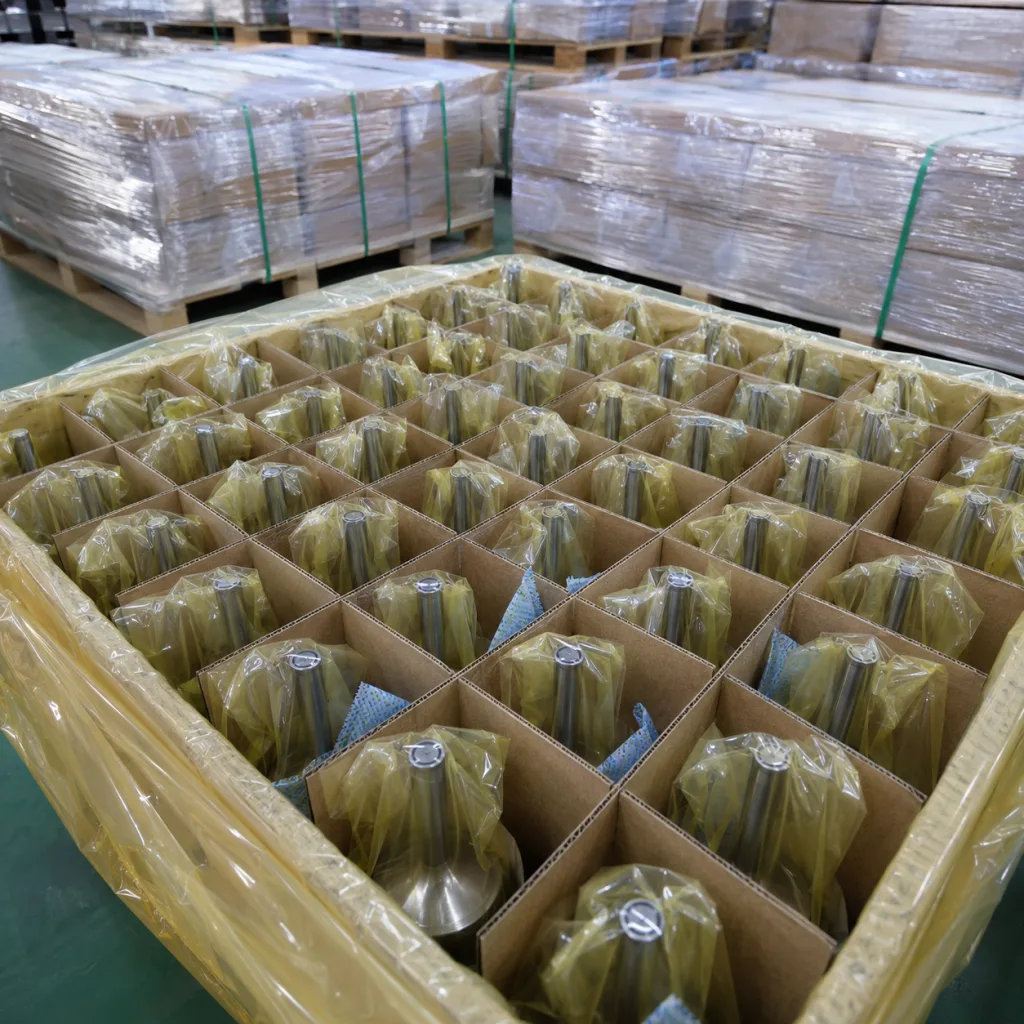
Packaging method to prevent edge damage
Corrosion protection for ocean freight and warehouse storage
Common failure points
The most common sourcing errors are wrong tooth count, incorrect offset, and insufficient runout control. These errors may appear only after installation as starter noise, vibration at idle, or converter engagement issues. If the application is under high thermal cycling, ask for material and heat-treatment documentation, plus dimensional reports from first article inspection.
For buyers comparing suppliers, our quality system page shows the controls used for incoming material, in-process checks, and final inspection. Where a customer needs a non-standard pattern or thickness, our custom manufacturing service can support drawing-based production.
Testing and standards that matter
Flex plates are simple parts geometrically, but they are exposed to repeated cyclic load. Procurement teams should ask for evidence, not general claims.
Relevant standards and references include:
IATF 16949:2016 for automotive quality management
ISO 9001:2015 for general quality management
REACH (EC) No 1907/2006 for EU chemical compliance expectations
SAE J2527 when discussing corrosion testing methods for coated components
ECE R-83 where vehicle emissions-related system fitment may be part of the broader application context
A sensible validation package usually includes dimensional inspection, material certification, surface finish check, and packaging verification. For high-risk programmes, buyers may also request sample installation on a test transmission and post-run inspection for cracks, discoloration, or fretting at the bolt interface.
When to choose replacement stock and when to tool a new part
If the application is common and the OE geometry is stable, replacement stock is usually the fastest route. If the part is discontinued, if the converter pattern has changed, or if the customer needs a private-label programme, tooling a new part may be more practical.
Choose replacement stock when:
OE dimensions are fully documented
The target market requires fast shipment
No design change is needed
The buyer wants low initial commitment
Choose custom tooling when:
The original part is obsolete
The application has regional variants
A new packaging or coating spec is required
The buyer wants control over batch presentation and labelling
1. Confirm OE cross-reference and application code. 2. State the required tooth count, bolt pattern, and thickness. 3. Request material specification and heat-treatment details. 4. Ask for flatness, runout, and balance tolerances. 5. Define coating or rust-prevention requirements. 6. Specify sample quantity, packaging, and label format. 7. Ask for compliance to IATF 16949:2016 and ISO 9001:2015. 8. Request lead time, MOQ, and inspection documents.
A complete RFQ reduces sampling rounds and avoids returns caused by dimensional mismatch. For distributors serving multiple regions, one controlled part number with verified alternates is usually more efficient than multiple unmanaged substitutes.
Frequently asked questions
Not necessarily. The part must match tooth count, bolt pattern, thickness, offset, and runout limits. Brand name alone does not confirm interchangeability.
Ask for dimensional reports, material certification, heat-treatment data, compliance statements, and sample inspection records. For automotive supply, IATF 16949:2016 and ISO 9001:2015 are relevant.
Yes. We support drawing-based production and validation for specified applications. Send the OE data, required tolerances, and target annual volume through /contact.html.
If you need a verified flex plate match or a drawing-based alternative, send your OE data and target volume through our request a quote page at /contact.html.