Engine Surging at Idle: Can an Engine Bearing Cause It?
Idle surge is usually tied to air metering, fuel delivery, ignition, or idle-control strategy—not to a plain engine bearing on its own. That said, worn main, rod, or thrust bearings can lower **hot-idle oil pressure**, upset hydraulically actuated valve timing systems, and introduce torsional or axial instability that shows up as a control problem. For distributors, warranty teams, remanufacturers, and repair chains, that distinction is important. Replacing throttle bodies, injectors, or sensors will not fix excessive crankshaft-bearing clearance, while replacing bearings without confirming oil pressure, journal condition, and oil-circuit cleanliness can lead to repeat failures and repeat returns. This article outlines a practical diagnostic path, explains where bearing damage fits in the fault tree, and summarises what procurement teams should verify before sourcing replacement shells. It is especially relevant when investigating **engine surging at idle engine bearing** complaints, where the symptom points toward control instability but the root cause may sit deeper in the lubrication system. Driventus manufactures engine bearings and related powertrain components under IATF 16949:2016 and ISO 9001:2015 controls. Driventus is an independent aftermarket manufacturer; brand names are referenced for fitment only.
Separate true idle surge from roughness and vibration
True idle surge is a repeating rise and fall in engine speed, usually visible on a tachometer or scan tool as a cyclical fluctuation of about 50 to 200 rpm. Rough idle, single-cylinder misfire, driveline shudder, or mount-related body shake can feel similar from the driver’s seat, but they belong to different diagnostic trees. Plain bearing wear is rarely the first cause of rpm hunting, so the first task is to define the complaint accurately before approving any parts.
In practice, workshop teams should confirm four basics right away: whether engine speed actually fluctuates, whether the fluctuation appears hot or cold, whether it changes with electrical load or A/C demand, and whether the symptom shows up in neutral, drive, or during clutch engagement. Those details quickly separate intake, fuel, and control issues from bottom-end or thrust-related problems.
</tr></thead><tbody> </tbody></table>A genuine surge usually carries a control-system signature. The ECU is opening or closing airflow, fuel, spark, or cam timing in response to a condition it cannot stabilise. Common triggers include unmetered air, incorrect throttle adaptation, a sticking purge valve, biased MAF or MAP signals, unstable EGR flow where fitted, or poor load compensation. By contrast, a worn engine mount, dead cylinder, converter drag, or transmission-related shake can make the vehicle feel unstable while actual rpm stays nearly steady.
This matters because many engine surging at idle engine bearing complaints are misclassified in the field. A customer reports “surging,” but scan-tool data later shows stable idle speed with a vibration complaint instead. If the symptom is really combustion unevenness or mechanical harshness, replacing bearings, throttle bodies, or sensors on assumption becomes expensive and unnecessary.
For warranty analysis, first establish whether the event is a speed fluctuation or a vibration-transfer issue. Log actual rpm, desired rpm, STFT/LTFT, misfire counts, spark correction, VVT target versus actual angle, and oil temperature during the event. That one step rules out many false bearing claims and avoids unnecessary fuel-system replacement.
How bearing wear can contribute indirectly
Main, connecting-rod, and thrust bearings set oil-film clearance and crankshaft location. When clearance moves beyond the engine’s design window, hot idle oil pressure is usually affected first because pump speed is lowest and oil viscosity has already dropped to operating temperature. On engines that use hydraulically actuated cam phasers, timing-chain tensioners, or hydraulic lash adjusters, that pressure loss can slow actuator response and create unstable idle, even though the first visible fault appears in the valvetrain control system.
That is the key distinction. A bearing usually does not command surge directly, but it can create the conditions that make the engine management system hunt for stability. At idle, modern engines operate with narrow airflow and torque margins. If cam phasers do not return consistently to target angle, if a chain tensioner bleeds down, or if lash adjusters collapse intermittently, trapped air mass and combustion stability vary from cycle to cycle. The ECU then corrects idle torque with throttle, spark, fuel, or cam commands, and the driver feels the result as surging.
A second pattern involves contamination. Once overlay material wipes or copper or bronze layer exposure begins, fine particles circulate through oil-control valves, VVT screens, strainers, and solenoids. Contaminated VVT valves can stick intermittently, causing hunting at idle, cam-correlation DTCs, slow phaser return, or unstable commanded versus actual cam angle. In that case, the fault may look electrical or sensor-related even though the root cause began as bearing distress and oil contamination.
A third mechanism is reduced crankshaft support. As bearing clearance increases, oil-film stiffness and shaft stability fall away. Even without an immediate audible knock, increased crank motion can add torsional irregularity at low speed and low oil pressure. Sensitive ECUs may respond by adjusting idle torque reserve, throttle angle, or spark advance more aggressively than normal.
Severe thrust-bearing wear is less common, but on some manual-transmission applications excessive crankshaft end float can upset idle quality during clutch engagement. When the clutch is depressed or released, axial crank movement changes enough to alter mechanical drag, reluctor-sensor relationship, or smoothness. In those cases the complaint may be reported as “idle dips,” “surges when stopping,” or “rpm changes when pressing the clutch,” and thrust clearance should be checked.
It is also important to understand what bearing wear does not normally cause. It does not usually create a classic cold-start flare, purge-induced oscillation, lean surge from a vacuum leak, or a throttle relearn issue after battery disconnection. Those are still far more common than a true engine surging at idle engine bearing root cause.
For that reason, a suspected bearing-related surge should be handled as a lubrication-system and rotating-assembly issue, not as an isolated shell replacement. Replacing shells alone without checking the oil pump, relief valve, pickup, journal finish, housing geometry, and oil-circuit cleanliness often leads to repeat failure. If the oil system cannot maintain pressure and cleanliness at hot idle, both the new bearings and the hydraulic control devices they support remain at risk.
Inspection sequence before authorising parts
A structured inspection path is essential because idle surge can start in the intake, fuel system, ignition system, ECU calibration, valvetrain control, or bottom end. Approving parts too early creates cost and confusion in equal measure. For distributors, repair chains, and fleet maintenance teams, the goal is to prove the failure mode before teardown and then verify all interacting components during teardown.
Non-intrusive checks
Before teardown, record DTCs, freeze-frame data, short- and long-term fuel trim, desired versus actual idle speed, camshaft target versus actual angle, coolant temperature, intake-air temperature, MAP or MAF values, battery voltage, and charging-system behaviour. Then confirm basic mechanical and control condition: intake smoke test, PCV operation, fuel pressure, injector leak-down where relevant, ignition integrity, software calibration status, and throttle adaptation status.
Next, compare cold and hot behaviour. A complaint that appears only at fully warmed hot idle points more strongly toward oil-pressure loss, phaser control loss, or hydraulic component instability. A complaint present immediately on cold start more often suggests air leakage, fuelling, purge, or calibration issues.
Use scan-tool functions where available. If the engine becomes stable with VVT disabled, parked, or locked by the scan tool, measure oil pressure with a mechanical gauge at hot idle and again at 2,500 rpm. Exact limits are OE-specific, but a useful rule is that a healthy engine should show a clear pressure rise with rpm and should not collapse to a marginal value once fully hot. If commanded and actual cam angles diverge only as oil temperature rises, hydraulic control loss becomes much more likely.
Also check whether the symptom changes with accessory load. Turn A/C on and off, switch headlights and blower load, and observe whether the ECU holds idle speed normally. A system that struggles mainly when hot and unloaded can fit the pattern of marginal oil pressure affecting phaser or tensioner stability.
Teardown checks
If oil pressure is below the OE workshop limit, cut open the oil filter, inspect the sump, and check for lead/tin, aluminium, or copper-coloured debris. Do not rely on drained-oil appearance alone; fine metallic material is often trapped in the filter element, oil cooler, and galleries. If the pickup strainer is restricted, record debris type and approximate loading before cleaning.
Measure crankpin and main-journal diameter, taper, and out-of-round with a micrometer. As a general metrology standard, journal taper and out-of-round should be assessed in multiple clock positions and at both journal ends, typically to 0.001 mm or 0.0001 in instrument resolution. Measure housing bores with a dial bore gauge, then calculate installed clearance from actual dimensions rather than relying only on Plastigage. Also inspect thrust faces, oil-pump body and rotor wear, pressure-relief valve condition, block alignment, connecting-rod big-end condition, cap fretting, and housing distortion.
Inspection should extend beyond the bearings themselves. Check cam-phaser screens, oil-control solenoids, chain tensioners, and lash adjusters for contamination. If the initial complaint was engine surging at idle engine bearing related, these secondary components may hold the evidence showing why the symptom appeared before obvious knock, seizure, or catastrophic oil-pressure loss.
Decision points before parts approval
Authorise bearings only after answering the following questions:
1. Was low oil pressure confirmed with a mechanical gauge? 2. Is there physical evidence of bearing distress such as wiped overlay, scoring, copper exposure, heat discolouration, fatigue, or embedded debris? 3. Are crankshaft journals reusable at standard size, or do they require grinding or replacement? 4. Are housing bores within specification, or is line-bore correction required? 5. Has the oil pump and pressure-relief system been inspected and approved for reuse? 6. Has the full lubrication circuit, including cooler and galleries, been cleaned or replaced as required? 7. Has crankshaft end float been checked where clutch-related idle change is reported?
A new bearing set will not survive if the crankshaft needs grinding, the line bore is distorted, the pickup is partially blocked, or the oil cooler still contains metallic debris. For claim control and repeatability, retain pressure readings, dimensional records, debris photos, and teardown images in the job file before authorising replacement stock.
What buyers should verify in replacement bearings
For procurement teams approving replacement stock, the bearing deserves the same scrutiny as the failed engine. Bearing shells are precision components, and small variations in wall thickness, eccentricity, crush, spread, surface finish, or cleanliness can change oil-film behaviour at hot idle. That matters directly when a programme has a history of low-pressure or idle-stability complaints.
Ask suppliers for a control plan covering the points below.
Material system: bi-metal or tri-metal construction matched to duty cycle, contamination risk, specific load, shaft hardness, and expected lubricant quality.
Wall-thickness control: shell-thickness consistency and pair matching so installed clearance stays within drawing limits and does not vary by lot or branch stock.
Geometry: crush height, free spread, eccentricity/profile, parting-line relief, oil-hole and oil-groove location, locating feature accuracy, and tang geometry where applicable.
Surface integrity: burr-free oil holes, controlled surface roughness, clean overlay finish, correct chamfering, and no handling damage at edges or parting faces.
Cleanliness and traceability: batch identification, retained inspection records, particulate control aligned with ISO 16232 where specified, and lot traceability through packing and dispatch.
Compliance documentation: current IATF 16949:2016 and ISO 9001:2015 status, plus material declarations aligned with REACH (EC) No 1907/2006.
In addition to the shell itself, buyers should verify fitment discipline. Confirm whether the application requires standard, undersize, selective-fit, or colour-coded grades. Cross-check catalog data against OE revisions, service bulletins, and crankshaft grind availability. Many field issues are not manufacturing defects but specification errors: wrong grade, mixed half-shells, incorrect thrust width, or a superseded application using an earlier design.
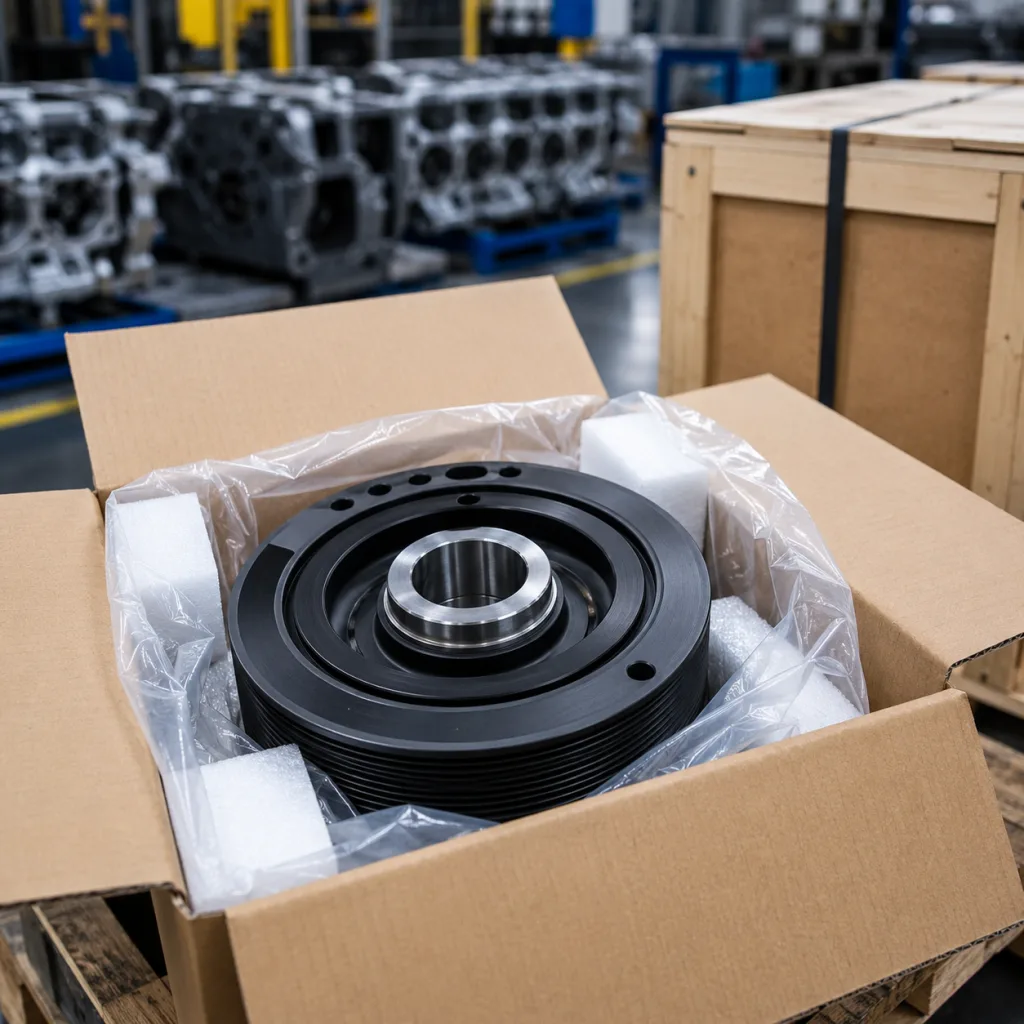
Packaging quality also deserves attention. Bearings can be dimensionally correct yet still fail in service if packaging allows edge damage, shell mixing, corrosion, or contamination before installation. Ask whether upper and lower halves are clearly identified, whether size markings remain visible after repacking, whether anti-corrosion protection suits warehouse and export conditions, and whether carton design prevents shell movement in transit.
Where fleets or distributors see repeated hot-idle complaints, request returned-part analysis with journal photos, shell-contact patterns, actual clearance measurements, and oil-condition findings. That separates genuine product issues from lubrication neglect, incorrect oil viscosity, contamination, housing misalignment, crankshaft reuse outside limit, or poor assembly cleanliness.
For higher-volume sourcing, it is sensible to request PPAP-style evidence or equivalent sample documentation even in the aftermarket. Useful records include capability data for wall thickness, bore-contact checks, raw-material certification, overlay or coating verification where applicable, and formal change-control procedures. If a supplier changes substrate source, overlay process, packaging method, or plant location, procurement should know before serial deliveries continue.
In short, buyers investigating engine surging at idle engine bearing cases should not treat bearings as generic commodities. The right source combines dimensional consistency, contamination control, lot traceability, application accuracy, and technical support for field analysis.
When replacement is justified and how to source it
If low oil pressure, wiped overlay, scoring, or exposed copper is confirmed, replace bearings only after the crankshaft, oil pump, and lubrication circuit have either passed inspection or been corrected together. On many programmes, a matched service kit is the lower-risk option because it reduces split sourcing, packaging errors, and fitment disputes across branches.
Replacement is justified when evidence shows the bearing has moved outside its functional window, not simply because the engine has an idle complaint. Typical justification points include hot-idle oil pressure below OE specification, measurable excess clearance, visible fatigue or wiping, metallic debris in the filter, journal damage, abnormal thrust wear, or corroborating cam-control instability linked to oil-pressure loss.
Where journals remain reusable, the sourcing decision should confirm exact size, grade, and material system before order release. Where the crankshaft requires grinding, buyers should ensure the corresponding undersize bearing is available and that the grinding specification, surface finish, fillet radius condition, and post-grind cleaning process are controlled. If housings are distorted or caps have fretted, the repair scope may require line boring, rod resizing, or component replacement rather than a simple shell installation.
For distributor networks and multi-branch repair groups, the lowest-risk sourcing model usually includes:
application-specific coverage with verified interchange data
consistent lot traceability for every pack shipped
clear labelling for size, grade, and fitment orientation
technical support for dimensional questions before fitment
returned-part analysis support for claim review
packaging that prevents shell mixing, corrosion, and transport damage
It is also good practice to source related service items at the same decision point: thrust washers where separate, oil pump or pump kit, pickup tube or strainer if contaminated, gasket set, fasteners where torque-to-yield applies, assembly lubricant, and oil or cooler cleaning provisions. This reduces the risk that a correct bearing replacement is undermined by a contaminated cooler, restricted pickup, or unreplaced wear source.
Driventus supplies engine bearings and related items through our catalog and our engine components range. Buyers reviewing process controls can see our quality system, and teams needing private-label or drawing-based adaptations can review custom manufacturing. Driventus is an independent aftermarket manufacturer; brand names are referenced for fitment only. For application review, packaging options, dimensional discussion, or support on a recurring engine surging at idle engine bearing case, use request a quote.
Frequently asked questions
Yes, but usually only indirectly. The common pathway is excessive bearing clearance causing low **hot-idle oil pressure**, which then affects VVT phasers, hydraulic lash adjusters, or timing-chain tensioners. That can create unstable cam timing and idle hunting before an obvious knock develops. If oil pressure is normal and there is no metallic debris, inspect air leaks, fuelling, ignition, and control calibration first.
Collect hot-idle and 2,500 rpm oil-pressure readings from a mechanical gauge, scan data showing desired versus actual idle and cam angle, oil grade and service history, photos of journals and shell location, oil-filter debris findings, and actual clearance measurements from teardown. Without that evidence, it is difficult to separate material issues from oil starvation, contamination, misassembly, or housing/journal geometry problems.
Ask for certification status, dimensional inspection records, material declarations, cleanliness and traceability procedures, packaging controls, and returned-part analysis support. For higher-volume programmes, also request PPAP-style sample records, capability data for wall thickness or geometry features, and a formal change-control process before approving serial supply.
If you are qualifying replacement bearings for distributor stock or analysing repeat idle-stability claims, Driventus can review drawings, inspection data, and packaging requirements with your team. Send the application list or failure details via [request a quote](/contact.html)