Engine Mount vs King Alternative: Sourcing Comparison
For procurement teams, the question is bigger than whether an engine mount appears to match a catalogue listing. The real issue is whether it can be produced consistently to the required geometry, rubber performance, and validation standard. When buyers compare an engine mount vs king alternative, the core checks are OE reference accuracy, mounting-hole centre distance, bracket offset, installed height, elastomer hardness, dynamic stiffness, rubber-to-metal bond strength, and application coverage by engine code, transmission, and mount position. A weak match can lead to idle NVH complaints, driveline knock, premature cracking, warranty exposure, or installation delays across a service network. The right sourcing choice should align with OE dimensions, material specification, static and dynamic load requirements, surface protection, and the documentation your market requires. Driventus is an independent aftermarket manufacturer; brand names are referenced for fitment only. We produce engine and powertrain components in Taizhou, Zhejiang, and supply B2B customers in more than 60 countries under IATF 16949:2016 and ISO 9001:2015 systems.
What buyers mean by engine mount vs king alternative
In procurement language, this comparison usually describes two sourcing paths for the same vehicle application: a direct-fit engine mount replacement or a king alternative. In this context, a king alternative is a substitute or cross-reference part selected to cover the same OE fitment when the original reference is unavailable, backordered, commercially unattractive, or unsuitable for a regional stocking programme.
That label should never be treated as proof of interchangeability. A direct-fit engine mount is expected to reproduce the OE installation points and functional behaviour as closely as possible. A king alternative may work as a commercial cross-reference, but it still needs to be checked against the exact engine code, transmission type, body configuration, drivetrain layout, and mount position. For distributors, the risk is simple: a part can look correct in a catalogue and still behave differently once installed under engine load and torque reaction.
The decision should rest on measured fitment data, not label claims or visual similarity. For this category, buyers should verify:
Bracket offset, bend angle, welded joint location, and installed orientation
Free height, compressed working height, and any hydraulic or voided rubber design features
Engine-side and chassis-side contact surfaces, including washer and spacer interfaces
Elastomer hardness, normally specified as Shore A with an agreed tolerance band
Rubber compound type and resistance to oil mist, coolant, ozone, heat ageing, and fatigue
Rubber-to-metal bond integrity around sleeves, inserts, and high-load edges
Static load direction, torque reaction control, and fore-aft engine movement limits
Clearance around exhaust, turbocharger, subframe, steering, cooling, and accessory components
Surface protection on brackets, studs, sleeves, and exposed fastener areas
If the application list includes an OE reference such as OE 06A107065, the substitute should match the critical geometry and functional load path, not only the catalogue description. A part can look similar and still fail in service if the rubber modulus, bracket angle, insert position, or compressed height is wrong. In a B2B sourcing decision, those details can affect installation time, engine alignment, vibration transfer, and the number of returned units in the first months after launch.
Side-by-side comparison for procurement teams
Criteria
Direct-fit engine mount
King alternative
Fitment control
High when OE dimensions and mount position are confirmed
Depends on cross-reference accuracy and application notes
Installation risk
Lower if hole centres, bracket offset, and installed height are verified
Higher if geometry or load path differs from the OE mount
NVH performance
More predictable when rubber hardness and dynamic stiffness are controlled
Can vary by compound, void design, stiffness curve, and bracket geometry
Supply continuity
May depend on one OE reference, one tool, or one validated supplier
Useful for shortages, regional substitutions, and line-stop protection
Validation effort
Moderate when the application is well documented
Higher; needs extra dimensional, material, and functional review
Cost position
Often higher for exact-match programmes and tighter documentation
Can be lower at unit level, but returns and revalidation can remove the saving
Inventory strategy
Best for stable, high-confidence applications
Useful for broader coverage when fitment limits are clearly controlled
Customer support burden
Lower when fitment is proven by engine code and position
Higher if application notes are incomplete or overly broad
</tr></thead><tbody> </tbody></table>For purchasing teams, the main trade-off is certainty versus flexibility. A direct-fit part is usually easier to approve for service networks, export programmes, fleet repair contracts, and warranty-sensitive customers because the fitment evidence is clearer. A king alternative can reduce supply risk and protect availability during shortages, but only when the supplier provides controlled drawings, material data, fitment notes, batch traceability, and a defined change-control process.
The sales and installation channel also matters. A wholesale distributor may accept a broader alternative if the catalogue notes clearly specify engine code, transmission, production year, and mount position. A repair chain may prefer a narrower direct-fit listing because technicians need predictable installation and fewer support calls. A fleet operator may care more about service life, NVH consistency, and repeatable availability than the lowest unit price.
For buyers managing mixed inventories, it helps to separate catalogue cross-reference from engineering equivalence. A cross-reference shows that two parts may serve the same application; engineering equivalence shows that dimensions, material behaviour, installation geometry, surface protection, and load management are close enough for the intended market. Our catalog should be checked against the application list, and final approval should use measured samples, trial installation, and inspection records, not photo comparison.
Technical points that affect durability
Engine mounts tend to fail for familiar reasons: heat ageing, oil contamination, rubber cracking, compression set, bond separation, corrosion of metal parts, and overload from poor drivetrain alignment. Because a mount controls both engine position and vibration transfer, even a small specification change can create a noticeable difference in service performance.
Key specification checks
Rubber hardness: specify the target Shore A range for the application and confirm whether hardness is checked on production batches, not only on development samples
Dynamic stiffness: review stiffness under operating frequency and load, because two mounts with the same Shore A hardness can transmit very different idle vibration
Rubber compound: review resistance to heat ageing, ozone cracking, oil mist, coolant exposure, and fatigue cycling
Metal gauge and weld quality: thin brackets, poor weld penetration, or inconsistent bracket forming can deform under torque reaction and shift engine position
Bonded construction: verify adhesion between elastomer and insert, especially on loaded edges, sleeves, and stamped-metal interfaces
Static and dynamic load control: confirm the mount holds engine position during acceleration, deceleration, idle, gear engagement, and engine braking
Compression set: check whether the rubber maintains working height after sustained load and elevated temperature exposure
Corrosion protection: zinc plating, e-coat, powder coating, or equivalent surface treatment should match the road-salt and humidity exposure environment
Dimensional repeatability: confirm that hole centres, sleeve length, stud height, bracket offset, and bushing position remain stable across batches
Temperature resistance: especially for turbocharged engines, tightly packaged engine bays, and mounts near exhaust manifolds or downpipes
NVH performance deserves its own review. A mount that is too soft may allow excessive engine roll, driveline knock, exhaust contact, or interference with surrounding parts. A mount that is too stiff may transmit idle vibration into the cabin and create customer complaints even if it does not physically fail. Rubber hardness alone is not enough; buyers should also evaluate dynamic stiffness, mount geometry, void orientation, and the direction of load transfer.
Published standards still matter. For general quality control, buyers should expect IATF 16949:2016 and ISO 9001:2015 process discipline. For rubber and bonded assemblies, the RFQ should state the applicable customer test methods for hardness, heat ageing, compression set, bond strength, corrosion resistance, and dimensional inspection. For materials compliance in Europe, REACH (EC) No 1907/2006 should be part of the documentation pack where applicable. If a programme requires fleet testing context, special customer validation, or market-specific durability evidence, define the acceptance criteria before sample approval.
How to evaluate an alternative supplier
A substitute mount should be reviewed as an engineering item, even when it is sold as aftermarket stock. The supplier needs to prove not just that the mount can be produced, but that it can be produced repeatedly with the same geometry, material behaviour, and packaging protection. For B2B buyers, this is the difference between a one-time sample match and a stable supply programme.
The minimum supplier file should include:
1. Dimensional drawing with tolerances for critical features such as hole centres, sleeve length, stud height, bracket offset, and installed height 2. Material declaration for rubber, steel, aluminium, studs, sleeves, adhesives, and coatings where applicable 3. Rubber hardness target and acceptable Shore A range 4. Surface finish specification for brackets, sleeves, fastener areas, and corrosion-exposed edges 5. Batch traceability method from rubber compound and metal components to finished goods 6. Sample inspection report with measured values, measuring tools, and inspection date, not only pass/fail comments 7. Salt spray, coating thickness, or corrosion data where relevant to the destination market 8. Packaging specification for export handling, carton strength, palletisation, moisture protection, and warehouse storage 9. Application list with OE references, engine codes, transmission notes, production years, drivetrain layout, and mount position 10. Change-control process for tooling, rubber compound, adhesive, surface treatment, or sub-supplier changes
If your team is comparing suppliers across regions, ask for PPAP-style evidence or equivalent first-article documentation. At minimum, the supplier should be able to show how samples were measured, which dimensions are controlled in production, how nonconforming parts are segregated, how inspection gauges are calibrated, and how batch records are retained. This is especially important when the part will be sold under a private label or used in a national repair network.
Before approving an engine mount vs king alternative sourcing route, run a structured review: compare OE sample measurements, inspect the alternative sample, perform a trial installation where possible, check clearance under load, confirm fastener engagement, and review packaging after simulated transport. For complex applications, Driventus can support custom manufacturing when the catalogue part does not fully match a target fitment.
A practical sourcing rule is worth keeping close: if the alternative changes the load path, rubber formulation, installed height, bracket angle, sleeve position, or fastener interface, treat it as a new validation item rather than a simple swap. That avoids the common mistake of approving an alternative based on catalogue overlap while missing the engineering differences that drive field complaints.
When the lower-cost option is not the lower-risk option
A cheaper mount can raise total cost when it causes rework, warranty claims, installation delays, or customer complaints about vibration at idle. Purchase price is only one part of landed cost. Procurement teams also need to account for inspection time, sample testing, rejected shipments, return freight, technical support, and loss of customer confidence if the part creates repeat problems.
In fleet and workshop channels, the hidden cost usually appears in three areas:
Additional labour for repeat installation, diagnosis, or drivetrain alignment checks
Increased stock holding to cover uncertain returns, revised fitment notes, or mixed application coverage
Complaints linked to cabin shake, steering wheel vibration, gear engagement shock, exhaust contact, or driveline thump
The risk grows when a single SKU is expected to cover multiple applications. The same OE reference may appear across related vehicle platforms, but mount requirements can change with engine code, transmission type, drivetrain layout, production year, or market-specific body configuration. A cross-reference should never be approved on vehicle badge alone. Use engine code, transmission type, chassis details, production range, and mount position as the minimum matching set.
For multi-location repair chains, standardisation is critical. Technicians need parts that install without slotting holes, grinding brackets, changing fasteners, or adding unapproved spacers. Service managers need a clear fitment list, and procurement teams need predictable returns data. If one alternative produces even a small increase in comebacks, the savings from a lower unit price can disappear quickly. In export distribution, the same issue can be amplified by long return cycles, high freight cost, and limited technical feedback from end users.
A better cost model should include unit price, freight efficiency, packaging durability, sample approval time, expected return rate, inspection workload, documentation level, and availability over the programme life. If your buying team needs broader supply coverage for engine and powertrain parts, review our catalog and the related engine components page before placing a bulk order.
What Driventus can supply for this category
Driventus manufactures engine and powertrain components in Taizhou, Zhejiang, with export support for aftermarket distributors, OEM and Tier-1 programmes, private label customers, and repair networks. Our production and inspection workflow is built around documented process control, incoming material checks, in-process inspection, final release records, and traceable export documentation.
For procurement teams comparing engine mount vs king alternative options, that support covers the areas that usually determine whether a sourcing programme runs smoothly:
Controlled batch traceability from incoming rubber, metal, adhesive, and coating materials to finished goods
Dimensional verification for brackets, sleeves, studs, bushings, fastener interfaces, and rubber-metal assemblies
Material review for rubber hardness, fatigue resistance, bonding performance, and surface protection
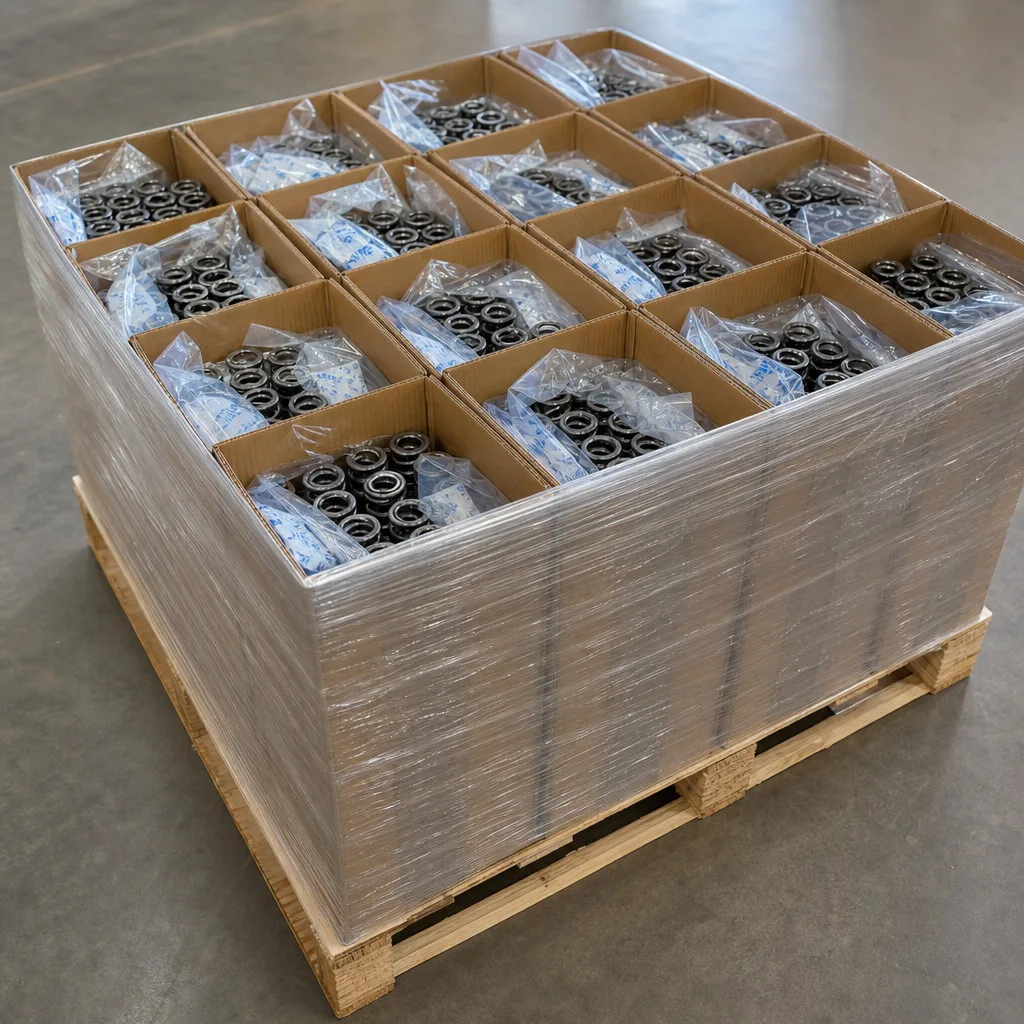
Export-ready packaging options for carton, pallet, and mixed-container supply
Engineering support for cross-reference review, OE reference matching, and application confirmation
Sample support before bulk approval, including measured inspection records where required
Private label or programme-specific support for distributor and repair-network channels
Assistance with catalogue development when buyers need multiple OE references consolidated responsibly
Our role is to help buyers reduce fitment uncertainty and supply risk. If a catalogue part matches the target application, we can provide sample, price, lead-time, and documentation review. If the target application requires a change in geometry, compound, bracket design, coating, or packaging, we can discuss a custom route and define the validation steps before tooling or bulk purchase decisions.
We do not claim vehicle manufacturer approval or endorsement. Driventus is an independent aftermarket manufacturer; brand names are referenced for fitment only. To review certificates, inspection scope, and quality procedures, see our quality system. If you are comparing supply options for a direct-fit mount or an alternative reference, use request a quote for sample, price, and lead-time information. Include OE reference, vehicle application, engine code, transmission type, mount position, target annual volume, packaging requirements, and destination market so the sourcing review can be handled accurately.
Frequently asked questions
Not always. A replacement should match the OE fitment and function closely. An alternative may cover the same application, but it still needs dimensional, material, installation, and load-path verification before approval.
Ask for drawings, tolerances, material details, Shore A rubber hardness range, surface finish, batch traceability, application notes, packaging specification, and sample inspection records. For regulated markets, also request compliance documents such as REACH where applicable.
Yes. We support custom manufacturing for buyer-specific requirements, including geometry changes, rubber compound review, packaging, private label support, and cross-reference development for export programmes.
If you are comparing fitment, pricing, and validation requirements for a new programme, send your OE reference, engine code, mount position, and sample request through /contact.html.