Engine Mount Replacement Price: B2B Cost Guide
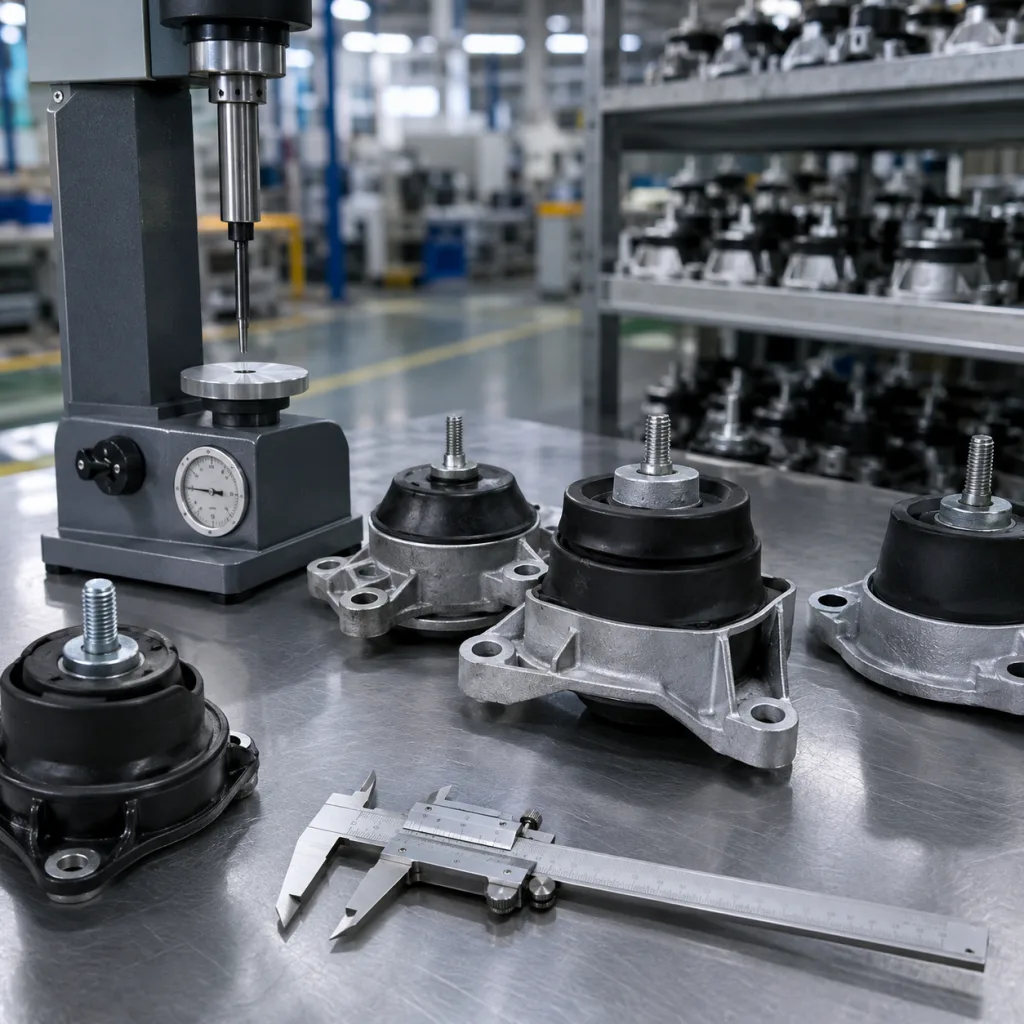
Engine mount replacement price is often framed as a retail repair bill, but procurement teams need a broader cost model. The installed total is shaped by mount design, rubber compound, hydraulic or vacuum-control features, bracket geometry, vehicle access time, regional labour rates and warranty exposure. For distributors and repair chains, a low unit price can become costly when poor NVH isolation, short fatigue life or inconsistent bolt-hole alignment lead to returns and technician rework. For OEM and Tier-1 sourcing teams, the key question is whether the supplier can maintain dimensional, material and process controls across repeat production lots. This guide reviews the main cost drivers behind engine mount replacement programmes, including part categories, validation expectations, sourcing terms and landed-cost checks. Driventus manufactures engine and powertrain components in Taizhou, Zhejiang, under IATF 16949:2016 and ISO 9001:2015 systems for B2B customers in 60+ countries.
What Drives Replacement Cost
For buyers managing engine mount lines, replacement cost should be separated into three layers: the component itself, the installation work and the commercial risk if the part fails or fits poorly. A workshop invoice may show only parts and labour, but a distributor or repair chain also carries returns handling, repeat repairs, customer downtime, warranty administration and inventory write-off risk.
Typical direct cost factors include:
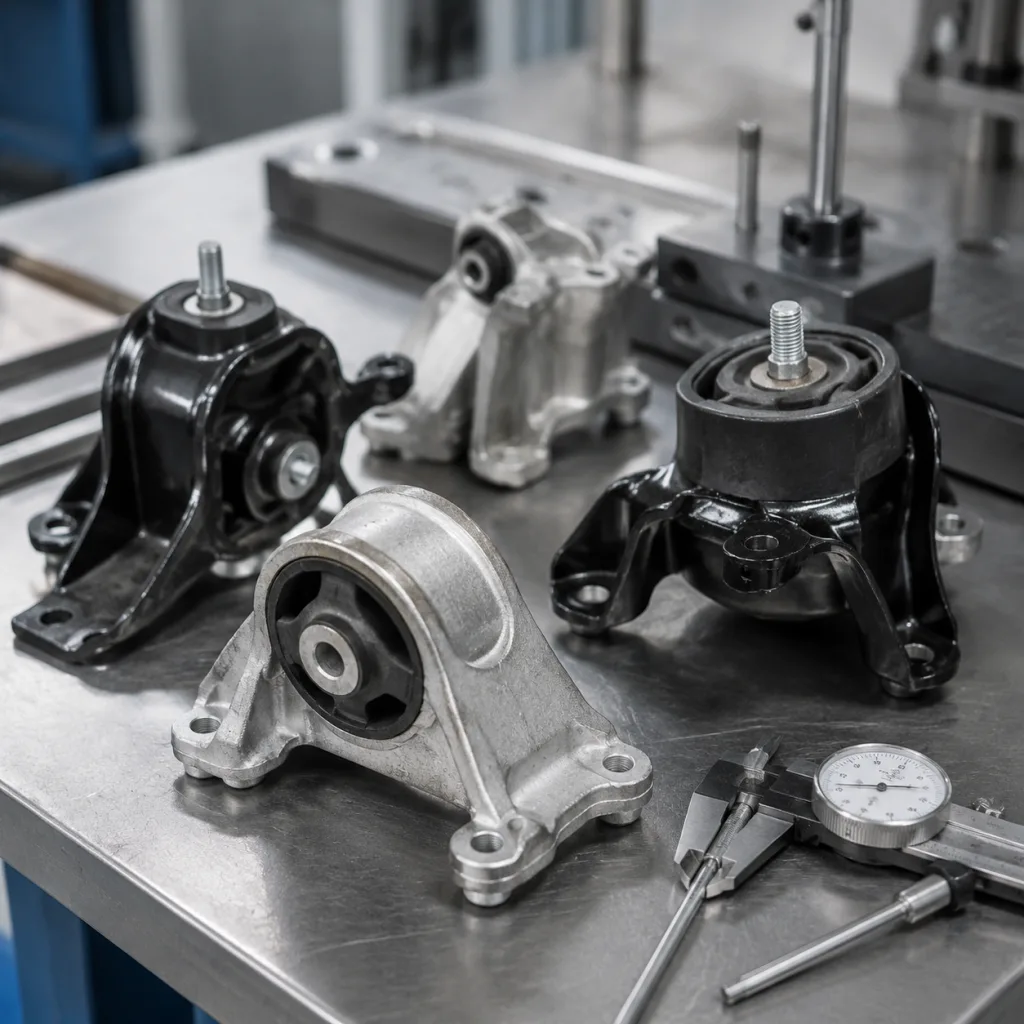
- Mount design: conventional rubber-metal mounts are normally lower cost than hydraulic, vacuum-controlled or electronically controlled mounts.
- Material specification: natural rubber, synthetic rubber blends, aluminium brackets, steel shells and bonded inserts all affect price.
- Dimensional complexity: multi-axis brackets, tight sleeve concentricity and integrated limiters increase tooling, gauging and inspection time.
- Vehicle access: transverse engines, subframe interference and crowded engine bays can add labour hours.
- Regional labour rate: workshop rates in the EU, UK, US, Canada and Australia vary widely, often by more than the part-cost difference.
- Warranty policy: longer trade warranty expectations require stronger fatigue validation, process traceability and corrective-action support.
A practical procurement benchmark should measure cost per successful installation, not only ex-works part price. A mount that is 12% cheaper on the quote but creates fitment complaints, idle vibration or early NVH returns can raise the total programme cost.
Indicative Cost Ranges by Mount Type
The following ranges are indicative for B2B planning and should not be treated as retail price promises. Actual costs depend on vehicle platform, annual volume, Incoterms, tooling status, packaging, validation scope and whether the item is supplied as a rubber-metal mount only or as a complete bracket assembly.
| Mount type | Typical part-cost position | Common labour impact | Main procurement risk |
|---|---|---|---|
| Conventional rubber-metal mount | Low to medium | Low to medium | Rubber hardness drift, bond failure, dimensional variation |
| Hydraulic engine mount | Medium to high | Medium | Fluid leakage, damping mismatch, membrane fatigue |
| Torque strut / dogbone mount | Low to medium | Low | Bushing void geometry, sleeve alignment, noise transfer |
| Transmission mount | Low to medium | Medium | Bracket tolerance, load-path mismatch |
| Active or vacuum-controlled mount | High | Medium to high | Control function, leakage, connector or hose interface |
| Parameter | Typical control method | Procurement relevance |
|---|---|---|
| Rubber hardness | Shore A durometer check | Controls NVH feel and load deflection |
| Bond strength | Rubber-to-metal adhesion test | Reduces separation risk under torque load |
| Dimensional fit | CMM, gauges, fixture inspection | Reduces installation complaints |
| Corrosion protection | Salt spray or coating verification | Important for UK, EU, Canada and coastal markets |
| Fatigue durability | Cyclic load testing | Supports warranty and repair-chain use |