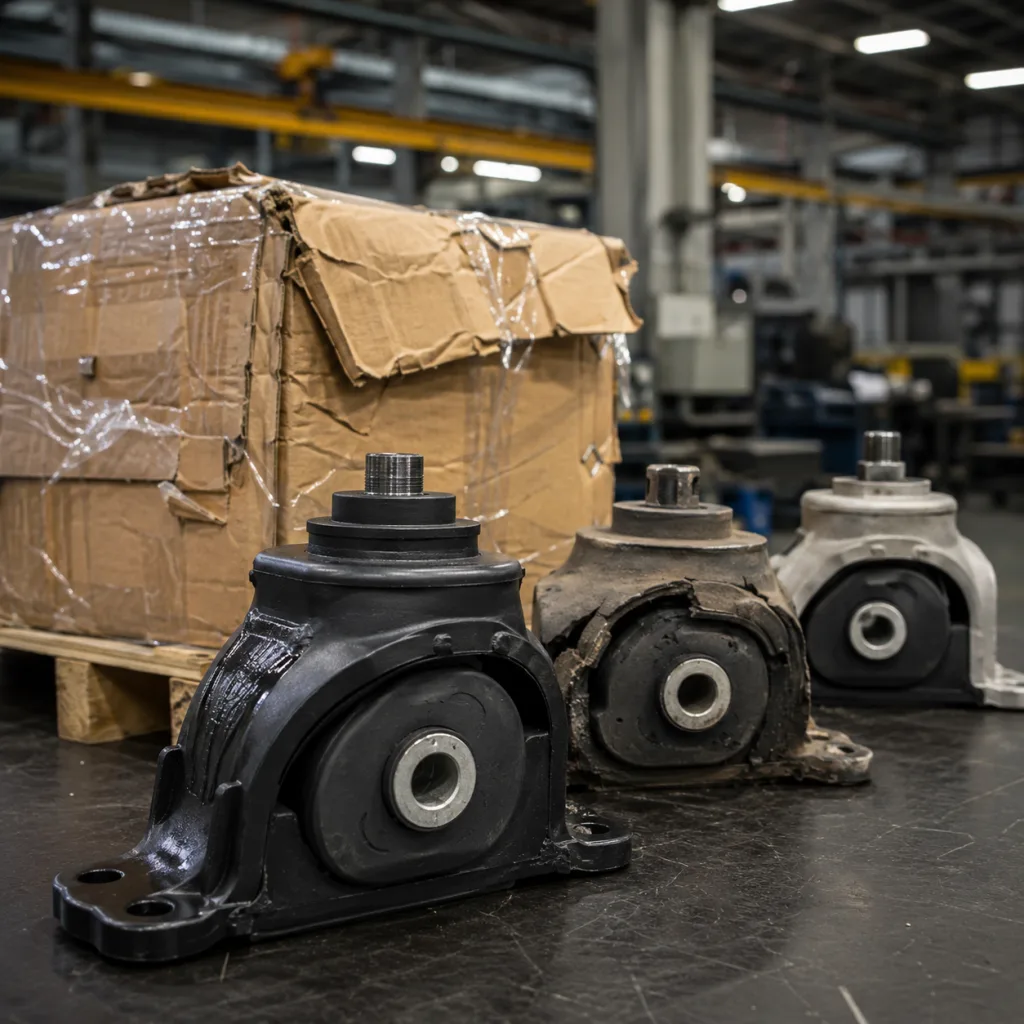
Choosing an engine mount Jaguar supplier is not a catalogue exercise. The buyer is really choosing how tightly the supplier can control rubber-to-metal bonding, bracket geometry, elastomer traceability and damping consistency from one batch to the next. The visible failure may be a warranty claim for vibration or harshness. The root cause is often smaller: Shore A drift, a bracket hole pulled out of position, incomplete adhesive coverage, weak coating, or a hydraulic mount that was never screened properly.
Driventus manufactures engine and powertrain components in Taizhou, Zhejiang, and exports to more than 60 countries. This guide is written for importers, distributors and repair-chain buyers that need a sourcing decision framework rather than a generic parts overview. It covers specification control, MOQ logic, audit evidence, validation, packaging, traceability and RFQ structure. Driventus is an independent aftermarket manufacturer; brand names are referenced for fitment only.
Start With the Decision File, Not the Price List
A Jaguar-fit engine mount can be a solid rubber-to-metal assembly, hydraulic mount, torque reaction mount or bushing-style part. Treating those designs as interchangeable RFQ lines is where sourcing mistakes begin. Before negotiation, build a decision file that tells the supplier what has to be controlled, what can be quoted from existing tooling and what needs development.
Use the first review to separate four questions:
Is the application scope fixed by model year, engine code, transmission layout, drive layout and left/right mount position?
Is the part being matched to an OE cross-reference, an approved aftermarket sample, a buyer drawing or a physical vehicle trial?
Is the mount function mainly load support, vibration isolation, torque reaction control or hydraulic damping?
Is the order a spot purchase, private-label range expansion, repair-chain programme or new development project?
Then lock the technical basics. Rubber compound should be defined by exposure, not habit: NR, SBR, EPDM or blends may be selected for heat, oil, ozone and ageing resistance. Shore A hardness commonly sits in the 55–75 range, but the tolerance matters more than the headline number; ±3 to ±5 points may be appropriate depending on the design. Bracket geometry, sleeve ID, hole position and stud alignment usually need drawing-based control, with many critical features held around ±0.2–0.5 mm.
Do not approve a mount on free height alone. Two mounts can measure the same on the bench and carry load differently in the vehicle. Ask for the static load and deflection curve, bond-strength evidence, coating requirement, thread checks and final inspection plan. For metal brackets and sleeves, specify zinc plating, e-coating or phosphate plus paint with agreed corrosion expectations.
For the first RFQ, attach six-side photos, key dimensions in millimetres, sample weight, installation position and any known market failure. Buyers consolidating related engine components can review adjacent product families in our catalog. Broad fitment claims should stay out of the sourcing file unless every listed application has been checked against drawings, approved samples or verified aftermarket references.
MOQ and Lead Time: Read the Programme Behind the Number
MOQ is not a single policy. It is the result of tooling status, rubber mixing batch size, metal preparation, packaging format, inspection load and forecast confidence. A capable supplier will explain the structure instead of forcing one number across every mount.
Sourcing scenario
What the buyer should ask
Control point
Existing aftermarket reference
Can current tooling support the order?
Check drawings, samples, past batch records and available capacity
Private-label SKU
What drives label and carton MOQ?
Approve artwork, barcode rules and carton structure before release
New tooling part
Which lead time is being quoted?
Separate tooling, sampling, validation and mass-production timing
Mixed-container shipment
Can mounts ship with related parts?
Confirm carton weight, pallet height, cube use and consolidation plan
Repair-chain supply
Can demand repeat monthly?
Agree forecast windows, safety stock and claim-feedback timing
</tr></thead><tbody> </tbody></table>As a working model, existing-tooling SKUs are often controlled by carton quantity or pallet layer. Private-label packaging may require a higher run because labels, cartons and barcode formats have their own minimums. Trial orders commonly sit around 100–300 pieces per moving SKU; repeat private-label SKUs may sit around 300–800 pieces. Slower references can still be viable when they are consolidated with faster movers.
New development needs a separate calendar. Tooling and fixture preparation may take 30–60 days after sample or drawing approval. First-article samples can add 10–20 days. Mass production often needs 30–45 days after PP sample approval and deposit. Add time for dimensional inspection, compound confirmation, bench or vehicle validation, packaging approval and pre-shipment inspection.
Low volume raises unit cost for a reason. Rubber mixing, surface preparation, mould set-up, curing, trimming, inspection and packaging changeover are spread across fewer pieces. Ask for price breaks by SKU and shipment band, such as 100, 300, 500 and 1,000 pieces, with a validity period tied to rubber, steel and exchange-rate movement.
Driventus supports distributor and programme-based supply, including custom manufacturing for buyers that need controlled drawings, brand-specific packaging, application expansion or consolidated sourcing across powertrain parts.
Audit the Failure Modes, Not the Brochure
Engine mounts affect powertrain location, vibration isolation and driveline movement. A supplier that only shows finished-product photos is asking the buyer to trust the last step while ignoring the process that created the risk.
Common failure modes have process roots:
Vibration complaints can come from rubber hardness drift, incorrect compound, poor cure control or mismatched deflection curves
Early rubber separation can point to weak degreasing, poor blasting or phosphating, adhesive open-time errors or incomplete bonding coverage
Installation problems often trace back to bracket-hole drift, sleeve ID variation, stud perpendicularity or thread damage
Corrosion claims usually come from thin coating, poor surface preparation or unprotected contact during sea freight
Hydraulic mount leakage can come from inconsistent fill, sealing defects, weak post-cure checks or missing leak screening
Driventus operates under IATF 16949:2016 and ISO 9001:2015 frameworks. Buyers reviewing the quality system should ask for active records, not just certificates: incoming inspection for steel, aluminium, rubber, sleeves and fasteners; material certificates; compound batch cards; cure-parameter records; mould maintenance history; cavity identification; dimensional reports; hardness data; bonding controls; and non-conforming material records.
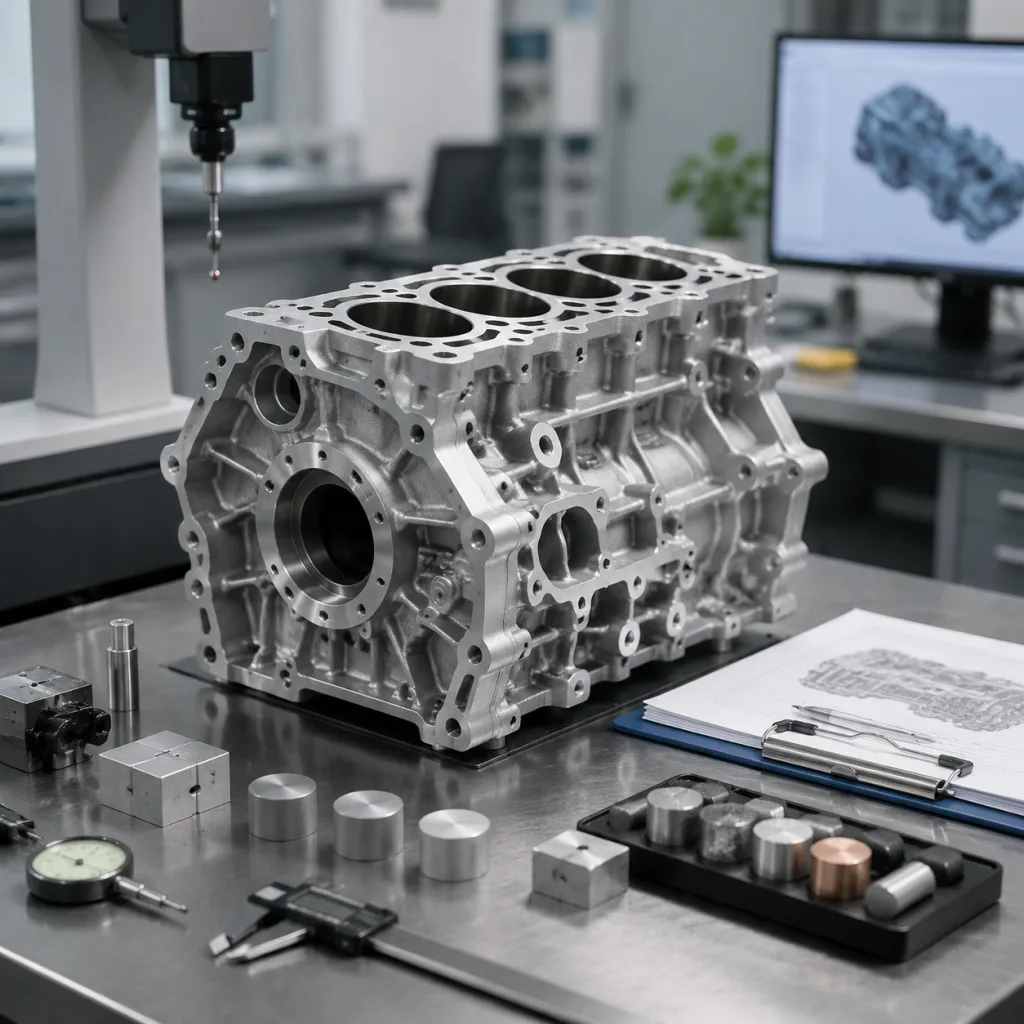
Walk the audit in the same direction as the part. Start with metal stamping or casting inspection, move through surface preparation, adhesive application, rubber mixing, pre-forming, mould loading, curing, demoulding, trimming, coating touch-up, final inspection and packing. On the shop floor, ask an operator to identify the drawing revision, inspection frequency and reaction plan when a dimension, hardness result or bond check is out of tolerance.
For EU and UK buyers, REACH (EC) No 1907/2006 declarations may be needed for rubber compounds, coatings, adhesives or packaging. A clear material response is more useful than a generic compliance sentence. Audit readiness is one of the strongest signals that a supplier can support repeat B2B orders rather than a one-time shipment.
Validation Deep-Dive: What Proves the Mount Will Work
Fit is only the first gate. Function is the real test. A mount that bolts into position can still transmit too much vibration, allow excessive powertrain movement or fail early under repeated load reversal.
For rubber-to-metal and torque mounts, the approval file should include:
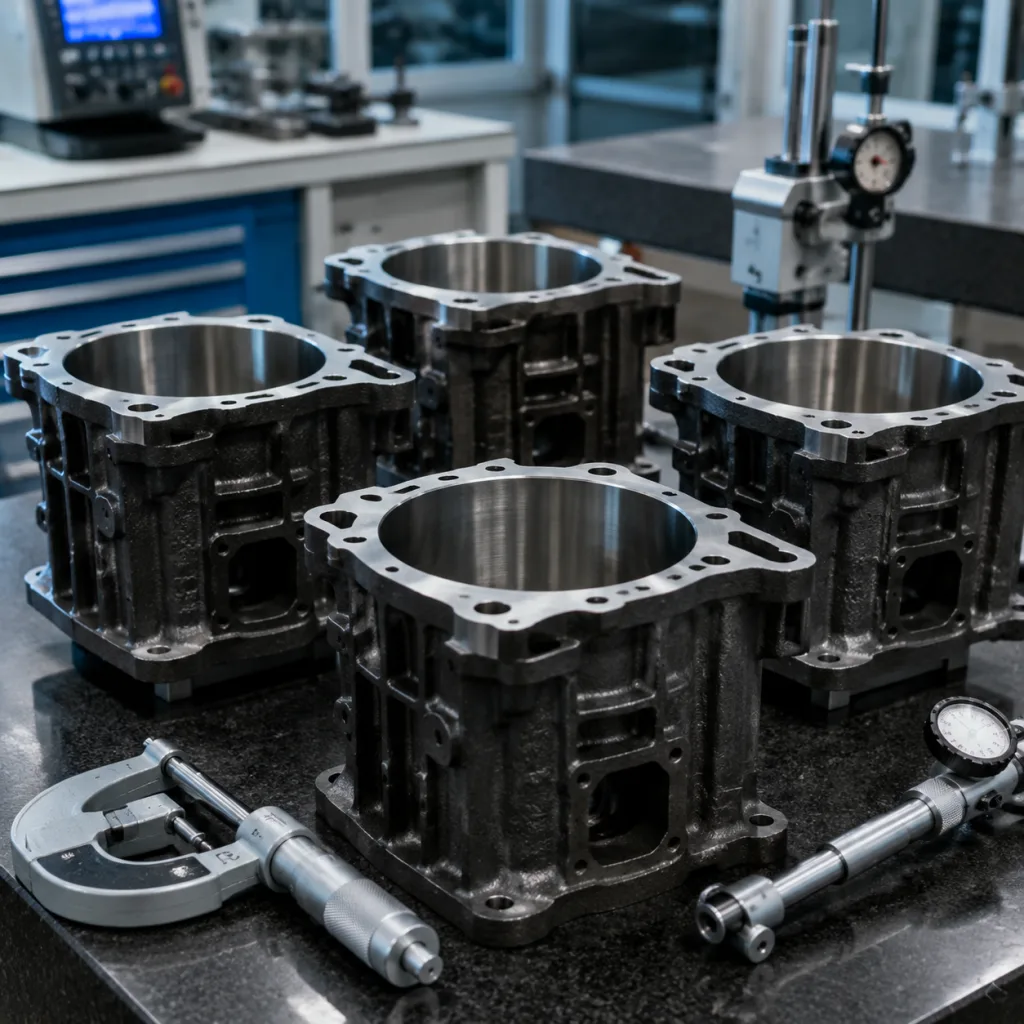
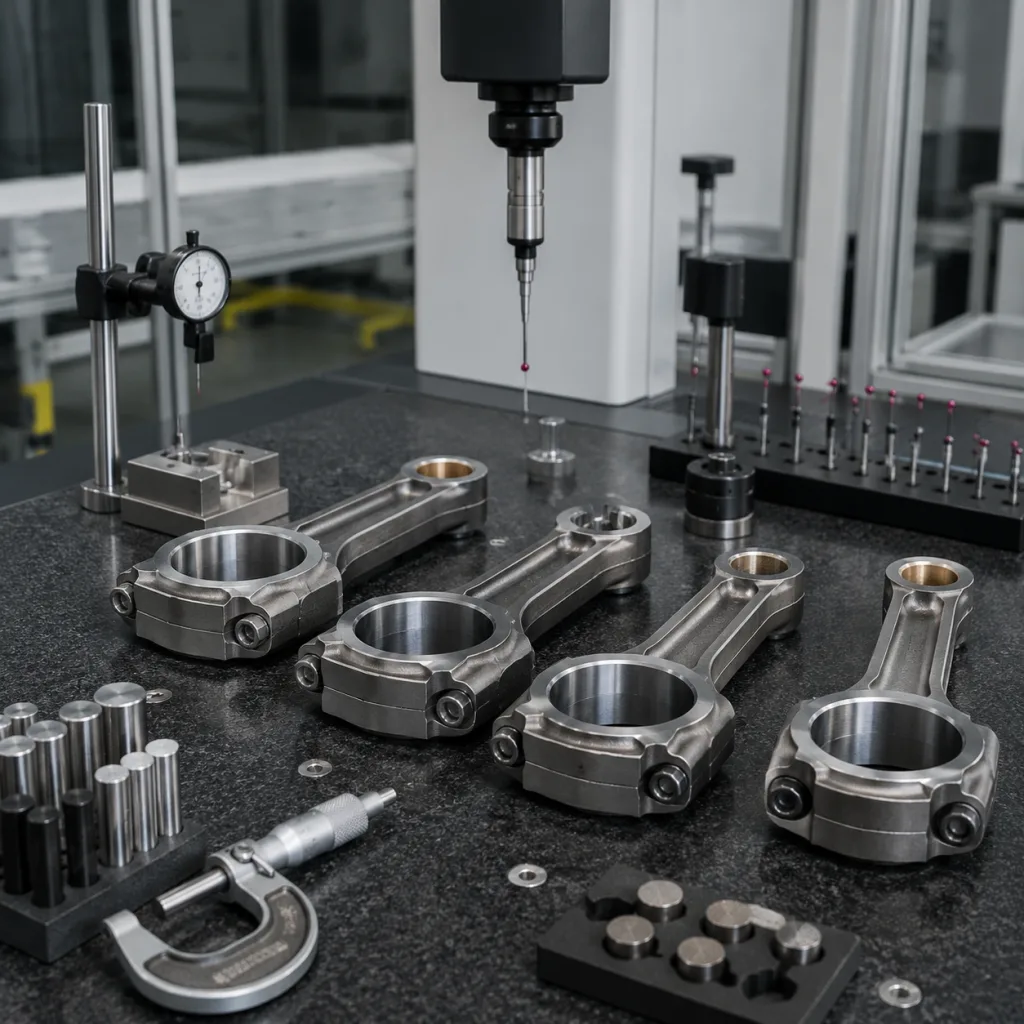
Critical dimensions against drawing or approved sample, including centre distance, bracket height, sleeve ID/OD and stud position
Bracket-hole and thread checks, preferably using go/no-go gauges for threaded studs and inserts
Shore A hardness with target and tolerance stated on the inspection report
Static compression and deflection curve at agreed loads, compared with an approved sample where possible
Bond strength or tear-resistance evidence, including destructive cut checks for large bonded areas
Heat-ageing comparison, including hardness change and crack inspection after elevated-temperature exposure
Oil, fuel mist or power-steering-fluid resistance when the mount location requires it
Ozone or weathering checks for exposed rubber in hot, humid or coastal markets
Corrosion testing for brackets, sleeves and exposed metal surfaces, with agreed salt-spray hours and acceptance criteria
Installation trial on representative fixtures, covering clearance, bolt start, bracket seating and torque access
Hydraulic mounts need extra proof. Ask about leak testing, fluid-fill consistency, sealing validation and seepage checks after cycling. A practical file should show fill-weight control, post-cure appearance, 100% leak or pressure-decay screening where required, and retained samples from the approved batch.
Set acceptance limits before samples are built. For example, a buyer may specify Shore A 65 ±5, bracket-hole centre distance ±0.3 mm, sleeve ID +0.05/0 mm, coating thickness 8–12 µm and no red rust after a defined salt-spray exposure. The correct numbers vary by design, but writing them into the RFQ prevents the familiar dispute: the buyer expected performance, the supplier quoted appearance.
IATF 16949:2016 and ISO 9001:2015 define management-system expectations. They do not validate a specific engine mount. If the buyer has internal test methods, they should be stated at RFQ stage so sampling cost, development timing and approval criteria are visible before production begins.
Scenario Check: When the Cheapest Carton Becomes the Highest Landed Cost
Imagine two quotes for the same Jaguar-fit mount. Supplier A is cheaper ex-works. Supplier B costs more per piece but defines carton strength, inner protection, pallet height, barcode format, inspection records and batch traceability. The lower unit price may still lose once sea freight damage, warehouse re-labelling, claims handling and return labour are counted.
Commercial and logistics points to confirm:
Incoterms, currency and quotation validity, often 15–30 days when material prices are moving
MOQ by SKU, carton, pallet and shipment so slow movers do not block consolidation
Sample cost, tooling charge, refund policy and ownership terms for custom parts
Tooling maintenance responsibility, expected tool life and cavity replacement rules
Carton specification, inner protection, desiccant need and barcode rules
Pallet size, gross weight, stacking limit and fumigation-free plywood or plastic pallet requirement
Country-of-origin documents, invoice description, HS-code confirmation and packing list format
Warranty handling, claim evidence requirements and credit-note timing
Packaging depends on the channel. Neutral packaging can work for market testing. Established importers usually prefer private-label cartons for warehouse control and channel consistency. Repair chains often care most about clear fitment labels, scan-ready barcodes and consistent branch-friendly carton dimensions.
Keep dense rubber-to-metal parts manageable. Many buyers cap individual cartons around 18–22 kg for manual handling, then specify inner sleeves, dividers or bags so coated brackets and rubber surfaces do not rub during sea freight. Pallet height should match the destination warehouse and container plan; export pallets are often capped around 1.1–1.2 m to reduce crushing risk. For compact heavy mounts, ask for a stacking test or loaded-carton compression photos.
Traceability closes the loop after shipment. If a claim appears, the buyer needs production date, lot number, inspection result, carton label, pallet number and material traceability. Without those records, warranty negotiation becomes slow, subjective and expensive.
RFQ Q&A: What Procurement Should Ask Before Awarding
A strong RFQ does more than request price. It tells the supplier how the buyer will decide, what evidence is required and which risks must be controlled before production release.
What application data should be included?
List model, year range, engine, transmission, drive layout and mount position. Add the OE cross-reference used in your system where available, written generically where required. If the part is being developed from an approved sample, include photos, 2D drawings, 3D files or a physical sample with dimensions marked in millimetres.
What volume information helps the supplier quote accurately?
Share annual forecast, first-order quantity and expected reorder frequency by SKU. State whether the order is a trial, repeat programme, private-label launch or range expansion. If tooling cost needs to be amortised into the unit price, say so at the beginning.
Which approvals should be named in the RFQ?
Include required certification evidence, such as IATF 16949:2016 or ISO 9001:2015 where applicable. Define test evidence before sampling: hardness, dimensions, bond checks, corrosion performance, hydraulic leak screening, fixture trial or vehicle validation. If a factory audit is part of onboarding, state the timing and audit scope.
What commercial details prevent late price changes?
Name the target landed cost, acceptable MOQ band, latest ship date, sample approval deadline, delivery term, destination port or warehouse, packaging format and consolidation schedule. Packaging should be specific: neutral, private label, bulk service pack or retail carton.
What should buyers avoid?
Do not ask only for the lowest price. Ask what process controls, inspection steps, traceability records and packaging protections are included in that price. A mount with unstable hardness or weak bonding can erase the saving through returns, labour claims and lost distributor confidence.
Driventus can review drawings, samples and forecast files before quoting. Buyers can request a quote with SKU lists, target packaging and validation requirements.
Frequently asked questions
Yes. Driventus supports neutral and private-label packaging for qualified B2B programmes. MOQ depends on the SKU, packaging format, carton artwork and whether existing tooling is available. Brand names are referenced for fitment only.
Request certification evidence, inspection reports, material or compound traceability, dimensional results, hardness data, bonding records, packaging specifications and batch records. For regulated markets, REACH (EC) No 1907/2006 declarations may also be required.
No. Driventus is an independent aftermarket manufacturer; brand names are referenced for fitment only. Product development is based on buyer specifications, samples, drawings and aftermarket application requirements.
If you are comparing suppliers for Jaguar-fit engine mounts, send your SKU list, annual forecast, target MOQ, delivery window and packaging requirements for review. Contact Driventus at /contact.html